Bootstrapping a Business: Pros, Cons & How to Do It

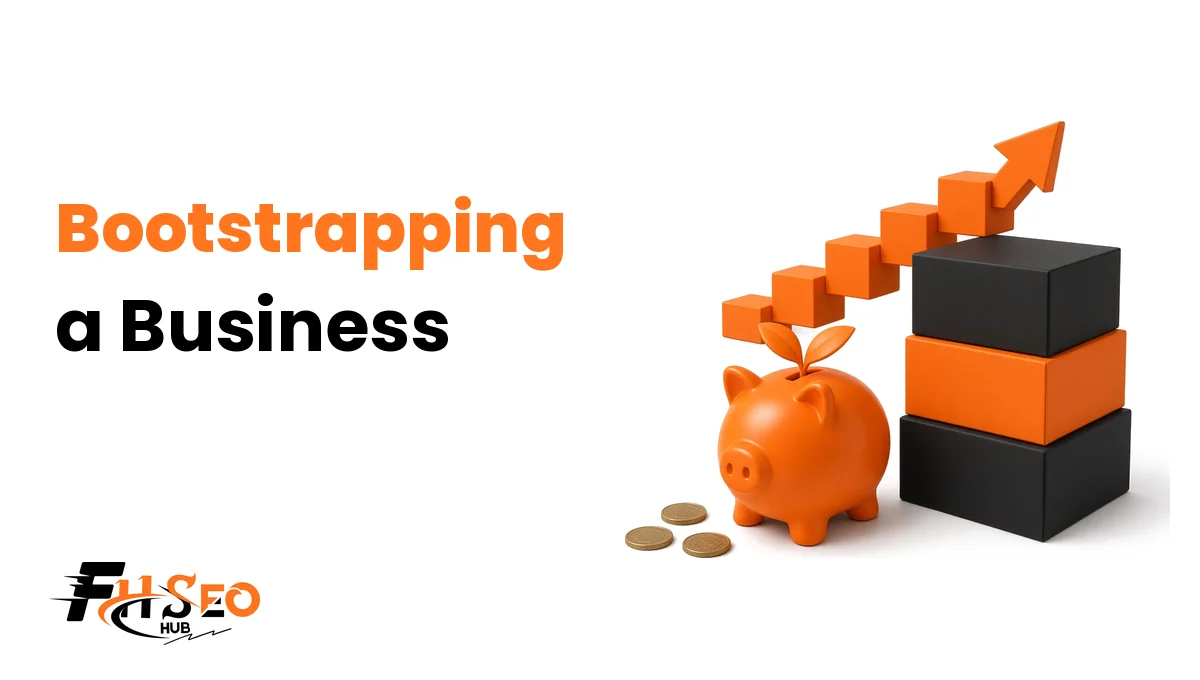
Bootstrapping a business means starting and growing it with your own money and the revenue it earns, not outside investors. You keep full ownership and control, but you carry the financial risk yourself and usually grow more slowly. It works best when early customers can pay for the next step.
The hard part is not the definition. It is knowing how long your cash will last, which costs to cut, and when self-funding stops making sense. Get that wrong and a sound idea can stall for lack of money, or you can give up equity you never needed to sell. This guide covers what self-funding means, the real trade-offs, a few well-known examples, a step-by-step plan, and the mistakes that most often slow bootstrapped companies down.
What Bootstrapping a Business and Self-Funding Actually Mean
Self-funding means the business runs on money you control: your savings, what customers pay you, and the profit you put back in. There is no venture capital round and no angel check, so nobody outside the company owns a share of it. JP Morgan’s startup banking team describes bootstrapping as building a company without outside investment, using personal finances or operating revenue.
The term covers a wide range of situations. A freelancer who turns client work into an agency is bootstrapping. So is a founder who builds a small software product on nights and weekends and grows it from subscriptions. What they share is the constraint: spending can only grow as fast as cash comes in.
That constraint shapes every decision. You choose cheaper tools, slower hiring, and offers customers will pay for now, because a missed month of sales cannot be covered by the next funding round.
Personal Savings, Early Revenue, and Reinvested Profits
Most bootstrapped companies move through three money sources. Personal savings cover the first costs, such as registration, a basic website, tools, or a first batch of inventory. Some founders keep a job or take side work so their savings last longer.
Early revenue comes next. Presales, deposits, retainers, and annual plans can bring in cash before the full product is finished. Once operating revenue covers costs, profit becomes the growth budget. You reinvest it into the product, marketing, or the first hire, one step at a time, so the company grows only as fast as it earns.
Pros and Cons of Bootstrapping
The pros and cons of bootstrapping come down to a trade between control and speed. You keep the company and every decision, but you accept personal risk and tighter limits on how fast you can move. Neither side is automatically better. Here is how each one plays out in practice, so you can judge which matters more for you.
Full Ownership, Control, and Lean Operations
The biggest advantage is ownership and control. With no investors, there is no equity dilution, no board to answer to, and no pressure to chase growth targets set by someone else. Stripe’s bootstrapping guide notes that founders typically sell between 10% and 20% of their equity in the seed round alone, so skipping that round keeps more of any future value with you.
Bootstrapping also forces lean operations. When every dollar comes from customers or your own account, you test cheaply, cut waste early, and pay close attention to margins. JP Morgan’s startup bankers say this discipline can lead to stronger unit economics, because founders pace themselves instead of trying too many things at once.
Personal Financial Risk, Resource Limits, and Slower Growth
The main drawback is personal financial risk. If you fund the business with savings or personal debt, a failure hits your household, not an investor’s portfolio. The odds matter: Bureau of Labor Statistics data released in 2026 show roughly one in five new US establishments closes within a year, and about a third close within two.
Resources are also thin, especially in the first year. You may not afford strong hires, paid marketing, or research and development, so the product launches later. In a fast-moving market, a funded competitor can take share first. Many founders also juggle a job alongside the business, which adds long hours, personal strain, and real burnout risk.
Bootstrapped Startup Examples and the Patterns They Share
Well-known bootstrapped startup examples rarely stay purely bootstrapped forever, and that is part of the lesson.
Mailchimp grew for years without venture funding. Intuit announced its acquisition of the company for about $12 billion on September 13, 2021, and closed the deal on November 1, 2021.
Spanx started in 2000 when Sara Blakely used $5,000 in savings. It took no outside investment until October 2021, when Blackstone bought a majority stake at a $1.2 billion valuation.
GoPro founder Nick Woodman funded the early company himself, though accounts differ: some say he borrowed about $35,000 from his mother, others say he put in about $30,000 of his own money. GoPro later raised outside money and went public.
GitHub ran on its own revenue for its first years, then raised venture capital and was bought by Microsoft in a deal Microsoft valued at $7.5 billion in stock.
The shared patterns are simple: each charged customers early, kept costs tight while finding demand, and took outside capital, if at all, only after the business had proven itself.
A Practical Plan for Self-Funding a Business
A practical plan for self-funding a business follows the order cash allows: prove people will pay, keep spending low, put profit back in, and know your exit point from pure bootstrapping. The four steps below follow that order, and each one protects the cash you need for the next. Skipping ahead is how most founders run short.
Validate Demand and Prioritize Paying Customers
Start by proving someone will pay. Interest, likes, and survey answers are weak signals. A deposit, preorder, or signed first contract is a strong one.
Sell a small version before you build the full product. A service business can land one client and deliver by hand. A software founder can sell a pilot with a basic feature set. JP Morgan’s startup bankers advise prioritizing paying customers even when they pay a small amount, because their feedback shows what to build next and what to drop.
Price early, too. Charging from day one tells you whether the value is real and gives you the operating revenue that bootstrapping depends on.
Keep Lean Operations and a Low Burn Rate
Your burn rate is how much cash you spend each month beyond what comes in. Keep it low enough that your runway, the months of cash you have left, gives you time to learn.
Spend on what brings in or keeps customers, and delay the rest. Work from home before renting an office or signing a long lease. Use low-cost or open-source tools, contractors, or part-time help before full-time hires. Buy inventory in small batches you know will sell, and reorder as it moves.
Review every recurring cost each month. Small subscriptions add up quietly, and canceling one you do not use extends your runway at no cost to growth.
Watch Cash Flow and Reinvest Profits Into Bootstrapped Growth
Profit on paper is not cash in the bank. Track cash flow weekly: what is due in, what is due out, and when. Invoices paid in 60 days can leave you short even in a strong month, so plan for the gap.
Speed up money coming in with deposits, upfront annual plans, and short payment terms. Slow down money going out by negotiating longer supplier terms where you can.
Then reinvest profits deliberately. Pick the one constraint holding you back, such as a missing feature, a sales channel, or delivery capacity, and fund that first. Bootstrapped growth comes from repeating that cycle, not from spending everything at once.
Know When Self-Funding Is No Longer Enough
Self-funding has limits. JP Morgan’s startup bankers say bootstrapping is not viable for capital-intensive industries such as applied tech, biotech, and fintech, where costs come long before revenue.
Watch for signs that you need help: demand you cannot serve, a funded competitor moving faster, or a cash gap you cannot close with sales. In those cases, outside money may be the better path.
You also have middle options. JP Morgan describes seed strapping, where a company raises a single seed round and then focuses on building a cash-flow-positive business, limiting dilution. Small loans and revenue-based financing are other routes worth comparing before you give up a large share of equity.
Mistakes That Stall Bootstrapped Growth
Most bootstrapped businesses stall for avoidable reasons, not because the idea was bad. These are the patterns to watch for.
Overestimating runway is the first. Founders assume sales will arrive on schedule, then run out of cash. Build your plan on cautious revenue and full costs.
Building too long before selling is the second. Months spent perfecting a product nobody has paid for burns savings and delays the feedback you need.
Underpricing is the third. Low prices can win early customers, but they leave no profit to reinvest and train buyers to expect cheap work.
Neglecting marketing is another. Lean does not mean invisible. Pick one or two low-cost channels, such as content, referrals, or direct outreach, and work them consistently.
Mixing personal and business money makes cash flow hard to read and tax time harder. Open a separate business account early.
Finally, founders often refuse outside money on principle, even when a clear opportunity needs it. Bootstrapping is a strategy, not an identity. Run the numbers each year and choose the funding model that fits the business you have.
Growing on Your Own Terms Without Running Out of Cash
Bootstrapping a business works when cash leads the plan. Sell before you build, keep your burn rate low, and put profit into one constraint at a time. Track runway monthly and be honest about when the business needs more than you can fund. Your next step is to list your fixed costs, your cash on hand, and the date it runs out. Then decide which single cost to cut and which single growth step your next profit will fund. Revisit that list every month as the numbers change.
FAQs
It means starting and growing a company with your own resources, such as personal savings and the revenue the business earns, instead of investors. You keep full ownership and control, but you also take on the financial risk and usually grow more slowly.
It can be, when revenue covers costs and profit funds the next step. It is hardest in capital-intensive industries where costs come long before sales. Sustainability depends on margins, cash flow, and keeping your burn rate within what customers bring in each month.
Bootstrap if customers can pay early, startup costs are modest, and you value control. Consider outside investment if the market rewards speed, costs come long before revenue, or a funded competitor could take the market. Many founders bootstrap first and decide later.
Consider it when demand outpaces what you can deliver, cash gaps keep blocking growth, or a competitor with funding is moving faster. Outside money makes the most sense once you have paying customers and a clear plan for the capital.
Yes, often. Spanx took no outside investment until Blackstone's 2021 deal, and GitHub raised venture capital after years on its own revenue. Bootstrapping first can give you a stronger position and better terms when you do raise.