
What Is a Backlink Profile? How to Build a Good Profile That Ranks

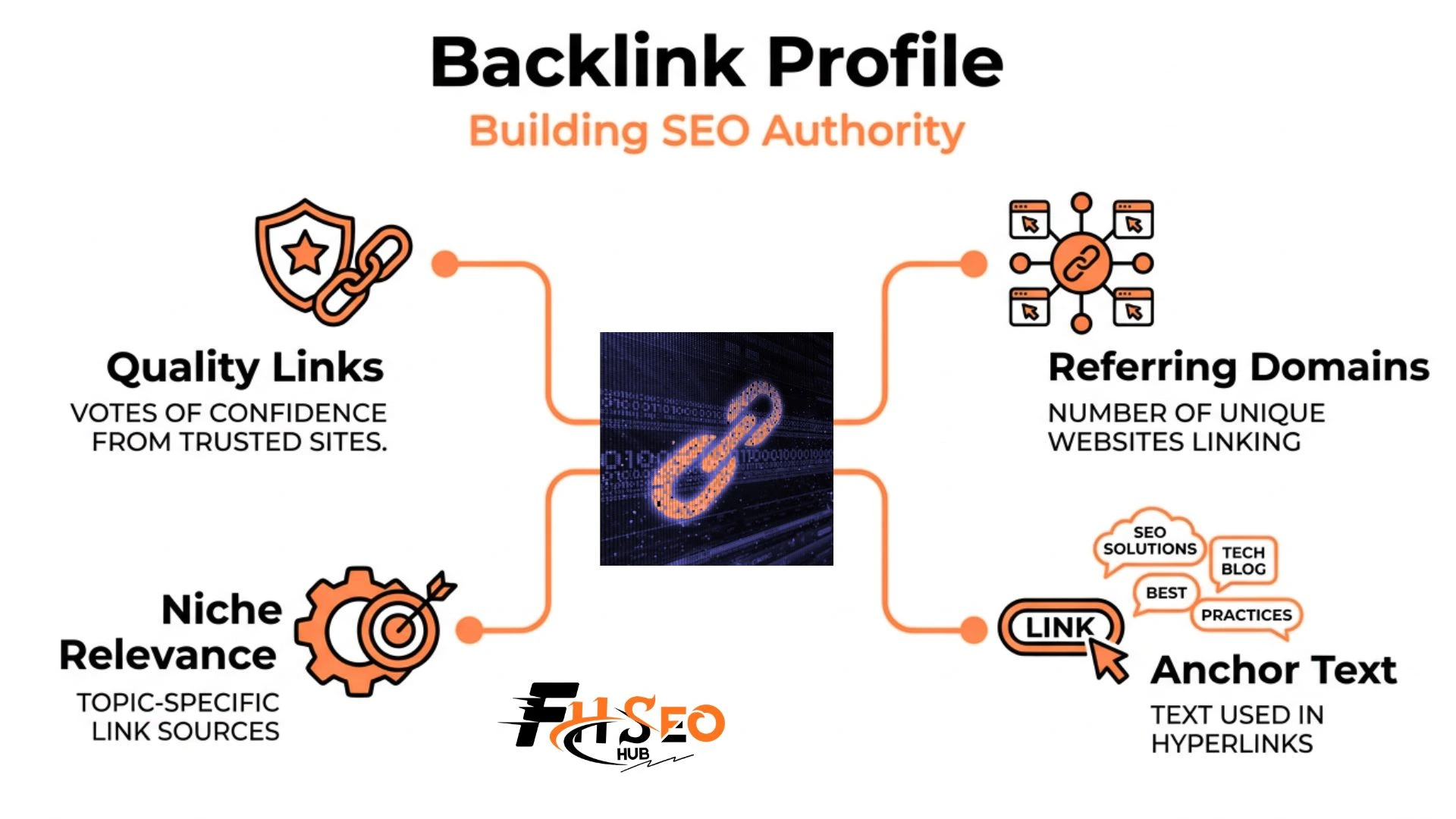
A backlink profile is the complete collection of all inbound links pointing to a website from external sources. It includes the total number of backlinks, referring domains, anchor text distribution, link quality and the ratio of dofollow to nofollow links. Search engines like Google evaluate a backlink profile to determine a website’s authority, relevance, and trustworthiness. A healthy backlink profile consists of diverse, high-quality links from authoritative and relevant websites, while a toxic profile with spammy or low-quality links can lead to ranking penalties.
What is Backlink Profile?

A backlink profile in SEO is the full set of inbound links pointing to your site viewed as a complete picture of your authority and trustworthiness. Search engines analyze to decide how credible your content is compared to competing pages.
Think of it this way. If backlinks are individual votes of trust from other websites, your backlink profile is the total voting record. Google does not count votes alone. It reads the source, the context, the pattern and the consistency of every vote together.
Websites with strong profile analysis strategies rank 3.2 times higher than those that ignore this data according to 2026 industry research. That gap explains why two sites with similar content can produce wildly different ranking results.
What Is the Difference Between a Backlink and a Backlink Profile?
A backlink is one single inbound link from one website to yours. A backlink profile is the full collection of every inbound link your site has ever received viewed as a whole.
| Feature | A Backlink | A Backlink Profile |
| What it is | One inbound link | All inbound links combined |
| What it shows | Value of one link source | Overall authority and health of your site |
| How you use it | Evaluate one referring domain | Audit your complete link fingerprint |
| Key metric | Domain Rating of that one site | Referring domains, diversity, anchor text mix |
The distinction matters because optimizing individual links is very different from managing the overall pattern. You can have 50 strong individual links and still have a weak profile if they all come from the same domain or all use the same anchor text.
What Makes a Backlink Profile Strong or Weak?
A strong backlink profile has diversity across authority levels, anchor text types and source domains. A weak one shows concentration in one area. Chasing high-DR links exclusively while ignoring natural diversity is the mistake most link builders make.
The five core components of a strong profile:
- Referring domain diversity: Links from a wide range of unique websites
- Topical relevance: Linking pages cover topics related to your niche
- Anchor text diversity: A natural mix of branded, generic, partial match and exact match anchors
- Link type balance: Roughly 70 percent dofollow to 30 percent nofollow
- Natural growth rate: Steady monthly referring domain growth without sudden spikes
Profiles that look too perfect trigger Google’s algorithmic filters. A profile with exclusively DR 70 links, all dofollow and all exact-match anchors looks self-build. Real profiles always contain some lower-authority links, nofollow links and branded or generic anchors mixed in naturally.
What Is the Right Anchor Text Distribution for a Backlink Profile?
Anchor text distribution is one of the most important and most ignored parts of backlink profile management. Over-optimizing here causes more Google penalties than almost any other link building mistake.
A natural anchor text distribution follows these approximate ratios:
If more than 20 percent of your backlinks use the exact same keyword phrase as anchor text, that pattern registers as manipulation in Google’s system. Always audit your anchor text spread before launching any new link building campaign.
How Do You Analyze Your Backlink Profile?
Analyzing your backlink profile means pulling your full link data and evaluating it across five dimensions: referring domain count, domain authority distribution, anchor text mix, topical relevance of linking pages and toxic link signals.
Start by collecting data from two sources simultaneously. Google Search Console shows you what Google has indexed and processed. Paid tools like Ahrefs and Semrush add depth including Domain Rating, traffic estimates and toxicity scores per link.
| Tool | Cost | Best For | Key Limitation |
| Google Search Console | Free | Seeing what Google indexes | Limited per-domain metrics |
| Ahrefs | Paid | DR analysis and link gap research | Requires subscription |
| Semrush | Paid | Toxic Score per individual link | Requires subscription |
| Moz Link Explorer | Free tier | Basic DA checks | Limited daily lookups |
The five-step analysis process:
- Export your full link list from Google Search Console and one paid tool
- Check your referring domain count against your top three competitors
- Review your anchor text distribution against the natural ratio benchmarks above
- Flag links from irrelevant niches, low-traffic sites or known spam domains
- Compare your monthly link growth rate against industry averages
What Is Link Velocity and Why Does Your Backlink Profile Need It?
Link velocity is the rate at which your site gains new referring domains. Google’s SpamBrain monitors this pattern to separate organic popularity from manufactured campaigns. Steady growth signals trust. Sudden spikes signal manipulation.
Safe monthly referring domain growth rates in 2026:
A site jumping from 10 to 500 referring domains in 30 days without major press coverage raises an immediate red flag. Consistent predictable growth always outperforms bursts.
How Do You Compare Your Backlink Profile Against Competitors?
Competitive backlink analysis shows the gap between your current link authority and what you need to rank for target keywords. It turns your profile from a historical record into an active planning tool.
The gap analysis process:
- Search your primary keyword and open the top three ranking pages
- Record each page’s referring domain count using Ahrefs or Semrush
- Calculate the average across those three pages
- Subtract your current referring domain count from that average
- Divide the gap by your available months to set your monthly link target
One metric matters more than any other here: referring domains, not total backlinks. Ten links from ten unique sites beat 100 links from one site every time. Google values diversity of endorsement over volume from any single source.
How Do You Build a Stronger Backlink Profile?
The fastest way to strengthen a weak backlink profile is one well-placed editorial link from a DR 75 or higher publication. One strong digital PR placement delivers more ranking impact than 20 guest posts on DR 30 blogs.
Three methods that produce consistent results in 2026:
Digital PR and original research: Publishing original data studies earns editorial citations from journalists. These tend to be high-DR and placed naturally inside real content that drives real traffic.
Strategic guest posting: Post only on topically relevant sites with real organic traffic. Vary your anchor text across every placement. Avoid site networks with similar footprints because Google’s spam detection identifies these patterns quickly.
Linkable asset creation: Free tools, comprehensive guides and original datasets become reference sources that attract links naturally over time without outreach.
Conclusion
Your backlink profile is a living fingerprint of how search engines perceive your authority. Managing it well means monitoring referring domain diversity, keeping anchor text natural, auditing for toxic links quarterly and building new links through editorial sources rather than shortcuts. Check your referring domain count in Google Search Console today, compare it against your top ranking competitor and close that gap one quality link at a time.
FAQs


