SEO and SEM: The Real Difference and How to Use Both in 2026
SEO and SEM are two different ways to gain visibility on search engines like Google. SEO builds organic rankings through content, technical fixes, and links, and it costs no fee per click. SEM uses paid ads to appear instantly above organic results. Most strong search strategies use both together.
Business owners often assume these terms mean the same thing, then wonder why one campaign works and another stalls. The confusion is fair. Both aim for the same goal: getting your business in front of someone typing a question into Google. The methods, costs, and timelines behind them differ sharply, and knowing which one fits your situation now decides how fast you grow.
What Are SEO and SEM
SEO stands for search engine optimization. SEM stands for search engine marketing, and most marketers today use it to mean paid search advertising specifically. The core difference sits in payment: SEO earns visibility over time without a per-click fee, while SEM buys visibility instantly through platforms like Google Ads.
Both strategies compete for the same real estate on a search results page. SEO wins a spot in the organic listings through relevance, technical health, and trust signals built over months. SEM wins a spot at the top of that same page by bidding on keywords and paying each time someone clicks. Neither approach replaces the other. They solve different problems on different timelines.
A common mistake is picking one and ignoring the other because a single blog post or a single ad campaign said it. A restaurant chasing a grand opening needs SEM for immediate bookings. That same restaurant still needs SEO, since paid traffic disappears the moment the ad budget runs out.
Why the Term SEM Causes So Much Confusion
The term SEM causes confusion because its original meaning covered organic and paid search together as one umbrella discipline. Today, most marketers and job postings use SEM as shorthand for paid search alone, while SEO refers strictly to the organic side.
This shift happened gradually as the two disciplines grew complex enough to need separate specialists. Older marketing textbooks and some agencies still use the broader definition, where SEM includes SEO as a subset alongside PPC. When you read an article, a job listing, or a proposal that mentions SEM, check the surrounding context before assuming which definition applies.
This matters in practice. A client once told an agency they wanted help with SEM, expecting a full search strategy covering both organic and paid work. The agency, using the narrower modern definition, quoted a pay-per-click package alone and left content and rankings untouched. Clarify the scope in writing before any contract begins.
How AI Overviews Are Reshaping Search Visibility
AI Overviews and zero-click search results now answer a growing share of Google searches without sending a single click to any website. This shift is forcing organic and paid search to adapt at the same time, since fewer total clicks are available to either channel.
Zero-click search happens when a user reads an answer directly on the results page and never visits a website. This behavior has climbed from under half of all Google searches a decade ago to roughly two out of three searches in 2026. Informational queries take the biggest hit, since an AI Overview can fully answer a simple question without a visitor ever needing to leave Google. Commercial and transactional searches still send meaningful clicks to both organic results and paid ads. These are the searches tied to buying something, and Google continues to show ads on the queries that make it money.
This changes strategy for both disciplines. For SEO, ranking is no longer the only goal. Getting cited inside an AI Overview or an AI chat answer, sometimes called generative engine optimization, now matters just as much, since a cited brand still earns trust and visibility even without a click. Structure your content with clear, direct answers near the top of the page to raise your odds of getting quoted this way.
For SEM, the shift means paid ads increasingly capture the clicks that used to flow through top organic rankings on competitive commercial searches. A real warning sign is treating zero-click growth as a reason to abandon SEO entirely. Brands that stop investing in organic content lose long-term authority and become fully dependent on rising ad costs instead.
SEO Strategies That Work in 2026
Effective SEO strategy combines technical health, content quality, and authority signals working together, not any single tactic alone. Sites that treat these as separate checklists instead of one connected system tend to plateau after early gains.
| SEO Factor | Focus Area |
| Keyword and intent research | Matching content to what searchers truly want to find |
| Technical SEO | Crawlability, indexing, site speed, and mobile usability |
| On-page optimization | Titles, headings, internal links, and image alt text |
| Content quality | Depth, originality, and real usefulness to the reader |
| Backlinks | Earning links from relevant, trustworthy external sites |
| Site structure | Clear navigation and logical page hierarchy |
| Core Web Vitals | Fast loading and stable, responsive pages |
| Topical authority | Consistent depth of coverage across a subject area |
A common mistake is chasing backlinks before the underlying content earns them. A site with thin pages rarely holds rankings even after an aggressive link campaign, since Google reassesses relevance constantly. A stronger approach publishes one deeply useful guide per core topic first, then builds links to that page through outreach and digital PR.
SEM Strategies That Work in 2026
Effective SEM strategy centers on tight keyword targeting, strong ad relevance, and continuous testing rather than simply raising your bid. A high budget cannot fix a low quality score, since Google rewards relevance with lower costs regardless of spend.
| SEM Factor | Focus Area |
| Campaign structure | Tightly themed ad groups built around specific keyword clusters |
| Quality score | Ad relevance, expected click-through rate, and landing page experience |
| Bidding strategy | Manual or automated bids matched to your actual conversion value |
| Retargeting | Showing ads again to people who already visited your site |
| Landing page optimization | Page speed, message match, and a clear call to action |
| A/B testing | Testing ad copy, headlines, and landing pages against each other |
A real mistake many businesses make is sending every ad click to a generic homepage instead of a dedicated landing page built for that exact keyword. A plumbing company running ads for emergency pipe repair should send that click to a page about emergency pipe repair, not a general services page, since mismatched intent quietly wastes ad spend every day.
How SEO and SEM Work Together
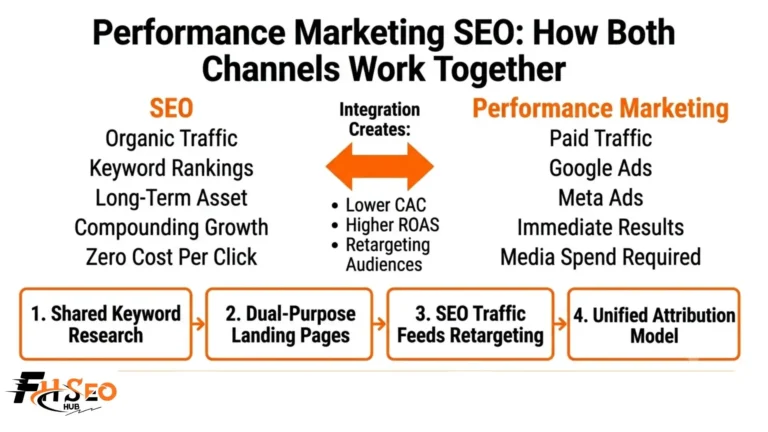
These two channels support each other far more than they compete, since each channel reveals data the other can act on. Running both together builds authority and generates immediate traffic at the same time, rather than forcing a choice between the two.
SEM fills the gap while SEO rankings build, since a new website can take months to earn organic trust. Paid campaigns also reveal which keywords convert into real leads before you invest months writing SEO content around a term that never performs. A page showing up in both the organic listings and a paid ad at the same time tends to earn more trust from a searcher, since repeated visibility signals legitimacy.
Three Real Campaigns Combining Both Channels
A Local Service Business
SEO ranks the business for plumber near me style searches over several months. SEM runs paid ads for emergency plumber the same week the campaign launches. The combination brings in leads immediately while the organic ranking catches up.
A SaaS Company
SEO targets problem-based blog content, like guides explaining a workflow challenge the software solves. SEM bids on comparison keywords from buyers already evaluating competitors. Together, they capture both early research traffic and high-intent buyers close to a decision.
An Ecommerce Brand
SEO optimizes category and product pages for search terms shoppers already use. SEM runs shopping ads and retargeting campaigns aimed at visitors who added items to a cart without checking out. The two channels recover lost sales while building lasting product page authority.
The Best SEO and SEM Tools in 2026
The right tool depends on which side of search marketing you are working on, and most serious teams use several from each category.
| SEO Tools | SEM Tools |
| Ahrefs | Google Ads |
| Semrush | Google Keyword Planner |
| Google Search Console | Microsoft Advertising |
| Google Analytics | SpyFu |
| Screaming Frog | WordStream |
| Surfer SEO | Optmyzr |
| Yoast or Rank Math | Google Analytics |
Google Search Console and Google Analytics show up on both sides for good reason. Both channels ultimately need the same conversion and behavior data to prove what is working.
When Should You Choose SEO, SEM, or Both
The right choice depends on your budget, your timeline, and how quickly you need results. Neither channel is inherently better, since they solve different problems.
Choose SEO If
You want traffic that keeps working without an ongoing ad budget. You have more time than money right now. You want to build long-term authority in your industry. You are comfortable waiting a few months for meaningful results.
Choose SEM If
You need leads or sales starting this week. You have a flexible, ongoing budget to fund clicks. You want to test which keywords truly convert before committing to SEO content. You are launching something time-sensitive, like an event or a seasonal offer.
Choose Both If
You want steady, compounding growth alongside immediate visibility. Most established businesses fall into this category once they have any marketing budget at all, since the two channels cover each other’s weaknesses.
Conclusion
SEO and SEM solve different problems, and treating them as rivals wastes the advantage each one offers. SEO builds durable, compounding visibility, while SEM delivers speed and control whenever you need it. The businesses winning search in 2026 run both together and adjust the mix as AI Overviews continue reshaping where clicks go. Start with whichever channel matches your timeline this month, then add the other once you have room in your budget.
FAQs
SEO earns free organic rankings through content, technical work, and links, while SEM buys visibility instantly through paid ads. SEO takes longer but keeps working without ongoing spend. SEM delivers traffic fast but stops the moment you stop paying.
Under the original, broader definition, yes, SEM covers both organic and paid search. Most marketers today use SEM to mean paid search alone, so check the context of where you read the term.
Neither is universally better, since they serve different timelines and goals. SEO builds lasting, low-cost traffic over months, while SEM delivers immediate visibility for a continuous cost. Most competitive businesses eventually run both.
SEM has a direct, ongoing cost per click that scales with competition in your industry. SEO has no per-click fee, but it requires an upfront investment of time or money into content and technical work before it pays off.
Yes, and many small businesses do this by starting SEM for immediate leads while building SEO content in parallel. Once organic rankings mature, some businesses reduce ad spend on the keywords SEO now covers for free.
Not equally. AI Overviews reduce organic clicks more sharply on informational searches, while Google still shows paid ads prominently on commercial and transactional queries. SEM remains more insulated from this shift than SEO for now.
Early movement can appear within weeks for low-competition terms, but meaningful ranking gains for competitive keywords usually take three to six months. Authority and trust signals continue compounding well beyond that initial period.
They overlap heavily but are not identical. PPC, or pay-per-click, is the payment model SEM most commonly uses, but SEM as a category can also include display ads and shopping campaigns beyond standard search PPC.