SaaS Predictive Analytics: Use Cases, Tools, and How to Implement It

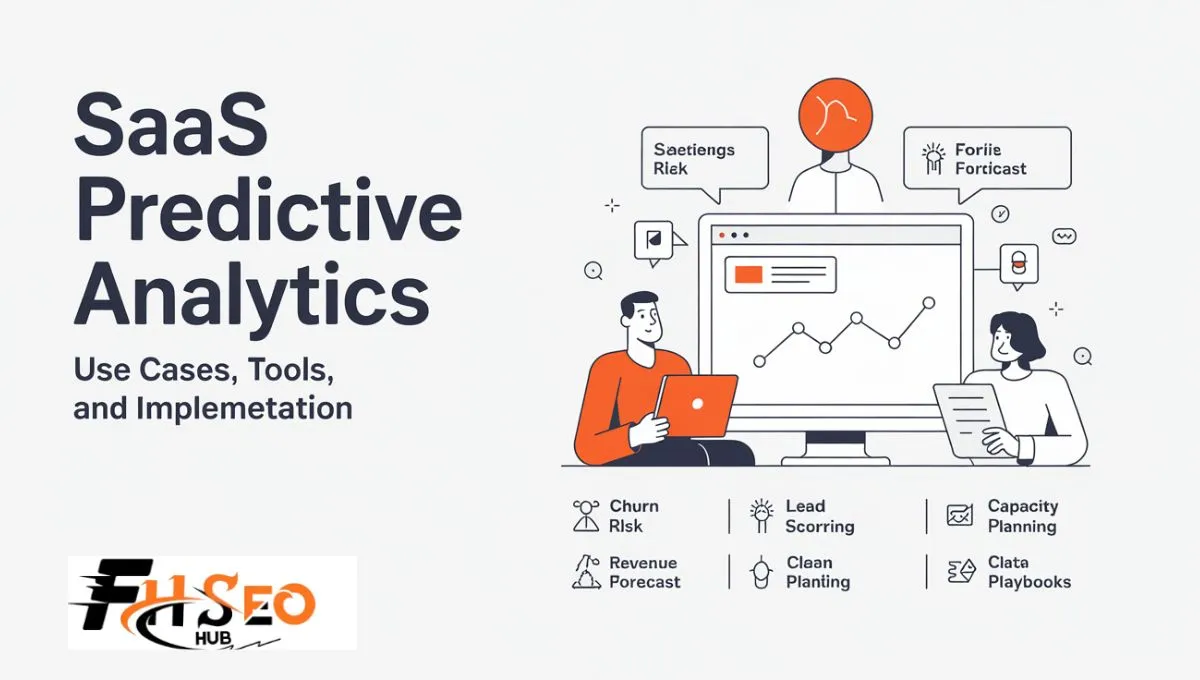
SaaS predictive analytics is a cloud-based software solution that uses machine learning, statistical algorithms, and historical data to forecast future trends, behaviors, and outcomes. It enables businesses to predict customer churn, optimize pricing, forecast revenue, identify sales opportunities, and make data-driven decisions without needing on-premise infrastructure. Key benefits include real-time data processing, scalability, lower upfront costs, and easy integration with existing business tools like CRMs and ERPs. Popular SaaS predictive analytics platforms include Salesforce Einstein, HubSpot, IBM Watson, and Google Cloud AI, serving industries like finance, healthcare, marketing and e-commerce.
Predictive vs descriptive vs prescriptive analytics
Descriptive analytics tells you what happened, like last month’s churn rate or trial conversions. Predictive analytics estimates what will happen, like which accounts may cancel next. Prescriptive analytics suggests actions, like which save offer to show, but it only works after you trust the predictions.
Why predictive analytics matters for SaaS
Subscription businesses win or lose on timing. If you wait for churn to show up in revenue, you are already late. Predictive signals help you act earlier, when a small fix can still change the outcome.
What Predictive Analytics Can Do for a SaaS Business
Churn prediction and retention timing
Churn rarely happens out of nowhere. Usage drops, tickets rise, and key contacts go quiet. A churn risk score helps your customer success team focus on the accounts that need attention now, not later.
LTV and revenue expansion
Not all customers grow the same way. Some expand when they hit a usage ceiling. Others expand after a workflow becomes routine. Predictive scoring can highlight accounts with strong expansion signals, so you do not treat every customer the same.
Lead scoring and pipeline forecasting
Many teams waste time on leads that will not convert. Predictive lead scoring ranks leads by intent and fit using real behavior, not vibes. When sales works the best leads first, your conversion rate usually improves.
Demand forecasting and capacity planning
Support and onboarding get crushed when demand spikes. Predictive forecasts can warn you before the spike hits. That gives you time to adjust staffing, queue rules, and training.
Pricing and packaging signals
Your plan structure affects churn and upgrades. Predictive patterns can show when pricing mismatches drive cancellations. It can also show which features trigger upgrades, so packaging becomes clearer.
The SaaS Metrics Predictive Analytics Improves
Revenue metrics
Revenue forecasting gets sharper when you track expansion signals and renewal risk. Teams watch ARR and MRR, but accuracy matters more than the number itself. A forecast that stays close to reality helps hiring, spend, and targets.
Customer metrics
Churn rate is the loudest metric, but it is not the first signal. Cohort retention shows whether newer customers stick better than older ones. LTV and CAC also get easier to manage when you can predict payback.
Product metrics
Activation and feature adoption explain churn better than emails. If users never reach time to value, they leave. Predictive insights can show which steps correlate with long term retention.
Support and ops metrics
Ticket trends can predict account risk and workload spikes. SLA risk can also be predicted when volume rises in specific categories. That helps your team stay ahead instead of reacting.
Data You Need and Where It Usually Lives
Core data sources
Most SaaS companies already have the raw ingredients. You have CRM fields, subscription billing data, product usage events, and support tickets. You may also have marketing engagement like email clicks and webinar attendance.
The minimum viable dataset
You do not need perfect data to start. You need consistent data on a small set of signals. For churn, that usually means plan type, tenure, billing status, key usage events, and ticket volume.
Common data problems
These issues make predictions feel wrong even when the idea is sound.
How to fix data quality fast
Pick a short list of fields that must be correct. Make those fields required at entry where possible. Define event names once and stick to them. Clean duplicates weekly until the system stays clean.
How Predictive Models Work Without the Math Overload
The two model types you will use most
Most SaaS use cases fall into two buckets.
| Type | What it predicts (example) |
| Classification | A category, like churn risk high or low |
| Forecasting | A number over time, like next month’s revenue |
What confidence means in real work
Predictions are not facts. A confidence score is a way to avoid false certainty. If confidence is low, route it to a human review or request more data.
Explain ability in simple language
Teams trust predictions when they can see the drivers. That can be as simple as “usage dropped by 40%” or “billing failed twice.” You do not need complex explanations to be useful.
Avoiding overfitting and stale models
A model can look great on old data and fail on new data. That happens after pricing changes or onboarding changes. Track accuracy over time and retrain when performance slips.
Best SaaS Predictive Analytics Use Cases by Team
| Team | How predictive analytics helps |
| Customer success | A churn risk score sets weekly priorities and highlights the accounts that need action first, then a simple playbook turns the score into clear outreach steps. |
| Sales | Lead scoring reduces time spent on low intent leads, and deal risk scoring helps managers spot deals that need support before they stall. |
| Marketing | Predictive scoring shows which channels bring high quality trials and which users are likely to activate, so targeting improves and onboarding emails get smarter. |
| Product | Predictive patterns connect features to retention, which helps teams prioritize work that improves long term usage and reduces churn. |
| Finance and ops | Forecasting supports cleaner revenue and cash flow planning, while ops predictions help with staffing and infrastructure before demand spikes. |
Choosing Tools: Build vs Buy for SaaS Predictive Analytics
When a SaaS tool is enough
If you want results fast, start with a tool that plugs into your stack. This works well for churn risk, lead scoring, and basic revenue forecasting. It also fits teams without a dedicated data science function.
When to build in house
Build makes sense when your data is unique or your workflows are custom. It also helps when you need tight control over features, privacy, and model updates. The tradeoff is time and ongoing maintenance.
What to evaluate in any tool
Start with integrations, because disconnected tools fail in practice. Check data access, permissions, and encryption. Look at uptime history and support quality. Make sure non technical users can read outputs without confusion.
Typical analytics stack options
Many teams use a warehouse for clean data, plus a BI layer for reporting. Product analytics tools cover events and funnels. Customer success platforms cover health scores and playbooks. Predictive analytics works best when these tools share the same definitions.
Implementation Plan That Actually Works
Step 1: Pick one outcome and one owner
Choose one outcome you can act on weekly. Churn risk is a strong first choice for most SaaS teams. Assign one owner who will run the process and report results.
Step 2: Define inputs and clean them
List the inputs that drive the outcome. For churn, that might be usage drop, billing failures, and ticket spikes. Clean these inputs first, or you will chase noise.
Step 3: Build a baseline before anything fancy
A baseline prediction is not meant to be perfect. It is meant to be testable. Compare predictions to real outcomes for a month and adjust.
Step 4: Turn predictions into actions
Predictions without action become dashboard decoration. Tie each prediction to a workflow. If churn risk is high, trigger an outreach plan and a product check.
Step 5: Add review loops and monitoring
Early on, review outputs daily or weekly. Look for obvious errors and fix root causes. As accuracy improves, reduce manual review and keep a lighter check.
Step 6: Prove ROI with clear tracking
Pick one or two proof metrics. For churn, track retention lift in the flagged group. For forecasting, track forecast error versus actuals. For lead scoring, track conversion rate by score band.
Security, Privacy, and Compliance Basics
What SaaS teams must protect
Treat customer data as sensitive by default. Limit access by role, not convenience. Encrypt data in transit and at rest when possible.
Compliance considerations
If you handle personal data, follow rules like GDPR and CCPA. Keep clear retention policies and consent records where required. Make sure vendors explain data ownership and deletion policies.
Ethics and bias in predictions
Predictions can reflect old patterns that are unfair or wrong. Check outputs across segments like company size or region. Keep human oversight for high impact decisions.
Real Examples You Can Copy
Churn risk workflow example
An account’s weekly usage drops, and ticket volume rises. The score moves to high risk. Customer success reaches out with a short check in, offers a quick training call, and flags product issues. The team tracks whether usage recovers within two weeks.
Trial conversion scoring example
A trial user hits key features in the first two days. The score moves to high intent. Sales contacts them fast with one specific use case and a short demo slot. Marketing suppresses generic nurture emails to avoid mixed messaging.
Payment failure and involuntary churn example
Billing fails twice, and the customer has no admin login activity. The system triggers a dunning sequence and alerts support. A human follows up if the account is high value.
Conclusion
Predictive analytics helps SaaS teams act earlier and waste less effort. Start with one outcome like churn risk or revenue forecasting. Clean a small set of inputs, test a baseline, and connect results to playbooks. When the workflow works, then expand.