Content Marketing vs SEO: How FHSEOHub Combines Both

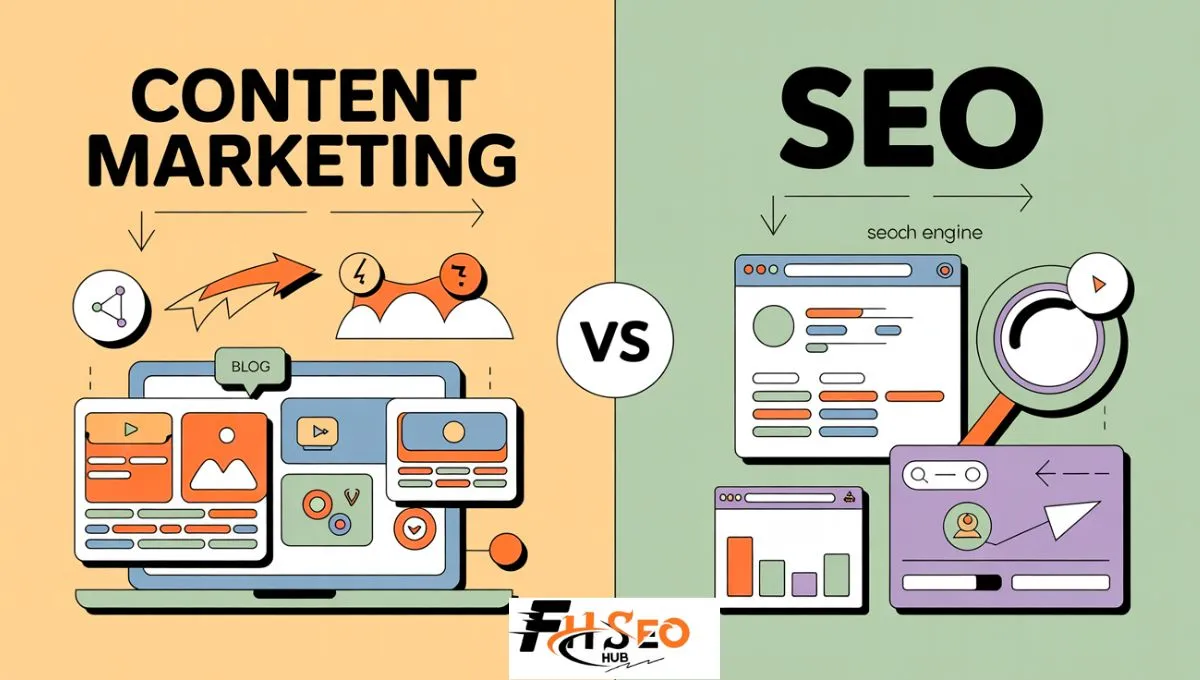
Content marketing creates useful material that builds trust and demand. SEO makes that material easy to find in search engines and AI answers. At FHSEOHub we treat them as one system rather than competing tactics so content earns attention and search delivers the right visitors.
Content marketing answers what to create and for whom. SEO answers how people find it. Together they produce pages that rank and convert. Running either alone leaves results incomplete.
What content marketing does
Content marketing plans and publishes material that helps a specific audience at different stages of their decision. It answers questions, reduces doubt, and builds confidence. Formats include blog posts, guides, case studies, newsletters, and videos.
Success shows up as engagement, repeat visits, newsletter growth, and leads. Distribution through email, social, and partner channels matters as much as publishing. FHSEOHub builds content that matches buyer intent and includes clear next steps so readers know what to do next.
What SEO does
SEO makes a site easy for search engines and AI tools to crawl, understand, and surface. It covers on-page optimization (titles, headings, internal links), technical SEO (speed, crawlability, indexing), and off-page signals (links and mentions).
Success shows up as impressions, rankings, click-through rate, and organic traffic. Technical issues can block even strong content from ranking. FHSEOHub handles the technical and on-page foundation so content has a clear path to visibility.
Key differences between content marketing and SEO
Content marketing optimizes for the human reader. It focuses on usefulness, clarity, and trust. SEO optimizes for the systems that decide visibility. It focuses on intent matching, site structure, and external signals.
Content marketing can sometimes work through owned channels such as a newsletter or podcast without heavy SEO. SEO rarely works well without content worth ranking. Most businesses need both. FHSEOHub integrates the two so pages are both useful and findable.
How content marketing and SEO work together
Search intent research identifies what people already ask. Content is written to answer those questions clearly. On-page SEO structures the page so both people and machines can follow it. Internal links and technical health help the page get discovered and indexed.
Topic clusters connect related pages so authority builds around a subject. FHSEOHub starts with intent research, produces the content, and applies the technical and on-page work so the system compounds over time.
The role of AI search
AI Overviews and AI chat tools answer many queries directly. They favor content that is accurate, well structured, and easy to cite. This raises the value of both clear content and solid technical foundations.
Pages that open with direct answers and use clean headings have a better chance of being referenced. FHSEOHub writes and optimizes with both traditional rankings and AI citation in mind so clients gain visibility across formats.
How FHSEOHub approaches both
We begin with audience and intent research so topics match real demand. Content is produced with clear structure and proof. On-page and technical SEO are applied from the start rather than added later. Reporting tracks both engagement and search performance.
Clients receive a connected system rather than separate content and SEO projects. The result is content that earns trust and pages that search engines and AI tools can find and cite.
FAQs
Content marketing creates useful material that builds trust and demand. SEO makes that material findable in search engines and AI answers. FHSEOHub runs both as one system.
Yes for most businesses. Content marketing can sometimes work through owned channels alone, but SEO needs content worth ranking. Together they produce better results.
They should start together. Intent research guides what to create. Technical and on-page work makes the content discoverable. FHSEOHub integrates both from the beginning.
AI tools favor clear, accurate, well-structured content. Strong content and solid technical foundations both improve the chance of being cited in AI answers.
We research intent, produce useful content, apply on-page and technical SEO, and report on both engagement and search performance so the system stays connected.
Yes in some cases, such as a strong newsletter or podcast with its own audience. For most websites, SEO is needed so people can find the content through search.
Distribution can create early engagement in weeks. Search rankings typically take two to four months to show meaningful movement and then compound. FHSEOHub tracks both timelines.