
Marketing for Optometrists: A 2026 Growth Guide for Independent Practices

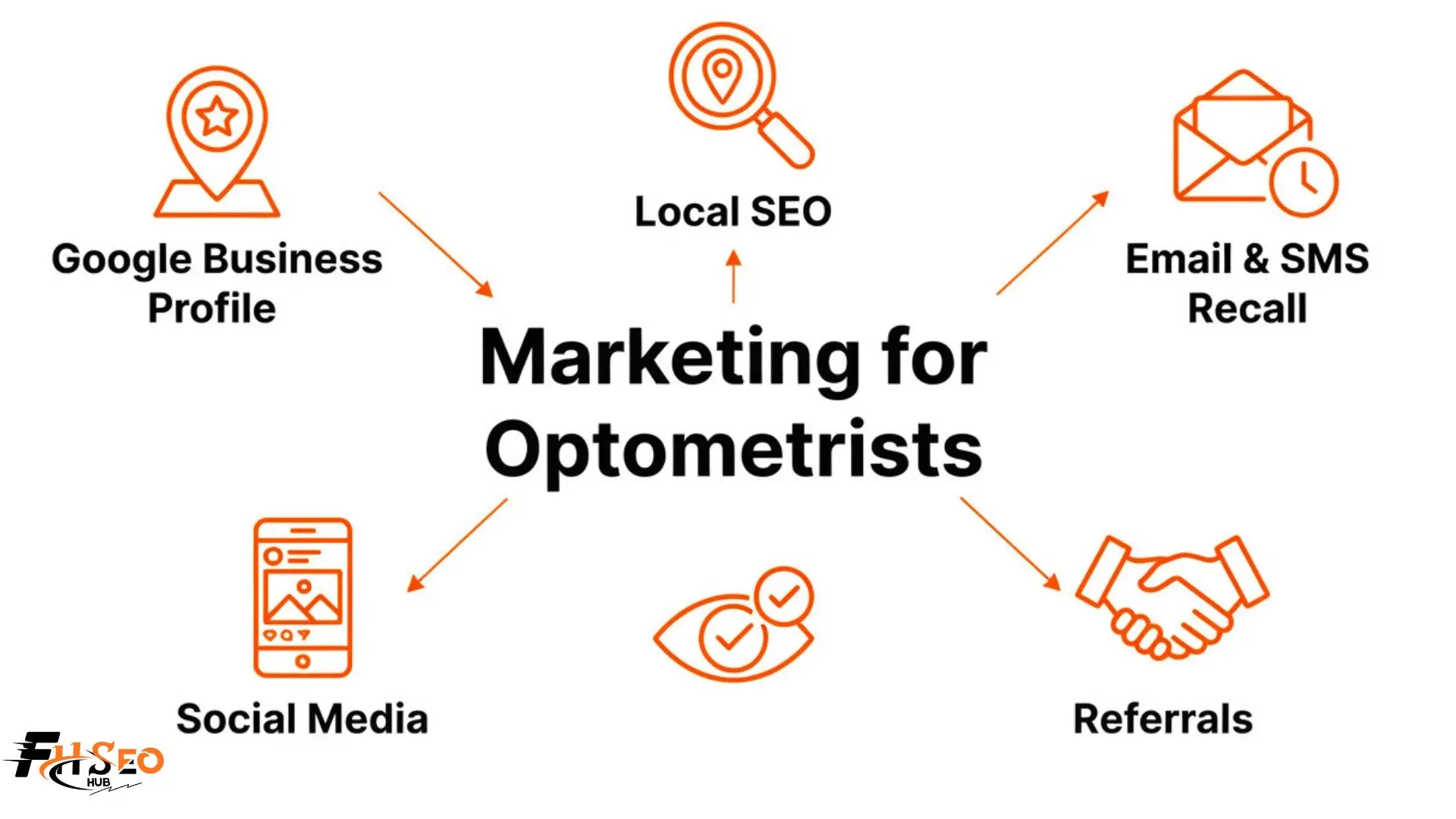
Marketing for optometrists means building a system that attracts new patients, keeps current ones coming back, and earns trust in your local area. The strongest approach combines a strong Google Business Profile, local SEO, email and SMS recall, social content, and referral programs. Practices that treat these as one connected system grow faster than those relying on a single tactic.
Independent optometry practices now compete with national chains and online retailers that spend heavily on digital ads. The U.S. optometry market reached roughly 23.2 billion dollars in 2026, and that competition keeps rising. Standing out requires more than a nice website. It requires a clear plan built around how patients actually search and choose a provider today.
What Marketing for Optometrists Includes
Marketing for optometrists is not a single tactic. It is the full set of systems your practice uses to get found, build trust, and stay top of mind between visits. That includes your Google presence, your website, your patient communication, and your reputation.
A strong plan connects every piece so effort in one area supports the others. A five star review strengthens your Google Business Profile. A helpful blog post supports your local SEO. A recall email brings back a patient who might otherwise forget their annual exam. None of these work well in isolation.
Why Most Optometry Practices Struggle With Marketing
Most practices struggle because marketing happens in bursts instead of as a steady system. One week the front desk posts on Instagram. The next month nothing happens. A boosted Facebook post runs for three days, then stops.
This pattern is common because practice owners are already managing clinical care, insurance, and staffing. Marketing gets squeezed into whatever time remains. Without a documented plan tied to clear goals, none of that effort builds on itself over time.
The other trap is leaning too long on word of mouth. Referrals from happy patients matter, but they eventually plateau. Independent research now shows online search has replaced referrals as the top way patients find a new doctor, so a practice that only relies on referrals is competing with one hand tied behind its back.
Answer Three Questions Before Choosing a Marketing Channel
Before spending on ads or hiring an agency, define your patient, your differentiator, and your goal. These three answers shape every channel decision that follows.
First, who are you serving. Families, seniors, young professionals, and pediatric patients each respond to different messages and channels. Second, what do you offer that others do not. A practice built around dry eye treatment or myopia management needs a different message than one competing on convenience. Third, what do you want to achieve. A goal like book 30 new patients by July is measurable. Get more patients is not.
Keep your messaging consistent across your website, social media, and in-office experience. Patients who see a mismatch between your Google profile and your Instagram often assume the practice is disorganized before they ever call.
Your Google Business Profile Is Your Most Valuable Free Asset
A complete, active Google Business Profile determines whether your practice appears in the Local 3-Pack when someone searches eye doctor near me. This one listing often drives more new patient calls than any paid channel.
Roughly 77 percent of patients begin researching care through a search engine before booking. A strong profile does several things at once. It shows accurate hours, address, and contact details, which protects your local ranking. It displays reviews that new patients read before calling. It gives you a Posts feature to share seasonal reminders and eye health tips. It lets patients request an appointment directly from the search results.
The most overlooked feature is Posts. Practices that share weekly updates, back to school exam reminders, or simple eye health tips inside their profile tend to see stronger engagement and better local visibility. Respond to every review you receive, including the negative ones, since a thoughtful reply often does more for trust than the review itself.
Local SEO for Optometrists Explained
Local SEO for optometrists is the ongoing work of making your website and online listings visible when nearby patients search for eye care. It works alongside your Google Business Profile rather than replacing it.
Nearly 84 percent of patients check online reviews before booking healthcare, and more than half read at least six reviews first. Effective optometry SEO covers several connected pieces.
How AI Search Is Changing Patient Discovery
A growing share of patients now use AI tools alongside Google to find a provider. Recent survey data shows about 70 percent of patients are open to or already using AI tools when researching a doctor, and roughly a quarter say an AI recommendation directly shaped their choice.
This is where Generative Engine Optimization, often shortened to GEO, comes in. When a patient asks an AI assistant to find a good optometrist nearby, the tool pulls from web content that reads as clear and trustworthy. Practices that publish direct FAQ answers, cite credible eye health information, and keep their online details accurate have a real edge here, since most practices have not started doing this yet.
Email and SMS Marketing Bring Patients Back
Email and SMS are the two highest return retention channels available to an optometry practice, and both stay underused by independent owners. A dormant patient recall program alone can recover a meaningful share of patients who have drifted away.
Effective email marketing works best when it is segmented and personal. Send annual exam reminders to patients who have not visited in 11 to 13 months. Run seasonal campaigns around back to school exams or spring allergy season. Reference the patient’s name and last visit date instead of sending a generic blast. A monthly newsletter with one health tip, one service highlight, and one booking link keeps your name visible without feeling pushy.
SMS reminders cut no shows significantly, and a missed appointment can cost a practice well over a hundred dollars in lost revenue. Two way texting lets patients confirm, cancel, or reschedule without a phone call, which patients increasingly expect. The real advantage comes from automation. Most modern practice management and EHR platforms let you build recall sequences that run without daily effort once set up.
Which Social Media Platforms Work Best for Optometrists
The right platform depends entirely on which patients you want to reach, not on which platform feels trendy.
| Platform | Best For | Best Content Type |
| Families, ages 35 to 65+ | Educational posts, promotions | |
| Ages 25 to 45, eyewear showcase | Reels, photos, Stories | |
| TikTok | Ages 18 to 35, awareness | Short educational videos |
| YouTube | All ages, long-term trust | How-to and FAQ explainers |
| Physician networking | Thought leadership |
Short videos answering questions like when should my child get their first eye exam or do blue light glasses work tend to perform well on both Instagram Reels and TikTok. Video consistently outperforms static text and images for patient engagement.
Facebook ads still work when targeted tightly by age, location, and interest. For a back to school push, targeting parents within a ten mile radius of your practice tends to be one of the more cost effective paid tactics available. Behind the scenes clips, staff introductions, and patient success stories with written consent add a human feel that a corporate chain cannot copy.
Referral Programs and Community Events Build Long-Term Growth
Referral programs work because patients trust other patients more than they trust an ad. Keep the offer simple and easy to explain.
Offer a discount on frames, a free lens upgrade, or an accessory credit for each referred patient. Train every front desk staff member to mention the program consistently, since a program nobody talks about produces nothing. Send occasional email reminders to your patient list explaining how it works.
Community events and school partnerships build long-term reputation in a way ads cannot replicate. Free vision screenings at local schools, sponsoring a youth sports team, or speaking at a local wellness fair all build trust over time.
Relationships with local physicians for co-management referrals remain underused by most practices. A warm introduction to a pediatrician or family doctor can turn into a steady referral pipeline, since those providers need trusted eye care partners for their own patients. Even small branded items like lens cleaning cloths keep your name visible in a patient’s home for months at almost no cost.
How Much Should an Optometry Practice Spend on Marketing
Most independent practices spend somewhere between 1 and 5 percent of gross revenue on marketing once established. Newer practices building a patient base from scratch often need to spend closer to 8 to 10 percent in the first year or two.
| Practice Stage | Recommended Budget | Priority Channels |
| New practice (Year 1 to 2) | 8 to 10% of revenue | GBP, local SEO, paid ads, social |
| Growing practice | 3 to 5% of revenue | SEO, email, video, social |
| Established practice | 1 to 3% of revenue | Retention, referrals, content |
The exact number depends on your local competition and growth goals. For a new practice, the cost of an empty schedule almost always outweighs the cost of consistent marketing. Free channels like your Google Business Profile, recall emails, and organic content should run regardless of your paid budget size.
Common Mistakes Optometry Practices Make With Marketing
The same handful of mistakes show up again and again in underperforming practices. Watch for these warning signs in your own marketing.
Posting inconsistently, then wondering why social media brings no new patients. Ignoring negative reviews instead of replying with a calm, professional response. Sending patients to a generic homepage from a paid ad instead of a dedicated landing page with a clear booking button. Treating email as a once a year postcard instead of an ongoing recall system. Skipping directory cleanup, which leaves outdated hours or a wrong phone number live on sites like Yelp or Healthgrades for months.
Fixing even two or three of these usually produces a visible change within a few months.
Conclusion
Marketing for optometrists works best as one connected system, not a set of disconnected tasks. Start with your Google Business Profile and a patient recall program, since those two alone produce results within about 60 days. Layer in local SEO, social content, and community outreach as your capacity grows. Pick one action from this guide and start this week.
FAQs
A complete Google Business Profile paired with a consistent patient recall email and SMS system produces the fastest, most measurable results. These two channels are free or low cost and directly influence booking decisions.
Most new patients arrive through local search, so a strong Google Business Profile, positive reviews, and a fast mobile-friendly website matter most. Local service pages and helpful blog content add long-term visibility on top of that foundation.
Yes, especially for high intent searches like emergency eye exam near me or pediatric optometrist in your city. Send ad clicks to a dedicated landing page with a visible booking button, not your homepage.
Ask in person right after a positive appointment, since that is when patients are most willing. Send a simple text or email link within a day of the visit, and respond publicly to every review you receive.
Clear service pages for each condition you treat, an online booking option, current hours and location, real patient reviews, and fast load times on mobile. A cluttered or outdated site quietly costs new patient calls every day.
Segmented recall emails targeting patients overdue for an annual exam tend to work best, along with seasonal reminders and a simple monthly newsletter. Personalizing with the patient’s name and last visit date improves response rates.
Start with a complete Google Business Profile and local SEO service pages, since those drive the fastest visible results. Layer in paid local ads and a referral program once your booking calendar has room to grow.


