
What Is Equifinality? A Clear Explanation with Real Examples

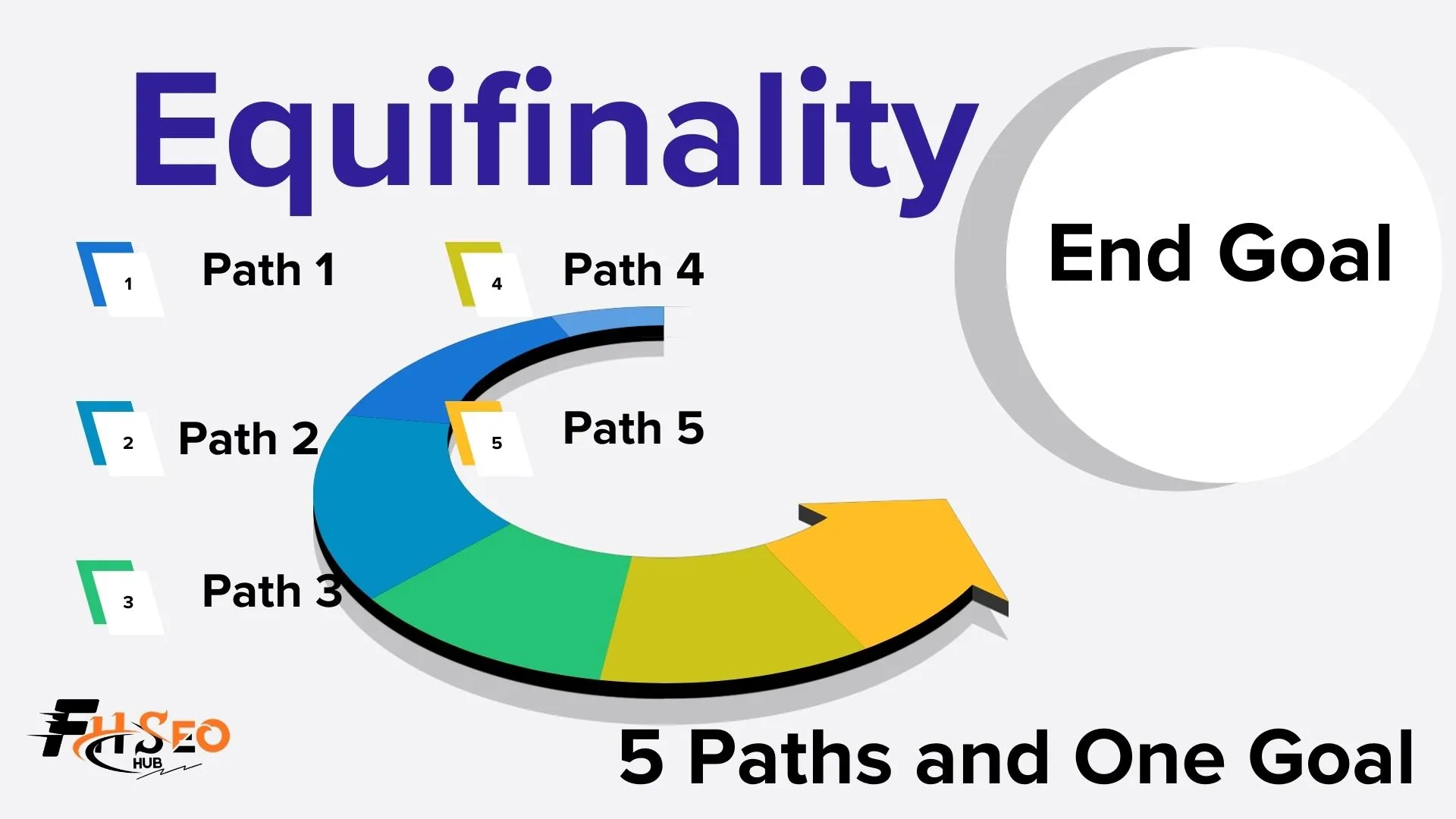
Equifinality is the principle that different paths, starting conditions, and methods can all lead to the same final outcome. Rooted in General Systems Theory, it applies to business strategy, psychology, ecology, and leadership. The core idea is simple: in an open system, the destination stays fixed even when the journey looks completely different.
Word “Equifinality” Historical Background?
The term was first introduced by Hans Driesch, a German biologist and philosopher, who described it as isotelesis: the intelligent direction of effort toward achieving an end. Driesch observed that biological organisms could reach the same mature form even when early developmental conditions were disrupted or altered.
Ludwig von Bertalanffy, an Austrian biologist working in the mid-20th century, later brought the concept into General Systems Theory. His work formalized equifinality as a defining property of open systems and gave it the academic foundation it carries today. That academic foundation makes it a nice idea. It is also a testable, documented principle that holds across biology, psychology, business, and environmental science.
Open Systems vs. Closed Systems: Why the Difference
The equifinality principle only applies to open systems. Understanding why requires a quick look at what separates the two.
| Open System | Closed System | |
| Interacts with environment | Yes | No |
| Outcome depends on | Process, adaptation, feedback | Initial conditions only |
| Equifinality applies | Yes | No |
| Real-world example | A company, a living organism | A sealed chemical reaction |
In a closed system, the starting point determines everything. Change the inputs and the output changes with them. There is no flexibility.
In an open system, a business can start with no funding or with millions in venture capital. A person can grow up in poverty or privilege. The endpoint, whether that is profitability, resilience, or health, can still be the same.
Equifinality vs. Multifinality: What Is the Difference?
These two concepts are frequently confused, and clearing them up is worth the effort.
Equifinality says: many different paths, one outcome. Multifinality says: one starting point, many different outcomes.
| Equifinality | Multifinality | |
| Focus | Different starts, same end | Same start, different ends |
| Direction | Converging | Diverging |
| Business example | Walmart and Costco, different models, both profitable | Two identical startups launch; one scales, one fails |
| Psychology example | Different childhoods produce similarly resilient adults | The same early trauma leads to different disorders in different people |
| Key takeaway | The goal does not need a fixed path | The same input does not produce a fixed result |
Both concepts sit inside systems thinking and both come from the same school of thought. They are essentially mirror images of each other. Equifinality converges toward a single endpoint. Multifinality diverges away from a single starting point. Knowing both helps you think more clearly about risk, strategy, and causal pathways in any complex situation.
Equifinality in Psychology and Human Development
Developmental psychopathology researchers, particularly Cicchetti and Rogosch, used equifinality to explain why people with completely different life histories can arrive at the same psychological outcomes. A child who experienced early neglect and a child who grew up in a stable home can both develop strong emotional regulation in adulthood through entirely different developmental trajectories and protective factors.
Conversely, the same risk factors in childhood can produce completely different outcomes in different people. That second observation is multifinality at work.
The practical implication for psychology is significant. It means no single causal pathway guarantees a specific outcome. Heterogeneity in how disorders and strengths develop is the rule, not the exception. Treatment and support can come from multiple angles. Recovery does not follow one script.
Cognitive diversity connects here too. People think differently, process differently, and reach conclusions through different reasoning paths. Equifinality validates that. It explains why a team with different thinking styles can still land on the same high-quality decision through different internal routes.
Equifinality in Business: Strategy, Leadership, and Operations
This is where the principle earns its weight in practical terms.
Walmart built dominance through everyday low pricing and enormous product variety. Costco built dominance through bulk purchasing, limited selection, and membership loyalty. Two completely different models. Same result: sustained profitability and market leadership. That is a simple example of equifinality.
Airbnb disrupted hospitality with a decentralized, peer-to-peer platform. Traditional hotel chains built the same market position through centralized brand consistency and physical infrastructure. Different systems. Same end goal of providing accommodation at scale.
In operations and workflow, the same logic applies. A team running Kanban and a team running Agile sprints can both deliver high-quality products on time. Neither method is universally correct. Both can reach the same destination.
Strategic flexibility comes from genuinely accepting this. When a business leader stops looking for the one right path and starts asking which paths are available, the whole approach to decision-making shifts. Roadblocks stop being dead ends and failed strategies become data rather than verdicts.
Resilience is built into that mindset. If one approach stops working, equifinality makes the case that other valid approaches still exist. That is not wishful thinking. It is a documented property of how open systems function.
Equifinality in Leadership
A published academic paper from the National Counterterrorism Innovation, Technology, and Education Center makes a direct case for applying equifinality to leadership diversity. The argument centers on the Charismatic, Ideological, and Pragmatic (CIP) model, which identifies three distinct leadership styles, each fundamentally different in how it motivates people and frames goals.
All three can produce highly effective, high-trust teams. Same outcome, completely different methods.
Organizations that demand one leadership style tend to create unnecessary friction when strong leaders with different styles are present. Applying the equifinality principle allows those differences to become strengths rather than sources of conflict.
Equifinality in Research, Ecology, and Environmental Science
In hydrology, researcher Keith Beven applied equifinality to parameter modeling, observing that different sets of model parameters can produce equally valid simulations of real-world watershed behavior. This has significant implications for environmental forecasting.
In sustainability and socio-ecological systems, equifinality supports the argument that rigid, singular solutions to environmental problems are rarely necessary or effective. Communities starting from vastly different ecological and economic conditions can still converge on the same sustainability outcomes through different interventions and strategies.
Why Equifinality Changes How You Should Think
The concept has a direct practical effect on how you approach decisions, problems, and goals. Most people, when they hit a wall, assume the goal is the problem. Equifinality says the goal is fine. The path was the issue. And there are other paths. That reframe is not trivial. It stops people from abandoning valid goals prematurely. It stops organizations from treating a failed strategy as a verdict on the entire objective. It stops researchers from assuming that one causal chain is the only relevant one.
For business process management, it means workflows deserve regular re-evaluation not because they are wrong but because better paths may have opened up since the original route was chosen.
For individuals, it means a career detour does not disqualify a destination. Two people with completely different educational backgrounds can reach the same professional outcome. Different entry points, same end state.
Putting It Together
Equifinality is one of those ideas that sounds academic until you sit with it for a moment. Then it starts showing up everywhere. In the company that scaled without outside investment. In the patient who recovered through an unconventional treatment path. In the leader who built a loyal team through quiet pragmatism rather than charismatic vision. The principle does not say all paths are equal. It says the destination does not require one specific path. That distinction matters a great deal when you are choosing how to move forward.
FAQs
What is the meaning of equifinality?
Equifinality means that different paths, starting conditions, and processes can all lead to the same final outcome. It is a property of open systems, where the endpoint stays the same regardless of how you get there.
What is a simple example of equifinality?
Two companies reach profitability through completely different business models. One uses low-cost pricing; the other uses premium membership. Both arrive at the same financial outcome through different routes.
What is equifinality vs. multifinality?
Equifinality means many paths lead to one outcome. Multifinality means one starting point can lead to many different outcomes. They are opposite concepts that both describe how open systems behave.
Who introduced the concept of equifinality?
Hans Driesch coined the term. Ludwig von Bertalanffy later formalized it within General Systems Theory, giving it the academic framework used in modern research.
What is isotelesis?
Isotelesis is another name for equifinality, originally used by Hans Driesch. It means the intelligent direction of effort toward achieving an end, regardless of which specific route is taken.
What is equifinality in psychology?
In developmental psychopathology, equifinality describes how individuals with different life histories, risk factors, and developmental trajectories can still arrive at the same psychological outcomes. It means no single causal pathway determines a fixed result.
What is equifinality in research?
In research, equifinality acknowledges that multiple explanatory models or parameter sets can produce equally valid results. It argues against assuming one model or one causal chain is definitively correct.
What is equifinality in business?
In business, equifinality supports the idea that different strategies, organizational structures, and operational methods can all produce the same desired outcomes. It encourages strategic flexibility and discourages rigid adherence to one approach.
Is equifinality only relevant to large organizations?
No. The principle applies to individual decision-making, small teams, startups, and solo entrepreneurs just as much as it applies to large corporations. Any goal with more than one viable path benefits from this kind of thinking.
What is the principle of equifinality in systems theory?
In systems theory, equifinality is the principle that open systems can reach the same final state from different initial conditions through different developmental paths. It contrasts with closed systems, where the outcome is entirely determined by the starting point.