SaaS SEO Tools in 2026: The Smartest Stack Guide by Growth Stage

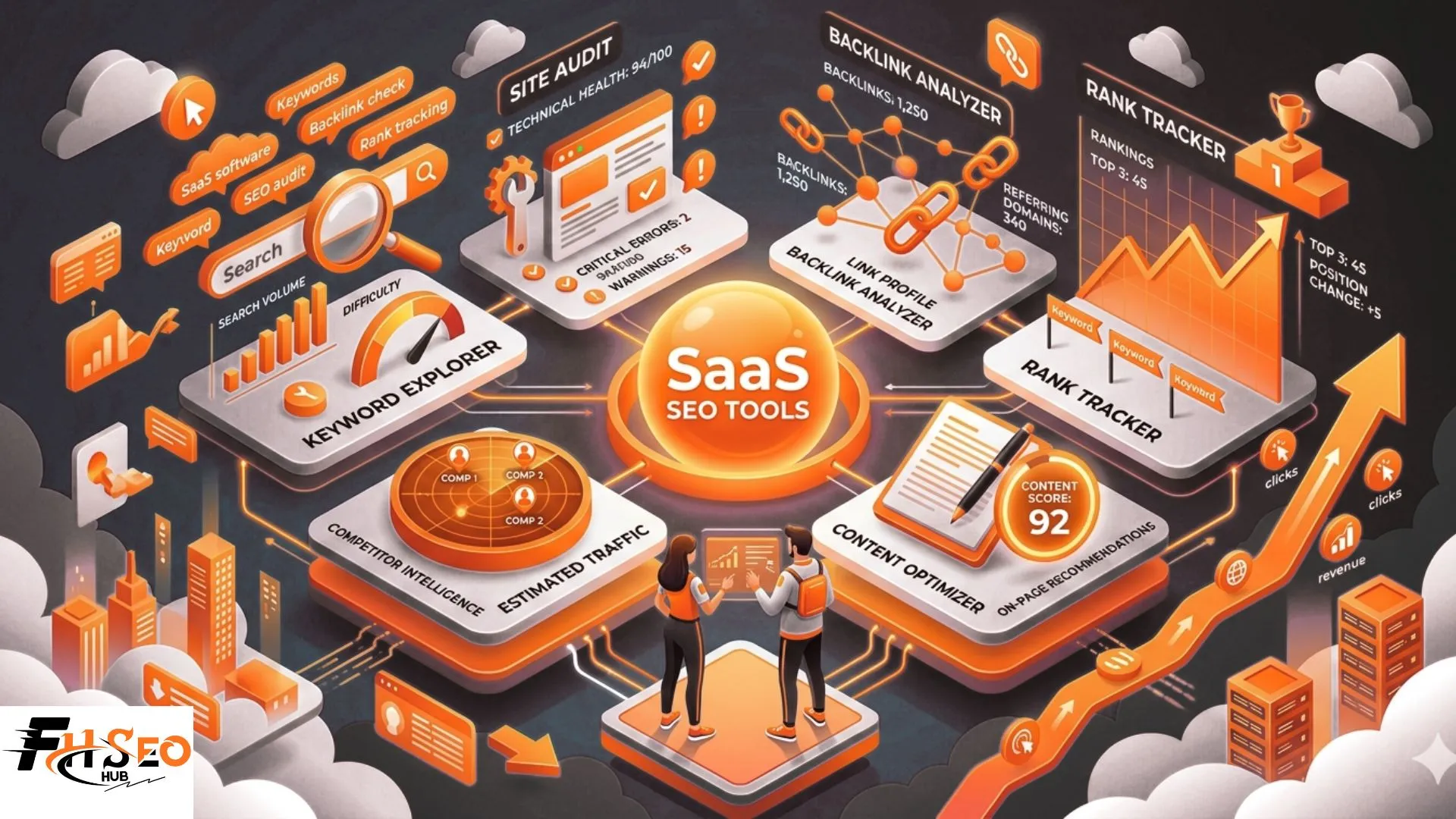
The best SaaS SEO tools in 2026 are Ahrefs, Semrush, Surfer SEO, Screaming Frog, Google Search Console, and Clearscope. Together they cover keyword research, content optimization, technical audits, and AI search visibility. For bootstrapped teams, LowFruits, Ubersuggest, and Google Analytics 4 form a strong free starter stack.
What are SaaS SEO tools?
They are cloud-based, subscription-based software platforms built to help software as a service companies rank higher in search. They handle keyword research, technical audits, backlink analysis, content optimization, and performance tracking. In 2026, the strongest ones also track visibility across AI answer engines like ChatGPT, Perplexity, and Google AI Overviews.
How are they different from regular SEO tools?
They are built for long sales cycles, product-led growth, and feature-focused pages like comparison pages, integration pages, and use-case pages. Regular SEO platforms chase generic rankings. SaaS-focused tools tie organic traffic to real pipeline metrics like trial signups, demos, and MRR.
Why do SaaS companies need a specialized stack?
Generic platforms miss the fundamentals of product-led SEO. They track traffic but ignore feature pages, integration directories, and AI search visibility. A smart stack connects keyword data to MRR and qualified leads, not just vanity metrics.
The right stack have these abilities:
What are the best SaaS SEO tools in 2026?
The top picks right now are Ahrefs, Semrush, Surfer SEO, Clearscope, Screaming Frog, SE Ranking, Google Search Console, Google Analytics 4, LowFruits, and Otterly AI. Each one owns a specific job. But the main thing is how we stack them or buy a single all-in-one suite that does everything.
Here is how they compare.
| Tool | Best For | Starting Price |
| Ahrefs | Backlink and competitor research | $129/month |
| Semrush | All-in-one research and tracking | $139.95/month |
| Surfer SEO | Content optimization | $99/month |
| Clearscope | Content quality scoring | $189/month |
| Screaming Frog | Technical audits | Free to $279/year |
| SE Ranking | Budget audits and tracking | $65/month |
| Google Search Console | Performance tracking | Free |
| LowFruits | Low-competition keywords | $21/month |
| Otterly AI | LLM visibility tracking | $29/month |
1. Ahrefs ($129/month)
The industry leader for backlink analysis and competitor research. It has the largest live backlink index, a solid Keywords Explorer, and a Content Gap tool that shows exactly which keywords your competitors rank for that you do not. Best for SaaS teams focused on link building and competitive intelligence.
2. Semrush ($139.95/month)
The most complete all-in-one SEO and marketing platform. It covers keyword research, site audits, rank tracking, backlink analysis, content optimization, and even PPC and social data. In 2026 it also added AI visibility tracking, which makes it a strong one-stop pick for SaaS teams that want fewer tools.
3. Surfer SEO ($99/month)
A data-driven content optimization platform that scores your draft in real time against top-ranking pages. It integrates directly with Google Docs and WordPress, so writers get live feedback on keyword coverage, structure, and word count. Popular with SaaS content teams shipping weekly articles.
4. Clearscope ($189/month)
A premium content optimization tool known for clean reports and high accuracy. It uses AI-powered analysis of top SERPs to recommend terms, headings, and ideal content length. It also tracks visibility on Google and AI chatbots like ChatGPT and Gemini, which is a growing need in 2026.
5. Screaming Frog (Free to $279/year)
A desktop crawler that behaves like a search engine to find technical SEO issues. It catches broken links, duplicate content, redirect chains, missing meta tags, and schema errors. The free version crawls up to 500 URLs per domain, which is enough for most early-stage SaaS sites. According to my opinion it is the best website audit tool.
6. SE Ranking ($65/month)
A cloud-based SEO platform that balances power and price. It covers keyword research, site audits, backlink monitoring, rank tracking, and white-label reporting. A smart pick for budget-conscious SaaS teams that want Semrush-style features without the price tag.
7. Google Search Console (Free)
Google’s official performance and indexation tool. It shows which queries drive traffic, impressions, clicks, average positions, Core Web Vitals, mobile usability, and indexing errors directly from Google’s own data. Non-negotiable for every SaaS site, no matter the size.
8. Google Analytics 4 (Free)
Google’s free analytics platform that tracks visitor behavior, conversions, and traffic sources. It ties organic traffic to signups and revenue when you set up custom conversion events. Pair it with GSC for the clearest picture of search to conversion performance.
9. LowFruits ($21/month)
A niche keyword research tool built for finding low-competition, long-tail keywords the big platforms overlook. It scores SERP weakness and flags “low-hanging fruit” terms where small sites can realistically rank. Popular with bootstrapped SaaS founders and DIY SEOs.
10. Otterly AI ($29/month)
A generative engine optimization (GEO) tool built for 2026 search. It tracks how often your brand appears in ChatGPT, Perplexity, Claude, and Google AI Mode answers for target prompts. It helps to you measure LLM visibility and adjust content for answer engine optimization before competitors catch on.
Which ones are best for keyword research?
If you are early stage, Google Keyword Planner and Google Trends cover the basics for free. Exploding Topics is worth a look for spotting rising terms before volume blows up.
Which ones help with content optimization?
Which ones SEO tool handle technical audits?
Which ones are best for backlink analysis?
Which SaaS SEO tool track rankings and performance?
Which tools optimize for AI search and GEO?
Otterly AI, Profound, Semrush AI tracking, and Clearscope lead generative engine optimization. They monitor LLM visibility across ChatGPT, Perplexity, Claude, Gemini, Grok, and Google AI Mode. This matters because AI search referral traffic now drives real signups for B2B software, and most competitors are not tracking it yet.
How do you track LLM visibility for a SaaS product?
Use Otterly AI or Profound to monitor how often your brand appears in ChatGPT, Perplexity, Claude, and Google AI Mode answers. Test branded and unbranded prompts, log citation frequency, and compare over time. Semrush added AI visibility tracking in 2026, so you can layer it on top of your existing setup.
As you know our goal is answer engine optimization. Rank where buyers ask questions, even when that question never touches a Google results page.
How do you build a stack by growth stage?
Match tools to your stage. But usually:
Which tools support programmatic SEO?
Programmatic SEO needs a connected setup. Use Ahrefs or Semrush for keyword research, Keyword Insights for clustering, Frase for outlines, Webflow for page building, and Google Search Console to monitor indexation. This scales integration pages, use-case pages, and feature pages across thousands of keywords without losing quality.
If you sell software with many integrations, locations, or templates, this is where real compounding traffic comes from.
How do you choose the right tool for your team?
Pick platforms that match your real job. Check ease of use, integration with your CMS, and whether pricing scales with your team. Most importantly, make sure the tool connects to pipeline metrics, not just traffic. A platform that shows rising impressions but no signups is costing you money, not making it.
The takeaway
At your initially state as new launch don’t try to use all tools which have discussed above. Build a stack of SaaS SEO tools that fits your stage, budget, and the way buyers actually search in 2026. Start with free tool then add Ahrefs or Semrush when you have a content plan, layer in Surfer or Clearscope when volume grows, and start tracking LLM visibility with Otterly AI before your competitors do. The edge this year goes to teams who cover both traditional search and AI answer engines.


