What Is a Reciprocal Link in SEO? The Complete 2026 Guide

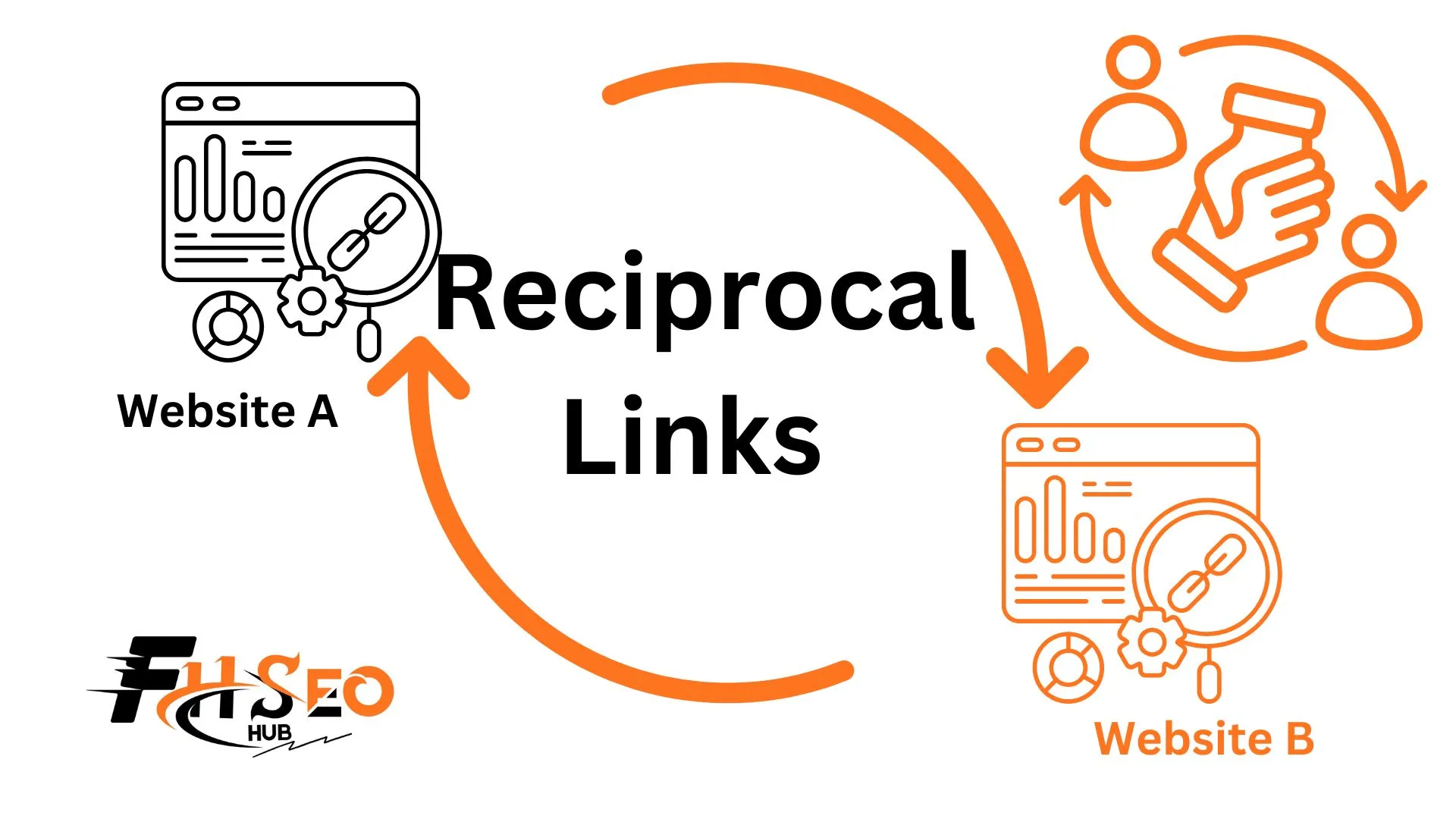
A reciprocal link in SEO is a two-way link between two websites where Site A links to Site B and Site B links back to Site A. It happens naturally when both sites find each other’s content genuinely useful or deliberately through a mutual agreement. Google accepts natural reciprocal links but flags excessive or irrelevant exchanges as link spam.
What Is a Reciprocal Link in SEO?
A reciprocal link in SEO is a mutual link between two websites. Site A links to Site B and Site B returns that link. The connection can form organically when two site owners independently value each other’s content or it can be arranged deliberately through a link exchange agreement.
The important distinction is between a reciprocal link and a regular backlink. Every reciprocal link is a backlink but not every backlink is reciprocal. A one-way link carries stronger authority signals because it represents an unreciprocated endorsement. Google values these most, which is why reciprocal links need to be used carefully.
Link equity still flows through reciprocal links when they are relevant and natural. The problem arises when the exchange looks engineered rather than organic.
What Are the Different Types of Reciprocal Links?
There are four types of reciprocal links worth understanding:
Natural reciprocal links form without any prior agreement. Two sites independently find each other’s content valuable and link to each other. Google sees this as a healthy sign of a connected niche community.
Artificial reciprocal links are manually arranged solely for SEO gain, without genuine content alignment. These are the ones that raise red flags in a backlink profile.
Paid reciprocal links involve money changing hands for placement. This directly violates Google’s Webmaster Guidelines and creates real penalty risk for both parties.
3-way link exchanges work differently. Site A links to Site B, and Site B links to Site C which is owned or connected to Site A’s owner. This breaks the direct mutual loop that Google’s algorithm scans for. It carries lower risk than a direct exchange, but only when the links are topically relevant and kept in small volume. It is not a guaranteed safe strategy. Natural links need no action. Artificial ones need careful vetting. Paid ones should be avoided entirely.
What are Examples of Reciprocal Link ?
Real examples make this concrete. Here is how natural reciprocal linking looks in practice:
Fitness and nutrition: A fitness website links to a healthy recipe platform for meal prep ideas. The recipe platform links back in a post about fuelling workouts. Both audiences overlap and both links add genuine value.
Digital marketing partnerships: A marketing agency links to a freelance copywriter under a “Trusted Partners” section. The copywriter lists the agency under “Recommended Services.” Neither link exists purely for SEO. Both help clients find complementary expertise.
SaaS integrations: A project management tool links to its time-tracking integration partner in a product features article. The time-tracking tool links back in its own integrations directory. Both companies share the same user base.
What makes every example above safe is the same: topical relevance, genuine user value and natural placement inside body content. That intent difference is exactly what separates a safe reciprocal link from a risky one.
Are Reciprocal Links Good or Bad for SEO?
It depends entirely on intent, relevance and volume. A few natural, contextually relevant mutual links between complementary sites improve user experience and support domain authority. A large-scale systematic exchange across unrelated sites specifically to manipulate SERP rankings triggers Google Spam Policies and risks a manual penalty.
Here is the decision framework Google actually uses:
| Signal | Google Rewards | Google Flags |
| Intent | Genuine content value for users | Rank manipulation |
| Relevance | Same or adjacent niche | Unrelated topics |
| Volume | Small and selective | Excessive and systematic |
| Anchor text | Natural and varied | Exact-match repeated |
| Placement | Body content contextual | Footer or sidebar only |
| Site quality | Authoritative with real traffic | Spammy or thin content |
| Pattern | Organic and irregular | Coordinated network |
Why Are Reciprocal Links Considered Bad?
Google’s Spam Policies explicitly list “excessive link exchanges or partner pages exclusively for cross-linking” as a policy violation. When a large share of your backlink profile consists of mutual links, Google reads that as an engineered attempt to inflate rankings rather than earned authority.
Keep your reciprocity ratio low. Industry research suggests staying below 20 to 30 percent of your total link profile. If you link out to 100 sites and 80 link back, that pattern raises flags regardless of site quality.
How Do You Build Reciprocal Links Safely?
Safe reciprocal link building rests on four rules:
How Do You Vet a Partner Site?
Before agreeing to any reciprocal link, check five things:
- The site must share your niche or cover closely adjacent topics.
- Its domain authority and domain rating should be solid and not artificially inflated.
- Organic traffic must be real and consistent.
- The backlink profile must show no toxic backlinks or link farm characteristics when audited in Ahrefs or Semrush.
- Site must not be a direct SERP competitor whose rankings you would be boosting at your own expense.
Should Reciprocal Links Be Nofollow or Dofollow?
Most reciprocal links should be dofollow to pass link equity and benefit both sites. Use a nofollow attribute when the link is a paid arrangement, when you are linking as a professional courtesy without strong content alignment, or when you want to maintain link diversity without adding more potential exchange signals to your profile. A natural backlink profile contains a healthy mix of both link types.
How Do You Create a Reciprocal Link?
Creating a safe reciprocal link takes four steps. First, identify a complementary website with relevant content and solid SEO metrics. Second, audit their domain in Ahrefs or Semrush to check for red flags in their backlink profile. Third, send a personalized outreach email that names the specific pages you propose linking to and suggests natural anchor text for both placements. Fourth, once both parties agree, place the link inside existing body content where it genuinely serves readers rather than stuffing it in a footer or sidebar.
Lead your outreach email with content value for both audiences, not “let’s swap links for SEO.” That framing improves acceptance rates and keeps the intent aligned with what Google rewards.
How Do You Monitor and Track Reciprocal Links?
Use the Links report inside Google Search Console to see which sites link to yours and which you link back to. Cross-reference with Ahrefs, Semrush, or Moz to measure what percentage of your backlink profile is reciprocal. If that reciprocity ratio climbs above 30 percent, pause new exchanges and focus on earning one-way editorial links. For toxic reciprocal links you cannot remove manually, submit them to Google’s Disavow Tool.
What Are the Best Alternatives to Reciprocal Links?
Three tactics consistently outperform reciprocal linking without the exchange risk:
Guest posting earns a one-way editorial backlink from a relevant authority site by contributing original content. No mutual obligation required.
Broken link building identifies dead links on strong sites and proposes your content as a replacement. Site owners benefit and you earn a contextual backlink.
Linkable assets such as original data studies, free tools and comprehensive guides attract inbound links organically because people naturally cite genuinely useful resources.
These tactics build link diversity without any exchange pattern that could draw algorithmic scrutiny.
The Takeaway
A reciprocal link in SEO is normal, common and safe when used in small relevant doses. Problems only emerge when volume becomes excessive, relevance disappears or the intent shifts to pure rank manipulation.
Keep your reciprocity ratio under 30 percent of your backlink profile. Vet every partner site using Ahrefs or Semrush before agreeing to any exchange. Place every link inside body content with natural anchor text. Build the majority of your authority through guest posting, broken link building and linkable assets that earn one-way editorial links without any exchange required.