
Infographic Outreach Strategy: How to Pitch, Email & Find Sites for Backlinks

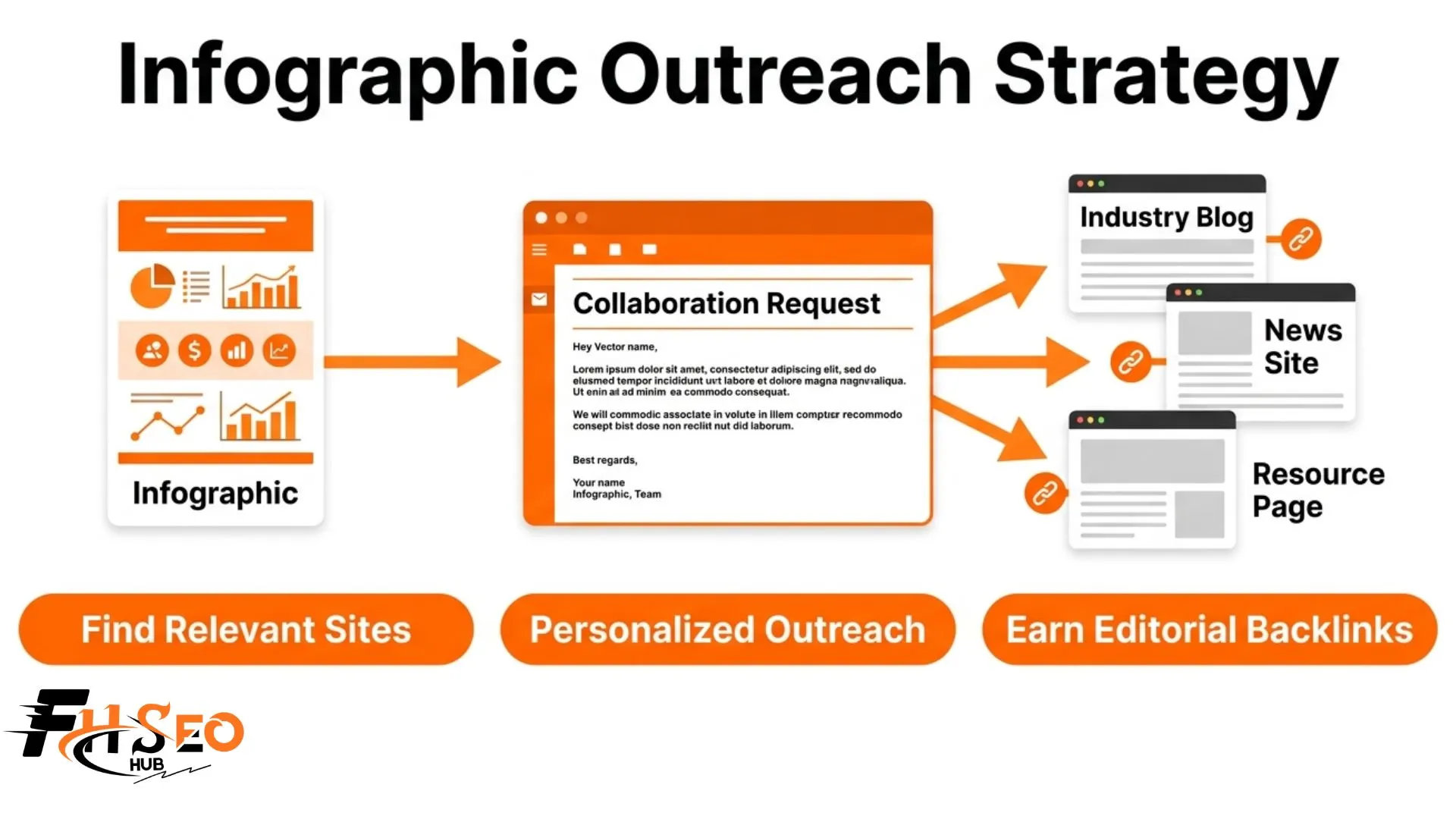
An effective infographic outreach strategy means identifying 30 to 50 topically relevant sites that already embed visual content, sending personalized emails under 150 words that reference each site’s specific content and following up once after 5 to 7 days. Mass submission to directories produces almost no editorial links. Targeted personalized outreach to qualified sites produces 3 to 8 backlinks per campaign.
Most infographic link building campaigns fail at the outreach stage, not the creation stage. The infographic is solid. The email is generic, the targeting is vague and the follow-up never happens. The result is a well-designed visual asset that earns zero backlinks while sitting on a page that nobody ever visits.
How to find the right websites for infographic backlinks
The sites most likely to embed your infographic are those that have already embedded similar infographics, regularly publish resource-heavy content in your niche, or actively cite the data sources your infographic visualizes. Finding these sites before writing a single email is the most important step in the entire process.
The 3 types of sites most likely to embed your infographic
Type 1: Sites that have already embedded infographics on your topic
Search Google Images for your primary topic keyword. The results show infographics that have already earned significant visibility. Click through to find which sites are hosting them. These publishers have already demonstrated willingness to embed visual content in your space.
Type 2: Sites that publish regular roundups or resource content in your niche
Editors who curate resource articles are actively looking for visual assets to include. A well-timed pitch with a relevant infographic solves their content problem. Search Google for “best resources for [your niche]” or “[your niche] statistics roundup” and note the publishers producing this format.
Type 3: Sites already citing the same data sources your infographic visualizes
If your infographic is built around a survey from a specific industry source, find sites that have already cited that source in their articles. These publishers are interested in that data category and may welcome a more visual presentation of the same underlying research area.
How to use Ahrefs and Google search operators to find targets
Open Ahrefs Content Explorer and search for your topic keyword combined with the word “infographic.” Filter by referring domains in descending order. This surfaces the infographics in your niche that have earned the most backlinks and reveals which publisher types are linking to visual content in your space.
For Google search operators, use infographic site:[competitor domain] to find whether a specific publication has embedded infographics before, or “[your topic]” infographic filtered to the past 12 months to find recent relevant publications.
When you run the Ahrefs Backlinks report on your own domain and filter for non-HTML content (target URL file extensions: .jpg, .png, .svg, .webp), you can see which of your existing visual assets already earn links. This pattern reveals which publisher types are already receptive to your content before you approach them for a new infographic.
How to qualify a target site before adding it to your outreach list
Every site on your outreach list should meet four criteria before you invest time writing a personalized pitch:
Sites that fail any of these criteria waste time. A DR 15 site with no organic traffic produces a backlink with minimal authority value. A topically irrelevant site with high DR produces a link that passes weak topical signal regardless of its domain strength.
What is the infographic outreach strategy that works?
The infographic outreach strategy that produces backlinks in 2026 is personalized targeted outreach to 30 to 50 qualified sites, not mass submission to infographic directories. Personalization, timing and a single clear ask separate campaigns that earn links from campaigns that earn silence.
Why mass infographic submission fails
Infographic directory submission to sites like Visual.ly provides minimal SEO value in 2026 for two connected reasons. First, these directories carry low domain authority and pass limited link equity through their listings. Second, Google’s link quality systems have become significantly better at identifying directory-pattern links and reducing their weight in ranking calculations.
Directory submissions are not harmful. They simply do not produce the editorial backlinks that move rankings. A link from a relevant DR 50 publication that embeds your infographic within a body article outperforms 50 directory submissions combined, both in link equity transferred and in referral traffic generated.
The personalized targeted outreach model step by step
A complete infographic outreach strategy follows five sequential steps:
- Build a qualified prospect list of 30 to 50 sites using the targeting criteria from the previous section.
- Find the direct contact for each site: editor, content manager, or site owner. Hunter.io searches by domain and returns associated email addresses with confidence scores.
- Write one personalized opening sentence per email that references something specific about their recent content.
- Send your outreach emails on Tuesday or Wednesday morning in the recipient’s local time zone. Open rates for cold outreach are consistently higher mid-week between 8am and 11am than on Mondays or Fridays.
- Follow up once, 5 to 7 days after the original email, with a brief two-sentence message that adds no pressure.
How to time your outreach for maximum response rates
The optimal timing insight most outreach guides miss: pitch a site editor within 48 to 72 hours of them publishing a relevant article on the same topic as your infographic. When you set up a Google Alert or Ahrefs Content Explorer monitoring alert for your target keywords, you catch fresh publications in your niche in real time. An editor who just published a 2,000-word article on email marketing statistics is significantly more receptive to an email marketing infographic embed request than one who published on that topic four months ago. The topic is active in their editorial cycle, the article is fresh, and adding a visual element improves an asset they are currently invested in.
How to write an infographic outreach email that gets responses
An effective infographic pitch email is under 150 words, opens with a personalized reference to the recipient’s specific content, explains the infographic’s value in two sentences, and ends with one clear ask. Every element beyond these four components reduces the response rate.
The structure of a high-response infographic pitch email
Here is a complete working email template:
Subject: Quick question about your [topic] article
Hi [First Name],
I came across your article on [specific article title or topic] and noticed you referenced [specific statistic or data point they cited].
We recently published an infographic that visualizes [describe the data or process clearly in one sentence] based on our survey of [number] [target audience]. It has already been featured by [publication name if applicable].
I thought it might be a useful addition to your [article title or topic] piece given that your readers are clearly interested in this data.
Would you like me to send it over for consideration?
[Your Name] [Your Title] [Your Website]
This email is under 130 words, references something specific, explains the infographic’s value without overselling it, and asks one clear yes-or-no question. The CTA is low commitment, which produces higher response rates than asking directly to publish or embed.
What to personalize in every email and what to keep templated
Personalize two elements per email: the subject line (reference their specific content) and the opening sentence (name a specific article, statistic or topic they recently covered). Everything from the value statement onward can be templated because it describes the infographic, which is the same for every recipient.
Unlinked infographic reclamation is a related tactic that runs in parallel with outreach. Set up a Google Alert for the title of your infographic. When someone embeds it without linking back to your source page, you have earned embed but not the link. A short email requesting attribution converts a significant percentage of these cases into backlinks because the editor already considers your content valuable enough to use.
The follow-up email: timing, tone and what to say
Send one follow-up email 5 to 7 days after the original. Keep it under 60 words. Do not resend the original email or repeat the full value explanation. A working follow-up reads: “Hi [Name], just checking back on my note from last week about the [topic] infographic. Happy to send it over if it would be useful. No pressure either way.”
That phrasing removes the pressure dynamic of standard follow-up emails while keeping the conversation open. Send only one follow-up. A second follow-up produces diminishing returns and damages the professional relationship you are trying to build.
How to track and scale your infographic outreach
Track infographic outreach results by monitoring new backlinks weekly in Ahrefs, setting up Google Alerts for your infographic title, and running a monthly link reclamation check for embeds without attribution. A well-targeted campaign of 50 personalized emails typically earns 3 to 8 backlinks, which represents a 6 to 16 percent response rate that industry practitioners consider strong for cold outreach.
How to track who has embedded your infographic
In Ahrefs Site Explorer, enter the exact URL of your infographic page and check the Backlinks report weekly. New referring domains appearing after your outreach confirm successful placements. Filter the report by dofollow links to separate editorial placements from directory submissions and identify which publication types respond best to your pitches.
For embeds without links, check Google Images for your infographic periodically after launch. When your infographic appears on a site that you did not pitch or that does not appear in your Ahrefs backlink report, that site has embedded without attributing. These are your easiest reclamation opportunities because the publisher already values the content.
Tools to monitor new backlinks earned from infographics
Three tools cover infographic link monitoring effectively: Ahrefs Backlink Checker for weekly new link notifications, Semrush Backlink Audit for identifying the domain authority and spam signal status of new links and Google Alerts for tracking brand and title mentions across the open web. Set Ahrefs to send weekly email digests for any new links to your infographic URL so you can follow up with embed-without-link cases promptly.
How to scale outreach without losing personalization quality
Scale by building a prospect list template in a spreadsheet that captures domain, DR, contact email, topical relevance score and the specific article you plan to reference in your opening line. With this data pre-populated, you can write the personalized opening sentence for 30 emails in under an hour by working through the list systematically rather than researching each site from scratch at email time.
Infographic social media promotion on LinkedIn and Pinterest runs in parallel to email outreach and produces additional organic discovery. Visual content generates 94% more views than text-only content.
Conclusion
A complete infographic outreach strategy requires four elements executed in sequence. Build a qualified prospect list of 30 to 50 sites using Ahrefs Content Explorer and Google search operators. Write personalized emails under 150 words with one specific reference per email and a single clear ask. Send on Tuesday or Wednesday morning and follow up once at day 5 to 7. Track new links weekly in Ahrefs and reclaim embeds without attribution through Google Alerts monitoring.
Quality of targeting produces better results than volume of emails sent. Twenty highly relevant personalized emails to qualified sites outperform 200 generic submissions to directories every time this comparison has been tested in practice. Infographic outreach strategy is one part of a broader link building system.


