
Complete Guide: Boost Sales with Sequential Storytelling Ads

Not getting sales using your advertisements? You make the content, but you are putting five hundredths of posts in an empty room. Individuals observe them and still do not experience anything. It is because one advertisement cannot create a connection. It is as though you are listening to one line of a movie, or it fails to engage you.
Sequential Storytelling Ads come in here. You do not simply make individual posts, but you narrate something related, which takes your audience on a journey. We will demonstrate how to make the viewers become loyal fans and customers.
What Is Sequential Storytelling in Advertising?
Think of your favorite book. What would happen if you read the chapters in a different order? The story would fall flat. And that is what most ads do to customers: make them feel disjointed and confused. It is sequential storytelling.
You begin by presenting a problem, create suspense, and finally, show your product as the rewarding denouement. It is the way you make a random viewer an invested customer and the relationship that no advertisement could build.
Why Sequential Storytelling Ads Works for Modern Brands?
Sequential storytelling works because it doesn’t sell a product; It builds relationships by drawing the customer’s attention one chapter at a time.
The Power of Emotional Connection
Think about your favorite brand campaigns — Nike, Dove, or Apple. They don’t just sell; they move you. When ads follow a storytelling sequence, people relate, remember, and react. This emotional storytelling transforms casual scrollers into loyal followers. And here’s the truth: emotions drive memory, and memory drives sales.
Creating a Journey, Not Just a Message
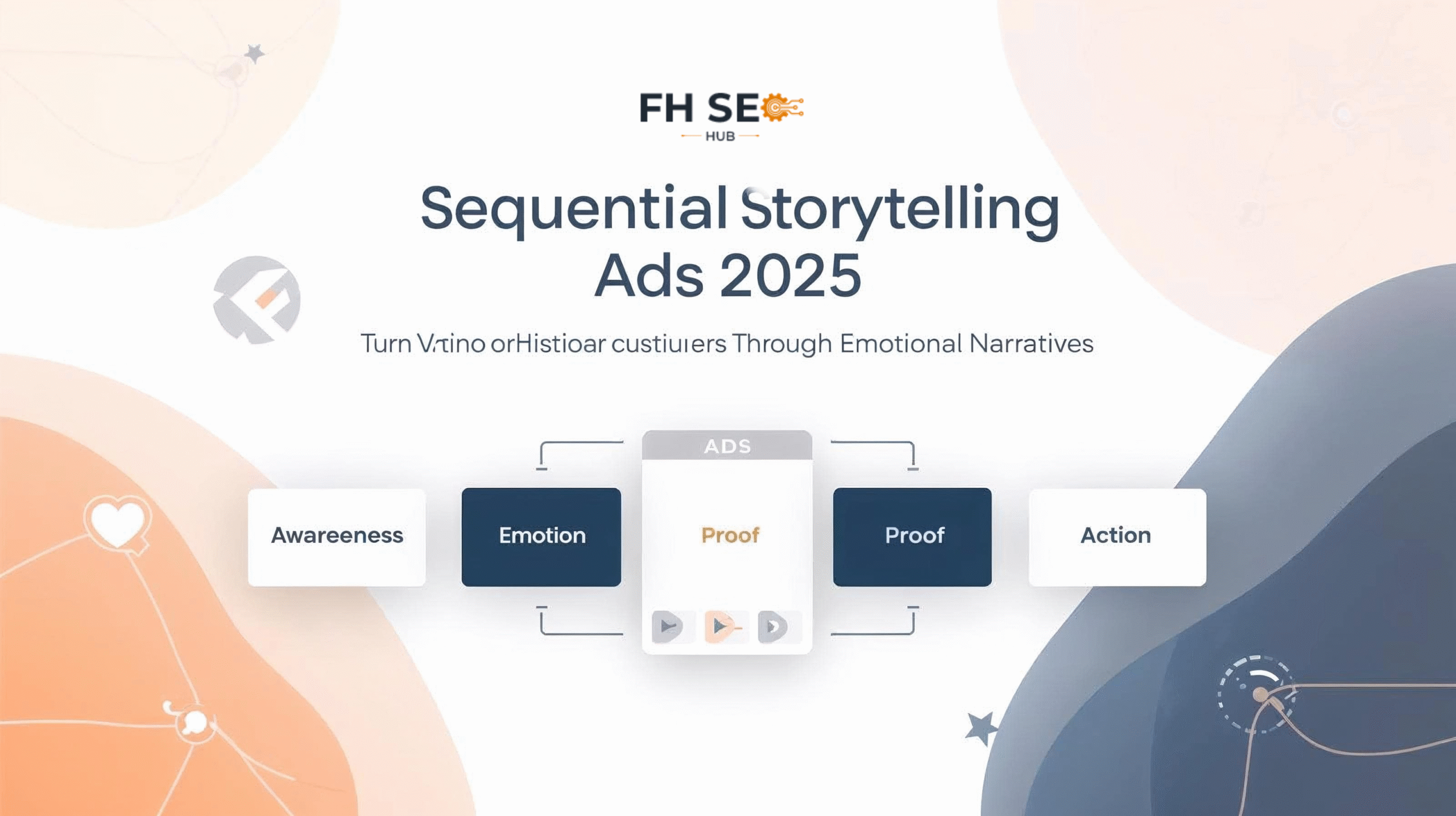
The ads are like disconnected puzzle pieces; they might look good individually, but never form a complete picture. Sequential storytelling connects every piece. Each ad continues the campaign narrative flow, matching the audience’s emotional stage: awareness, consideration, decision, and finally, action. The result? A cohesive journey that feels human, not forced.

Data-Driven Story Arcs That Sell
We love the blend of creativity and data. Analytics now help us craft better brand storytelling strategies, showing which scenes, emotions, or characters keep viewers engaged. For example, one client’s 3-part ad series on TikTok saw a 60% retention boost just by sequencing the story properly. Data shows what emotions convert; storytelling makes it memorable.

Guide a High-Performing Storytelling Sequence
Guide your audience from a spark of curiosity to a confident decision, creating a connection that leads to action, not just a sale.
Step 1 — The Hook (Awareness Stage)
Every story starts with curiosity. The first ad should make your audience stop mid-scroll and think, “Wait, that’s me.”Use relatable pain points, emotional visuals, or short questions that grab interest. Always keep it real, light, and real. It is where your story arc begins — the moment they feel seen. Begins — the moment they feel seen.
Step 2 — Build the Story (Consideration Stage)
After attracting attention, develop trust. Build your brand organically – without being a salesperson, but a guide. Don’t change the flow of the narrative campaign: the same tone, the same energy, and the same emotion. It is your opportunity to demonstrate the fact that you know their problem before providing a solution..
Step 3 — Show the Proof (Decision Stage)
Now bring in proof — human proof: testimonials, behind-the-scenes moments, or user experiences. Viewers want to see transformation, not perfection. By this point, your storytelling sequence should make them believe, “Yes, this works.” That emotional belief leads to conversion.
Step 4 — Drive the Action (Conversion Stage)
Your final ad should feel like a satisfying ending. Use a CTA that flows naturally from the emotion you built. Instead of “Buy Now,” say “Start your journey” or “Join the story.” Let the conversion feel like a reward, not a push. That’s the power of a complete campaign narrative flow.
Platforms That Amplify Sequential Narrative Marketing
The right platform is your stage, ensuring each chapter of your story unfolds with maximum impact.
YouTube Ad Sequencing:
YouTube’s ad sequencing feature is perfect for multi-part storytelling. You can plan your sequence — Awareness → Consideration → Conversion — and show videos in a specific order. One of our clients used this setup for a 4-part fitness campaign and achieved a 40% drop in cost per conversion. YouTube rewards consistent narrative flow, not one-off ads.
Short-Form Storytelling on TikTok, Instagram & Reels
Short videos are your modern movie scenes. Keep it light, authentic, and real.YouTube and TikTok reels use mini-stories. Adding easily trending sounds, captions, or subtle branding helps boost recall.
Retargeting and Audience Flow
The secret weapon behind sequential narratives is retargeting. If someone watches:
Part 1: Your ad platform can automatically show them
Part 2. This multi-phase campaign keeps emotional continuity alive.
It is Netflix autoplay, but you are taking a customer through the emotional experience of your brand.
Building a Winning Brand Storytelling Strategy
Creating Winning Brand Storytelling Strategy.
- Specify a message: What change will you bring to your customer?
- Break down into 3-5 sections: Each of them must be emotionally and logically related.
- Align each segment to buyer stages: Awareness, Cupidality Decision, Loyalty.
- Be unified in images and tone: Viewers see everything.
- Test, learn, and refine: Data fine-tunes your brand storytelling strategy over time.
Common Mistakes to Avoid
Bypassing the emotional buildup: Not in a hurry to sell.
Changing tone mid-story: It breaks the connection.
Forgetting retargeting: You’ll lose your sequence momentum.
Being too direct: Hard selling kills emotional flow.
In short, think like a director, not a marketer.
Measuring Success — KPIs for Sequential Storytelling Ads
Step by step, some key points that can help in the success of ads
Key Metrics
View-Through Rate (VTR): Tracks engagement per chapter.
Completion Rate: How many finish the whole sequence?
Click-Through Rate (CTR): Tests emotional call-to-action strength.
Conversion Rate: The conversion rate is an expression of how emotion converts into sales through storytelling.
Using Analytics to Refine Your Story Arc
Watch where viewers drop off. Your second video drags, or your CTA feels off. Tweak pacing, adjust visuals, and re-test. Storytelling performance data reveals what emotions truly move your audience. Over time, these insights make your ad sequencing more thoughtful and more personal.
How does a Brand achieve the success of Sequential Storytelling?
I share with you a case study.
Case Study 1: Nike’s Motivation Series
Nike’s Motivation Series Nike’s “You Can’t Stop U” series is a masterclass in emotional storytelling. They sequenced clips of athletes worldwide, connecting personal struggle to universal strength. Each video built emotion until viewers felt inspired to act — not because of shoes, but because of shared humanity.
Case Study 2: Airbnb’s “Made Possible By Host”.
Airbnb’s “Made Possible By Host”. Airbnb’s multi-part campaign connected hosts and travelers emotionally. It started with gratitude, built with real stories, and ended in loyalty. The campaign narrative flow made people feel they weren’t booking rooms — they were joining a community.
Case Study 3: Small Business Success
A small café client of FHSEO Hub ran a 3-part story campaign: discovery, story, and proof. In 45 days, local conversions doubled. Their ads didn’t sell coffee — they sold connections. That’s storytelling that sticks.
Future of Sequential Storytelling in Digital Advertising
AI is changing how we tell stories. Imagine ads that adjust in real time based on what viewers react to; that’s dynamic ad sequencing. With AI-driven narrative insights, brands can automatically personalize storylines. The future is adaptive storytelling: interactive, emotional, and tailored to each person. Soon, marketing won’t just tell stories — it will feel like a conversation.
Comparison Table: Sequential Storytelling vs Traditional Ads
| Feature | Traditional Ads | Sequential storytelling Ads |
| Story Arc | Single message | Multi-part narrative |
| Emotional Impact | Short-term | Long-term connection |
| Engagement | Passive | Progressive & Retargeted |
| Conversion Rate | Moderate | Higher via emotional journey |
| Platform Fit | TV, Static Social | TikTok & YouTube Reels, Shorts |

Pros
- Builds a deeper emotional connection
- Increases viewer retention
- Converts better across the sales funnel
- Creates a consistent brand identity
Cons
- Needs story planning and mapping
- Requires creative continuity
- Retargeting setup takes time.
But the results? Worth it. Sequential storytelling doesn’t just boost ROI — it builds long-term brand love.
Conclusion
People don’t buy ads — they buy stories. Sequential Storytelling Ads transform your marketing from noise into narrative. When your campaign follows a natural story arc, viewers stay curious, connect emotionally, and finally convert. Our service, we’ve seen it firsthand — storytelling builds loyalty faster than discounts ever could. Start sequencing your story today. Every chapter brings your audience closer to “yes”
Frequently Asked Questions
1. What makes sequential storytelling better than regular ads?
It builds emotional continuity that keeps viewers engaged longer.
2. How many videos should my storytelling sequence have?
Around 3–5, aligned with your customer journey.
3. Can I use sequential storytelling on TikTok?
Yes! Break your message into short, connected parts (Part 1–3).
4. What KPIs should I track?
VTR, CTR, and conversion rate are the top three.
5. Do sequential ads cost more?
Not always — better engagement often lowers cost per conversion.


