Top 8 Best Twitter Alternatives in 2026

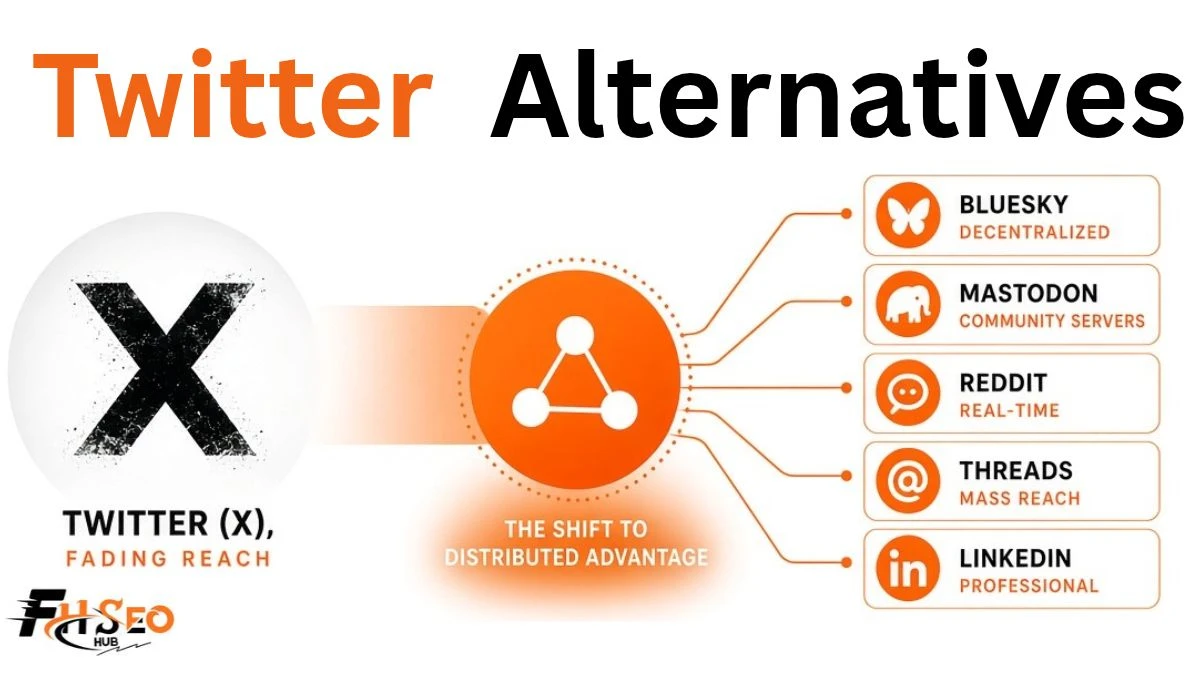
Twitter alternatives give you short-form posting, following, and real-time discussion without depending on X. In 2026 the strongest options are Bluesky, Mastodon, Threads, Discord, LinkedIn, Reddit, Tumblr, and Substack Notes. No single platform fully replaces X. Most people and teams now keep a small mix of platforms matched to where their specific audience already spends time.
Many users left X after repeated changes to verification, moderation rules, and the ranking algorithm. The practical question is no longer which single app replaces Twitter. It is where the people you want to reach actually moved, and how you stay visible there without starting from zero.
Top 8 Twitter Alternatives in 2026
1. Bluesky
Bluesky is the closest thing to classic Twitter for most people who want a familiar interface and short-form posts. It was started with involvement from Twitter co-founder Jack Dorsey and runs on the AT Protocol. The protocol focuses on portable identity and custom feeds, so you can choose or even build the algorithm that ranks what you see.
The platform opened fully in 2024 and has grown past 40 million users. Growth spikes often follow major controversies on X. Journalists, technologists, and people who care about algorithmic choice make up a large part of the active user base. Posts are limited to 300 characters. You can use hashtags, threads, and custom feeds. There are no ads on the main experience.
Bluesky is strongest when you want something that feels like Twitter but with more control over your feed. You can subscribe to multiple feeds at once, including feeds built by other users around specific topics or accounts. Discoverability is better than on fully decentralized networks, yet still lower than on Meta-owned platforms. Full cross-platform interoperability remains limited in practice, so most activity stays inside Bluesky.
For professionals who used X for industry news and quick commentary, Bluesky often becomes the first place they check. The culture is still relatively focused, which means posts from smaller accounts can still get seen if they join the right conversations. The main limitation is that many brands and large media accounts have not fully moved, so some topics still feel quieter than they did on X.
2. Mastodon
Mastodon is a decentralized network made of thousands of independent servers called instances. Each instance has its own rules and community focus. All instances can still talk to each other through the ActivityPub protocol. This is the Fediverse model.
You pick an instance when you join. You can follow people on any other instance. Posts (called toots) appear in a chronological timeline. There is no central algorithm and no advertising. Character limits are higher than on X, often around 500 characters. Many instances are topic-specific, language-specific, or interest-based.
Mastodon gives the highest level of user control. Server administrators set moderation rules. You can even self-host your own instance if you want complete ownership. Public instances are free to join. Self-hosting a small instance typically costs $5 to $20 per month for a basic server plus the time needed for updates and moderation.
The trade-off is lower discoverability and a steeper learning curve when choosing a server. Active monthly users are lower than on Bluesky or Threads, but engagement inside well-chosen communities is often high. People who stay usually value the chronological feed and the absence of ads more than raw reach. If an instance shuts down, you can move your account to another server, though you may lose some local follows in the process.
3. Threads
Threads is Meta’s microblogging app and the largest dedicated Twitter alternative by user count. It reached roughly 400 to 450 million monthly active users by early 2026. The main reason is instant onboarding. Anyone with an Instagram account can create a Threads profile in seconds and immediately see people they already follow.
The interface is simple and familiar. Posts appear in an algorithmic feed similar to other Meta apps. There is strong brand and celebrity presence because of the Instagram connection. Threads has added some Fediverse features so posts can be shared outward, but most activity stays inside Meta’s system. Data and account control remain with Meta.
Threads works best when you need broad reach quickly. Brands that already have an Instagram audience can start posting and see existing followers without rebuilding from scratch. It is less useful for pure chronological, real-time conversation or for users who want to leave Meta’s ecosystem entirely. Daily engagement is lower than the registered user numbers suggest, and the algorithmic feed means not every post reaches the same people.
4. Discord
Discord started as a gaming chat tool and has grown into a general community platform with more than 250 million monthly active users. Instead of a public timeline, Discord is built around servers. Each server can have text channels, voice channels, video, forums, and roles.
Communities form around specific topics, brands, games, or interests. Conversations happen in real time. There is no public algorithmic feed that pushes content to strangers. Discovery happens mainly through invites or the Discover tab. Many servers use bots for moderation, welcome messages, and simple automation.
Discord is excellent for ongoing community engagement and real-time discussion. Creators and brands often use it as a deeper layer where the most interested people gather. It is weaker for broadcasting to a wide public audience or for SEO, because most content is not indexed by search engines. Managing a server takes consistent effort. Empty servers lose members quickly.
5. LinkedIn
LinkedIn is not a pure microblogging clone, but it has become a major place for professional short-form and long-form discussion. The platform has more than 1.2 billion members. For B2B audiences, industry news, hiring, and thought leadership, LinkedIn often delivers better results than X.
You can post updates, articles, newsletters, and comments. The feed is algorithmic and professional in tone. Content that performs well tends to be useful, specific, and tied to work topics. LinkedIn also has strong targeting for ads and organic distribution inside professional networks. Many users treat it as their main place for industry commentary.
LinkedIn works when your audience is made of professionals, decision-makers, or industry peers. It is less effective for casual conversation, memes, or real-time news that is not work-related. The professional context reduces some of the noise that appears on more open platforms, but it also limits creative or off-topic posts.
6. Reddit
Reddit organizes conversation into topic-based communities called subreddits. Each subreddit has its own rules and moderators. Users can post text, links, images, and video. Voting determines visibility. About 26 percent of U.S. adults use Reddit, and the platform has surpassed X in American adoption according to recent surveys.
Reddit is strong for niche expertise, product discussions, AMAs, and long-form comments. Many subreddits are indexed by search engines, which gives some SEO value. Brand participation works best when it is helpful rather than promotional. Overt marketing often gets downvoted or removed. Successful accounts usually contribute useful answers for weeks before posting anything promotional.
Reddit is useful when you want to reach people who are already deep into a specific topic. It is not a good one-to-one replacement for a personal public timeline. The culture varies sharply between subreddits, so rules and expectations must be learned for each community.
7. Tumblr
Tumblr is a long-running microblogging platform that supports text, images, GIFs, and video. It has a creative, fandom-heavy culture. Posts can be longer than typical tweets. Users reblog content, which spreads posts across the network. There is a chronological element for people you follow, plus trending and tag-based discovery.
Tumblr added ActivityPub support so Mastodon users can follow Tumblr blogs. Paid options remove ads. The platform appeals to creators who like visual and longer-form expression mixed with short updates. Hashtags still play a large role in discovery, similar to how they worked on older Twitter.
Tumblr fits users who want more creative freedom and a different culture from X. It has a smaller overall user base than Bluesky or Threads but retains loyal communities. Brands that fit the creative or fandom space often see better engagement here than on more professional platforms.
8. Substack Notes
Substack Notes is the short-form layer on top of the Substack newsletter platform. Writers can post quick updates that appear in a feed. Readers who already subscribe to newsletters see those writers’ Notes automatically. The feature is designed to drive engagement with longer newsletter content rather than to act as a standalone public square.
Notes works best for people who already publish newsletters or want to build an owned audience. Reach depends on existing subscribers and restacks. There is no large public discovery feed comparable to X or Bluesky. Writers use Notes to share quick thoughts, link to new posts, and stay in front of readers between longer emails.
It is a strong complement for writers and analysts, not a general replacement for everyone. Because the audience is owned through email, Notes reduces dependence on any single social algorithm.
How to Choose the Right Twitter Alternative
Start with where your current audience already is. Check which platforms the accounts you follow have joined. Bluesky and Mastodon attract people who want more control or less algorithmic ranking. Threads is the fastest way to reach a large general audience if you already use Instagram. Discord and Reddit work better for deeper community conversation than for public broadcasting. LinkedIn is the clear choice for professional topics. Tumblr and Substack Notes suit creators who want more control over presentation or who already have an email list.
Most users do best with two or three platforms rather than one. Post the same core ideas in formats that fit each platform, then watch where replies and follows actually appear. Keep a direct channel such as email so you are not fully dependent on any social network. Rebuilding visibility usually takes consistent posting over four to twelve weeks before results feel stable.
The practical path in 2026 is to pick two or three Twitter alternatives that match different parts of your audience, post consistently, and keep an owned channel such as email. Rebuilding visibility takes weeks to months of regular activity, not a single announcement. The platforms that reward steady, useful participation continue to outperform those treated as pure broadcast channels.
FAQs
What is the single best Twitter alternative in 2026?
No single platform wins for every user. Bluesky is closest for people who want a Twitter-like experience. Mastodon is best for full decentralization. Threads is best for maximum reach.
Are these Twitter alternatives free?
Yes. Bluesky, Mastodon, Threads, Discord, Reddit, Tumblr, and Substack Notes are free to use. Optional paid tiers exist on some platforms for ad-free browsing or extra features.
How do I join Mastodon?
Create an account on any public instance. You can later move to a different instance if you want. Follow people across instances using their full username.
Can I automatically move my Twitter followers?
No. You must announce the move on X, cross-post for a period, and rebuild the audience organically on the new platforms.
Which alternatives still get indexed by Google?
Reddit and some public Mastodon posts can appear in search results. Most activity on Threads, Discord, and Bluesky has little direct SEO value.