Why DuckDuckGo Is Bad: The Privacy Gaps Nobody Talks About

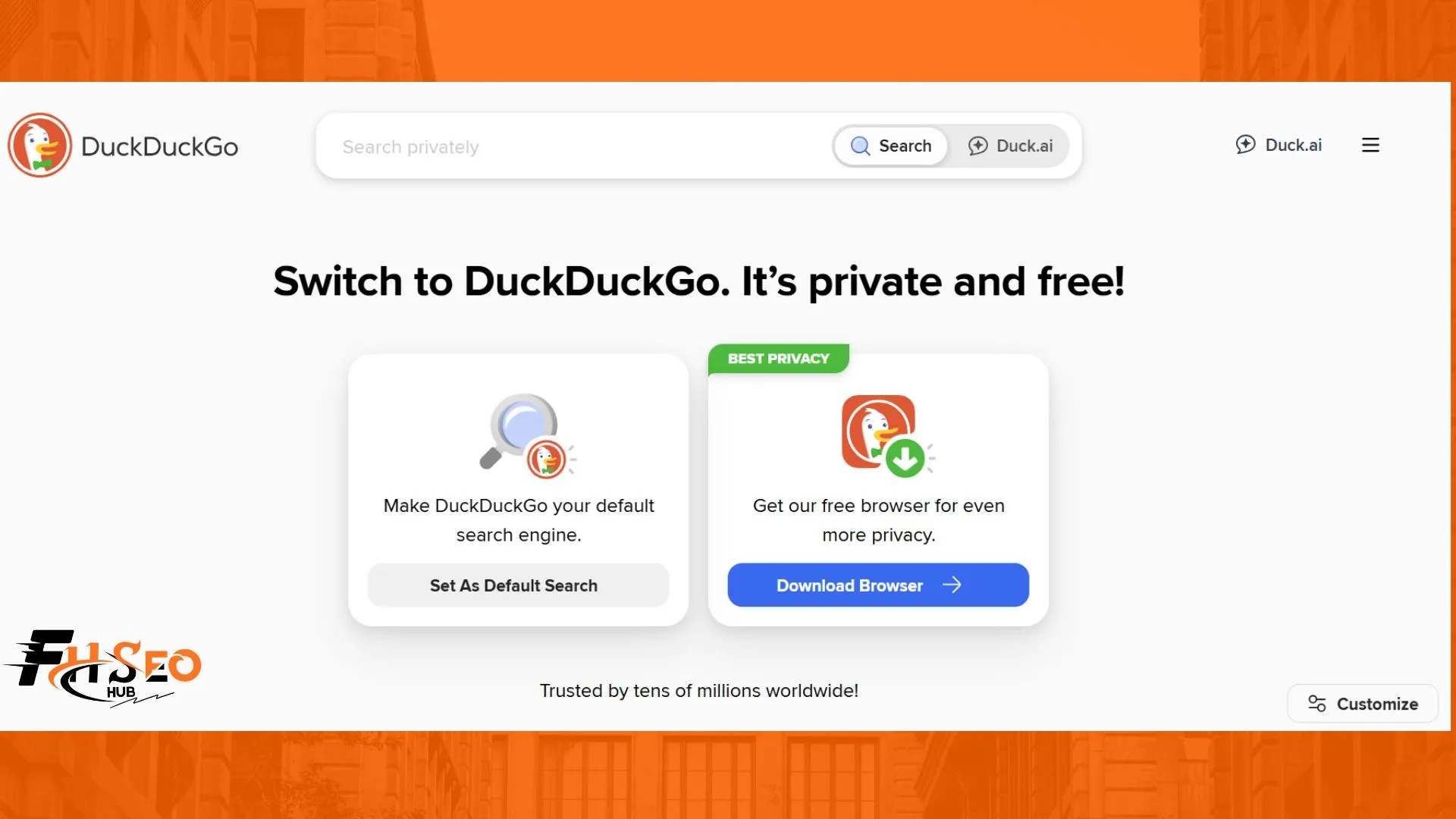
DuckDuckGo is a search engine that lets you search the web without tracking what you look up or storing your personal info. It uses Bing’s index for results and shows ads based on your current search term, not your browsing history.
The privacy-focused search engine does skip personalized search results and won’t build a user profile around your habits. That part is true. But there are real gaps in tracker blocking, search result quality, and data collection practices that most people never hear about.
DuckDuckGo Is Not What You Think It Is
I used DuckDuckGo for years before digging into what actually happens behind the scenes. Most people switch because they’re tired of Google’s data collection and targeted advertising. Makes total sense. DuckDuckGo, founded by Gabriel Weinberg in 2008, markets itself as the anonymous browsing alternative that doesn’t track your search history or store personal data.
And on the surface, that’s accurate. DuckDuckGo doesn’t build a user profile. It doesn’t log your IP address permanently. It serves contextual advertising instead of behavioral ads. But here’s the thing. There’s a massive difference between DuckDuckGo the search engine and DuckDuckGo the browser. The search engine pulls results from Microsoft Bing’s search index. The browser is a separate product with its own tracker blocking and privacy features. Almost nobody makes this distinction clearly, and that confusion creates a false sense of total protection.
The 2022 Microsoft Tracking Scandal That Changed Everything
In 2022, privacy researcher Zach Edwards discovered something that shook the entire privacy community. DuckDuckGo’s mobile browser was allowing Microsoft trackers from Bing and LinkedIn to run on third-party websites. Not the search engine.
The reason? A syndicated search content contract between DuckDuckGo and Microsoft. As part of their deal to use Bing’s index, DuckDuckGo had agreed not to block certain Microsoft tracking scripts. Gabriel Weinberg confirmed this publicly and said the company was working to renegotiate those terms. By late 2022, DuckDuckGo announced they had expanded tracker blocking to include Microsoft’s domains.
What DuckDuckGo Still Doesn’t Protect You From
Okay so let’s talk about what DuckDuckGo actually can’t do for you, even after the 2022 fixes.
Browser fingerprinting. It offers partial protection against fingerprinting, but it’s not airtight. Websites can still identify you based on your screen size, installed fonts, browser plugins, and dozens of other signals. No cookie required. DuckDuckGo’s cookie blocking helps, but fingerprinting is a completely different tracking method that goes way deeper.
IP address exposure. Even if you trust DuckDuckGo’s no-logging policy, your IP address is still visible to every website you visit from search results. It doesn’t include a VPN and route your traffic through any proxy. Your ISP can still see every site you visit. Without a VPN or Tor Browser, ISP tracking is completely untouched.
Search leakage. When you click a link from DuckDuckGo results, the destination site can sometimes see your search query through the referrer header. DuckDuckGo uses HTTPS encryption and tries to strip this data, but search leakage isn’t fully eliminated in every scenario.
Local storage vulnerabilities. The DuckDuckGo browser stores some data locally on your device. While the burn bar feature lets you clear this data, anything stored between sessions could be accessed if your device is compromised.
There was also a reported uXSS vulnerability (Universal Cross-Site Scripting) in earlier versions of the DuckDuckGo browser that could have allowed attackers to inject malicious scripts. It was patched, but it highlighted that the browser’s security posture wasn’t as mature as established options like Firefox or Brave.
Search Quality: The Bing Problem
Here’s another thing nobody likes to admit. DuckDuckGo’s search results just aren’t as good as Google’s. Not even close.
It doesn’t have its own search index. It pulls results primarily from Microsoft Bing, supplements them with its own web crawler (DuckDuckBot), and adds Instant Answers from various sources. The problem? Bing’s index is smaller and updated less frequently than Google’s. Real-time indexing is weaker, which means breaking news or rapidly changing topics often show stale results.
And because DuckDuckGo doesn’t use personalized search results, you lose the filter bubble but also lose the relevance tuning that makes Google feel so accurate. For some people, escaping the echo chamber is worth it. For others, it means spending more time scrolling to find what you need.
The bangs feature is genuinely useful. Typing “!g” sends your search directly to Google, “!yt” to YouTube, and so on. But relying on bangs to get good results kind of defeats the purpose of using a privacy-focused search engine in the first place.
What DuckDuckGo Collects (It’s Not Nothing)
DuckDuckGo says it has a no-logging policy. And compared to Google, that’s a fair claim. But “no logging” doesn’t mean “no data collection.” There’s a difference.
It collects aggregate, anonymized search data. They store general information about search queries to improve Instant Answers and ad targeting. They use contextual advertising from Microsoft, which means ads are based on your current search term, not your browsing history. But your search query is still sent to Microsoft’s ad network in some form.
It also collects some device information and uses local storage on the browser. They don’t tie this to a user profile, which is meaningful. But if you thought DuckDuckGo collects absolutely zero data, that’s not accurate either.
The company has raised over $170 million in total funding, including a $113 million Series B round from investors like Union Square Ventures. With only 0.7% of the global search market share, the business model depends on contextual advertising and affiliate revenue.
How DuckDuckGo Stacks Up Against Alternatives
I put together a comparison of DuckDuckGo against the main alternatives people actually consider. Here’s what matters.
| Feature | DuckDuckGo | Brave Search | Startpage | SearxNG | |
| Tracks searches? | No | Yes | No | No | No |
| Own search index? | No (Bing) | Yes | Yes | No (Google) | No (Meta) |
| Blocks fingerprinting? | Partial | No | Yes | Partial | Varies |
| Blocks Microsoft trackers? | Yes (post 2022) | N/A | Yes | Yes | Yes |
| Personalized results? | No | Yes | No | No | No |
| Built-in VPN? | No | No | Firewall/VPN | No | No |
| Open source? | Partial | No | Yes | No | Yes |
Brave Search is the strongest alternative if you want an independent index with real privacy. Startpage gives you Google results without the tracking. SearxNG is for the technically inclined who want full control. And Mojeek deserves a mention as a truly independent search engine building its own index from scratch.
The Government Ban Angle Nobody Covers
DuckDuckGo has been banned or restricted in Indonesia and India at various points. The bans were related to content filtering disputes, not privacy violations. But here’s why this matters for privacy users: a centralized service can be blocked at the ISP level, cutting off your access entirely.
If you’re relying on DuckDuckGo as your sole privacy tool and your government decides to block it, you have nothing. Decentralized options like SearxNG or using DuckDuckGo through Tor Browser offer more resilience against censorship. Not a dealbreaker for most users, but something the privacy-conscious crowd should factor in.
Is DuckDuckGo Worth Using in 2026?
Look, I’m not going to tell you to stop using DuckDuckGo. For most people, it’s still a massive step up from Google when it comes to search history privacy and avoiding targeted advertising. But calling it a complete privacy solution? Big mistake.
It works best as one layer in a larger privacy stack. Pair it with a solid VPN like ProtonVPN, NordVPN, or Mullvad. Use Firefox or LibreWolf as your browser with uBlock Origin for ad blocking. Consider Brave Search or Startpage as your search engine if independence from Bing matters to you.
The real danger with DuckDuckGo isn’t that it’s bad. It’s that people think switching search engines is enough. Without addressing browser fingerprinting, ISP tracking, and IP address exposure, you’re only solving a small piece of the puzzle. Privacy is layered. One tool will never be enough.
Final Thought
DuckDuckGo is not bad. But the blind trust people place in it? That’s the real problem. Privacy is not a single switch you flip by changing your default search engine. It’s a stack of tools, habits, and informed choices. It can be part of that stack, but it should never be the whole thing.
FAQs
What are the negatives of using DuckDuckGo?
The main downsides are weaker search results compared to Google, reliance on Microsoft Bing’s index, partial fingerprinting protection, no built-in VPN, and a history of allowing Microsoft trackers before the 2022 controversy forced changes.
Is DuckDuckGo really private?
It’s more private than Google for search queries, but it’s not fully private. Your IP address is still exposed to websites, your ISP can see your browsing, and browser fingerprinting can still track you. Pair it with a VPN and privacy-focused browser for real protection.
Does DuckDuckGo hide your IP address?
No. DuckDuckGo does not hide your IP address. Every website you visit from DuckDuckGo search results can see your real IP. You need a VPN or Tor Browser to actually mask your IP.
Is DuckDuckGo owned by Google?
No. DuckDuckGo is an independent company founded by Gabriel Weinberg. It has received funding from investors like Union Square Ventures but has no ownership connection to Google. It does use Microsoft Bing’s index for search results.
Can you be tracked if you use DuckDuckGo?
Yes. While DuckDuckGo doesn’t track your searches, websites can still track you through browser fingerprinting, cookies on individual sites, and your visible IP address. DuckDuckGo reduces tracking but doesn’t eliminate it.
Why is DuckDuckGo banned in some countries?
DuckDuckGo has been blocked in Indonesia and restricted in India over content filtering disputes. These bans relate to local regulations about accessible content, not privacy issues, but they expose a vulnerability of relying on a centralized search service.
DuckDuckGo vs Brave: which is more private?
Brave Search has an edge because it uses its own independent search index, offers stronger fingerprinting protection, and includes a built-in firewall and VPN option. DuckDuckGo’s reliance on Bing and its 2022 tracker controversy give Brave a trust advantage.
Why are DuckDuckGo search results bad compared to Google?
DuckDuckGo pulls from Bing’s index, which is smaller and less frequently updated than Google’s. It also skips personalization, which means results aren’t tailored to your preferences.
Is DuckDuckGo part of the dark web?
No. DuckDuckGo is a standard search engine accessible on the regular internet. It does have an .onion version accessible through Tor Browser, which gives extra privacy, but the search engine itself is not part of the dark web.
Should I use DuckDuckGo with a VPN?
Absolutely. DuckDuckGo doesn’t protect your IP address or encrypt your connection beyond HTTPS. A VPN like ProtonVPN, NordVPN, or ExpressVPN hides your IP from websites and prevents ISP tracking. Using both together gives you much stronger privacy.