Anchor Text Optimization: A Practical 2026 Guide

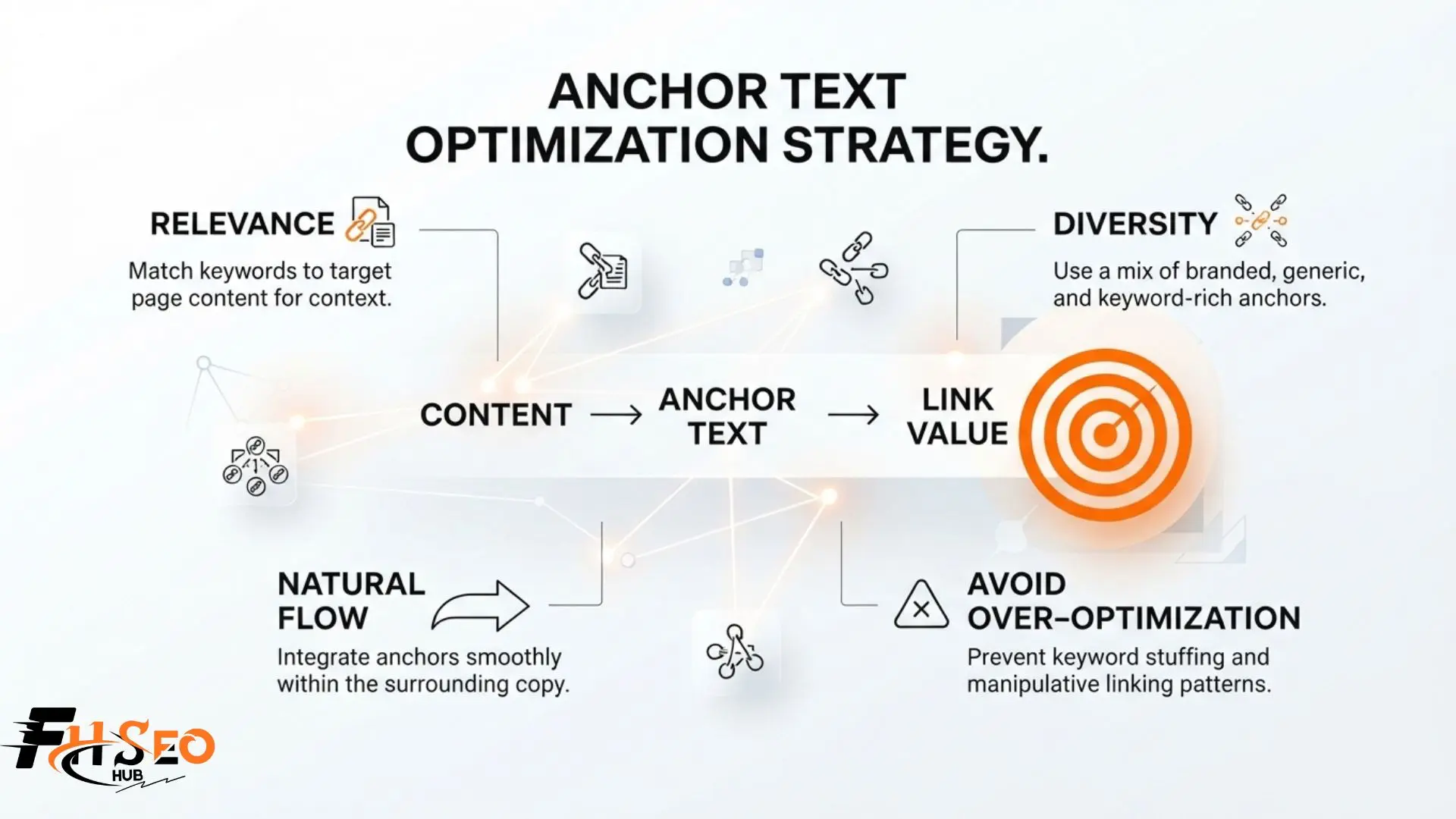
Anchor text optimization means controlling the mix of link text pointing to your site so the pattern looks earned, not engineered. Branded and partial-match anchors should carry most of the weight. Exact-match anchors work best under roughly 10% of your total profile. Beyond the percentages, what matters most is whether that mix developed the way a real, unplanned link profile would.
This guide covers the real ratios worth targeting, the audit process, and where anchor text stops mattering more than the backlink itself.
What is Anchor Text?
Anchor text is the visible, clickable words in a hyperlink. When another site links to you, Google reads that text as a relevance signal for the destination page. A link reading “best project management software” tells Google something specific. A link that just says “click here” tells Google almost nothing. Google’s systems read anchor text as evidence of how a link profile grew over time, not as an instruction to follow.
What Is Anchor Text Optimization?
Anchor text optimization is the practice of managing the clickable text in your backlinks. It covers which anchor type to use, how often, and on which pages. The goal is a distribution that looks like it grew naturally, not one built to rank a single keyword. Anchor text optimization is the discipline of shaping that signal across your whole link profile, not just on individual links.
The 7 Types of Anchor Text (With Examples)
There are seven core anchor text types: exact match, partial match, branded, naked URL, generic, image, and LSI or related-keyword anchors. Each sends a different relevance signal, and a natural link profile uses all seven in different proportions rather than relying on one or two types.
Knowing the types matters more than memorizing definitions. It determines which anchors you can safely request in outreach, and which ones should only happen naturally.
| Anchor Type | Example | Risk Level | When It Happens |
| Exact match | “project management software” | High if overused | Rare in natural linking, common in manipulated profiles |
| Partial match | “great project management tools like this one” | Low to moderate | Guest posts, resource pages |
| Branded | “Asana” or “the Asana blog” | Very low | Most common anchor type on a healthy site |
| Naked URL | “asana.com” | Very low | Forum posts, citations, directory listings |
| Generic | “click here,” “this article,” “learn more” | Very low | Editorial content, casual mentions |
| Image | Alt text of a linked image | Low | Image embeds, infographic syndication |
| LSI/related | “task tracking platform” | Low | Guest posts, editorial mentions |
What’s the Safe Anchor Text Ratio?
There’s no single safe ratio, but most practitioners keep branded anchors around 40 to 60%, partial match around 20 to 30%, and exact match under 10%, with naked URL, generic, and LSI anchors filling the rest. The ratio matters less than whether it developed at a pace and pattern that looks organic.
Every source publishes a slightly different number, and that’s the point. Google isn’t checking your profile against a fixed formula. It’s comparing the shape of your anchor distribution against millions of link profiles that grew without any planning at all. A site that hits a textbook 60/25/10/5 split within three months looks suspicious. A messier ratio built over a full year reads as more organic.
Two things matter more than the raw percentage. First, timing. A burst of exact-match anchors in a short window looks manufactured. The same anchors spread across months of normal link building don’t. Second, consistency: a profile that optimizes once isn’t usually the problem. A profile that optimizes the same way every time, page after page, is what modern detection systems are built to catch.
If you’re auditing an existing profile, check your top 10 competitors’ anchor ratios in Ahrefs or Semrush first. Use their median as a rough benchmark, then aim slightly below it on exact match. Being cautious costs you almost nothing. Being aggressive can cost you a manual action.
Correcting a skewed ratio takes longer than most timelines suggest. Offset links dilute an existing pattern, they don’t erase it, so expect three to six months of steady link building before the percentages shift enough to matter. That’s still faster, and far less risky, than a disavow-and-wait cycle.
Why Anchor Text Over-Optimization Triggers Penalties
Anchor text over-optimization happens when a large share of your inbound links use the exact same keyword-rich phrase, a pattern Google’s Penguin system was built specifically to detect. It signals that links were placed to manipulate rankings rather than earned because the content deserved a citation.
Penguin launched in 2012, but the detection logic behind it is still active inside Google’s core ranking systems today. It doesn’t just count exact-match anchors. It looks for repetition: the same phrase, from similar-looking sites, arriving in a short window. That pattern is a stronger signal than any single percentage.
The real-world consequence is usually a manual action, not an automatic ranking drop. If Search Console flags a manual action for unnatural links, affected pages can disappear from search results entirely. That’s different from just slipping a few spots. Recovery typically takes a disavow file, a reconsideration request, and one to several months of waiting. There’s no guarantee the request succeeds on the first try. That risk is why prevention is cheaper than the cleanup.
How to Audit Your Anchor Text Distribution
Auditing anchor text means pulling your full backlink list, categorizing every anchor by type, and calculating what percentage falls into each bucket. Free tools handle small sites well, while Ahrefs or Semrush give a more complete picture for sites with hundreds of referring domains.
Start by exporting every backlink pointing to your site, along with the anchor text used on each one. Then sort each anchor into one of the seven types above. From there, calculate the percentage each type represents of your total link count, not your total referring domains. One domain can link to you multiple times with different anchors, so counting domains alone undercounts the pattern.
Watch for two red flags once the numbers are in. Exact match anchors above roughly 10 to 15% is the most common trigger point cited across current SEO research. A handful of pages carrying a disproportionate share of your exact-match links is the second red flag. That concentration is what search algorithms and manual reviewers notice first.
| Tool | Cost | Best For |
| CommonNinja Anchor Text Analyzer | Free | Quick check on a small site, no signup |
| Sitechecker Anchor Text Checker | Free trial, then paid | Full-site anchor audits with issue flagging |
| Ahrefs Site Explorer (Anchors report) | Included in Ahrefs subscription | Sites with a large, established backlink profile |
| Semrush Backlink Analytics | Included in Semrush subscription | Combining anchor data with toxic link detection |
Does Backlink Quality Matter More Than Anchor Text?
Yes, in practical terms. A clean anchor text ratio built on low-quality or unrelated domains still underperforms, because Google increasingly weighs topical relevance and editorial context alongside the anchor itself. Anchor text discipline and backlink quality work together. Neither one fixes the other.
A high DR score used to be treated as proof a link was worth having. That’s outdated advice now. A site can reach a DR of 70 or 80 through link manipulation or republished content. A network of low-value sites linking to each other can inflate the same score. The number looks strong. The trust behind it isn’t real.
Before counting a link toward your anchor strategy, check three things beyond the domain score:
- Does the site publish consistently in your niche?
- Does the specific linking page get real organic traffic?
- Is the link inside genuine editorial content, not a sitewide footer or sidebar?
A partial-match anchor from a topically relevant DR 35 site usually outperforms the same anchor from an unrelated DR 75 site. Relevance matters as much as the authority score.
Should You Buy High Authority Backlinks for Anchor Text Control?
Buying links specifically to control anchor text is what Google’s link scheme policy exists to catch, especially when the anchors are exact match. Paid placements aren’t automatically a violation, but undisclosed paid links built purely to pass ranking credit are, regardless of how high the domain’s authority score is.
The search term “buy high authority backlinks” gets typed a lot, and the honest answer is more nuanced than yes or no. Paying for a guest post or niche edit on a relevant, editorially-reviewed site is common practice across the industry. It’s compliant as long as the placement carries a rel=”sponsored” or rel=”nofollow” tag where required. What crosses the line is paying specifically for keyword-rich anchor placement at scale. That’s especially true for vendors who guarantee exact-match anchors on high-DR sites with no editorial review.
That pattern is easy for both algorithms and manual reviewers to spot, because real editorial links rarely use exact-match commercial phrases as the anchor. If a link package promises a specific anchor text on a specific high-authority domain for a flat fee, treat that as a red flag rather than a shortcut. The safer version of the same goal is normal outreach-based link building, where you can suggest an anchor but the publisher decides the final wording.
Final Thoughts
Anchor text optimization isn’t about hitting a specific percentage and calling it done. It’s about making sure your link profile’s anchor mix looks like it happened naturally, at a pace and from a quality of domains that matches how real citations accumulate. Audit your current distribution before building anything new. Fix concentration problems with offset links rather than a disavow file by default. Weigh every new link on backlink quality as much as anchor wording. Get both right together, and the ratio takes care of itself.
FAQs
Most practitioners aim for roughly 40 to 60% branded, 20 to 30% partial match, and under 10% exact match, with the remainder split across naked URL, generic, and related-keyword anchors. Treat these as a rough benchmark, not a formula to hit exactly.
The seven core types are exact match, partial match, branded, naked URL, generic, image, and LSI or related-keyword anchors. A healthy profile uses all seven in different proportions rather than relying on just one or two.
Rarely on its own. Over-optimized anchor text combined with low-quality, unrelated, or manipulated linking domains is the pattern that triggers manual actions, not the anchor text in isolation.
Usually not first. Building new “offset” links with branded, generic, and naked-URL anchors normalizes the ratio without the risk of disavowing a link that was quietly helping you. Reserve disavow files for confirmed manual actions or clearly toxic, spammy domains.
No. They work together. A perfect anchor ratio on weak or unrelated domains underperforms, and a strong backlink profile with careless anchor text still carries over-optimization risk. Both need attention.


