Forecasting Organic Traffic: The Complete Guide for SEO Professionals

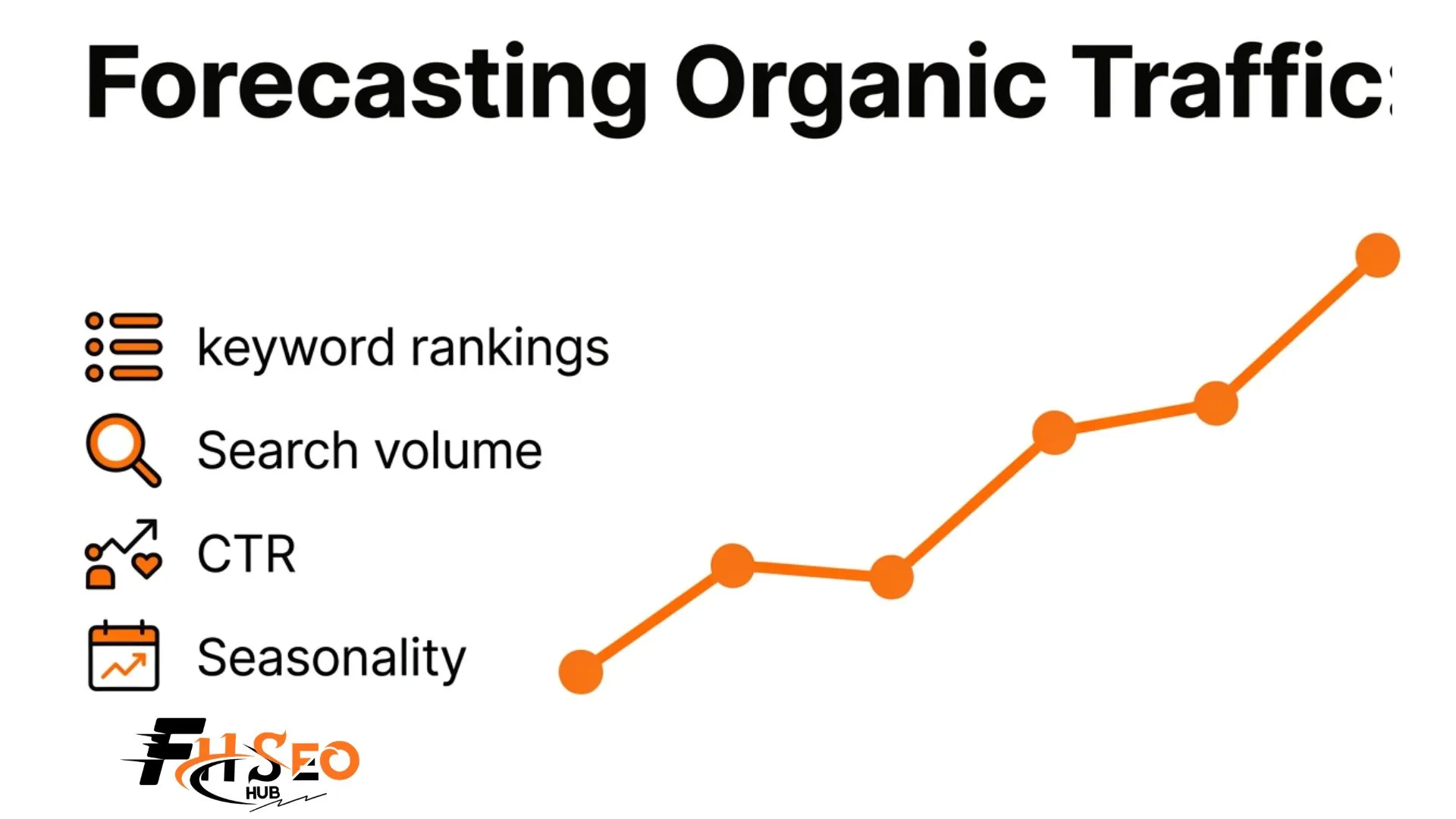
Forecasting organic traffic means estimating how much search traffic your website will receive in the coming months. You build that estimate using keyword rankings, search volume, click-through rate data and historical traffic trends. It helps you plan content, justify SEO spend and set growth targets grounded in actual data.
Why Forecasting Organic Traffic Changes How You Run SEO
Most SEO teams measure what already happened. They pull last month’s traffic report and call it strategy. Forecasting organic traffic flips that entirely. You stop reacting and start planning.
The practical impact is bigger than it sounds. When you show a client or leadership team that a new content push should generate 6,000 additional monthly visits and 150 leads over the next six months, SEO shifts from a cost line to a business investment with projected returns.
Search has also changed significantly heading into 2026. Search Generative Experience and AI Overviews now reshape how users interact with results. A forecast built on outdated assumptions will miss badly. Getting this habit right now keeps your strategy ahead of those shifts.
The 4 Inputs Every Organic Traffic Forecast Needs
Your forecast is only as reliable as what you put into it. Miss any one of these and your traffic projection becomes guesswork.
Keyword Rankings
Where does your page currently sit in Google search results? Your SERP position determines how much visibility and how many predicted organic clicks are even possible. A page at position 3 behaves very differently from one at position 10. Pull current rankings from Google Search Console or tools like Ahrefs and Semrush.
Monthly Search Volume
Search volume is your ceiling. You cannot receive more clicks than the number of people searching for a term each month. Use Google Keyword Planner, Ahrefs, or Semrush to gather volume estimates. Average across multiple tools when numbers differ significantly.
Click-Through Rate (CTR)
This is where most forecasts fail in 2026. Older CTR benchmarks suggest position 1 earns 30 to 40 percent of clicks. That figure is outdated.
Current data from Advanced Web Ranking based on 2024 and 2025 studies shows a different picture:
Your CTR curve must reflect what Google looks like today. Using old benchmarks is one of the fastest ways to produce a forecast nobody trusts.
Seasonality
Search demand is not consistent throughout the year. A keyword generating 4,000 monthly searches in March might pull 11,000 searches in December. Google Search Console shows these seasonal patterns inside your own traffic data. Never forecast using a flat monthly assumption.
Two Forecasting Methods That Actually Work
There is no single best approach. Most experienced SEOs combine both methods below depending on what they are forecasting.
Keyword-Based Forecasting
This builds a projection from scratch. Take your target keywords, apply monthly search volumes and then multiply by a realistic CTR for the position you expect to reach.
Simple example: a keyword cluster with 8,000 combined monthly searches at a blended CTR of 11 percent produces a rough organic traffic projection of 880 visits per month.
This method works best when planning new content or entering a topic area with no historical traffic data.
Always forecast at the cluster level, not keyword by keyword. Five related search queries that would rank the same page should combine into one projection. Counting them separately inflates your traffic estimation model significantly and produces numbers that fall apart fast when real data arrives.
Historical Data Forecasting
This method starts with what your site already does. Pull 18 to 24 months of organic traffic data from Google Analytics 4 and Google Search Console. Filter out branded searches to isolate genuine non-brand organic performance. Then apply a linear projection or moving average to model where the trend heads next.
This approach is more grounded because it reflects actual site behavior. It works best for established sites with enough history to reveal consistent patterns. For new sites with limited data, keyword-based forecasting is the more practical starting point.
When to use each: Keyword forecasting for new content opportunities. Historical forecasting for overall site projections and year-over-year reporting.
Reading Google Search Console Data for Your Forecast
Google Search Console is your most reliable source for organic traffic data. It gives you real numbers that no third-party tool can fully replicate.
Here is exactly what to pull:
Build your own custom CTR curve using your Google Search Console position data instead of relying on published industry averages. Your site behaves differently based on your niche, brand recognition and the SERP features that appear for your specific keywords.
This matters for E-E-A-T too. Forecasts built on site-specific data signal that your analysis reflects real performance, not assumptions copied from a 2019 study.
How SGE and AI Overviews Are Reshaping Forecasts in 2026
AI Overviews now appear on a large share of informational queries. When they appear above the organic results, click-through rates fall sharply. Studies using aggregated 2024 and 2025 performance data show CTR reductions of 40 to 50 percent on informational queries when an AI Overview is present.
If your SEO traffic prediction treats all keywords the same way, you will consistently overestimate traffic from informational content. The gap between your forecast and real numbers grows worse every quarter.
Practical adjustments to make right now:
Modeling around AI Overviews is not optional in 2026. It is the difference between a forecast your team trusts and one that loses credibility after the first monthly review.
Mistakes That Make Your Organic Traffic Forecast Unreliable
A forecast is a living document. Compare predicted clicks against actual results every month. When the numbers drift, find out why and adjust. That review cycle separates a forecast that drives decisions from one that collects dust.
Core Web Vitals belong in this review too. If your page experience scores decline rankings shift and that breaks any ranking-based projection you have built. Add technical SEO monitoring to your forecasting routine.
Key Terms for Organic Traffic Forecasting
CTR curve: The relationship between your ranking position and the percentage of users who click your result.
Organic traffic baseline: Your current traffic level used as the starting point for all projections.
Year-over-year (YoY) traffic: Comparing one 12-month period to the same period the prior year to remove seasonal noise from growth data.
Impression share: How often your pages appear in search results relative to the total available searches for your tracked keywords.
Forecasting confidence interval: The range your actual traffic is likely to fall within based on your model assumptions. A range is more honest and more useful than a single projected number.
Brand vs non-brand traffic: Traffic from users searching your brand name versus users who found you through topic-based queries. Non-brand traffic shows true SEO-driven organic search performance.
Organic traffic velocity: The rate at which your traffic is accelerating or decelerating over a rolling period. Slowing velocity is an early warning sign before a monthly traffic drop appears in your report.
Your Next Step
Getting accurate when forecasting organic traffic comes down to four solid inputs, the right method for your situation and a commitment to reviewing the model as real data arrives each month. The SEO professionals outperforming competitors in 2026 treat this as a weekly habit, not a quarterly report. Your data is already sitting inside Google Search Console. Pull your top 20 target keywords, apply current CTR benchmarks that account for AI Overviews and build your first projection this week.


