Event Link Building: The Category Guide to Get Backlinks From Events

Event link building means earning backlinks by hosting, sponsoring, or participating in real-world or virtual events, links that are genuinely hard for competitors to replicate through a cold outreach email since they’re tied to an actual relationship or presence. Most content treats sponsorship links as straightforward earned backlinks, when they’re technically paid commercial arrangements Google expects you to attribute correctly, a compliance detail that changes how you should actually run this tactic.
What Is Event Link Building?
Event link building is the practice of earning backlinks specifically through involvement in events, hosting your own, sponsoring someone else’s, or participating as a speaker, exhibitor, or attendee, rather than through cold outreach to sites you have no existing connection to. The links this produces tend to come from event landing pages, sponsor logo walls, speaker profile pages, and press coverage generated around the event itself, a genuinely different acquisition mechanism than pitching an editor who’s never heard of your brand.
What separates this from generic relationship-based link building is the concrete, real-world anchor point: a genuine event creates a legitimate, verifiable reason for a link to exist, which is exactly why it’s harder for a competitor to replicate quickly and exactly why Google scrutinizes the commercial versions of it more closely than organic mentions. A link tied to genuine attendance, sponsorship, or speaking carries a real story behind it, something a rushed guest post pitch rarely has.
Main Benefits of Event Link Building
Backlinks earned through events tend to carry genuine topical relevance, since event organizers, industry publications, and other attendees operate in the same niche your business does, a relevance signal harder to manufacture through generic outreach. Referral traffic from an event landing page or press coverage often delivers real, qualified visitors independent of whatever link equity the backlink itself passes, particularly valuable when the link carries a required nofollow or sponsored attribute that limits its direct ranking contribution.
Domain authority and domain rating gains from event-related links tend to compound modestly individually but meaningfully over a year of consistent participation, sponsorship, and hosting, building a backlink profile that looks genuinely diverse rather than concentrated in one tactic. The relationship-building side matters just as much long-term: genuine connections made through repeated event participation often produce additional link opportunities, press mentions, and business development value well beyond the original event itself.
Types of Events You Can Leverage
Industry conferences and trade shows offer the highest-authority opportunities, typically through sponsor pages, speaker profile links, and press coverage, though competition for prominent placement runs correspondingly higher. Webinars and virtual summits, either hosted or co-hosted, produce genuine landing page links and speaker mentions with meaningfully lower cost and logistics than in-person events.
Local community events, charity runs, chamber of commerce mixers, small business expos, offer accessible, lower-cost sponsorship opportunities particularly valuable for local SEO, since these links typically come from genuinely local, geographically relevant domains. Meetups and smaller specialized gatherings round out the landscape, often producing links from community platforms and local press covering the event rather than large-scale industry publications.
Category 1: Building Links by Hosting Your Own Event
Hosting your own event, a webinar, virtual summit, or in-person meetup, gives you full control over your own event landing page’s SEO, letting you build genuine event schema markup that helps the page surface in search results for the event name and related queries. This approach also naturally generates backlinks from co-hosts, sponsors, and speakers you invite, each with their own reason to link back to the official event page from their own site.
The realistic trade-off: hosting requires genuine upfront investment, in planning time, promotion, and often venue or platform costs, and the link building payoff depends heavily on how much genuine promotion and attendance the event actually generates rather than being guaranteed just by holding the event. A poorly-attended hosted event produces a lonely landing page with few organic links pointing to it, while a well-promoted one with genuine industry participation can generate links from every co-host and speaker’s own site plus any press coverage the event earns.
Category 2: Building Links Through Event Sponsorship
Sponsoring an event typically earns a link from the event’s sponsor page or landing page, but this link is a commercial arrangement in Google’s eyes, meaning it should carry a rel=”sponsored” attribute rather than passing full link equity as an unmarked dofollow link. This isn’t a minor technicality: Google’s spam policies explicitly cover any link tied to payment, product exchange, or a commercial arrangement, and a sponsorship link passing full equity without proper attribution sits on the wrong side of that line regardless of how legitimate the underlying event is.
Google has been explicit that buying sponsor logo links from sites or events that exist purely to sell them constitutes a link scheme, a real distinction worth understanding precisely: genuine sponsorship of an event with real attendees and real community value is a legitimate marketing spend with a link as a side benefit, while paying purely for a logo placement on an event with no genuine audience is functionally link buying with extra steps. A quick check worth running before any sponsorship: does this event have a real, verifiable history of attendance and coverage, or does it exist mainly as a vehicle for selling sponsor placements to a rotating list of businesses.
Realistic costs vary enormously by event scale: local community sponsorships, a 5K run, a chamber of commerce event, a small industry meetup, often run in the range of roughly $50 to $150 for a modest sponsorship tier, sometimes producing several backlinks from a single event weekend across the event’s own site, local press coverage, and partner promotion. Larger industry conference sponsorships climb into the thousands of dollars depending on tier and prominence, where the link itself is genuinely a minor line item compared to the brand visibility, lead generation, and networking value the sponsorship actually delivers. Treat the link as a bonus on top of genuine marketing value, not the primary justification for the spend, given the attribution requirement limits its direct ranking contribution regardless of the event’s authority.
Category 3: Building Links Through Event Participation
Speaking at an industry conference typically earns a speaker profile link from the event’s speaker page, often a genuine dofollow link since it functions as editorial content about the event’s actual program rather than a paid placement, distinct from sponsorship in both cost and Google’s treatment of the resulting link. This makes speaking opportunities a genuinely underused link building angle, since many practitioners pursue speaking purely for visibility and networking without recognizing the backlink value the resulting profile page carries.
Exhibiting at trade shows, participating in panel discussions, or being featured in event-related press coverage all produce similar participation-based links, generally without the commercial attribution requirement sponsorship carries, since these placements reflect genuine editorial inclusion in the event’s program rather than a paid arrangement. The trade-off here is access, not cost, since competitive industry events often have a real vetting or selection process for speakers and panelists that a straightforward sponsorship payment doesn’t require.
How to Find Events to Sponsor or Attend
Eventbrite and Meetup remain the most direct starting points for discovering relevant events by industry and location, particularly for local and community-level opportunities. Facebook Events and LinkedIn Groups surface industry-specific gatherings often missed by pure event-listing platforms, particularly useful for niche or emerging communities not yet well-indexed elsewhere.
Ahrefs Content Explorer helps identify which events competitors or comparable brands have already sponsored or participated in, searching for event names or sponsor pages within your niche to find recurring, relevant opportunities. Ahrefs Site Explorer applied to a specific event’s own domain reveals its existing backlink profile and domain rating, useful for judging whether a sponsorship opportunity is genuinely worth the cost before committing. Google search operators, combining your industry keyword with terms like “sponsors” or “call for speakers,” surface both upcoming events and the specific sponsorship or participation pages worth targeting directly. Chambers of commerce remain a reliable, often underused source of consistent local event opportunities for businesses building genuine local SEO relevance.
Leveraging Outreach and Influencer Marketing for Events
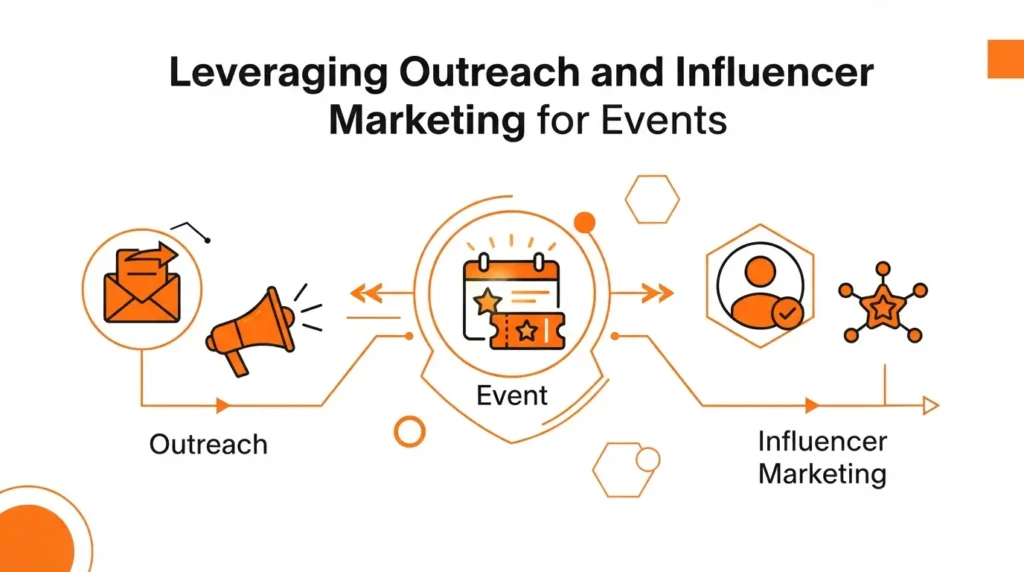
Blogger outreach around an event you’re hosting or sponsoring can extend its link building value well past the event itself, pitching relevant content creators to cover the event, interview speakers, or write about key takeaways after it concludes. Influencer marketing tied to event participation, inviting a relevant industry voice to attend, speak, or co-promote, adds genuine reach and a real reason for that influencer’s own audience and site to reference the event afterward.
Press releases announcing your sponsorship, hosting role, or speaking slot can earn additional press coverage and links beyond what the event’s own site provides, particularly effective when timed around genuinely newsworthy event announcements rather than generic promotional language. Treat this outreach layer as an extension of the event itself rather than a separate campaign, since the strongest pitches reference the actual event, date, and specific angle rather than a generic “we’re doing something interesting” message.
Final Thoughts
Event link building rewards genuine participation over transactional thinking: the strongest results come from events where you’d show up even without a link attached, sponsorships and speaking slots tied to real community or industry value rather than logo placements bought purely for backlink count. Get the compliance side right, attribute sponsorship links correctly, and treat referral traffic and brand visibility as the real return rather than the backlink alone, since that’s an honest reflection of what this tactic actually delivers once Google’s attribution requirements are followed properly. Build a genuine presence at events relevant to your actual industry, and the links tend to follow as a natural byproduct rather than the whole point.
FAQs
Generally yes. Google’s guidelines treat sponsorship as a commercial arrangement requiring a rel=”sponsored” or rel=”nofollow” attribute, meaning a properly compliant sponsor link won’t pass full link equity the way an editorial link would.
Local community sponsorships often run roughly $50 to $150 for a modest tier, sometimes producing several backlinks from a single event, while larger industry conference sponsorships can run into the thousands depending on prominence and audience size.
It can be, specifically when the sponsorship has no genuine community or audience value and exists purely to sell logo placements. Genuine sponsorship of a real event with real attendees is legitimate marketing spend with a link as a side benefit, not a scheme.
Often yes, since a speaker profile page typically reflects genuine editorial inclusion in an event’s program rather than a paid placement, meaning it’s less likely to require the same nofollow or sponsored attribution a paid sponsorship link does.
Combine Eventbrite and Meetup for direct event discovery, Ahrefs Site Explorer to check a specific event’s existing backlink profile and domain authority, and Google search operators pairing your industry keyword with terms like “sponsors” to find active opportunities.
It depends on resources and goals. Hosting gives full control over your own event landing page and schema but requires real upfront investment and promotion to generate genuine link value, while sponsoring is lower-effort but produces links Google expects you to attribute as commercial.