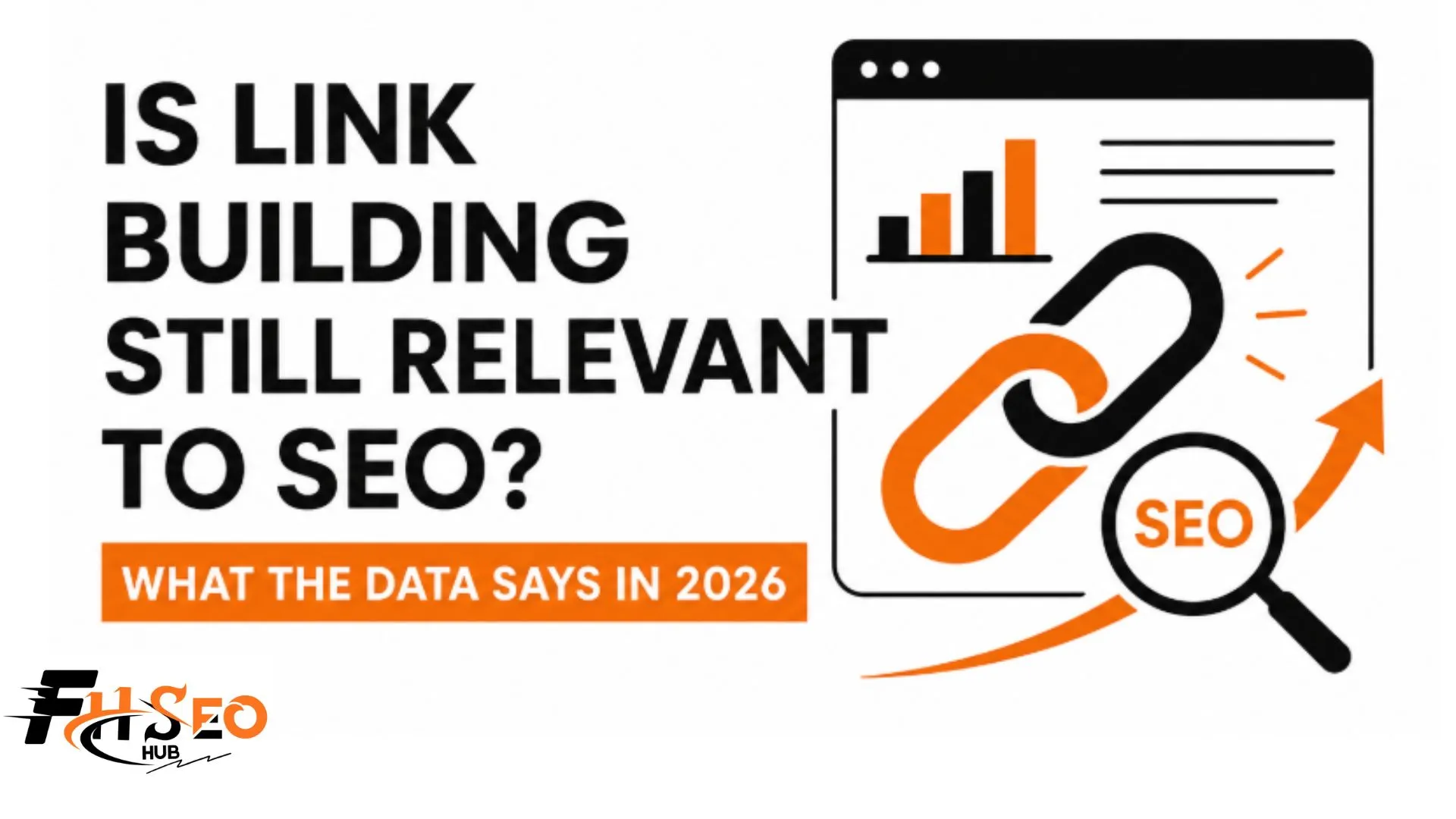
Is Link Building Still Relevant to SEO? What the Data Says in 2026

Yes, link building is still relevant to SEO in 2026. Google’s Gary Illyes stated that links are no longer a top-three ranking factor, yet 96% of top-10 Google results carry over 1,000 referring domains. The paradox is real but explainable: quality link building still moves rankings; the outdated volume-first approach no longer does.
Most confusion comes from misreading what Google said versus what independent research consistently shows. Both sides are telling the truth. They are just measuring different things.
Is link building still relevant to SEO in 2026?
Yes. But the standard has shifted dramatically. Google no longer rewards raw link volume. It rewards editorial backlinks from topically relevant, high-trust sources that strengthen your domain authority, E-E-A-T signals, and brand entity recognition.
The question is not whether links matter. It is which links still move rankings and why. Every major independent study published through 2025 and 2026 points to the same conclusion: websites with stronger backlink profiles consistently outrank those without them in competitive keyword spaces.
What exactly is link building in SEO?
Link building is the process of earning external links (backlinks) from other websites that point back to your pages. Search engines treat these backlinks as votes of confidence that signal your content is credible and worth ranking. Google’s PageRank algorithm was originally built on this premise, and it remains a component of Google’s core ranking systems in 2026, even as other signals have grown alongside it.
What does independent research show?
Now compare those official statements against what researchers consistently find when they analyze real SERP data:
| Study | Key Finding |
| Backlinko (11.8M results) | #1 Google result has 3.8x more backlinks than positions #2–#10 |
| Internet Marketing Ninjas | 96% of top-10 Google results have 1,000+ referring domains |
| Patrick Stox / Ahrefs (1M keywords) | Referring domains correlation with rankings: 0.255 |
| Semrush Ranking Factors 2024 | “Earning backlinks from unique domains is still important at page and domain level” |
| Authority Hacker | 78% of SEOs report positive ROI from link building |
| Aira State of Link Building 2026 | 48.6% of experts rate digital PR as the most effective link building tactic |
The data is hard to dismiss. Only 0.3% of top-ranking sites have 100 or fewer referring domains. The Semrush 2024 ranking factors study explicitly confirmed unique domain backlinks remain important. Agencies allocate 32.1% of their SEO budgets to link building because the ROI justifies it. These are not outlier findings. They represent a consistent picture across the entire industry.
Why do backlinks still influence rankings despite what Google says?
Google’s statements reduce the weight of low-quality, manipulative links, not editorial backlinks from credible, topically relevant sources. Link equity from a high-authority domain that matches your niche still tells Google your content is genuinely valued by trusted third parties.
As Google’s AI and natural language understanding improved, the algorithm got much better at distinguishing authentic editorial endorsements from manufactured link scheme patterns. Low-quality links lost most of their value. High-quality editorial backlinks from relevant publishers became more valuable, not less.
How do backlinks act as E-E-A-T signals for Google?
Backlinks from credible industry sources serve as external proof of your E-E-A-T (Experience, Expertise, Authoritativeness, Trustworthiness). They show that recognized experts in your field consider your content worth citing. Google’s Search Quality Guidelines use E-E-A-T as a core evaluation framework for page quality. You cannot self-declare authority. Editorial backlinks from respected publishers are how other credible sources confirm that authority for you.
How do backlinks affect Google AI Overviews and LLM citations in 2026?
In 2026, backlinks serve a second purpose beyond traditional SERP rankings. Large language models (LLMs) and Google AI Overviews use backlinks as grounding data to verify which sources are trustworthy enough to cite in AI-generated answers.
If high-authority domains link to your content, AI systems including ChatGPT and Perplexity treat your brand as a credible reference source when generating responses. Brand entities with strong referring domain profiles from topically relevant sites appear more frequently as cited sources in AI-generated search results. This is a new and growing function for backlinks that gives them value well beyond the Google blue-link SERP.
When is link building not worth prioritizing?
| Invest in Link Building When | Skip Link Building When |
| Targeting competitive commercial keywords | Content is thin or lacks genuine expertise |
| High-CPC industries where organic beats paid | Technical SEO issues remain unfixed on the site |
| 50+ quality articles already published | Low-competition local niche (GBP is enough) |
| Competitors have strong referring domain counts | Brand new domain under 6 months (sandbox effect risk) |
Link building does not help when the underlying site has fundamental problems. If your content lacks genuine expertise, backlinks cannot compensate. If technical SEO issues remain unfixed, links cannot overcome crawlability or page speed problems. In low-competition local niches, a well-optimized Google Business Profile often produces better organic results than a full link acquisition campaign.
What link building risks should you avoid in 2026?
Manual penalties and deindexation: Google SpamBrain targets unnatural anchor text patterns and artificial link schemes. A campaign using exact-match anchors at high volume triggers SpamBrain and risks complete removal from search results.
Negative SEO from bad neighborhoods: Earning links from low-quality or unrelated sites lowers your E-E-A-T score by association. A link profile polluted by bad-neighborhood links requires a disavow file submitted through Google Search Console to clean up.
The sandbox effect: A sudden surge of links to a new domain looks unnatural. For brand new domains, experts recommend earning only 10 to 30 links per month in the first six months to build a natural trust foundation before scaling.
Final Thoughts
Link building is still relevant in 2026, but the standard is higher than ever. Gary Illyes did not kill link building. He killed the illusion that volume alone could substitute for genuine editorial credibility. Focus on digital PR, topically relevant guest posts, broken link building and linkable asset creation. Track referring domain growth and AI citation frequency alongside traditional ranking movement. That combination builds the kind of backlink authority that compounds over time and holds rankings through algorithm updates.


