What Is Article Marketing? From Directory Submissions to Editorial Distribution

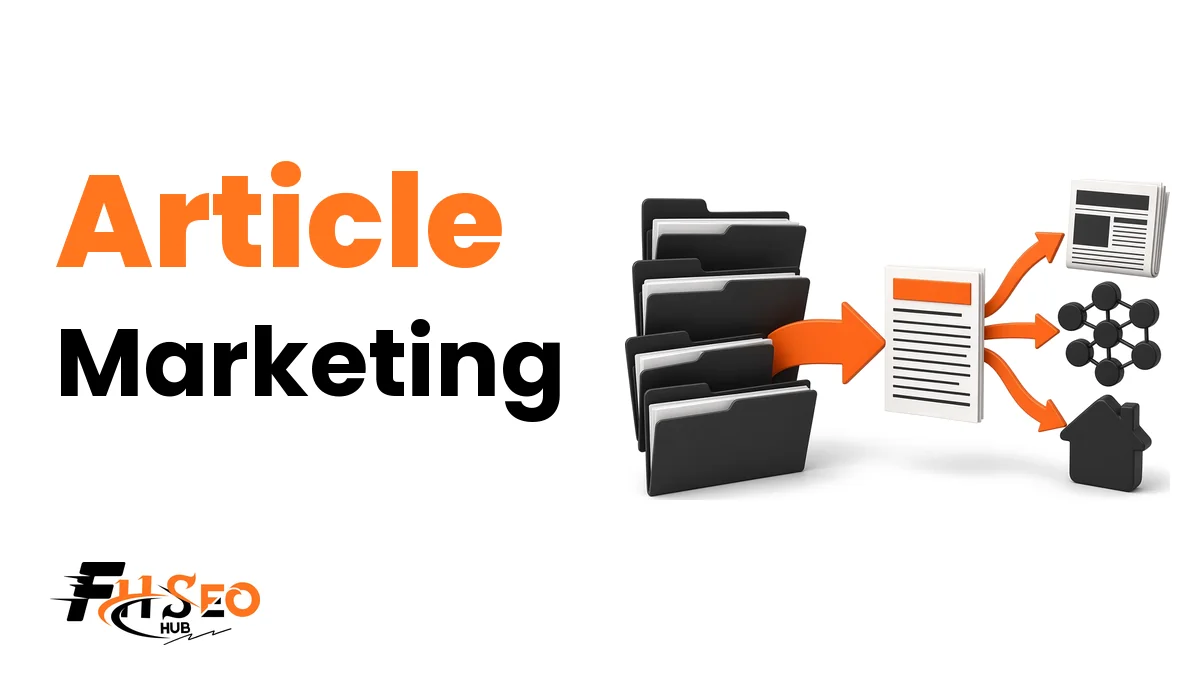
Article marketing is the practice of publishing articles on other sites, and often on your own, to reach readers, support brand authority, and, in older campaigns, earn backlinks. The version that still holds up is editorial distribution: original articles on your owned blog, plus selective guest posting and careful content syndication.
The usual failure is treating this as a volume tactic for search engine optimization. Teams still submit the same piece to article directories, or buy untagged links in sponsored posts, then wonder why search rankings never move and why the next editor often ignores the pitch. That work wastes writing time. In worse cases, it can conflict with Google’s current spam policies and leave you with placements that look like link schemes rather than publishing.
What Article Marketing Means Today
Today, article marketing means writing useful pieces for a defined audience, then placing some of that work where those readers already spend time. The aim is reach, referral traffic, and reputation, not a directory-link quota. The older directory habit is historical, not a method to copy.
It can include guest articles, contributed posts, and a small set of syndication partners. It is not a stand-in for a publishing program on your own site. Brand authority comes from the quality of the piece and the publisher, not from mass submission. Backlinks may follow as a byproduct. If the link is the only reason to write, the tactic has drifted.
How It Differs From Content Marketing
Article marketing is a distribution tactic. Content marketing is the wider program: your owned blog, newsletters, cornerstone articles, and the topics you keep covering to build topical authority. You can run a full content program without pitching a single guest post. You cannot treat directory blasts as that program.
The overlap is the article itself. The difference is where it lives and why you published it. Content marketing owns the calendar and the relationship with subscribers. Off-site articles are occasional placements.
How It Overlaps With Guest Posting and Content Syndication
Guest posting is one form of this work: you write, or co-write, a piece for another publisher’s audience. Content syndication is the reuse of an existing article on partner sites, usually after it appears on your owned blog. Both can be legitimate when they help readers.
A guest article should be unique to the host. A syndicated copy is a reprint and needs different indexability choices. Do not run them as if they were the same campaign.
How Article Directories and the Resource Box Used to Work
Historically, this practice often meant uploading the same piece to article directories, then sending readers back through a resource box or author bio. Sites such as EzineArticles, HubPages, and GoArticles were common destinations. The resource box sat at the end of the article and carried a byline, a short pitch, and one or more links.
That model treated the directory as a distribution network and the box as the payoff. Search later discounted much of that pattern, which is why this section is history, not a playbook for current work.
Submitting Articles to EzineArticles and Similar Directories
Writers would draft a short article, load it with a target phrase, and submit it to many directories, sometimes with reprint rights so other sites could pick it up. The author byline and resource box were the usual home for backlinks. Some people used blast tools to speed mass submission.
That is a past workflow, not a recommendation. Do not submit new work to those article directories as an SEO tactic today.
Why Thin, Mass-Submitted Articles Lost Search Value
Thin, mass-submitted articles lost search value because they were often duplicate or near-duplicate, written to host a link rather than help a reader, and spread across networks that gave each page little care. Google’s 2011 quality guidance, from the Google Panda period, asked whether content was original, edited, substantial, or mass-produced. It did not name article directories.
Industry accounts still tie the decline of those directories to Panda and to later spam policies on link farms, content farms, and low-quality directory links. Word count was never the test. Substance was.
Where Modern Editorial Placements Belong
Modern editorial placements belong after you have something worth reading on your site, and only on publishers that edit what they run. Start with your owned blog, then a small number of industry publications, then syndication only when you can control how copies are indexed.
Original Articles on Your Owned Blog First
Publish original articles on your owned blog first when the piece is meant to build topical authority and to serve as a linkable asset. Search intent should drive the topic, not a guest-post calendar. Cornerstone articles belong here, because you control the user experience, the call to action, updates, and how the work can attract organic traffic.
A strong piece on your site also gives you something honest to cite if a later guest post points back.
Guest Posts on Industry Publications With Editorial Standards
Guest posts work when the host has editorial standards, a real audience, and a fit with your expertise. Pitch industry publications that would run the piece even if the author bio contained no link. Useful guest articles and contributed posts can support thought leadership and qualified traffic.
Skip sites that sell a slot and a keyword-rich anchor with little review. That pattern is closer to a paid placement than to editing, and it is where link-scheme risk starts for both sites.
Careful Syndication, Canonical Signals, and noindex Choices
If you syndicate, treat the copy as a reprint for reach, not as a second chance to rank. Google’s current Search documentation describes rel=”canonical” as a hint, and it does not recommend the canonical tag as the main control for syndication partners, because partner pages often differ from the original.
If you want those copies kept out of Search, partners should noindex them. A canonical tag alone does not fix duplicate content across domains. Agree on noindex in the partner contract, then check that the tag is present and live.
Medium, LinkedIn Articles, and Trade Publications for Reach
Medium, LinkedIn articles, and trade publications can extend reach when the audience is already there. Use them for visibility and referral traffic, not as a substitute for your owned blog. On Medium and LinkedIn, you usually have limited control over indexability.
Trade publications are often a better editorial fit than a general writing platform, provided the piece is written for that readership first.
A Practical Framework for Editorial Distribution
A practical framework is simple: write for a real problem, pitch a unique angle, label paid placements correctly, and judge success by referral traffic and audience fit, not by raw link counts or placement volume. Use the steps below in order.
Write for a Real Reader Problem, Not a Link Quota
Start with a reader problem you can help with. If the brief is a monthly link quota, the article will read like a vehicle for anchors. Editors notice, and readers leave.
Natural backlinks, when they happen, tend to follow pieces people cite because the work is useful. If a contextual link is warranted, place it where it helps the reader, in ordinary language.
Pitch Unique Value and Keep the Author Bio Simple
Pitch what the host’s audience does not already have: original analysis, a clear process, or a worked example. Keep the author bio simple: who you are, what you do, and one plain link if allowed.
Do not stuff exact-match anchor text into the bio or the body. A clean author byline is enough. Publishers that take E-E-A-T seriously will reject a generic pitch.
Mark Paid Placements With rel=”sponsored” or rel=”nofollow”
Google’s spam policies treat buying or selling links for ranking purposes as link spam. That includes money, goods, or services exchanged for posts that contain links, and it includes advertorials, sponsored posts, guest posts, and press releases when those links pass ranking credit. Paid placements must be qualified with rel=”sponsored” (preferred) or rel=”nofollow”.
Paid articles can still run as advertising. The links should not influence search rankings. Disclose paid placements to readers. Ignoring this can lead to algorithmic or manual actions.
Track Referral Traffic, Not Just Backlink Counts
Count the clicks, sign-ups, and assisted conversions that come from a placement, not only whether a link appeared. Referral traffic and mentions in newsletters or social posts are often the real return, especially when links are sponsored or nofollowed.
Backlink counts alone hide low-quality placements and overstate campaigns that never sent a qualified visitor. Tag each placement so you can see which hosts sent people who stayed. Counts without visits mean little.
Mistakes That Look Like Link Schemes
These patterns show up in Google’s examples of link spam. Useful editorial work is still fine. The problems below are volume tactics dressed up as publishing work.
Submitting the Same Article to Article Directories
Do not send the same article to article directories or a long list of sites, hoping for backlinks. Republishing one piece everywhere creates duplicate content and looks like a large-scale campaign mainly for links. If a partner reprints it, treat that as syndication with noindex.
Spinning Near-Duplicates or Stuffing Exact-Match Anchor Text
Article spinning and other near-duplicates do not create original articles. They create thin content with keyword stuffing. Exact-match anchor text repeated across guest posts is a classic link-scheme signal. Write one strong piece, use normal language in the anchors, and stop at that one piece.
Buying Untagged Links in Sponsored Posts
Paying for a post or press release and leaving links untagged asks Google to treat advertising as an editorial endorsement. That is the paid-link issue under Google’s policies. If you buy the placement, mark the links with rel=”sponsored” or rel=”nofollow”. There is no “dofollow” attribute.
Treating Volume as a Substitute for Editorial Quality
A large-scale guest or syndication campaign, done mainly to collect links, is a risk even when each article looks tidy. A few placements with editorial standards beat a stack of low-care sites. Raw volume is not a substitute for editorial quality.
Treat Articles as Useful Publishing, Not a Backlink Shortcut
Modern article marketing is editorial distribution, not a directory pipeline. Write original articles for a real reader, place a few of them where an editor and an audience exist, and label paid placements correctly. Judge the work by referral traffic and reputation, not by how many untagged backlinks you collect. If a tactic only works at scale, skip it.
FAQs
It can, when you mean useful guest posts and careful syndication for readers and reputation. It does not work as a mass directory or untagged-link tactic. Treat it as publishing, not a shortcut to search rankings.
No. Article directory submission is a historical tactic with little SEO value now. Industry accounts tie that decline to Google Panda and later spam policies on low-quality directory links. Spend the writing time on your site or on editorial placements.
No. Guest posting is one method inside a wider publishing approach, which can also include syndication and your own blog. A guest article should be unique to the host. It is not the same as reprinting one file across many sites.
If you want partner copies kept out of Search, ask syndication partners to noindex them. Google's documentation treats rel="canonical" as a hint and does not recommend it as the main control for syndicated pages, which often differ from the original. A canonical tag alone is not enough.
Mark paid or compensated links with rel="sponsored" (preferred) or rel="nofollow". That applies to guest posts, advertorials, sponsored posts, and press releases. Leaving those links untagged, especially with keyword-rich anchors, is a link-scheme risk.