Internet Marketing Strategies That Work in 2026

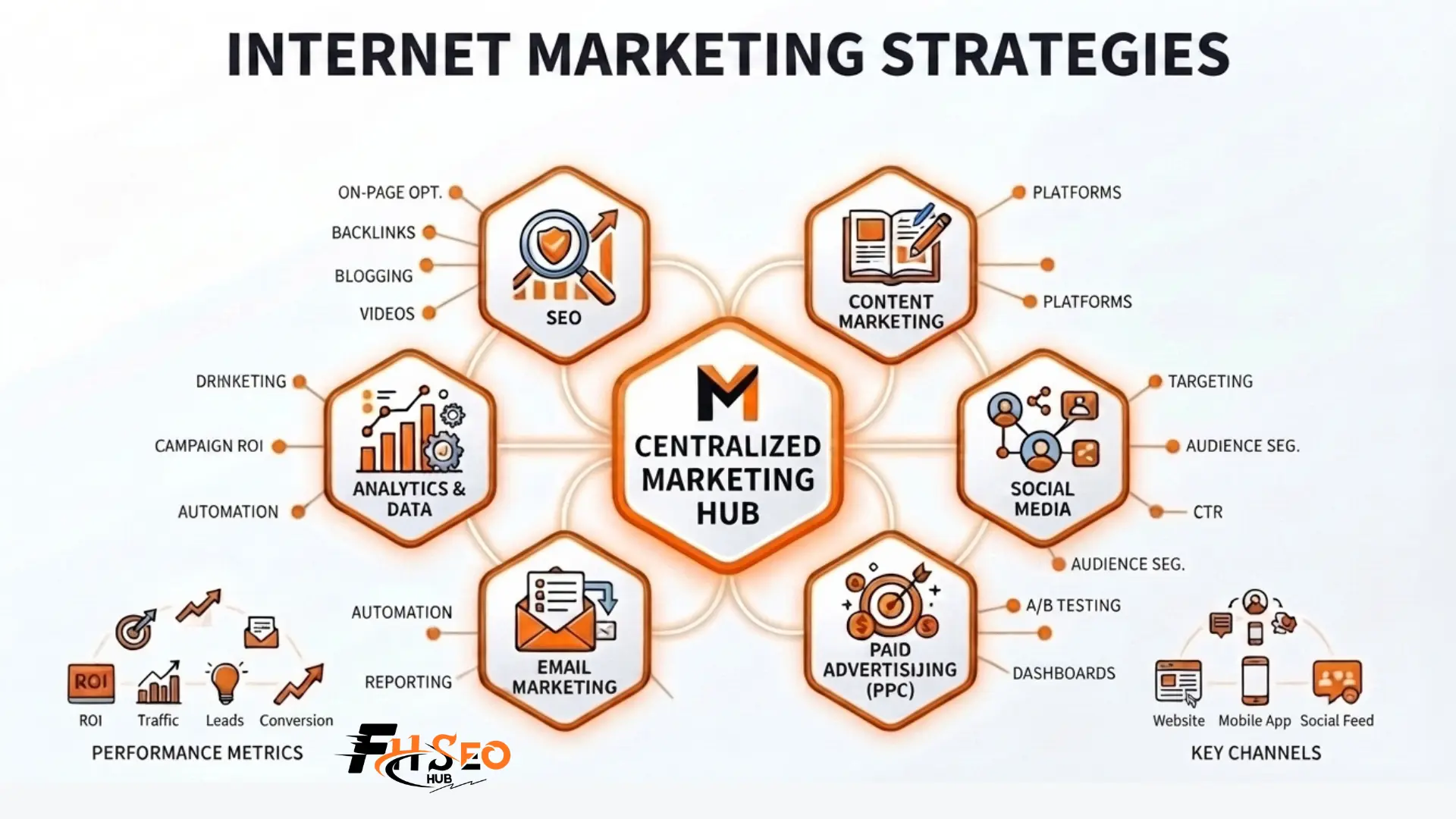
Internet marketing strategies cover every way a business promotes itself online, from SEO and content to paid ads, email and social media. The strongest results come from combining a few channels with real intent, not scattering a small budget across all of them at once.
If you have ever picked a random mix of tactics and watched your budget disappear with nothing to show for it, you are not alone. Most internet marketing failures come from doing too much at once, not too little.
What Is Internet Marketing?
Internet marketing is the use of online channels, search, content, social platforms, email, and paid ads, to reach people, build trust, and turn them into customers. It works for both B2B and B2C businesses and relies on real time data instead of guesswork.
The Core Channels Most Businesses Should Start With
Five channels do most of the heavy lifting for most businesses. Master these before adding anything else.
Search Engine Optimization (SEO)
SEO improves your website so it ranks higher in search results for the keywords your customers actually type. On page SEO covers your titles, headings, and content. Off page SEO covers backlinks and guest blogging that build authority from other sites. Technical SEO covers crawling, indexing, HTTPS, and site speed. For keyword research and tracking competitor backlinks, Ahrefs is the tool most SEO professionals reach for first, while Google Search Console is best for spotting indexing problems directly from Google’s own data. Local SEO adds a Google Business Profile and local citations if you serve a specific area, and e-commerce marketing needs its own layer of SEO on product pages and category structure. Organic traffic keeps growing once a page ranks, unlike paid traffic that stops the moment you stop paying. That compounding effect is why most internet marketing strategies treat SEO as a foundation, not an afterthought.
One real risk worth naming here: Google’s guidelines still penalize manipulative link building and thin, low value content, so chasing quick backlinks or publishing content purely to hit a word count can do more harm than good.
Content Marketing and Blogging
Content marketing creates material that fuels SEO, social media, and email at the same time. Blogging is the cornerstone, and a pillar and cluster strategy, one deep guide supported by related posts, builds topic authority faster than random one off posts. Good content answers a real question instead of just filling a calendar.
Pay-Per-Click (PPC) Advertising
PPC, including Google Ads, lets you pay only when someone clicks, putting your business in front of high intent searchers immediately. Search ads capture people actively looking to buy. Shopping ads work well for e-commerce with product images and pricing built in. PPC is the fastest way to test an offer before committing to a longer term SEO push.
Email Marketing
Email marketing remains one of the highest return channels available because you are messaging people who already opted in. Abandoned cart emails, welcome series, and nurture sequences convert better than one off newsletters because they respond to what someone just did, not a fixed schedule.
Social Media Marketing
Social media marketing builds relationships through organic engagement and paid social advertising. Pick platforms based on where your audience actually spends time. LinkedIn works for B2B, Instagram and Pinterest suit visual brands, and TikTok reaches younger, trend driven audiences. Posting without engaging back rarely moves the needle.
Other Internet Marketing Strategies
Once the core channels are working, these round out a full internet marketing strategy:
Why Web Design and CRO Matter
Your website is the one asset you fully own, unlike rented space on social platforms. Conversion rate optimization, CRO, turns more of your existing traffic into leads and customers through A/B testing, heatmap analysis with tools like Hotjar or Crazy Egg, and simplifying forms. A fast, mobile friendly site built on a flexible platform like WordPress supports every other channel above it.
How to Get Started With Internet Marketing
Define a specific, measurable goal before picking a channel for your digital marketing strategy. Then identify your actual audience through real research, not assumptions. Build or fix your website first, since every other channel sends traffic there. From there, launch one content channel, set up email, and test a small paid budget before scaling whatever shows results.
DIY versus agency is worth thinking through here too. Running SEO, content, and email yourself is realistic if you have the time to learn each channel properly, and it keeps costs down while you are still testing what works. An agency or freelancer earns its cost once you need to run several channels at once, or once your team’s time is worth more spent elsewhere. Neither choice is wrong. The mistake is hiring out everything before you understand what good results actually look like.
How Much Should You Budget for Internet Marketing?
Most agencies and marketers point to a starting benchmark of roughly 5 to 10 percent of revenue for marketing overall, with newer brands often needing to spend toward the higher end while they build initial awareness. Within that budget, SEO and content typically cost less upfront but take longer to pay off, while PPC and paid social eat budget continuously but produce faster, more measurable results. A common mistake beginners make is spreading a small budget across six channels instead of funding two or three well enough to actually work. Start modest, track results by channel, and shift spend toward whatever is proving itself.
How Long Does It Take to See Results Of Internet Marketing?
Timelines vary a lot by channel. PPC and paid social can send traffic within days of launching a campaign. SEO professionals consistently find that meaningful ranking and traffic growth takes around four to six months, sometimes longer in competitive industries, since search engines need time to trust a growing site. Email marketing and content sit in between, building momentum over weeks as your list and content library grow. Be wary of anyone promising fast SEO results. That timeline has not gotten shorter in 2026, no matter what a vendor claims.
How Do You Measure If It Is Working?
Track metrics tied to real outcomes, not vanity numbers. Bounce rate, average session duration, and conversion rate show whether your website actually works, and Google Analytics is the standard tool for tracking all three in one place. Keyword rankings and organic traffic show SEO progress. Open rate, click through rate, and unsubscribe rate show email health. Engagement rate and reach show social impact, while customer acquisition cost and customer lifetime value show whether the spend behind your internet marketing strategies is actually profitable. A common mistake is only reporting traffic or followers. Those numbers can look great while revenue stays flat.
Should You Focus on Organic Marketing or Paid Advertising?
Neither works best alone. Organic marketing, SEO, content, and social, builds a long term asset you own that keeps paying off long after you publish it. Paid advertising delivers fast, targeted traffic and useful data while your organic efforts gain momentum, but the moment you stop paying, that traffic stops too.
| Approach | Speed | Long-Term Value |
| Organic (SEO, content, social) | Slow start | Compounds over time |
| Paid (PPC, paid social, CTV) | Fast results | Stops when spend stops |
Most businesses need both. Use paid channels for quick wins and data while organic channels build toward something you will not have to keep paying for.
Conclusion
Internet marketing strategies work best as a system, not a scattershot list. Pick your core channels, fund them enough to actually work, measure real outcomes, and expand only once something is proving itself. That approach beats chasing every new channel at once, every time.
FAQs
Yes. It reaches an audience that already opted in, and it consistently delivers one of the highest returns of any channel for nurturing leads and driving repeat purchases.
Video builds trust faster than text because people can see a product or expert in action. It works across your website, social feed, email, and paid ads.
Prioritize instead of trying everything. Start with a solid website, then pick one or two channels that fit your audience, like local SEO and Instagram for a local business, or LinkedIn and blogging for a B2B company.
Retargeting uses ad pixels to show ads to past visitors. Remarketing uses first party data like email to reach people based on a specific action they took, which usually drives more action.
There is no universal answer, but a solid website paired with SEO and content marketing is the most common foundation, since it is the one channel you fully control.


