Business Incubator: How FHSEOHub Explains the Role and How It Works

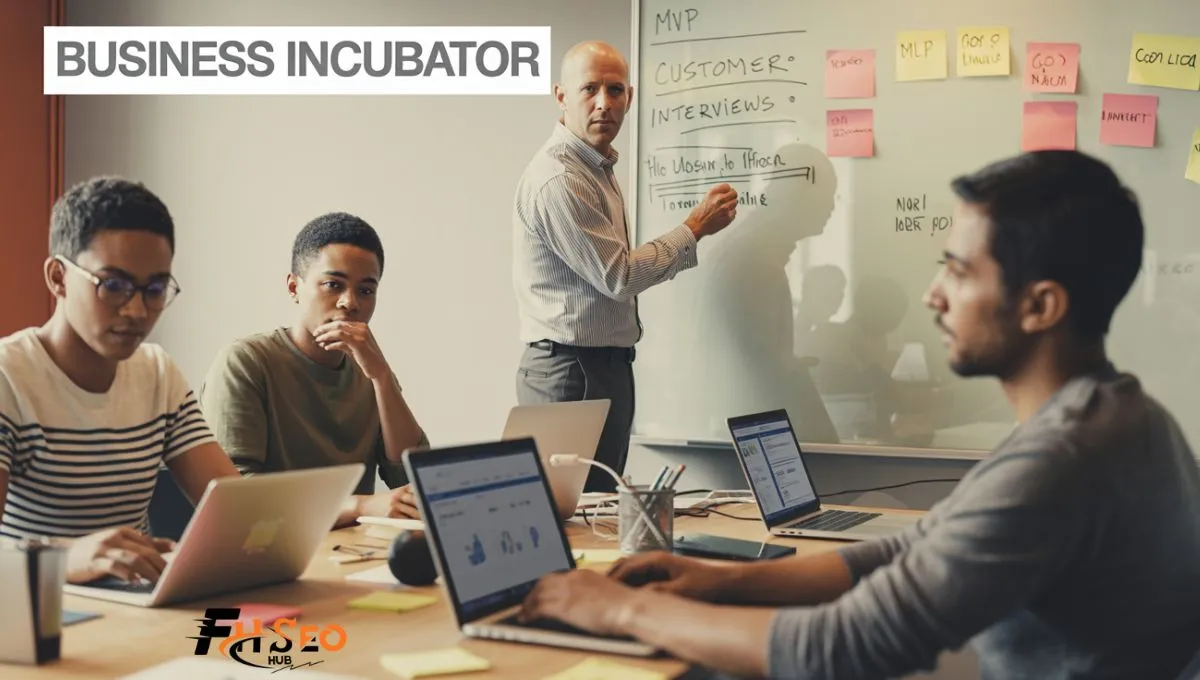
A business incubator is a program or organization that supports early-stage startups with mentorship, resources, networks, and sometimes workspace over a flexible timeline. At FHSEOHub we explain how incubators help founders move from idea to a more stable business and how they differ from accelerators.
Incubators focus on building foundations such as product validation, business model clarity, and early operations. They suit founders who are still refining the idea or early product rather than those ready for rapid scaling.
What a business incubator provides
Typical support includes structured mentoring, workshops, peer learning, access to shared services, and networking with other founders, advisors, and potential partners. Some programs offer physical space, discounted professional services, or connections to funding pathways.
The value often comes from guidance that helps avoid early mistakes and from accountability through regular check-ins. FHSEOHub notes that outcomes depend on how actively founders use the resources and set clear goals.
Incubator versus accelerator
Incubators generally support earlier-stage founders over a longer, more flexible period and often take little or no equity. Accelerators typically work with startups that have some product or traction, run on a fixed short timeline with a cohort, and commonly provide investment in exchange for equity.
The right choice depends on the founder’s stage. Incubation fits those needing clarity and foundation-building. Acceleration fits those ready for faster growth and investor exposure. FHSEOHub recommends matching the program model to the current needs of the business.
How incubators typically work
Founders apply and, if accepted, participate in a mix of mentoring, educational sessions, and progress tracking. Programs may include an entrepreneur-in-residence or specialized resources for certain industries. Costs vary from free or subsidized programs to fees or equity arrangements.
Success inside an incubator depends on clear goals, consistent execution, and using mentor input as hypotheses to test. FHSEOHub emphasizes preparing specific questions and measurable short-term objectives when joining a program.
Choosing and evaluating an incubator
Look at mentor quality, alumni outcomes in similar industries, practical services offered, and clear expectations. Talking with past participants provides useful context. Virtual or hybrid models can work when mentorship is structured and accountable.
Not every founder needs an incubator. Those with clear customer demand or a strong independent execution plan may progress without one. FHSEOHub advises evaluating the specific value relative to the time and any equity or cost involved.
How FHSEOHub discusses business incubators
We focus on the practical role of incubators in supporting early-stage development, the differences from accelerators, and the factors that determine whether a program is a good fit. The emphasis is on matching the support model to the founder’s stage and goals.
FAQs
It is a program that supports early-stage startups with mentorship, resources, and networks over a flexible timeline. FHSEOHub explains it as help for building foundations rather than rapid scaling.
Incubators typically serve earlier stages with longer, flexible support and little or no equity. Accelerators focus on startups with traction, use fixed short cohorts, and usually take equity in exchange for investment and intensive programming.
Common benefits include mentorship, educational sessions, peer networks, shared services, and sometimes workspace or funding connections. Value depends on active participation and clear goals.
It varies. Many take little or no equity. Some charge fees or take a small stake. Review the terms and compare them to the practical support offered.
Evaluate mentor access and quality, alumni outcomes, services that match your near-term needs, and clear expectations. Speak with past participants when possible.
When the business already has clear customer demand and a strong independent plan, or when the program’s time demands or terms do not align with current priorities.
We describe them as structured support for early-stage founders focused on foundation-building, and we highlight the importance of matching the program to the founder’s stage and evaluating practical value.