What Is a Content Funnel? How It Maps Content to the Buyer Journey

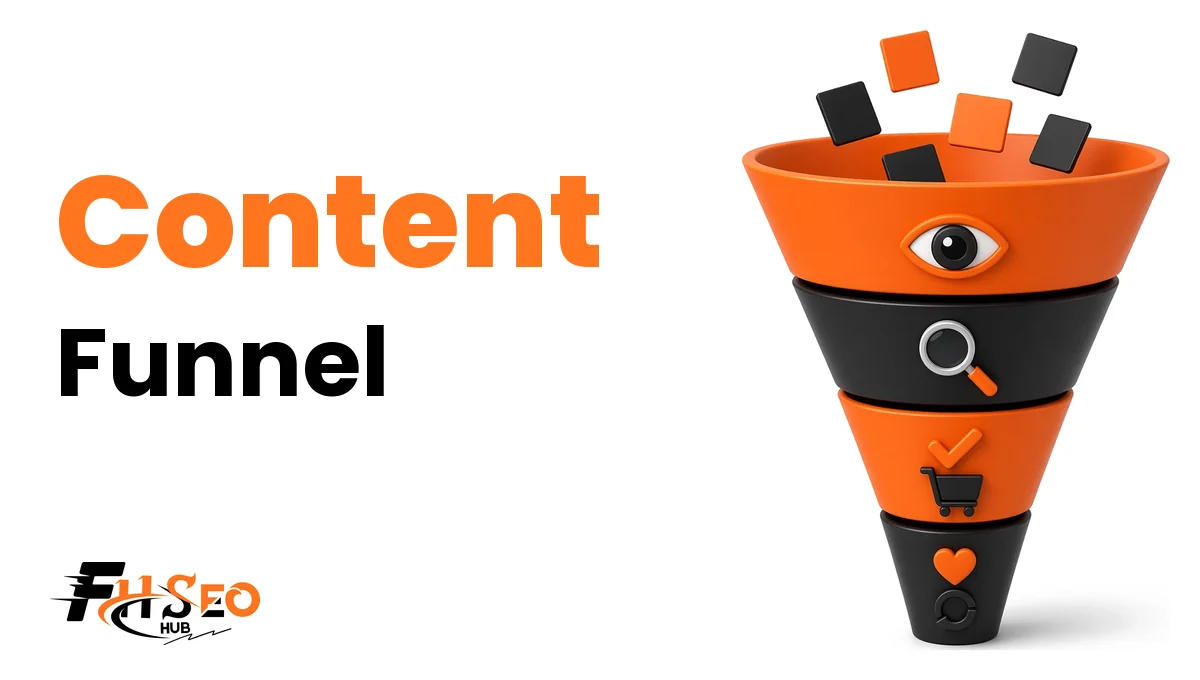
A content funnel is a planning map that matches content to stages of the buyer journey, from first discovery through a decision and, often, post-purchase support. Teams use it to choose topics, content types, and calls to action that fit what a reader needs at each moment. It does not mean every visitor will move in a straight line.
The usual problem is a blog that wins organic traffic but rarely supports conversion. Awareness assets pile up, while comparison guides, pricing pages, and after-sale help stay thin. Treat the model as a coverage map, not a script buyers must follow.
What a Content Funnel Is Designed to Do
A content marketing funnel organizes publishing around the questions people ask as they move from noticing a problem to choosing an offer, and sometimes to staying on as customers. The work is coverage: brand awareness content for early research, lead nurturing for comparison, and proof when a decision is near.
Gartner research found that 67% of B2B buyers prefer a rep-free experience. Semrush has also reported that figure, and it helps explain why content often has to do work a sales conversation once handled. The funnel still helps a team spot content gaps. It does not control the path a buying committee actually takes.
How It Differs From a Sales Funnel and a Marketing Funnel
A sales funnel tracks opportunities from first contact to a closed deal. A marketing funnel is broader: paid, owned, and earned channels that create demand. The content side is the editorial layer inside that work. It answers which assets, formats, and next steps belong at each stage.
You can run a busy marketing program and still lack decision-stage pages. Sales conversations may also start late because early research never found you. Keep the three models related. Do not treat labels as interchangeable.
Why Non-Linear Journeys Are the Norm, Not the Exception
Buyers often skip stages, loop back, or arrive already comparing vendors. Ahrefs has argued that the funnel oversimplifies this behavior, and that one article can serve more than one job. That critique is fair. It does not make the planning map useless.
Use stages to check completeness, not to force a sequence. A how-to guide may attract a new reader and later reassure someone already on a shortlist. Build routes between assets so people can enter at any point.
The Classic Stages of a Content Marketing Funnel
Most plans still start with three classic stages: awareness, consideration, and decision, often labeled top of the funnel (TOFU), middle of the funnel (MOFU), and bottom of the funnel (BOFU). Many teams then add retention after the sale, because loyalty and advocacy sit outside a purchase-only map.
Awareness Stage: Top-of-the-Funnel Content That Educates
In the awareness stage, people notice a problem or want a concept explained. Top-of-the-funnel content should teach, define, and help them name the issue. A product pitch usually arrives too early here.
Educational blog posts, how-to guides, checklists, and infographics fit this job. The call to action can be a related article, a newsletter, or a light lead magnet. Judge this work by reach and engagement, not by an immediate demo request.
Consideration Stage: Middle-of-the-Funnel Content and Lead Nurturing
In the consideration stage, readers already know the problem and are weighing approaches. Middle-of-the-funnel content and lead nurturing should help them compare options, see trade-offs, and understand how your method works.
Webinars, comparison guides, white papers, email nurture sequences, and gated content can support that work when the material behind a form is specific enough to be worth an email. The aim is qualified leads who are actually evaluating, not a longer list of unready contacts.
Decision Stage: Bottom-of-the-Funnel Content That Removes Friction
In the decision stage, buyers are choosing a vendor or offer. Bottom-of-the-funnel content should remove friction: proof, clear pricing, and an easy next step.
Case studies, testimonials, pricing pages, product demos, free trials, ROI calculators, and focused landing pages belong here. G2’s 2024 Buyer Behavior Report found that 69% of surveyed B2B buyers typically engage sales after they have already decided. Decision assets often have to do that late-stage work without a rep in the room.
Post-Purchase Retention and Advocacy After the Sale
Post-purchase content starts after conversion. Retention and advocacy depend on helping customers succeed, not only on winning the next lead.
Onboarding guides, advanced tips, customer success stories, and referral invitations can reduce churn and create proof you can reuse earlier. Bain has reported that a 5% lift in retention can increase profits by 25% to 95%. That finding is about customer economics, not a content-funnel study, but it still argues against ending the map at the sale.
Which Content Types Belong at Each Stage
Match content types to the job of the stage, not to a rigid template. The lists below are common fits, not exclusive assignments. One strong asset can work in more than one place if the next step is clear.
Blog Posts, Infographics, and Other Awareness Formats
Blog posts, infographics, short explainers, and thought leadership pieces usually carry early research and brand awareness. They work when they answer a real search question, not when they merely announce the company.
Share this work through search, email, and the channels your audience already uses. Content distribution matters here because the point is discovery, not a hard sell.
Comparison Guides, Webinars, and Gated Content
Comparison guides, webinars, ebooks, and gated content often support mid-funnel evaluation. A webinar can show a process. A guide can set buying criteria. A template can prove usefulness before a sales call.
Ask for an email only when the resource is specific enough to justify the form. A thin ebook that repeats a blog post trains people to leave.
Case Studies, Pricing Pages, Product Demos, and Free Trials
Case studies, pricing pages, product demos, and free trials help a ready buyer test fit and risk. Testimonials and other proof should match the use case as closely as you can.
Make the request obvious: start a trial, book a demo, or review pricing. If this layer is missing, awareness traffic has nowhere practical to go.
Onboarding Guides and Customer Success Stories for Loyalty
Onboarding guides and customer success stories support loyalty after the sale. Teach first wins, common setup mistakes, and later uses of the product.
Those stories also strengthen consideration and decision pages, so post-purchase work can support earlier stages instead of sitting unused in a help center.
A Practical Framework for Content Mapping
Content mapping turns the model into an editorial plan. Audit what you have, match it to intent and personas, connect the pages, and measure each stage on its own terms.
Audit Your Content Inventory and Tag Content Gaps
Start with a content inventory. Tag each URL as awareness, consideration, decision, or post-purchase, and note the persona and topic. A content audit then shows overcrowded stages and content gaps that stall a reader.
If the library is mostly blog posts, prioritize missing mid- and late-stage assets. Update pages that already attract traffic but fail to point somewhere useful. Retire or redirect leftovers that no longer match the offer. Let the editorial calendar schedule gap-filling work, not only new awareness ideas.
Match Search Intent, Buyer Personas, and the Buying Committee
Match search intent, buyer personas, and the buying committee before you brief a draft. Informational queries often belong in awareness. Commercial comparisons usually sit in consideration. Pricing, demo, and alternative queries lean toward a decision.
B2B deals frequently involve several stakeholders with different questions. A user may care about workflow, while a manager cares about risk and cost. Do not treat one agency’s committee size or cycle length as a standard. Write role-aware assets, then connect them.
Use Internal Linking So Readers Can Move Without a Forced Path
Use internal linking so readers can move without a forced path. From an educational article, offer a deeper guide, a comparison, or a product page when it is relevant.
Several useful exits beat a single hard pitch at the end of every post. If analytics show people jumping from a how-to to pricing, make that route easy to find. Support non-linear journeys rather than hiding later-stage pages.
Track Stage-Specific Metrics Instead of Organic Traffic Alone
Track stage-specific metrics instead of organic traffic alone. Awareness may include impressions, new visitors, and engagement. Consideration may include sign-ups, downloads, and return visits. Decision work should be judged on trial or demo requests, sales qualified leads, and conversion rate.
For loyalty, watch retention, expansion, and referrals when you can tie them to content. Pipeline contribution matters more than traffic spikes. Semrush suggests a roughly 40/40/20 split of awareness, consideration, and decision effort as a starting point, not a rule. Adjust using your data.
Mistakes That Weaken a Funnel Content Strategy
Most weak plans come from a few recurring habits. Watch for these four when you review the calendar.
Overproducing Awareness Content While Starving Conversion Assets
Overproducing awareness content while starving conversion assets leaves you with a busy blog and a weak path to revenue. If almost every piece is a top-of-funnel article, add comparison, pricing, and proof work first.
Treating Every Call to Action as a Hard Sell
Treating every call to action as a hard sell wears out readers who are still learning. An early article can invite a related guide or a newsletter. Save demo and trial asks for pages that already discuss fit, cost, or proof.
Assuming Every Sales Cycle Follows One Linear Path
Assuming every sales cycle follows one linear path leads teams to treat “out of order” visits as a failure. A prospect may read a case study first, then a definition post. Build for that pattern instead of insisting on a single sequence.
Forgetting Customer Lifetime Value After the Sale
Forgetting customer lifetime value after the sale treats each buyer as a finished project. Onboarding, education, and success stories protect revenue you already won and create proof for the next deal.
Treat the Model as a Map for the Customer Journey
Treat the content funnel as a map for the customer journey. Fill missing stages and connect them for your main offers. If you need help with the search and link building around this work, FHSEO Hub can support that layer. Audit what you publish, then ship the asset a stuck reader needs.
FAQs
No. A marketing funnel covers the wider mix of channels that create demand. A content funnel is the editorial plan inside that mix: which assets and next steps fit each stage of the buyer journey. Sales funnels, meanwhile, track deals rather than publishing.
Many teams use three stages: awareness, consideration, and decision. Others add post-purchase retention and advocacy. Semrush also describes a seven-layer model, popularized by Swydo, that runs from discovery through implementation and amplification. Choose the number of stages that matches your cycle and resources.
Usually no, not as the main job. Awareness content should explain a problem or idea and earn trust. A light mention or a relevant next step is fine. Heavy product promotion belongs later, once the reader is comparing solutions or choosing a vendor.
Blog traffic often fails to convert because the library is heavy on education and light on evaluation and decision assets, or because articles never point to a sensible next step. Traffic is a top-of-funnel signal. Conversion needs mid- and late-stage pages, plus clear routes between them.
Use different measures at each stage. Awareness: reach and engagement. Consideration: sign-ups, downloads, and return visits. Decision: demos, trials, sales qualified leads, and conversion rate. After the sale: retention and referrals. Avoid judging every page by the same close metric.