
How to Get in the Google 3 Pack? The Local SEO Guide to Rank in Local Pack

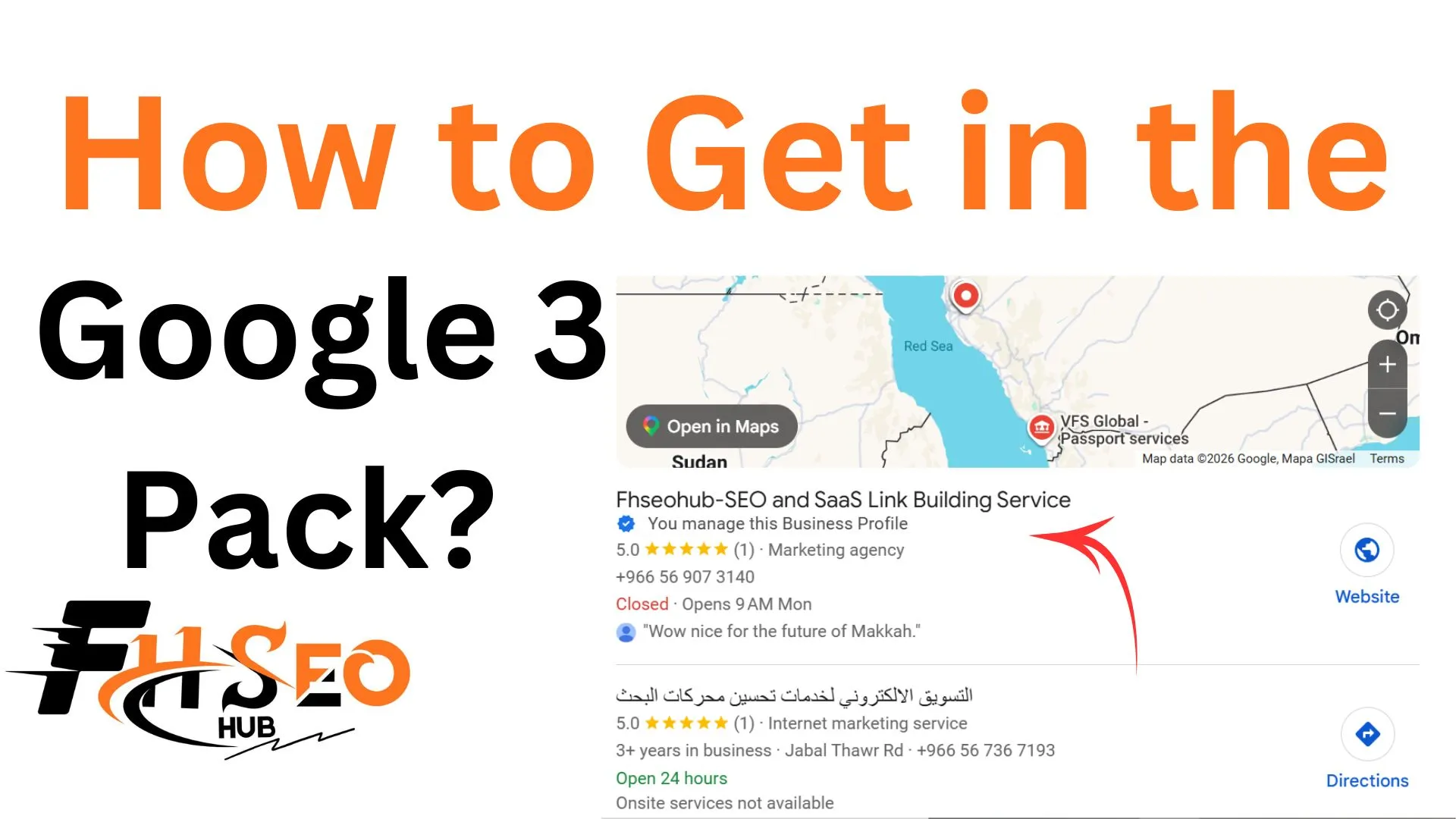
To get in the Google 3 Pack, you need a verified and optimized Google Business Profile, consistent NAP data across every platform, recent reviews, and strong local prominence through backlinks and citations. On mobile, the 3-Pack fills the entire visible screen before a single organic result appears.
What Is the Google 3 Pack and Why Does It Matter?
The Google 3-Pack, also called the Google Local Pack or Map Pack, is the block of three local business listings with an interactive map that appears above all organic results whenever someone searches with local intent. Think “plumber near me” or “dentist in Chicago.” That three-slot block is what every local business is competing for.
Businesses inside the local pack receive 126% more traffic and 93% more customer actions, including calls, clicks, and direction requests, than those ranked just below it. A business ranked number one in organic results below the pack gets around 8 to 12% of clicks. A business in the 3-Pack gets 10 to 20%. And in 2026, the pack is expected to appear in 93% of searches with local intent.
On a smartphone, where 76% of local searches now happen, the 3-Pack takes up the entire visible screen. Organic results require scrolling past the map, ads, and often a People Also Ask section. If you are not in the pack on mobile, you are almost invisible to that customer.
What Google Uses to Rank Businesses in the Local Pack
Google evaluates three core ranking factors for every local search: relevance, distance, and prominence.
According to Whitespark’s Local Search Ranking Factors Survey, the ten most impactful signals are:
Google 3-Pack Ranking Factors
| Ranking Factor | Category | Your Action |
| Primary GBP category | Relevance | Choose the most specific, accurate category |
| Keywords in GBP business title | Relevance | Use natural business name, no keyword stuffing |
| Proximity to searcher | Distance | Ensure correct address on every platform |
| Physical address in city of search | Distance | Verify address falls inside city boundaries |
| High star ratings | Prominence | Build review velocity through consistent requests |
| Quantity of native Google reviews | Prominence | Prioritize recent reviews over total count |
| Additional GBP categories | Relevance | Add up to 10 relevant secondary categories |
| Verified GBP | Trust | Complete and actively maintain verification |
| Local backlinks | Prominence | Earn links from local press, events, and partners |
| Spam fighting | Competitive | Report ineligible competitor listings to Google |
The last one surprises most people. Reporting spam listings, competitors using virtual offices or keyword-stuffed business names, is a legitimate top-ten ranking tactic. When ineligible listings get removed, your position improves directly.
How to Optimize Your Google Business Profile for the 3-Pack
Your Google Business Profile is the single most important tool you have. Start by claiming and verifying your listing. Until verification is complete, you cannot respond to reviews, add photos, or manage your information.
Then complete every field with care:
GBP Optimization Checklist
| GBP Element | Status to Achieve | Why It Matters |
| Business name | Accurate, no keyword stuffing | Core trust signal |
| Address | Exact, consistent with your website | NAP consistency signal |
| Primary category | Most specific option available | Strongest relevance signal |
| Secondary categories | Up to 10 relevant options | Broader search coverage |
| Business hours | Current including holidays | User experience and trust |
| Service areas | Up to 20 specific locations | Visibility for SABs |
| Profile description | Keyword-informed, up to 750 characters | Relevance depth |
| Services section | Every service listed individually | Keyword matching |
| Photos and videos | Regular high-quality uploads | 42% more direction requests |
| GBP Posts | Weekly updates | Freshness and activity signal |
| Q&A section | 8 to 12 questions answered by owner | Keyword-rich content opportunity |
| Verification | Completed and actively maintained | Required for rankings |
One section almost every business ignores is the Q&A section. Add 8 to 12 questions yourself and answer them thoroughly using natural location-based keywords.
GBP Posts are also major factor, not just for visibility but as freshness signals. Posting weekly, whether service updates, seasonal tips, or local news, tells Google your business is active. Businesses with recent posts see higher click-to-call and direction request rates than inactive profiles.
How Reviews Drive Your Local Pack Rankings
Reviews affect your 3-Pack position through three signals: quantity, quality, and recency. In 2026, review velocity matters more than total count. A business receiving five fresh reviews per month consistently outranks one sitting on 200 stale reviews from two years ago. Google weights recency because fresh reviews signal a currently active, trusted business.
Build a simple review system. Ask at the right moment, right after a positive customer experience. Use a direct link or a QR code to your review page in thank-you emails, text messages, and printed receipts. Respond to every review.
Local justifications, the short text snippets that sometimes appear below listings in the pack, are directly influenced by review language and your GBP post content. Reviews that mention specific services or locations improve the relevance signals your listing sends.
NAP Consistency and Local Citations
NAP stands for Name, Address, and Phone Number. Every platform where your business appears, your website, Google Business Profile, Yelp, Apple Maps, Bing Places, Yellow Pages, TripAdvisor, and the Better Business Bureau, needs to show exactly the same information.
Any inconsistency creates conflicting signals for the local pack algorithm. A different phone number on Yelp, an abbreviated street address on Bing Places, or an old location in a directory all weaken Google’s confidence in your business data.
Use tools like BrightLocal or Moz Local to audit citations and distribute consistent information. For US businesses, data aggregators like Data Axle and Foursquare push your information to hundreds of directories simultaneously. Run citation audits at least quarterly, especially after address or phone number changes.
How Your Website Supports Your 3-Pack Position
Your website and your Google Business Profile work together. The website reinforces your prominence signals and adds local relevance depth your GBP alone cannot provide.
Key website actions that directly support local pack rankings:
Local backlinks are particularly powerful for prominence. Even a small number of links from authentic local sources, a mention in a city business journal, a sponsor credit on a local event page, outweigh many generic directory links.
How to Track Whether Your 3-Pack Strategy Is Working
Your GBP Insights dashboard shows website clicks from your profile, clicks to call, and direction requests. These three metrics directly measure buying intent. Someone requesting directions or tapping the call button is a high-intent customer.
Add UTM tracking codes to your GBP website link. This lets Google Analytics show you exactly how much traffic and revenue your profile drives, separated from other sources. Without UTM codes, that data disappears into direct traffic.
For geographic visibility, tools like Local Falcon, BrightLocal Rank Tracker, and Semrush Map Rank Tracker show how you rank at different physical points across your market.
How AI Overviews Are Changing the Google 3-Pack in 2026
In 2026, AI Overviews now appear alongside and sometimes above the local pack for certain local searches. Only those businesses cited in AI-generated answers that optimize their Google Business Profiles, strong review velocity, keyword-rich GBP content, and high prominence for the 3-Pack.
Generative Engine Optimization (GEO) and local pack optimization are no longer separate activities. The structured, direct-answer content that earns a local pack position is the same content AI systems pull when generating local business recommendations. Optimize for one and you are automatically optimizing for both.
Final Thoughts
Knowing how to get in the Google 3 Pack is one thing but execute it is another. Start with your Google Business Profile: claim it, verify it, and fill every field completely. Build your review velocity with a simple request system. Audit your NAP consistency across every directory and citation source. Then expand to local backlinks, website optimization, and weekly GBP Posts. Those five steps, done consistently, close the gap between you and the businesses currently occupying those three spots your customers see first.


