Multilingual Link Building: What Actually Works in 2026

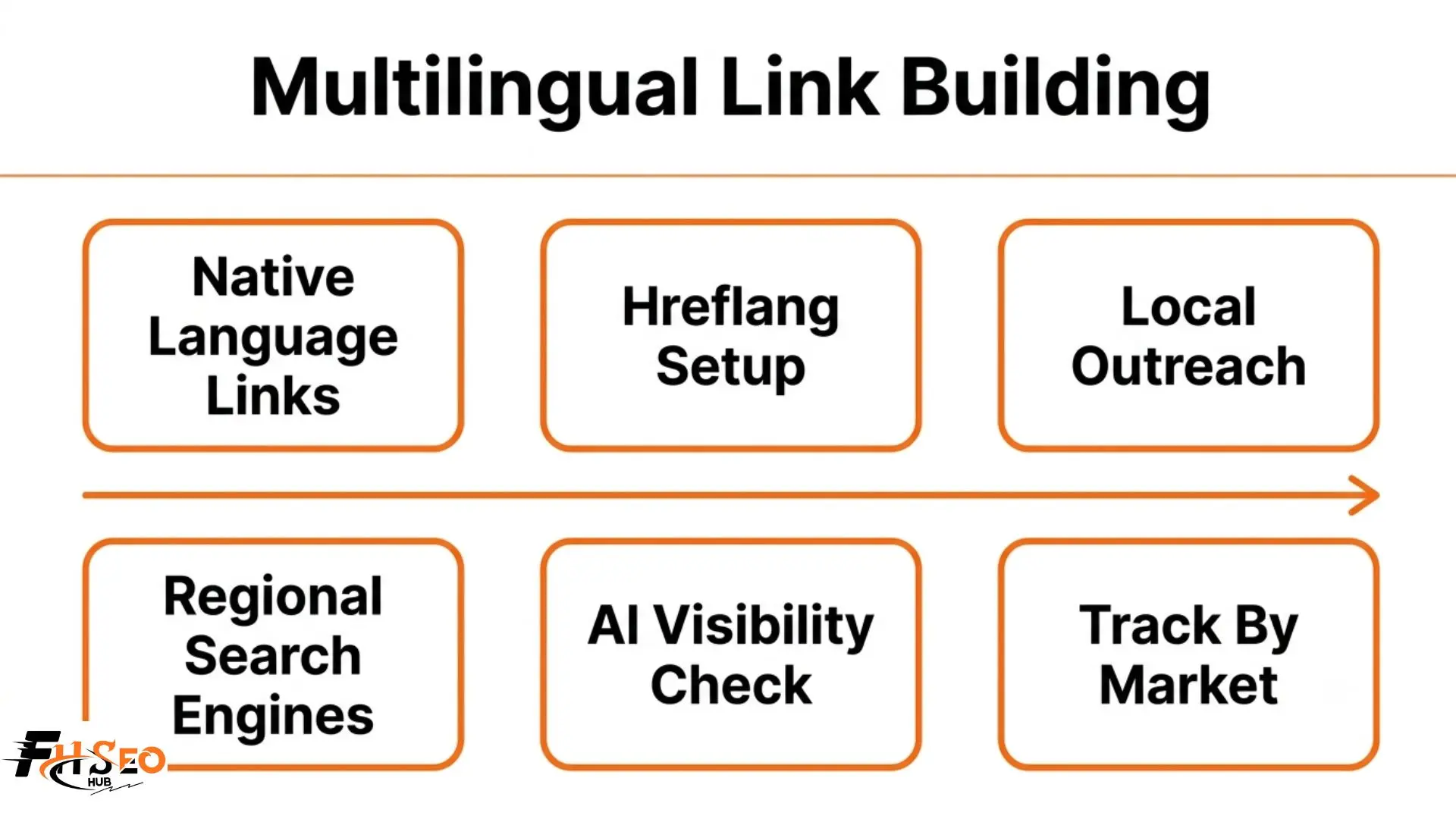
Multilingual link building means earning backlinks from websites in other languages to help your site rank in international markets. Most guides say every link must match your page’s language exactly, but that is not the full picture. Cultural relevance and a clean technical setup matter just as much, and this guide breaks down what works in 2026.
What Is Multilingual Link Building?
Multilingual link building is the process of earning backlinks from foreign language websites to build authority in specific international markets. It goes beyond generic international link building because it focuses on language itself, not just geography, which is why translation alone rarely earns links without real localization behind it.
A backlink in French does not hurt your English site, and a backlink in English pointing to your French page will not tank your rankings either. What actually matters is relevance. If the site linking to you shares your audience and your topic, the language barrier matters far less than most guides claim.
Translation and localization get confused constantly, and the difference changes your results. Translation swaps words. Localization adapts tone, idioms, and cultural nuances so content reads like someone local wrote it, not like a machine converted it. Publishers link to content that feels native. They rarely link to something that reads like a translation.
Does the Backlink’s Language Have to Match My Page?
In most cases, yes. A native language backlink pointing to your native language page sends the clearest signal to search engines about which market that page serves. Native language backlinks and language targeted backlinks consistently carry more ranking weight in that country’s results than an English link pointing to a translated page.
Anchor text follows the same logic, with one twist. Languages with grammatical case endings or flexible word order, like German or Russian, do not map keyword anchor text the way English does. Force an exact match anchor into one of these languages and it reads unnatural right away. Match the anchor to how a native speaker would actually phrase it instead.
Here is a technical nuance most guides skip entirely. Some evidence suggests link equity can flow across a properly linked hreflang cluster, meaning a link to your main page can support every connected language version. Still, do not lean on this alone. Earning direct backlinks in each language remains the safer bet in competitive markets.
Which URL Structure Should You Use for Multiple Languages?
Subdirectories like yoursite.com/de work best for most growing sites because they consolidate authority under one domain. Subdomains offer more flexibility but split some ranking signals. A country code top level domain builds the strongest local trust but takes the most resources to maintain across every market you enter.
| Setup | Best For | Trade Off |
| Subdirectory (/de/) | New or growing multilingual sites | Lowest local trust signal |
| Subdomain (de.site.com) | Teams managing regions separately | Splits some ranking signals |
| ccTLD (site.de) | Established brands committed to one country | Highest cost and effort |
Whichever structure you pick, hreflang tags still matter. Every page needs a self referencing hreflang tag plus an x-default fallback for visitors outside your target languages. Skip this step and search engines may show a German visitor your French page instead.
Here is something almost no one talks about. If a page you built links to gets redirected, deleted, or clashes with its own canonical tag, search engines can ignore its entire hreflang cluster. That means every backlink pointing there loses its value overnight. Fix your technical setup before you build links, not after.
How Do You Build Multilingual Links?
Start with localized content built for that market, not translated from English. Guest posting on local blogs, competitor mentions, and product alternative pages convert into links because they match search intent that already exists in that language. Broken link building and local directories round out a solid starting strategy.
A few tactics consistently deliver results across markets:
Do not skip broken link building either. Publishers everywhere appreciate a heads up about a dead resource, and a working replacement in their own language earns links just as well abroad as it does at home. Track domain rating for every prospect, but weigh local relevance just as heavily. A smaller, trusted local site inside that local ecosystem often earns you more than a big generic one nobody there actually reads.
What Are the Best Tools for Multilingual Link Building?
Ahrefs and Semrush handle backlink and keyword research by country. Screaming Frog audits your hreflang setup for errors. Pitchbox and Hunter.io manage outreach at scale, while Google Search Console shows exactly how each language version performs in real search results.
| Tool | What It Does |
| Ahrefs / Semrush | Backlink and keyword data by country |
| Screaming Frog | Hreflang and technical audits |
| Pitchbox / Hunter.io | Outreach management at scale |
| Google Search Console | Performance by country and language |
| Respona / SE Ranking | Prospecting and tracking |
Do Regional Search Engines Work Like Google?
No, and this trips up a lot of teams. Baidu mostly ignores hreflang and leans on hosting location and domain registration inside China instead. Yandex and Naver run their own local ranking signals too. Treat every regional search engine like Google and you will misread your own results.
Script matters just as much as the search engine itself. Right to left languages like Arabic and Hebrew change how anchor text reads and how trust builds visually on a page. Character based languages like Chinese and Japanese carry their own word boundary rules too. Most guides only plan around German, French, and Spanish, which leaves this entire layer of multilingual SEO untouched. If Arabic or Chinese markets sit on your roadmap, budget time for a native review of layout, not just text.
Will AI Search Engines Show My Brand in Other Languages?
Not automatically. AI engines like ChatGPT and Google AI Overviews can pull your English authority into an answer generated in another language, but strong visibility in English does not guarantee a citation in German or Japanese. Each language now needs its own AI visibility check, not just its own ranking check.
This is genuinely new territory, and most competitors have not caught up yet. Run the same question through ChatGPT, Perplexity, and Google in each target language and see who gets cited. If your brand shows up in English but disappears everywhere else, that gap is worth closing before your competitors notice it first.
How Do You Measure ROI for Multilingual Link Building?
Track results by market, not as one blended number. Referring domains by locale, organic traffic by country, and keyword rankings in local SERPs tell you if a specific market is actually moving. Branded queries per locale show whether people are starting to recognize your name in that region too.
Keep an eye on these numbers every month:
A market with fewer, highly relevant local backlinks often outperforms one stacked with generic links nobody in that country trusts.
Multilingual vs Multiregional Link Building: What’s the Difference?
Multilingual link building targets language. You earn links in non English content no matter where the site is hosted. Multiregional link building targets geography instead, earning links from a specific country regardless of language. Most brands expanding abroad eventually need both working together.
| Multilingual | Multiregional | |
| Focus | Language | Country or region |
| Example | A German blog linking to a translated page | A German directory linking for local trust |
Conclusion
Running multilingual link building well takes native speakers, local prospecting, and constant technical checks across every market at once, which is exactly why most teams eventually bring in outside help. At FHSEOHub, we handle multilingual link building for clients around the world, covering local outreach, hreflang checks, and reporting broken down by market so you always know what is actually working.
Multilingual link building is not a side project you bolt onto your regular SEO. It is its own discipline, with its own technical rules and its own risks. Get the fundamentals right in one market before spreading across five, and the results tend to compound faster than most teams expect.
FAQs
Not entirely. Translate and localize the pages you plan to pitch first. A half translated site signals low effort to publishers, so get your best linkable pages fully ready before outreach begins.
Not much on its own. US backlinks support English search results. Germany runs on its own signals, so you need native language backlinks and correct hreflang tags before that authority carries over.
Yes. A native language backlink signals real topical and geographic relevance for that market. English links still help some, but native language backlinks consistently carry more weight in that country’s results.
Yes, with the right setup. Correct hreflang tags, localized content, and separate keyword research per language make this possible. Thin translation and inconsistent technical setup usually hold a domain back, not the domain itself.
There is no fixed number. Focus on steady link velocity per language and relevance over volume. A handful of trusted local backlinks often beats dozens of generic ones nobody in that market reads.
Treating every language like a copy paste job. Centralizing outreach too much erases local relevance fast, since each market has its own trusted publishers and search habits. Scaling without native review costs more in trust than it gains in links.
It depends on how many markets you are targeting. One or two languages can work in-house with native freelance help. Five or more usually need a dedicated team, since coordinating native speakers, prospecting, and technical checks across that many markets becomes a full time job on its own.


