Newsjacking: How to Build Links From Trending Topics

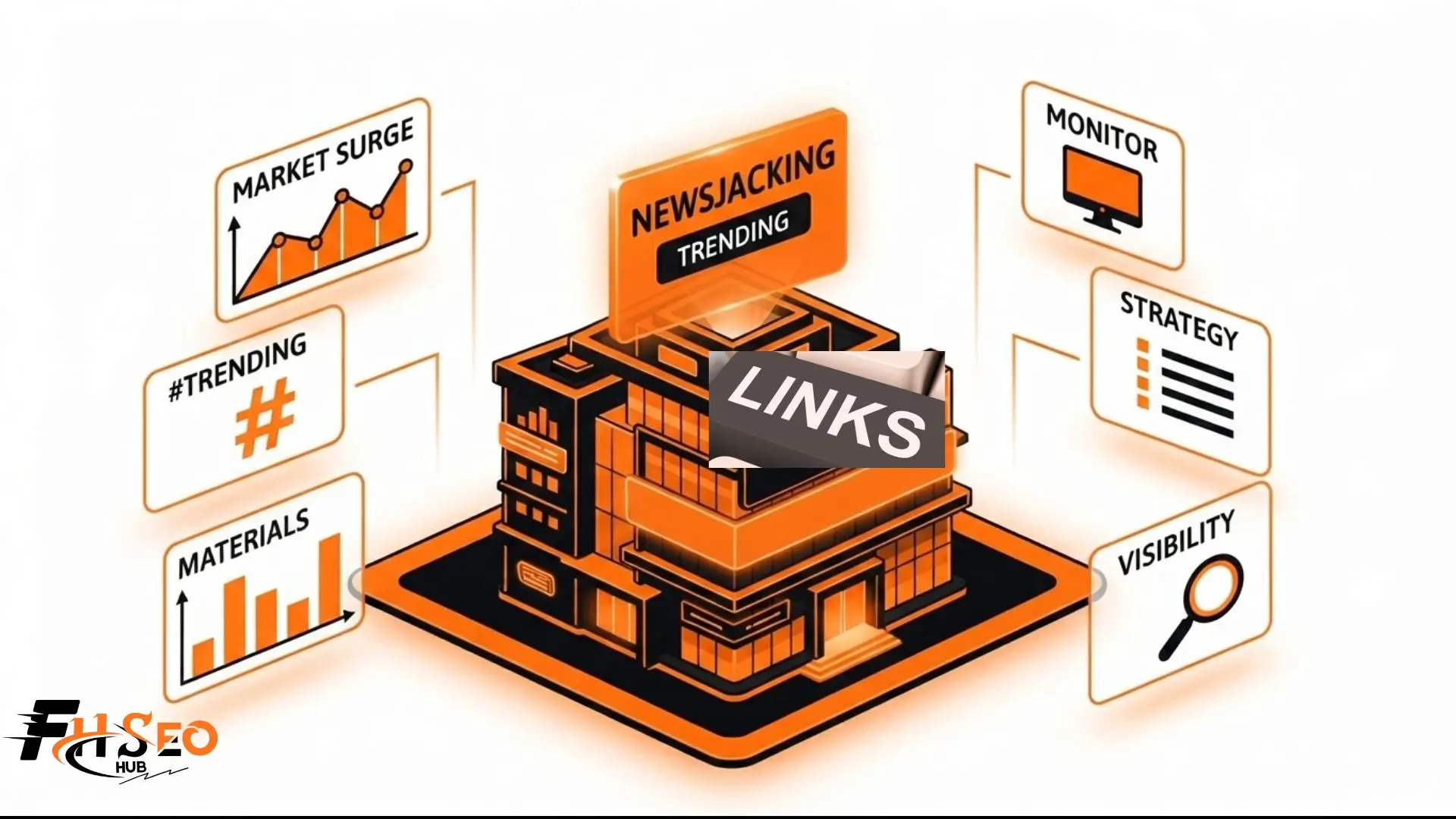
Newsjacking means injecting your brand’s expert commentary or reaction into a breaking news story fast enough to earn media coverage while journalists and audiences are still paying attention. In 2026 the real value has shifted away from the viral tweet, the actual payoff is earning high-authority backlinks from the news publications writing follow-up coverage, not just social media engagement.
If you have watched a competitor land a link in a major outlet the same week a relevant story broke and wondered how they moved that fast, or you’re worried newsjacking always risks turning into a PR disaster, here is the practical, current answer to both.
What Is Newsjacking?
Newsjacking is the practice of piggybacking on a breaking news story or trending topic to insert your brand’s angle, data, or expert commentary while the story is still developing, generating media coverage and brand visibility that would otherwise be far harder to earn. David Meerman Scott coined the term in his 2011 book “Newsjacking: How to Inject Your Ideas into a Breaking News Story and Generate Tons of Media Coverage,” describing a PR strategy built on speed and genuine relevance, being fast enough and useful enough that journalists and audiences welcomed the addition rather than reading it as an opportunistic intrusion.
Newsjacking used to be framed mostly around clever, quick social media reactions chasing retweets. The dominant use case among SEO and digital PR teams now is earning genuine editorial backlinks from the news outlets covering the story, since those links carry real domain authority that outreach-based link building struggles to match at the same speed. What Scott described as a manual, instinct-driven skill in 2011 is now increasingly systematized, with monitoring tools, pre-approved spokespeople, and pitch templates replacing pure reflexes for the brands doing this consistently well.
Why Newsjack? (The Benefits)
The clearest benefit is speed to visibility: a genuinely well-timed newsjacking response can put a brand in front of an audience already paying close attention to a story, something a planned content campaign takes weeks or months to build organically. For SEO teams specifically, the bigger benefit is the backlink itself, a quote or data point picked up in a journalist’s follow-up coverage produces a genuine link from a domain carrying real authority, an asset that keeps working long after the news cycle moves on, unlike a viral tweet that fades within days.
Cost efficiency is a real, underappreciated benefit too. A newsjacking response typically costs a fraction of a planned digital PR campaign or paid media placement, since it rides attention the news cycle already generated rather than paying to build that attention from scratch. Media coverage earned this way also tends to carry more credibility than paid placement, since it appears as independent editorial judgment rather than sponsored content, a trust signal both readers and search engines increasingly weigh.
How Newsjacking Works for Link Building and SEO
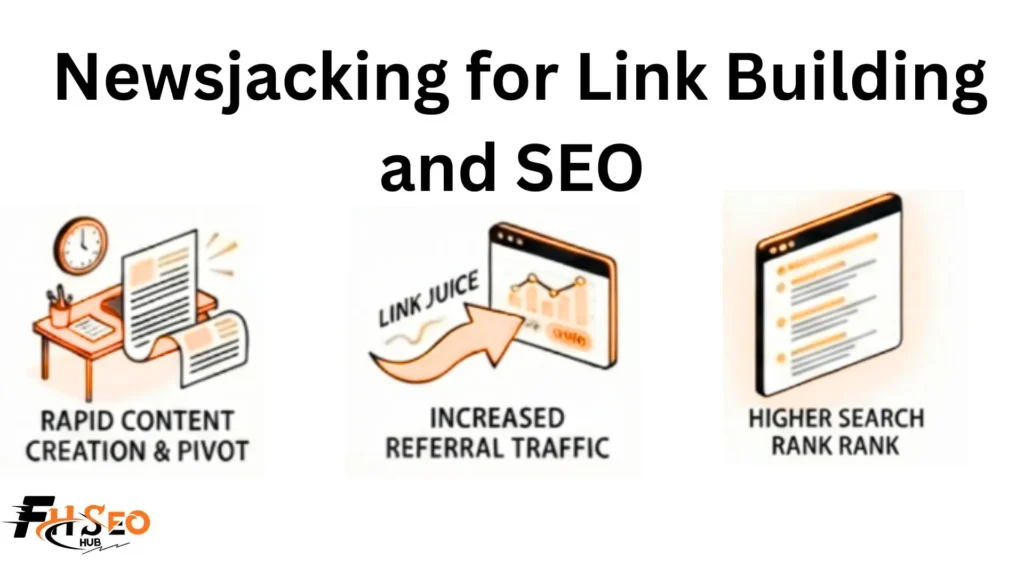
The mechanism is straightforward once you see it clearly: journalists writing fast follow-up coverage of a breaking story need credible sources to round out their piece, often within hours, and a brand or expert who reaches out with a genuinely useful angle before the journalist has finished their own source search becomes an easy, low-friction citation. This produces PR links from domains with far higher domain authority than most outreach-based link building could realistically target on a comparable timeline.
Two specific tactics noticeably improve whether a media mention actually converts into a link rather than just a text citation: referencing a specific page or resource on your site directly within your quote, giving the journalist something concrete to link to, and following up promptly if a piece publishes without a link, since a polite, quick request converts a meaningful share of otherwise-unlinked citations. Speed is the real operational constraint underneath all of this: the effective response window runs roughly 4 to 24 hours from when a story breaks, after that point most journalists have already sourced their follow-up piece using their own news aggregator tools or an existing source list.
Newsjacking sits in the same broader reactive PR family as HARO-style journalist-source platforms, but the two work in opposite directions. HARO is where a journalist posts a query asking for expert sources, and a brand responds to a confirmed, already-stated need, slower to result in coverage but lower-effort per attempt, since you know the demand exists before you respond. Newsjacking means spotting the story before the journalist has even finished their own source search and pitching your expert directly to the reporter likely to write the follow-up, faster and higher-upside but more speculative, since you’re betting on a story developing the way you expect rather than responding to a confirmed ask.
Traditional digital PR, built around original data studies and planned media outreach, produces steadier, more predictable link acquisition over time than either reactive approach, since it doesn’t depend on the right story breaking at the right moment. The strongest digital PR programs run all three in parallel rather than picking one: planned campaigns for baseline link velocity, HARO responses for lower-effort, confirmed-demand coverage, and newsjacking capability specifically to capture the sharp, unscheduled spikes a content calendar can’t plan for in advance.
Pros and Cons of Newsjacking
Newsjacking’s biggest strength and biggest risk both come from the same source: speed.
| Pros | Cons |
| Earns high-authority backlinks faster than most outreach campaigns | Narrow response window, roughly 4 to 24 hours, before opportunity closes |
| Low cost relative to paid media or planned PR campaigns | Real reputational risk if the response misjudges the story or the moment |
| Rides attention the news cycle already generated | Unpredictable, can’t be scheduled or planned on a content calendar |
| Coverage carries independent editorial credibility | Requires real monitoring infrastructure and a fast approval process |
| Compounds with existing journalist relationships over time | Poor execution reads as obviously opportunistic and damages trust |
When Newsjacking Works Best
Newsjacking works best when a brand has a genuine, credible connection to the story, not just a tangential excuse to insert itself, since audiences and journalists both recognize forced relevance quickly and react badly to it. Stories involving product categories, industry expertise, or consumer behavior your brand can speak to with real authority are the strongest territory, a technology company commenting on a major security breach, a food brand reacting to a viral culinary trend, a financial services firm offering context on a market-moving event.
Timing within the news cycle matters as much as topic fit. The earliest hours of a breaking story, before the initial wave of coverage has fully formed, offer the best odds of getting picked up in first-wave reporting, while the window for landing in slower analysis or opinion pieces stays open somewhat longer. Newsjacking works worst around genuine tragedy, serious harm, or deeply sensitive human suffering, where any brand insertion reads as exploitative regardless of how cleverly it’s executed, and around stories still too fluid or unconfirmed to comment on credibly without risking a factual misstep.
How to Get Started with Newsjacking: Step-by-Step
Building a repeatable newsjacking capability means treating it as an operational system rather than a one-off reaction, since consistent results come from process, not luck.
- Identify your realistic angle territory before any story breaks, the specific topics, data, or expertise your brand can credibly comment on, so you’re not scrambling to figure out relevance in the moment.
- Set up baseline monitoring with Google Trends and Google Alerts, which surface rising search interest and new mentions of terms relevant to your industry as they happen, though both tend to lag the actual news event by several hours since they depend on search volume building first.
- Add Google News and a dedicated news aggregator tool, or a topic research tool like TrendFeed, to catch a story in its first hour rather than waiting for it to register as a search trend, genuinely the difference between pitching inside the 4 to 24 hour window and missing it entirely.
- Layer in Feedly or a similar RSS tool to track a curated set of industry-specific and mainstream outlets in one dashboard rather than checking each site manually, and add social media listening specifically because stories often break on social platforms before any mainstream outlet has covered them at all.
- Pre-approve a spokesperson or two who can respond quickly with a quotable, on-brand comment without requiring a lengthy internal approval chain.
- Build a lightweight pitch template that can be customized with specific story detail and sent within an hour of a relevant story breaking.
- Pitch directly to the journalist likely to write follow-up coverage, referencing a specific page or resource your brand can offer, rather than sending a generic press release blast.
- Follow up if coverage publishes without a link, since a prompt, polite request converts a real share of unlinked mentions into genuine backlinks.
- Track what worked after each attempt, response time, angle type, outlet, referring domains earned, and which distribution channels actually produced the coverage, direct pitch, wire service, or social amplification, to refine the process rather than treating every attempt as an isolated event.
Whichever combination of tools a team settles on, the real requirement isn’t any specific tool, it’s a defined person or rotation actually watching the alerts consistently. The best monitoring stack produces nothing if no one’s checking it when a story actually breaks.
Newsjacking Checklist
Run through this before any pitch goes out, ideally in under five minutes so speed doesn’t get sacrificed to process:
Do’s and Don’ts of Newsjacking
The same speed that makes newsjacking valuable is exactly what turns it into a PR disaster when a brand reacts to a story it doesn’t understand or attaches itself to genuine tragedy for visibility.
| Do | Don’t |
| Verify facts before responding, even under time pressure | Guess at details of a still-developing story |
| Add genuine data, expertise, or a real resource | Offer opinion alone with nothing concrete to cite |
| Move within the realistic 4 to 24 hour window | Respond days later once the news cycle has moved on |
| Get a fast second-opinion check before publishing | Skip judgment entirely in the name of speed |
| Reference a specific URL the journalist can link to | Rely on a vague brand mention with no linkable asset |
| Stay within your brand’s genuine area of credibility | Force relevance to a story with no real connection |
| Attach to stories where your input adds real value | Attach to tragedy, serious harm, or sensitive suffering |
Real-Life Newsjacking Examples
Oreo Super Bowl Blackout. When Super Bowl XLVII went dark from a power outage in 2013, Oreo’s social team tweeted “You can still dunk in the dark” within minutes, becoming one of the most widely cited newsjacking examples in marketing history. What made it work: genuine speed, direct relevance to the brand’s actual product, and a tone that read as clever rather than opportunistic.
Aviation Gin vs. the Peloton Ad Controversy. When Peloton’s 2019 holiday ad drew widespread mockery for its tone-deaf premise, Ryan Reynolds’ Aviation Gin brand hired the same actress for a follow-up ad showing her now relaxing with friends over gin, captioned “Exercise bike not included.” The response was viewed more than 7.5 million times within two days and generated tens of thousands of retweets, a case study in reacting fast enough to ride the peak of a controversy rather than arriving after attention had moved on.
Calm App CNN Election Night Sponsorship. Calm sponsored CNN’s 2020 election night “Key Race Alert” coverage with quiet, calming ads, rain on leaves, gentle scenes, deliberately avoiding any political content and instead offering contrast to the surrounding tension. Reported App Store tracking data showed Calm’s ranking jumped roughly 50 spots in a single day following the campaign, reaching the top of the Health & Fitness category, a rare newsjacking example with genuinely verified commercial outcome data attached.
IKEA Cristiano Ronaldo Water Bottle. When Cristiano Ronaldo removed Coca-Cola bottles from a Euro 2020 press conference table and gestured toward water instead, reportedly coinciding with a drop in Coca-Cola’s market value, IKEA responded within hours by rebranding its reusable water bottle as “Cristiano” and promoting it on Instagram under the event’s hashtag. The campaign earned links from The Sun, Clio, The Drum, and Virgin Radio UK, a clean, documented example of a fast, low-cost response converting directly into real referring domains rather than just impressions.
Burger King Big Mac Trademark Jab. After McDonald’s lost its EU trademark case for “Big Mac” to Irish chain Supermac’s in 2019, Burger King launched a cheeky “not Big Mac” style burger across its European menus, directly needling its rival’s very public legal loss, a reminder that not every newsjacking opportunity needs a spokesperson or a press pitch. Sponsorship-driven newsjacking, the kind of Budweiser World Cup activity run around past tournaments, works on a longer planning cycle than any of these same-day reactive examples, worth distinguishing as its own category.
Final Thoughts
Newsjacking rewards genuine speed and real relevance over cleverness alone, and its 2026 value sits less in the viral moment and more in the durable backlinks earned from journalists writing follow-up coverage while a story is still moving. Build the monitoring and approval systems that let your team hit the 4 to 24 hour window reliably, run the checklist before every pitch, and hold to the do’s over the don’ts even when speed is tempting you to skip the judgment step. Done consistently, newsjacking becomes a genuine, repeatable link building channel, not a lucky one-off tweet you can never quite replicate.
FAQs
Newsjacking is the practice of injecting a brand’s commentary, data, or reaction into a breaking news story while it’s still developing, aiming to earn media coverage and, increasingly, high-authority backlinks from the outlets writing follow-up coverage.
David Meerman Scott coined the term in his 2011 book of the same name, describing a PR strategy for attaching brand content to breaking news stories to borrow their attention and audience.
Yes, when it converts into actual backlinks rather than just social engagement. A quote or data point picked up in a journalist’s follow-up coverage produces a genuine, often high-authority backlink, a more durable SEO asset than a viral post that generates no links at all.
The effective window is roughly 4 to 24 hours from when a story breaks. After that, most journalists writing follow-up coverage have already sourced their piece, and a late pitch is competing for space in a story that’s already moving on.
HARO is where journalists post queries asking for sources and brands respond to a confirmed need. Newsjacking is spotting a story before the journalist has finished sourcing it and pitching your expert directly, a faster but more speculative approach.
Build in a real, if brief, judgment check before speed, confirming genuine relevance to your brand rather than pure opportunism, and avoid attaching to stories involving tragedy or serious harm regardless of how much attention they’re generating.
Google Trends and Google Alerts cover baseline monitoring, Google News and a dedicated news aggregator or topic research tool catch breaking stories faster, and Feedly or social media listening tools round out coverage across industry-specific and social sources.