
Digital PR vs Link Building: Which One Works Well and What is the Difference?

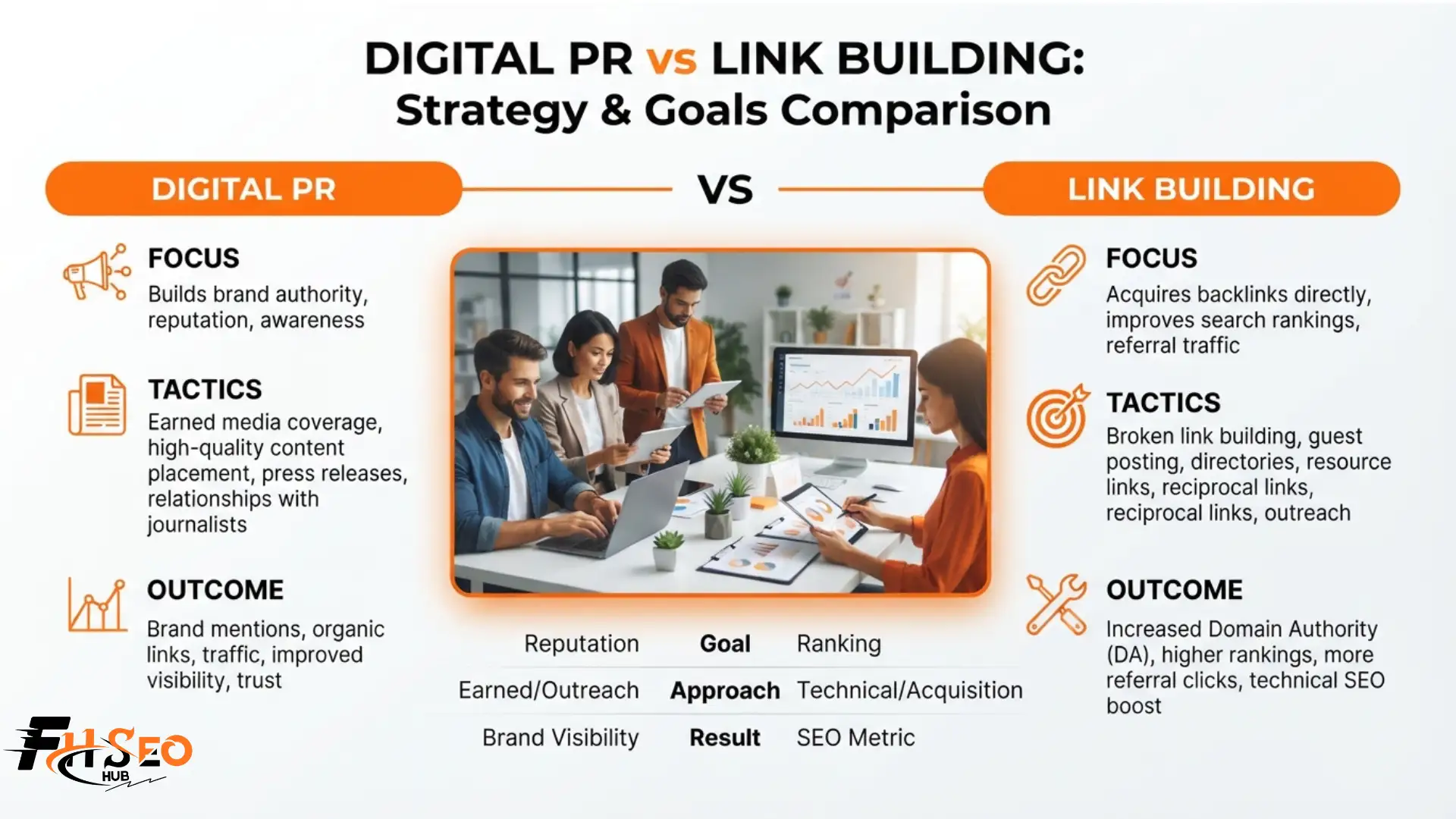
Digital PR vs link building comes down to one core difference. Link building focuses on acquiring backlinks to boost rankings, while digital PR earns media coverage and brand mentions that produce backlinks as a side effect. Both can grow your search traffic, but they carry very different costs, timelines, and risks.
If you have ever burned budget on links that did nothing for your rankings, or worried a shady vendor might get your site penalized, you are not alone. Picking the wrong strategy wastes months of work and a lot of budget.
What Is Link Building?
Link building is the process of getting other websites to link back to yours. The logic is simple. Relevant, high quality backlinks signal to Google that your site is trustworthy, which helps it rank higher.
Common methods include guest posting, broken link building, niche edits, resource page links, and directory submissions. Editorial links, the kind a writer adds naturally because your content deserves it, tend to carry the most weight. Domain authority, the general strength score of a linking site, plays a big role in how much any single backlink is actually worth.
What Is Digital PR?
Digital PR takes the traditional PR playbook, pitching stories to media outlets, and applies it online. Instead of chasing individual link placements, digital PR teams create newsworthy content journalists genuinely want to cover: original data studies, surveys, or expert commentary on a trending story.
The result is earned media, coverage you did not pay for and cannot fully control. When a campaign works, you get media coverage, brand mentions, and often a backlink, all from the same piece of content.
Digital PR vs Link Building: The Core Difference
Traditional link building is transactional. You find a site, pitch a placement, and get a link, usually from a webmaster or blog editor who decides quickly. Digital PR link building is relational. You build something newsworthy, pitch journalists and editors, and earn a link as a byproduct of real coverage, not a direct exchange.
That difference shapes how each strategy performs. Link building gives you more control over anchor text and exactly which page receives the link. Digital PR gives you broader brand authority and earned links from bigger, harder to replicate publications, but you cannot control whether a journalist adds a link at all, even when they cover your story.
Digital PR Techniques That Earn Links
Not every digital PR tactic works the same way or earns links at the same rate. These are the ones that consistently deliver:
Is Link Building Safe? What Gets Penalized
Link building itself is not risky. Manipulative link building is.
Google’s spam policies specifically warn against private blog networks, link farms, and paid links used purely to manipulate rankings. Google’s SpamBrain system, combined with algorithm updates like the link spam update from December 2024, has gotten noticeably better at catching manufactured link patterns across an entire network, not just flagging one obvious site.
A common mistake beginners make is assuming a penalty only happens from obviously spammy links. In reality, buying a large batch of links from the same low quality network, even when each individual link looks reasonable on its own, is exactly the pattern that gets flagged. If a manual action does hit your site, recovery usually means auditing your full backlink profile, disavowing the worst offenders, and waiting through reconsideration, a process that can stretch on for weeks with no guaranteed outcome.
White hat link building, earning links through honest outreach, guest posting on relevant sites, and content people genuinely want to reference, carries essentially none of this risk. It moves slower than buying links, but it does not put your rankings in jeopardy.
What Makes a Backlink High Quality
A high quality backlink comes from a site that is topically relevant to your industry, not simply high authority in general. Trust flow and citation flow, two metrics some SEO professionals use alongside domain rating, help balance link quality against raw link quantity when auditing a profile.
Dofollow links pass more ranking value than nofollow links, though a natural backlink profile includes a mix of both. If every single link you earn is dofollow with exact match anchor text, that pattern itself starts to look manufactured to Google’s systems, regardless of how the links were actually earned.
The Tools SEO Professionals Use
For research and prospecting, Ahrefs and Semrush are the two most common choices for finding backlink opportunities and analyzing competitor link profiles, while Moz remains a solid, lower cost alternative for smaller teams. Google Trends helps time content releases around what people are already searching for right now.
For digital PR outreach specifically, HARO, Qwoted, and SourceBottle connect you directly with journalists actively looking for sources, while Muck Rack and Prowly work better for building a targeted media list at scale. Hunter.io and VoilaNorbert help you find verified contact emails once you know exactly who to pitch.
For tracking coverage and brand mentions, Google Alerts works fine for a small brand on a tight budget, while Brandwatch and Cision are built for larger teams monitoring mentions across the entire web in real time. Google Search Console and Google Analytics 4 round out the stack for measuring actual SEO impact rather than just vanity metrics.
What Digital PR and Link Building Cost in 2026
Pricing varies a lot by quality and provider, but here is a realistic range based on what most agencies charge.
Digital PR retainers most commonly run somewhere between $5,000 and $25,000 a month, depending on the agency’s experience and how many campaigns run simultaneously. That price reflects the research, content creation, and journalist outreach required, not just a single placement fee.
Link building costs span a much wider range. A low quality bought link can run around $100, though it carries real penalty risk under Google’s guidelines. A single earned, high authority placement built through genuine outreach or content can run $1,000 or more. Link building retainers typically range from $500 to $25,000 a month, depending on volume and quality tier.
If a vendor offers backlinks in bulk for a flat, very low price, treat that as a warning sign rather than a bargain worth taking.
Digital PR vs Link Building: Which Is Better
Neither one is universally better. The honest answer depends on where your site stands right now.
If your domain is new or you need to rank a specific page fast, link building is usually the smarter first move. It costs less upfront, moves faster, and is more predictable to plan around. If your domain already has some authority and you want to build broader brand authority that supports every page on your site at once, digital PR tends to deliver more durable, harder to replicate value over time.
Worth it versus skip it: digital PR earns its higher cost when you have genuinely interesting data or expertise worth pitching. It is not worth it if you are only chasing a fast link count with no real story behind it.
Should You Combine Both, and Should You Hire an Agency
The strongest SEO programs rarely treat digital PR vs link building as an either or choice. Use link building for foundational, page level support on priority URLs, and digital PR to build the brand authority that makes future outreach land more easily.
As for DIY versus agency, you can absolutely start in house. The core skills involved are research, writing, and outreach, nothing an experienced marketer cannot learn. Where an agency earns its fee is existing journalist relationships and the ability to run several campaigns at once. Start with one small campaign yourself before deciding whether hiring out makes sense for your budget.
Digital PR and AI Search
AI Overviews and tools like ChatGPT do not just count backlinks when deciding what to cite. They weigh brand mentions in context to judge whether a source seems credible before referencing it. A strong, consistent digital PR history feeds directly into that kind of visibility, which is part of why generative engine optimization and digital PR overlap so heavily right now.
Conclusion
Digital PR vs link building is not really an either or decision. Link building is the faster, cheaper way to support specific pages right now. Digital PR is the slower, pricier way to build brand authority that compounds over time. Start with whichever gap is hurting your rankings most today, plan to budget for both eventually, and skip any vendor promising fast results for either one.
FAQs
No. Directory spam and low quality guest posts carry more risk than reward now, but earning links through legitimate, relevant outreach still works well.
They serve different purposes. Content marketing builds material for your own site. Digital PR earns coverage on other people’s sites. The two work best together, not as substitutes.
Yes. Good content does not link itself. Someone still has to pitch it to the people who would genuinely want to reference it.
Yes. Niche expertise and specific product data often make smaller brands better digital PR candidates than large, generic companies with nothing new to say.
You can start in house if you have time for research, writing, and outreach. Agencies help most once you want to scale beyond a single campaign.
Relevance to your industry, a real dofollow link, and a natural link profile matter more than one high domain authority number alone.


