Social Backlinking: How Nofollow Links Earn Real Backlinks and AI Citations

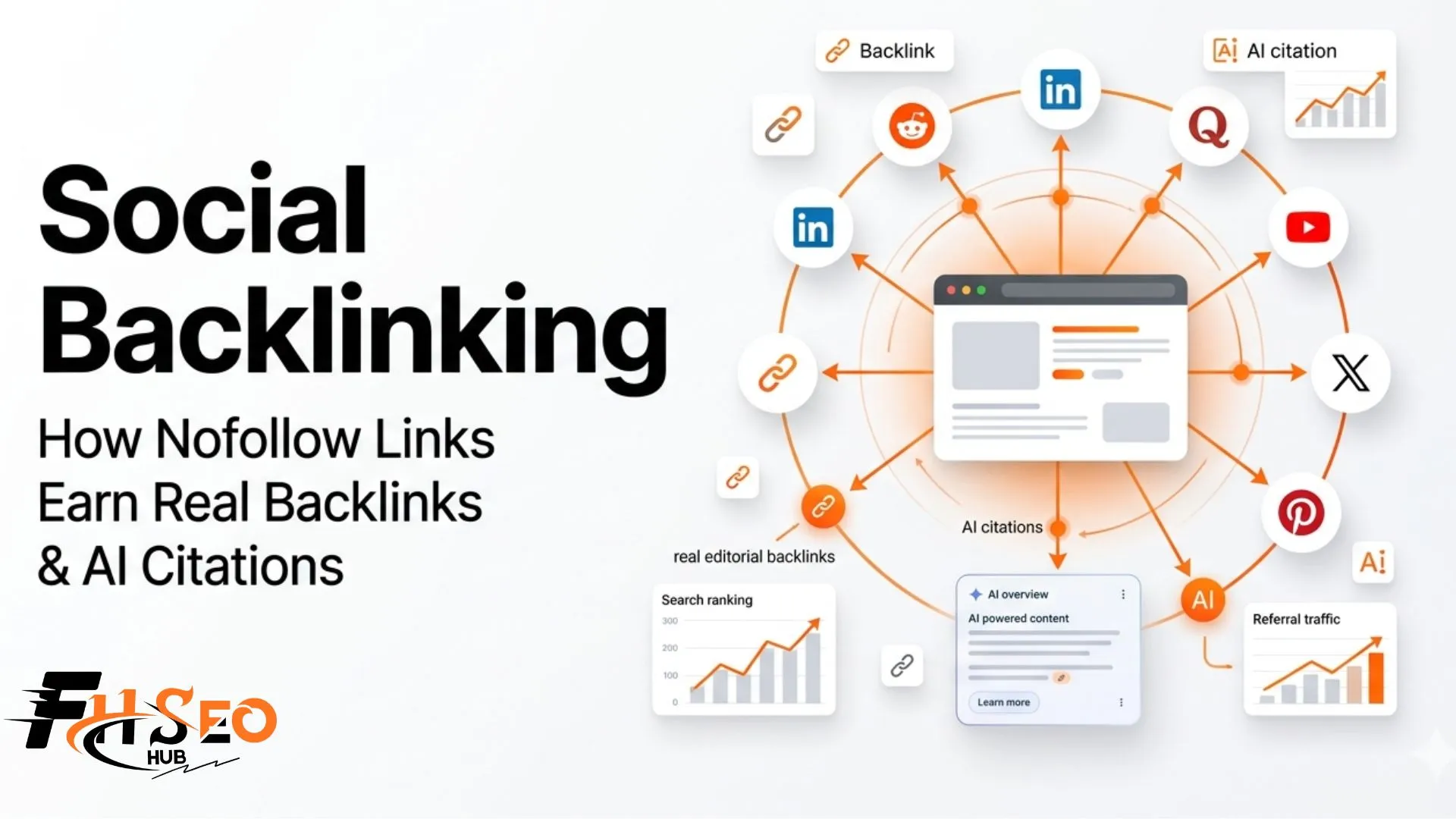
Social backlinking is the practice of distributing your website’s links across social media platforms so journalists, bloggers and AI systems discover and cite your content. Every major social platform produces nofollow links that pass zero link equity directly. But in 2026, those same links drive indexation speed, referral traffic, brand signals and the link triggers that generate editorial backlinks.
Most people dismiss social backlinks the moment they learn they are nofollow. That is the misconception this article corrects.
What is social backlinking?
Social backlinking is the process of sharing your website links across social media through posts, comments, profiles and shared content. When a LinkedIn user shares your blog post, when a Reddit thread references your article, or when someone pins your infographic on Pinterest, those are social backlinks. They are almost universally nofollow links or UGC-tagged links, meaning they do not pass link equity directly to your domain.
That technical reality leads many SEOs to undervalue the tactic. They focus on the missing link juice and miss the compounding visibility effect that consistent social sharing creates. A natural link profile built through social backlinking looks trustworthy to both Google and AI-powered search engines, which matters more than link equity alone.
What is the difference between social backlinking and traditional link building?
Traditional link building earns dofollow editorial backlinks from authoritative websites that pass PageRank and raise domain authority directly. Social backlinking earns nofollow links that build brand signals, referral traffic and content discovery instead. Traditional links rank pages directly. Social backlinks trigger the visibility conditions that lead to those ranking links being earned organically. Both belong in the same off-page SEO strategy.
How do social backlinks and traditional backlinks compare?
| Factor | Traditional Editorial Backlinks | Social Backlinks |
| Link type | Dofollow (usually) | Nofollow or UGC |
| Direct ranking impact | Yes | Indirect only |
| Link equity passed | Yes | No |
| Speed to go live | Days to months | Minutes |
| Visibility boost | Limited | High |
| Scalability | Manual outreach | Platform amplification |
| AI citation potential | High | Growing rapidly in 2026 |
Traditional editorial backlinks remain the strongest direct ranking signal. Social backlinks build the visibility conditions that make those editorial links happen organically. Neither alone produces optimal results. Together they create a self-reinforcing system where social visibility feeds editorial discovery and editorial backlinks reinforce the brand authority that makes social content more shareable.
Do social media backlinks help SEO?
Yes, but not in the way most people expect. John Mueller from Google confirmed that social signals are not a direct ranking factor. Nofollow links from Twitter/X, LinkedIn, and Reddit pass no PageRank. So where does the real SEO value come from?
Five measurable ways social backlinks help SEO:
How do social signals trigger real editorial backlinks?
The indirect SEO chain reaction works in clear stages. You share a linkable asset on social. It builds social velocity through likes, shares and comments. Journalists, bloggers and researchers in your niche discover it. They reference it in their own content. You earn an editorial dofollow backlink from a real site without cold outreach. That is the link trigger mechanism in action. One viral Reddit thread can produce ten or more real dofollow backlinks within two weeks.
Which social media platforms give the best backlinks for SEO?
The platform matters as much as the content. Reddit and LinkedIn produce the strongest link trigger results because Google actively indexes their public content. YouTube description links carry strong E-E-A-T signals. Quora answers increasingly appear in LLM citations because AI systems trust Q&A platforms. Medium allows content syndication with canonical tags that protect your SEO while building topical authority.
| Platform | Link Type | Google Indexable? | Best Content Type | Primary SEO Benefit |
| UGC / Nofollow | Yes | Threads, AMA, comments | High link trigger potential | |
| Nofollow | Yes | Articles, carousels, posts | Brand trust and editorial discovery | |
| Twitter / X | Nofollow | Yes | Threads, data breakdowns | Fast indexation, viral link trigger |
| YouTube | Nofollow | Yes | Video descriptions, comments | E-E-A-T signal and referral traffic |
| Nofollow | Yes | Infographics, visual content | Niche traffic and image SEO | |
| Medium | Nofollow and canonical | Yes | Syndicated long-form content | Editorial authority and syndication |
| Quora | Nofollow | Yes | Expert answers | LLM citation and topical authority |
Instagram and Facebook still contribute to brand signals and referral traffic even though their content is indexed less consistently. Use them for awareness. Use Reddit, LinkedIn and Quora for triggering editorial links.
What types of content earn the most social backlinks?
The formats that consistently earn the most social sharing and eventual editorial backlinks share one quality: they give the reader something worth passing on.
The highest-performing content types for building social backlinks:
Platform-native formatting matters too. Match the content format to the community expectations of each platform.
How does social backlinking build AI citation authority in 2026?
This is an underexplored angle in off-page SEO right now.
Large language models including ChatGPT and Perplexity assess brand credibility by analyzing mentions across Reddit, LinkedIn, Quora, and niche community platforms. When your brand appears in those discussions, AI-powered search engines begin to associate your brand with topical authority in your industry.
Two actions that amplify AI citation authority through social:
How do unlinked brand mentions contribute to social backlinking authority?
Unlinked brand mentions across social platforms, subreddits, Quora answers and niche communities build entity-level authority even without a clickable link. Google and AI-powered search engines read these mentions as trust signals for your brand entity. In 2026, 80.9% of SEO professionals confirm that unlinked brand mentions affect rankings. Every time someone recommends your brand in a Reddit comment without linking to you, that mention still contributes to the brand signals search engines use to evaluate authority.
What are the 4 core strategies that build social backlinks effectively?
Understanding the mechanism is only the first step. Here are the four strategies that produce compounding results:
- Engage niche communities before promoting: Spend weeks contributing genuine value in subreddits, LinkedIn groups and Quora topics before sharing your own links. Cold link drops get removed. Earned presence gets shared.
- Create platform-native shareable content: Carousels for LinkedIn, threads for Twitter/X, long-form expert answers for Quora and AMAs for Reddit. Format signals to the algorithm and the community that you belong there.
- Post thought leadership insights that spark conversation: Bold opinions backed by data, process breakdowns with real numbers, and content that challenges assumptions builds social velocity fast and puts your brand.
- Make sharing frictionless: Place social share buttons at the top, middle and bottom of every content page. Add ready-to-share snippets with key stats. Optimize pages for mobile since most social shares happen on phones.
The core takeaway
Social backlinking in 2026 works as a visibility engine that feeds the editorial backlink pipeline. Every share builds brand signals. Every community mention builds entity-level authority. Every link trigger earns real dofollow backlinks without cold outreach. Start with two or three platforms where your audience already spends time, create platform-native shareable content and let the indirect SEO chain reaction compound over months.


