
What Is Web Marketing and the Main Types

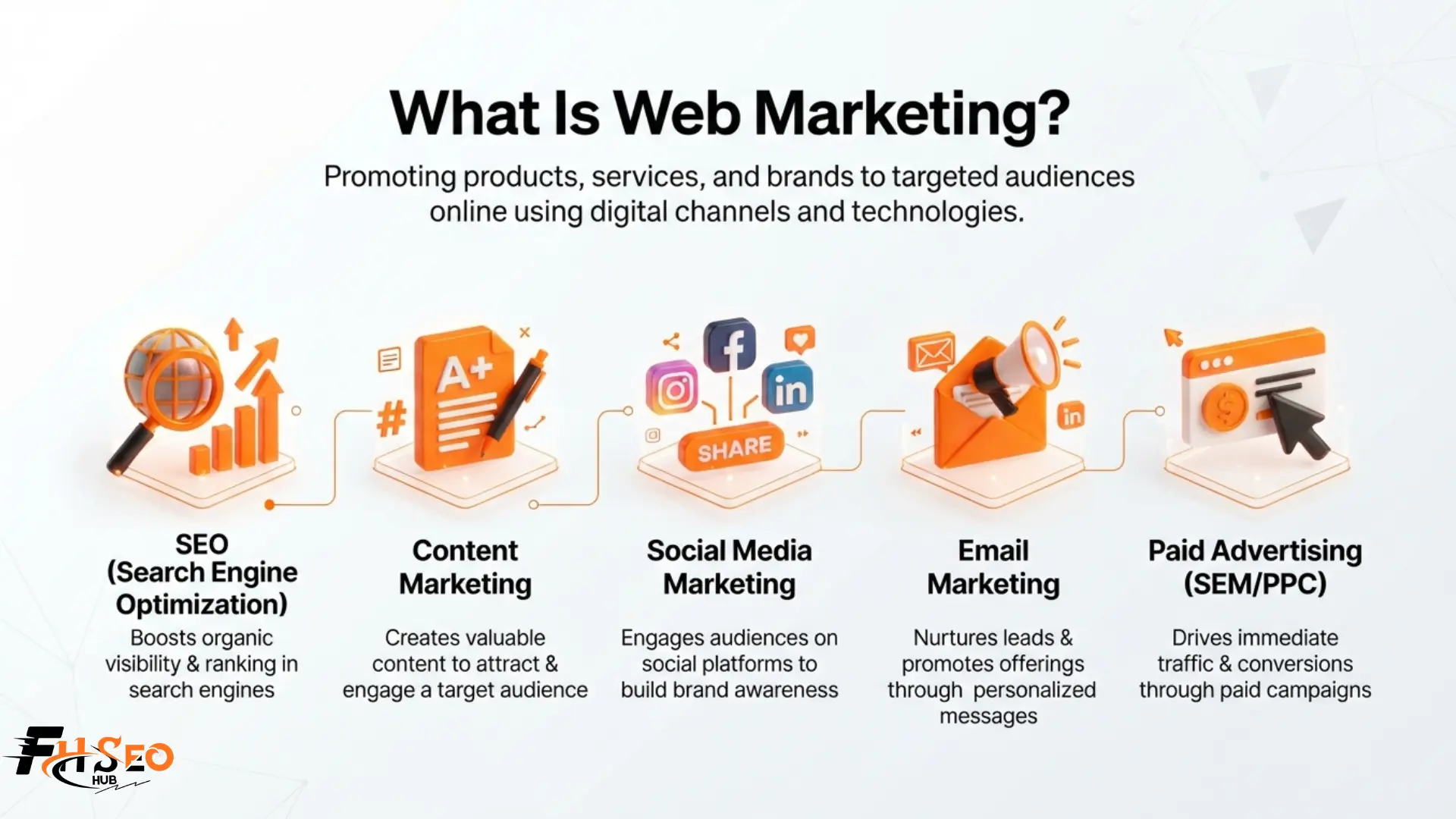
Web marketing is the promotion of products, services, or brands through internet based platforms like search engines, websites, email, and social media. Most guides use this term interchangeably with digital marketing, which leaves a lot of business owners budgeting for the wrong channels entirely.
What Is Web Marketing?
It is the practice of using the internet to promote your business, covering everything from search visibility to email campaigns. Unlike a billboard or a radio spot, every part of it can be tracked, measured, and adjusted while a campaign is still running.
This matters because it removes the guesswork traditional advertising has always carried. You can see exactly which channel brought in a customer, not just guess based on a bump in sales.
What Is the Difference Between Web Marketing and Digital Marketing?
It covers only tactics that need an internet connection, things like SEO, PPC, and email. Digital marketing is the broader umbrella, including offline digital channels like SMS campaigns, connected TV ads, and digital billboards that reach people without them being online at all.
A common mistake beginners make is treating these two terms as identical. If your strategy only ever touches internet connected channels, that is what you are doing specifically, and it is where most small businesses should start before ever expanding into broader digital channels.
Is Web Marketing the Same as Internet Marketing?
Yes. These three terms, along with online marketing, all describe the same thing: promotion that happens through an internet connection. Digital marketing is the only term in this group with a genuinely wider scope, since it also includes channels that do not require the internet at all.
What Are the Main Types?
The core types include SEO, SEM, PPC, content marketing, social media marketing, and email marketing, along with display advertising and affiliate marketing. Most effective strategies combine several of these rather than relying on just one channel, since each one reaches people at a different stage of their decision to buy.
| Type | What It Does | Best For |
| SEO | Earns free traffic through search rankings | Long term, sustainable visibility |
| SEM/PPC | Buys immediate visibility through paid ads | Fast results, testing demand |
| Content marketing | Builds trust through useful information | Brand authority, organic sharing |
| Social media marketing | Builds community and brand awareness | Engagement, direct customer contact |
| Email marketing | Nurtures existing leads and customers | Retention, low cost per contact |
| Display advertising | Builds awareness through visual ads | Retargeting, brand recognition |
| Affiliate marketing | Pays partners for referred sales | Performance based growth |
SEO and content marketing tend to compound over time, getting cheaper per visitor the longer they run. PPC and display advertising deliver traffic immediately but stop the moment you stop paying, which is why most mature strategies lean on a mix of both instead of picking just one side.
How Much Does It Cost?
Costs typically range from a few hundred dollars a month for one focused campaign to well over ten thousand dollars monthly for a full multi channel strategy. Most agencies charge between $500 and $2,500 a month for a single service like SEO or PPC management alone.
| Budget Level | Typical Monthly Range | What It Covers |
| Starter | $300 to $1,000 | One channel, basic reporting |
| Growth | $1,000 to $5,000 | Two to three channels, dedicated management |
| Full strategy | $5,000 and up | Multi channel, integrated reporting |
These figures vary by industry and competition, so treat them as a starting reference. A local service business needs far less than an e-commerce brand competing nationally, and highly competitive industries like legal or financial services often sit at the top of every range simply because everyone else is bidding for the same attention and the same keywords.
Why Does Ranking Position Matter So Much?
The first organic search position typically captures more than half of all clicks for a given keyword, while positions five through twenty compete for under five percent combined. This is why SEO investment concentrates so heavily on reaching the very top of the page rather than settling for page one in general.
SEO professionals consistently find that a page sitting in position eight or nine gets barely noticed, even though it technically ranks on page one. Moving from position nine to position three usually delivers a far bigger traffic jump than moving from position three to position one, which is worth remembering when deciding where to focus limited SEO effort first.
What Are Common Mistakes?
The most common mistakes include skipping market research, launching without clear goals, copying competitors instead of differentiating, confusing marketing with sales, and failing to follow up on leads. Each one quietly wastes budget that a clear plan would have protected, and most of them show up together rather than in isolation.
A common mistake beginners make is stopping these efforts once sales pick up, then wondering why growth stalls a few months later. Consistency matters more than intensity.
How Do I Build a Strategy?
Start by setting a specific, measurable goal, then build a buyer persona describing exactly who you are trying to reach. Choose the channels that fit your audience and budget, craft a consistent brand message, assign clear ownership, and review results regularly to adjust what is not working.
- Set one specific, measurable goal, not a vague wish for more sales
- Build a buyer persona based on real customer traits, not guesses
- Pick two or three channels you can actually sustain, not all of them at once
- Keep your message consistent across every channel you choose
- Review results monthly and redirect budget toward what is working
Most businesses fail at step three, not step one. Setting a goal is easy. Sticking to two or three channels long enough to see real results, instead of chasing every new platform that shows up, is what actually separates a working strategy from a scattered one.
What Legal Requirements Apply to a Marketing Ready Website?
Depending on your location, your website typically needs to disclose your registered business details, clear pricing terms, and a privacy policy covering data collection. Skipping these details can quietly hurt trust and increase bounce rate, since visitors notice when basic information is missing, even if they cannot articulate exactly what felt off.
How Do I Measure Whether It’s Working?
Track conversion rate, click-through rate, bounce rate, and return on investment across each channel rather than watching traffic numbers alone. Tools like Google Analytics and Google Search Console show which specific pages and campaigns are actually driving results, not just which ones get visits.
A high traffic number with a low conversion rate usually means the wrong audience is arriving, not that the channel itself has failed. Fixing the targeting or the landing page it points to often solves the problem faster than switching channels entirely.
What Does This Career Path Look Like?
Common roles include marketing manager, social media manager, and SEO specialist positions, with pay generally rising alongside years of experience and specialization within the field. Entry level roles typically pay less than roles requiring three or more years of hands on campaign experience, and specialists who can prove measurable results from past campaigns tend to command the highest rates.
Certifications through programs like the Google Partner network can help professionals stand out early in their careers, since they signal verified platform experience to employers and clients alike. A strong portfolio of real campaigns, even from freelance or volunteer work, often matters more to hiring managers than certifications alone.
Does AI Search Change How This Works?
Increasingly, yes. As AI Overviews and chat based answer engines summarize information directly in results, these tactics, like content marketing and SEO, need to account for being cited inside an AI answer, not just ranking on a traditional results page. Content written to directly answer a specific question now carries value beyond its search ranking alone, since an AI system can pull and cite a clear answer even from a page that never reaches position one.
Final Thoughts
Web marketing works best when you pick a few channels, commit to them consistently, and measure what actually moves the numbers that matter to your business. Start narrow, prove what works, then expand into new channels only once the first ones are profitable. Treated this way, it remains one of the most measurable and adjustable ways to grow a business in 2026.
FAQs
Common examples include SEO to earn organic rankings, email marketing to nurture leads, and social media marketing to build community around a brand, often used together rather than alone.
These terms mean the same thing. Digital marketing is broader, including offline digital channels like SMS and connected TV that do not require an internet connection.
Pay varies by experience and region, generally rising from entry level rates to significantly higher pay once a professional has several years of hands on campaign management experience.
Launching without a specific goal. A vague wish for “more sales” makes it impossible to know which channel is actually working, which usually leads to wasted budget across too many tactics at once.
Small businesses with time and basic skills can start with one or two channels themselves. Agencies make more sense once you need multiple channels running simultaneously with dedicated reporting and strategy.
Most businesses do better starting with one or two channels and doing them well rather than spreading a small budget across five or six at once. Add a new channel only after the first ones are consistently profitable.


