Online Reputation Management: Strategies That Work

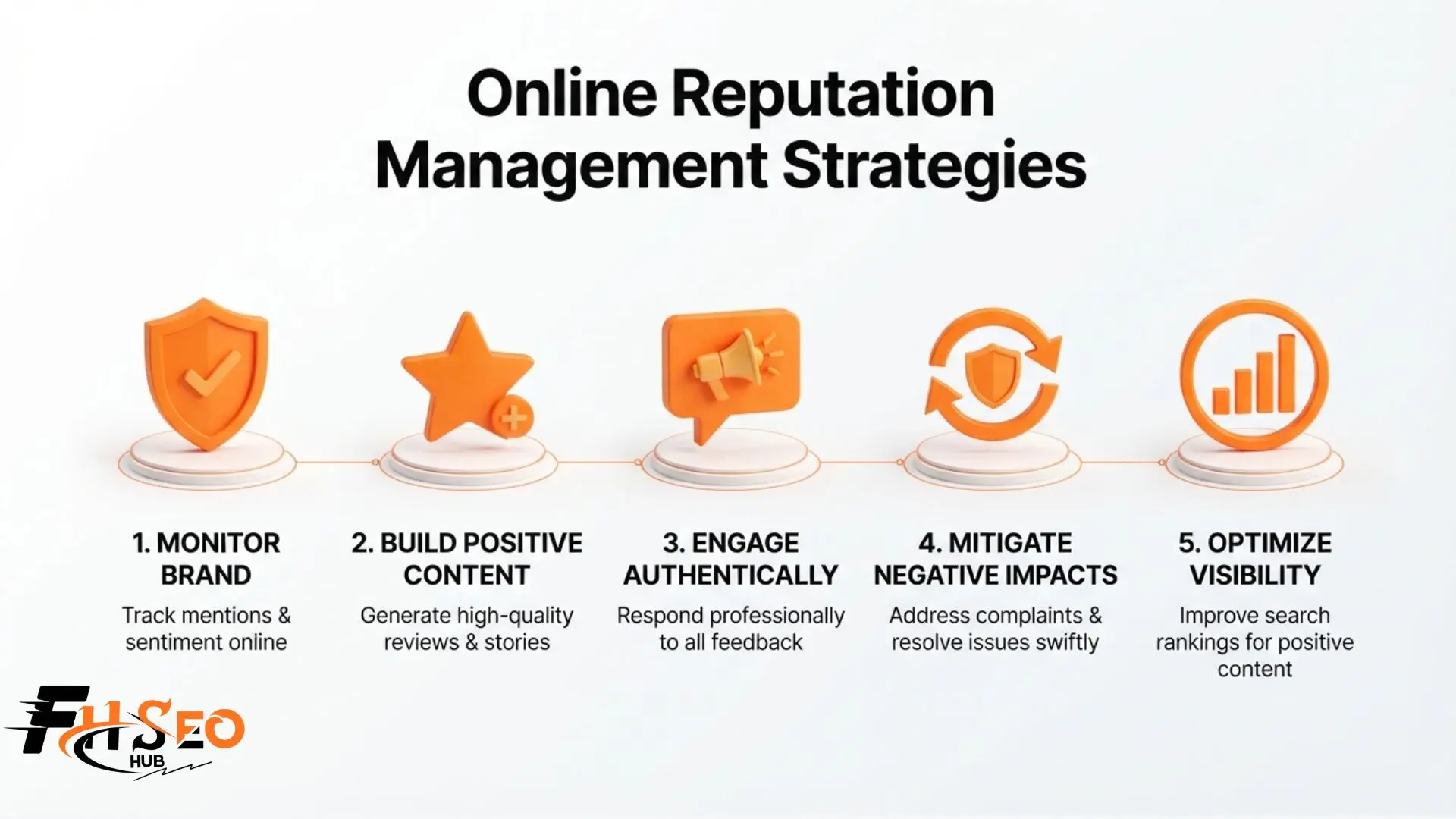
Online reputation management is the ongoing practice of monitoring, influencing, and improving how your business appears across search results, review sites, and social media. Most guides treat this as a one-time fix, but real recovery from a damaged reputation takes months, not days, and skipping the monitoring step is why so many businesses get blindsided by a bad review they never saw coming.
What Is Online Reputation Management?
ORM covers everything people find when they search your business name: reviews, news coverage, social media chatter, and search results themselves. It combines three ongoing practices: monitoring what gets said, addressing it directly, and promoting content that shows your brand accurately across every channel that matters.
Monitoring and management are not quite the same thing. Monitoring is the proactive work of tracking your existing presence before anything goes wrong. Management is what happens after an issue surfaces, the repair work needed to rebuild public perception once something has already gone sideways.
Why Does Online Reputation Management Today?
Reviews shape buying decisions more than most businesses realize. Research consistently shows the large majority of consumers check reviews before choosing a local business, and most say they trust online reviews as much as a recommendation from a friend. This is exactly why online reputation management has become a core part of digital marketing rather than an afterthought. A handful of negative reviews left unanswered can quietly cost far more in lost customers than any marketing campaign could recover.
Search visibility compounds the effect. Positive reviews correlate with higher local rankings, since review signals sit among the top factors search engines weigh for local search results. That means reputation and SEO are not separate projects. They reinforce each other, and neglecting one tends to quietly undercut progress made on the other.
How Do I Get More Positive Reviews?
Ask directly after a successful interaction, since most customers will leave a review when asked and rarely do so unprompted. Make the process easy with direct links on your website, in follow-up emails, and on receipts, and follow up politely if the first request goes unanswered.
Timing matters more than most businesses realize. A request sent immediately after a positive experience converts far better than one sent days later, once the emotional impact of the interaction has already faded from memory.
How Should I Respond to Negative Reviews?
Respond quickly, acknowledge the issue without getting defensive, and offer to move the conversation offline for details. A calm, professional response reads as trustworthy to every future customer who sees it, even when the original reviewer never changes their rating.
SEO professionals consistently find that generic, copy-paste responses do more damage than no response at all, since customers can tell instantly when a reply was not written for their specific complaint. For high-volume businesses fielding dozens of reviews a week, a templated structure with a few personalized details usually strikes the right balance between consistency and authenticity.
A common mistake beginners make is deleting or arguing with a negative review instead of addressing it. You generally cannot remove a genuine negative review just because it feels unfair. Removal only works for reviews that violate a platform’s actual policies, like fake reviews, off-topic content, or harassment, and can be flagged directly inside Google Business Profile or Yelp. Reviews containing false, defamatory claims sometimes warrant legal counsel, but that path is slower and more expensive than most businesses expect, so it should stay a last resort rather than a first step.
What Is SEO for Reputation Management?
Reputation SEO works differently than standard SEO. Instead of ranking many pages for many keywords, the goal is ranking several different properties, your website, social profiles, and third-party listings, for a small set of brand-name searches. This pushes negative or outdated content further down the results page instead of removing it.
Practical steps include publishing strong content on your own site, claiming and optimizing every third-party profile you control, earning brand mentions through digital PR, and building backlinks to the pages you want ranking on page one. Google tends to favor established, authoritative sources for these brand queries, so consistency over months matters more than any single tactic, and a burst of activity followed by silence rarely holds a ranking for long.
How Do I Monitor My Online Reputation?
Set up alerts for your brand name, product names, and key executives so new mentions reach you within a day or two of publication. Free tools like Google Alerts and Talkwalker Alerts cover basic monitoring, while paid platforms like Brand24, Mention, and Sprout Social add social listening and sentiment tracking for businesses managing higher volumes of conversation.
Most tools flag new mentions within a day or two of publication, though older mentions from before you started monitoring are worth a manual search too. Keeping a simple log of what you find, even outside a dedicated platform, makes it far easier to spot patterns in recurring complaints before they turn into a larger problem.
Do I Need a Crisis Management Plan?
Yes, before you need it, not after. A crisis response team typically includes someone monitoring social channels in real time, a customer service lead handling direct complaints, a PR contact managing media inquiries, and legal counsel available for anything involving defamation or false claims.
Having these roles assigned in advance means your business can respond within hours instead of days once a real issue surfaces, and that speed often determines whether a story fades quietly or spreads further. Waiting until a crisis is already unfolding to figure out who owns which response usually costs precious time you cannot get back.
How Much Does Professional Reputation Management Cost?
Entry-level services covering review management and basic brand monitoring typically start around $500 to $1,500 a month. Mid-tier programs that add content creation, reputation-focused SEO, and press response generally run $2,000 to $7,000 monthly. Active crisis management during a serious incident can climb to $10,000 or more per month, since it often requires rapid, hands-on work across PR, legal, and content simultaneously.
Most businesses overestimate what entry-level monitoring costs and underestimate what real crisis response costs once a story starts spreading across multiple platforms at once.
| Service Tier | Typical Monthly Cost | What It Covers |
| Entry-level | $500 to $1,500 | Review management, basic monitoring |
| Mid-tier | $2,000 to $7,000 | Content creation, SEO suppression, press response |
| Crisis management | $10,000 and up | Rapid multi-channel response during active incidents |
How Long Does It Take to Repair a Damaged Reputation?
Moderate issues, a few negative reviews or a single bad press mention, typically take three to six months of consistent effort to resolve. Severe cases involving viral negative content or sustained press coverage can take twelve to twenty four months, since search engines need time to reindex new content and let it outrank the old.
Recovery speeds up with steady positive content publishing, a healthy pace of new reviews, and a real SEO push aimed at moving negative listings past the first page. Businesses that treat recovery as a one-time sprint instead of a sustained effort often see negative content creep back toward the top within a year.
Does AI Search Change How Reputation Management Works?
Increasingly, yes, and this is a gap in most current advice. As AI Overviews and chat-based tools summarize what they find about a business directly in their answers, the sources feeding those summaries, reviews, news coverage, and brand mentions, matter as much as traditional search rankings. A business with a thin, inconsistent online presence risks an AI system pulling from outdated or negative sources simply because nothing stronger exists to cite instead.
This makes the same fundamentals, fresh reviews, accurate third-party listings, and consistent brand mentions, more important than ever, since these are exactly the signals AI systems draw from when summarizing a business for someone who never visits a traditional search results page at all.
Final Thoughts
Online reputation management rewards consistency over quick fixes. Monitor what people are already saying, respond to it with care, and keep publishing content that represents your business honestly across every platform that matters. Handled this way, a strong online reputation becomes one of the most durable advantages a business can build, one that keeps compounding long after any single review fades from view.
FAQs
Your online reputation includes reviews on sites like Google and Yelp, news coverage, social media mentions, blog posts, and anything that appears when someone searches your business name.
Only if it violates the platform’s policies, such as being fake, off-topic, or posted by a competitor. Genuine negative reviews that are simply unflattering cannot be removed just because you disagree with them.
Yes, when possible. Responding to positive reviews reinforces your brand voice and encourages future customers to leave their own feedback, while showing every reader that your business stays engaged.
Set brand name alerts through Google Alerts or Talkwalker Alerts for free coverage, and consider paid tools like Brand24 or Mention if you need deeper social listening and sentiment tracking.
Usually yes. Most consumers check reviews before choosing a local business, so even modest, consistent effort on review generation and response tends to outperform ignoring the issue entirely.
Monitoring is the proactive, ongoing work of tracking your existing presence before problems arise. Management is the reactive work of repairing perception after an issue has already surfaced, which is usually more expensive and time consuming than monitoring alone.