Top 10 White Label SEO Agencies for 2026

White label SEO agencies fulfill SEO work under your agency’s own brand, letting you resell rankings, backlinks, and reporting to your clients without building an in-house team. The right partner protects your margins and your reputation at once; the wrong one hands you thin links, generic reports, and a client relationship you’ll spend months repairing.
What Is White Label SEO? Who Should Use It?
White label SEO means a third-party provider performs SEO work, link building, technical audits, content, reporting, that gets delivered to the end client under your agency’s own branding rather than the provider’s name. It suits agencies that have sales and client relationships but lack in-house SEO fulfillment capacity, and agencies scaling faster than they can hire without a genuine SEO reseller relationship absorbing the overflow.
It’s a weaker fit for agencies wanting to build genuine in-house SEO expertise as a core differentiator, or agencies with client relationships sensitive enough that any quality gap between promised and delivered work creates real reputational risk regardless of who technically did the work.
Why White Label SEO Matters in 2026
Client retention increasingly depends on demonstrating consistent SEO results and generative engine optimization visibility, both of which require fulfillment capacity many agencies don’t have in-house, especially smaller shops without a dedicated SEO specialist. SEO outsourcing to a genuine fulfillment partner also gives agencies access to domain authority and backlink profile expertise most in-house generalists haven’t specialized in deeply. Building that capacity internally takes real time and cost, hiring, training, tool subscriptions, while a genuine white label partnership lets an agency start delivering credible SEO services within weeks rather than months.
The honest trade-off worth naming directly: quality control sits partly outside your team’s direct oversight once work is outsourced, making vendor vetting and ongoing spot-checks a real, ongoing responsibility rather than a one-time decision made during onboarding.
Top White Label SEO Companies at a Glance
| Agency | Best For | Starting Price |
| FHSEOHub | Agencies wanting manual, white-hat link building fulfillment | Custom |
| The HOTH | Agencies wanting broad service menus at accessible entry pricing | ~$99/link, ~$500/mo managed |
| LinkGraph | Agencies in competitive verticals wanting tech-platform-driven SEO | Custom, premium |
| Upward Engine | Agencies wanting boutique, content-and-storytelling-led campaigns | Custom |
| HawkSEM | Agencies wanting integrated SEO and PPC under one ROI-driven roof | Custom |
| Search Engine People | Agencies needing enterprise-scale, multi-channel execution | Custom |
| Semify | Agencies wanting a 100% wholesale, agency-only fulfillment partner | ~$294-744/mo tiers |
| Logic Inbound | Agencies wanting consultative, boutique-quality strategic depth | Custom |
| Symphonic Digital | Agencies wanting intent-driven, helpful-content-aligned strategy | Custom |
| DashClicks | Agencies wanting an all-in-one automated fulfillment platform | Custom |
Our Methodology
Each agency below was assessed on genuine white label fulfillment depth rather than generic service menus, real branded reporting and client-ready dashboard capability, transparency around Clutch rating, G2 rating, and DesignRush recognition where publicly available, and honest reviewer feedback rather than only the highest-scoring testimonials an agency’s own site features. Glassdoor employee reviews and LinkedIn team size were checked where available too, since a provider’s internal culture and genuine staffing scale often show up in delivery consistency. Agencies with vague pricing, no verifiable team size on LinkedIn, or a pattern of reviewer complaints about transparency were weighted down relative to agencies with clearer, checkable track records.
Top 10 White Label SEO Agencies
1. FHSEOHub

FHSEOHub runs manual, white-hat SEO fulfillment built specifically for agency partners reselling under their own brand, with real attention to ethical link building rather than volume-driven placements that put a reseller’s reputation at risk. Every deliverable, link building, technical SEO audit, on-page SEO work, ships with genuinely branded reporting an agency can hand a client without editing, and campaigns get built around real client outcomes rather than vanity metrics disconnected from ranking or revenue impact.
Agencies wanting a formal, ongoing reseller program structure rather than a one-off engagement can scale delivery this way without adding headcount. Link building services are core objective of FHSEOHub.
2. The HOTH
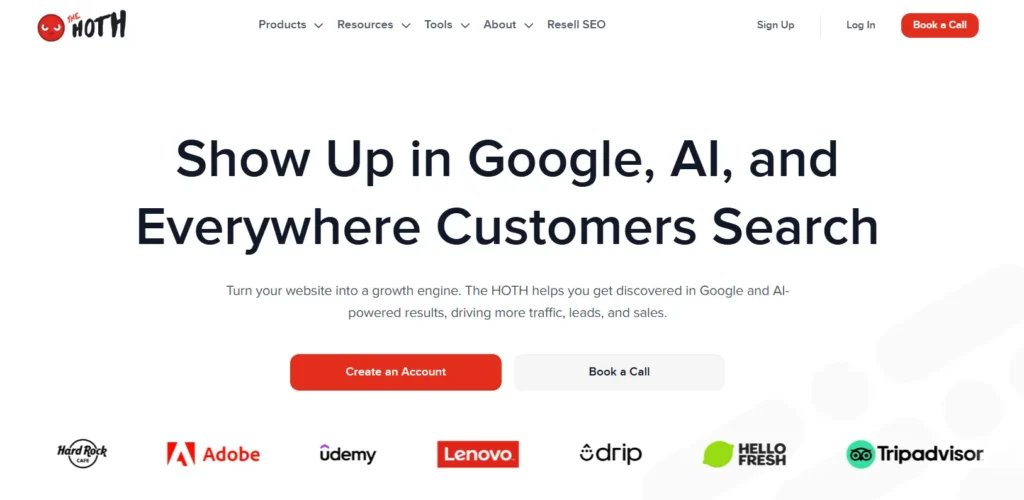
The HOTH, founded in 2010, offers one of the broadest service menus in this space, link building, content creation across formats including AI-optimized content for generative search visibility, local SEO, and reputation management, all available at accessible entry pricing starting around $99 per link and roughly $500 a month for managed HOTH X campaigns. The scale here is real: hundreds of thousands of agencies and businesses have used the platform, giving it one of the most documented track records among white label SEO providers.
Review sentiment is genuinely mixed rather than uniformly positive, worth stating honestly: alongside strong marks for link building and ease of use, some verified reviews specifically flag inconsistent content quality, transparency gaps, and reporting that doesn’t always match expectations. This makes The HOTH a reasonable fit for agencies wanting broad service breadth at accessible pricing, provided you spot-check deliverables directly rather than assuming uniform quality across every order.
3. LinkGraph
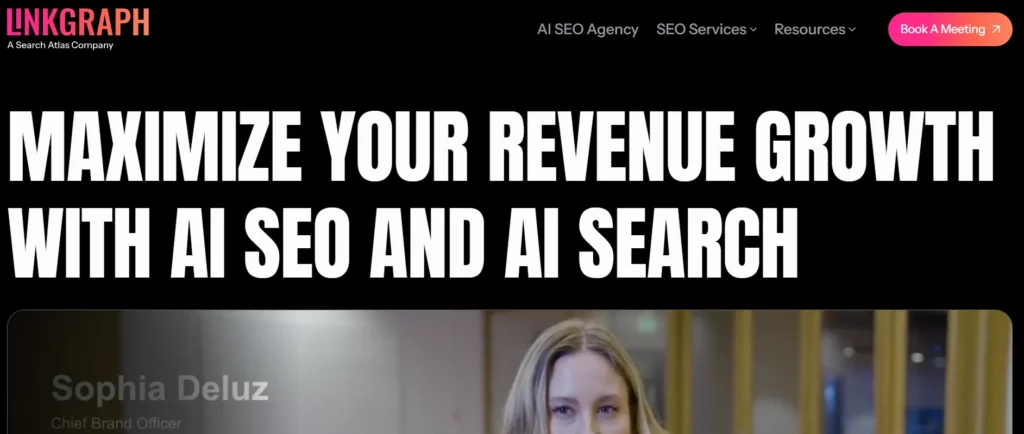
LinkGraph delivers white label SEO through SearchAtlas, its proprietary software platform automating technical audits, content optimization, and link building at scale, with AI agents the company says accomplish meaningfully more work than a traditional agency team in the same time. The platform has earned real third-party recognition, including a US Search Awards Best Startup Agency win, and client satisfaction scores in current industry rankings run notably high.
The honest trade-off worth knowing upfront: LinkGraph’s model assumes your agency brings the strategic direction, anchor text planning and content gap mapping aren’t handled for you by default, making this a stronger fit for SEO-savvy agencies in competitive verticals like legal, SaaS, or healthcare than for agencies wanting a fully hands-off strategic partner. Pricing runs at a premium tier reflecting the technology and enterprise-grade tooling behind it.
4. Upward Engine
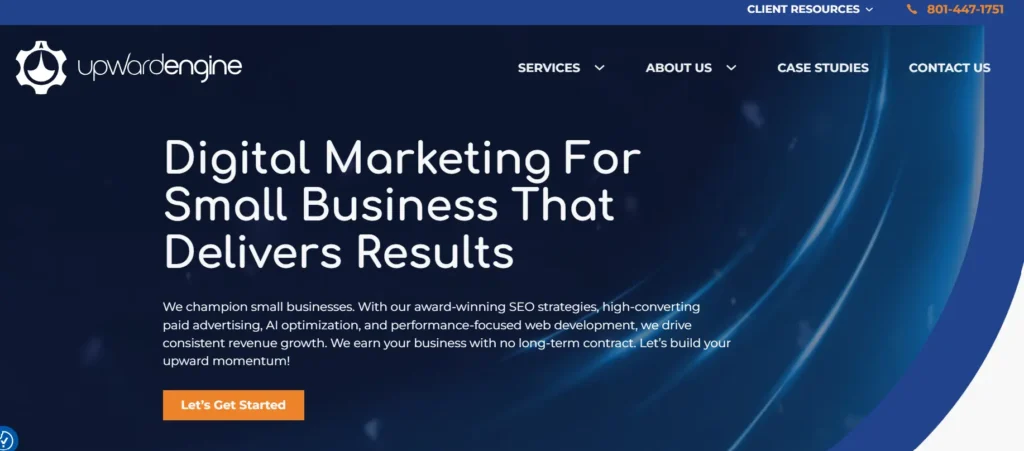
Upward Engine operates as a boutique-style provider built around content-driven SEO specifically, on-page structure, meta optimization, pillar pages, and resource centers built with genuine storytelling rather than templated, keyword-stuffed copy. This content specialization suits agencies whose clients value narrative-driven brand content alongside standard technical SEO fundamentals, particularly in industries where genuinely differentiated content carries real competitive weight.
The boutique positioning cuts both ways: agencies get more tailored, less templated work, but should confirm realistic delivery timelines and account capacity directly, since a smaller, content-focused shop generally can’t match the sheer volume throughput a larger, more automated provider offers.
5. HawkSEM
HawkSEM brings 19 years of experience built around an explicitly ROI-driven approach, integrating SEO with PPC management, remarketing, and retargeting under one full-funnel marketing strategy rather than treating organic and paid as separate workstreams. This integration genuinely suits agencies whose clients want unified performance analytics across both channels rather than reconciling separate SEO and PPC reports from different vendors.
The trade-off: agencies wanting pure-play SEO fulfillment without a bundled paid media component may find HawkSEM’s integrated model less suited to a narrowly-scoped SEO-only reseller relationship than a provider built specifically around organic search alone.
6. Search Engine People
Search Engine People operates at genuine enterprise scale, combining AI SEO and traditional SEO with PPC management, web design, and UX work across multi-channel campaigns built for data-led optimization and ongoing algorithm adaptation. This breadth and scale suit agencies managing larger, more complex client accounts needing coordinated execution across several channels simultaneously rather than SEO fulfillment in isolation.
Smaller agencies or those with simpler, single-channel client needs may find the enterprise positioning here delivers more scope, and correspondingly more cost, than a leaner engagement actually requires.
7. Semify
Semify operates exclusively as a wholesale provider for agencies, with no direct-to-client competition, a structural guarantee worth real weight for agencies concerned about a fulfillment partner poaching their client relationships. With 17 years in business, Semify offers prebuilt fulfillment packages, keyword strategy, technical audits, and branded client portals, with current pricing tiers running roughly $294 to $744 a month depending on package depth, some sources citing a similar range starting closer to $750 monthly for comparable scope.
Reviews consistently praise Semify’s dependability and responsiveness as a genuine extension of an agency’s own team, though some feedback describes the approach as more templated than fully custom, a trade-off many high-volume agencies view as a feature for maintaining consistency across a large client portfolio rather than a drawback.
8. Logic Inbound
Logic Inbound positions itself around consultative SEO delivered with boutique-level attention, keyword optimization, backlink strategy, thought leadership content, and technical SEO paired with CRO and analytics, serving a client base spanning healthcare, ecommerce, and SaaS. This consultative approach suits agencies wanting a fulfillment partner capable of genuine strategic conversation with sophisticated end clients, not just order-taking execution.
The trade-off: a consulting-heavy delivery model generally comes at a higher price point and slower throughput than a more automated, package-based provider, worth weighing against your own clients’ expectations for turnaround speed.
9. Symphonic Digital
Symphonic Digital builds its SEO strategy development around genuine audience research and intent-driven content, explicitly aligning campaigns with Google’s helpful content system rather than optimizing narrowly for keyword targets disconnected from what searchers actually want. This alignment suits agencies whose clients need content depth and audience-intent accuracy as the core value proposition, particularly as generative engine optimization makes genuine content quality matter more for AI citation visibility too.
Agencies wanting a high-volume, link-building-first fulfillment partner rather than a content-and-intent-first strategic approach may find better throughput fit elsewhere on this list.
10. DashClicks
DashClicks rounds out this list as a genuinely differentiated pick: an all-in-one automated fulfillment and reporting platform rather than a traditional service-delivery agency, consistently rated around 4.8 out of 5 across both Clutch and G2 with a large volume of verified reviews. Agencies consistently describe the platform as easy to scale with and well-integrated, with real-time project tracking and automated client-facing reports reducing the manual check-in overhead a traditional fulfillment relationship usually requires.
This makes DashClicks a strong fit specifically for agencies and resellers wanting platform-driven automation and self-serve visibility over a more traditional, relationship-managed fulfillment partnership, though agencies wanting deep, hands-on strategic consultation may find the platform-first model less suited to complex, highly custom client needs than a boutique or consultative provider elsewhere on this list.
What Are the Benefits of White Label SEO?
Scalable SEO services let an agency take on more clients without a proportional headcount increase, since a genuine SEO reseller relationship absorbs fulfillment capacity your own team doesn’t need to build internally. Branded dashboard and client-ready reporting capability lets even a small agency present a polished, professional client experience indistinguishable from a much larger in-house team’s output.
Access to specialized expertise, technical SEO audit capability, link building services, ecommerce SEO nuance, content marketing production, and Google Business Profile optimization for local clients, comes bundled in without hiring separately for each specialty, a genuine cost advantage over building equivalent in-house depth across every discipline a diverse client roster might need.
How to Choose the Right White Label SEO Company
Confirm real transparency before signing: can you see sample deliverables, actual link building services placements, real technical SEO audit reports, not just marketing case studies, since this is the clearest signal of what your own clients will actually receive under your brand. Check Clutch rating, G2 rating, and DesignRush listings directly rather than trusting only testimonials featured on the provider’s own site, and read critical reviews specifically for patterns around transparency, reporting accuracy, and communication responsiveness.
Match minimum project cost and hourly rate structure to your own margin requirements realistically, since a provider priced too close to what you charge clients leaves little room for your agency’s own markup. Confirm the provider’s structural relationship to your clients directly: a genuine SEO reseller partner with no direct-to-client competition protects your account relationships in a way a provider also selling directly to end clients in your market doesn’t.
Conclusion
The right white label SEO agency depends on your agency’s client mix, required service breadth, and how much strategic direction you want to provide versus receive from your fulfillment partner. Verify real transparency and checkable review history before committing, match pricing structure to your actual margin needs, and treat vendor vetting as an ongoing responsibility rather than a one-time decision made during onboarding. White label SEO works best when the partnership behind it holds up to the same scrutiny you’d apply to any client-facing commitment your agency makes directly.
FAQs
White label SEO means a third-party provider performs SEO work, delivered under your agency’s own branding to the end client, letting agencies resell rankings, content, and reporting without building in-house fulfillment capacity.
Agencies with strong sales and client relationships but limited in-house SEO capacity, or agencies scaling faster than they can hire, benefit most, while agencies wanting in-house SEO expertise as a core differentiator may be a weaker fit.
Pricing varies widely by provider and scope, entry-level link building can start around $99 per placement, managed monthly campaigns often start in the $300 to $750 range, with enterprise or technology-platform-driven providers running at premium custom pricing.
Check verifiable Clutch rating, G2 rating, and DesignRush recognition directly, request real sample deliverables rather than only marketing case studies, and read critical reviews specifically for patterns around transparency and reporting accuracy.
Yes, if quality control isn’t maintained, since any gap between promised and delivered work reflects on your agency’s brand, not the provider’s, making ongoing spot-checks a real, continuous responsibility rather than a one-time vetting decision.
A wholesale provider like Semify operates exclusively for agencies with no direct-to-client competition, protecting your account relationships structurally, while a general agency offering white label services alongside direct client work carries some risk of that overlap.