
Testimonial Link Building: How to Earn Homepage Links From Tools You Already Pay For

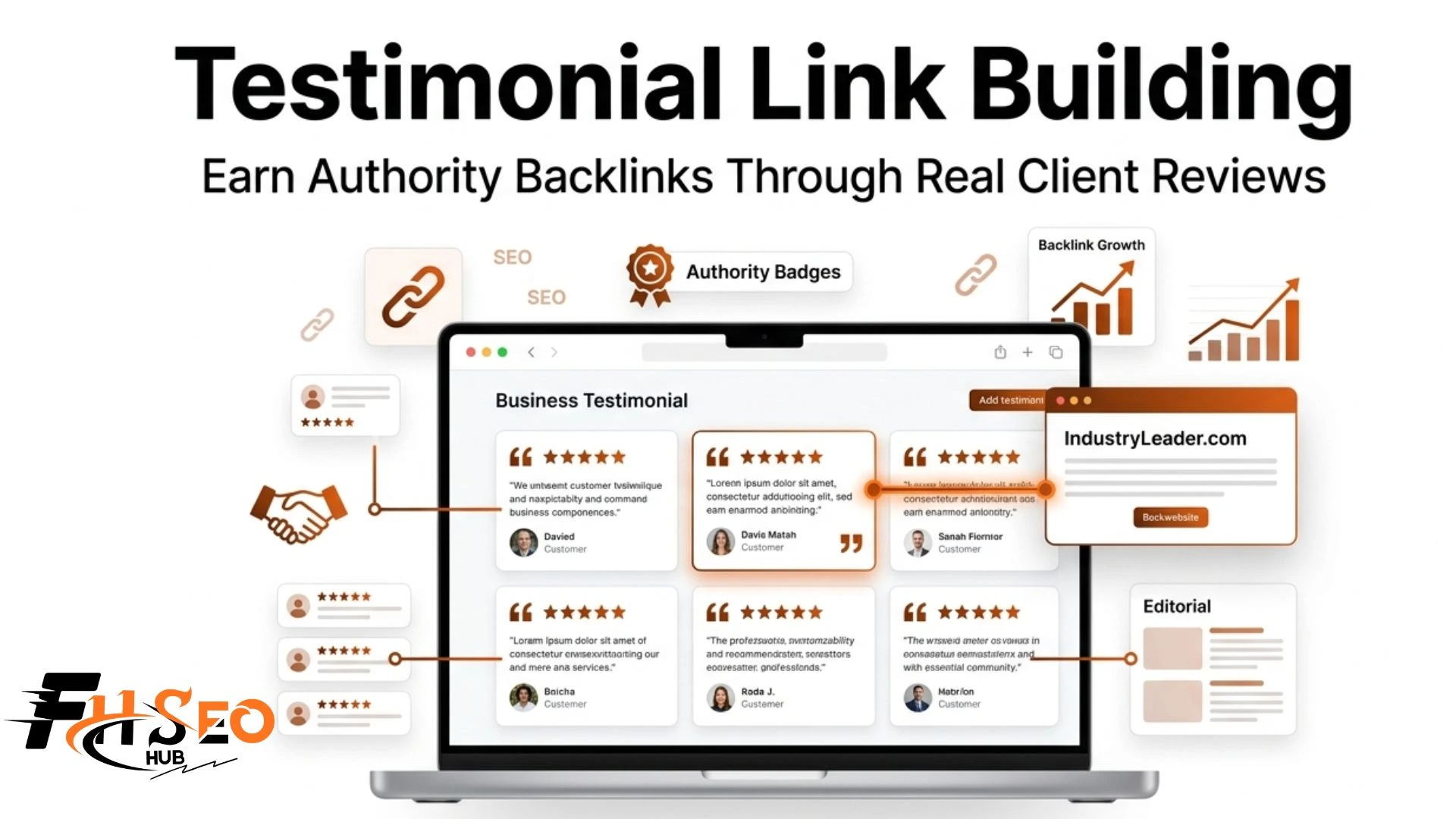
Testimonial link building is the practice of writing a genuine review for a product you already pay for, in exchange for a backlink on that company’s website. It bypasses the cold pitch problem entirely because you are already a verified customer. Your billing dashboard is your prospect list and most founders never think to use it that way.
That is exactly why this tactic works when cold outreach fails. No trust to build from scratch. No content campaign to launch first. Just an honest paragraph about something you already rely on, published on a page Google already trusts.
What is testimonial link building?
Testimonial link building is the process of writing an authentic testimonial for a tool, platform, or service you genuinely use, which the company then publishes on their site alongside a backlink pointing to your domain. It qualifies as a white hat link building strategy because the brand endorsement is real, the editorial link is earned, and no payment changes hands for the link itself.
Both sides benefit genuinely. The brand gets social proof from a verified customer that converts new visitors better than any copy their marketing team could write. You get a backlink from a domain Google already views as credible in your industry.
How is this different from buying a backlink?
A bought backlink exchanges money for a link, which violates Google’s spam policies and risks a manual penalty. A testimonial backlink exchanges a genuine, outcome-focused review for a link, which Google classifies as an editorial link because the brand independently chose to publish your words. No payment touches the link. That distinction keeps this strategy fully compliant.
How does the mechanism work?
Your verified customer status is what makes this tactic function. The brand checks your account in under 30 seconds, confirms you are a real paying customer, and that verification replaces the trust-building phase every cold pitch has to fight through first.
You write a two to three sentence specific outcome statement. They publish it with a backlink to your site. The link is topically relevant by default because both businesses operate in the same product ecosystem. And unlike guest posts that age out of editorial queues, most testimonial links stay live for years without any additional work from you.
Why does verified customer status bypass the cold pitch problem?
Every standard link building tactic starts from zero trust. Testimonial pitches start from verified credibility. You are not asking a stranger for a favor. You are a real customer whose words have genuine conversion value for that brand’s marketing team. The company confirms your account in 30 seconds. That confirmation removes the biggest obstacle in any outreach campaign before a single word of your pitch is even read.
Where do testimonial links appear and which placement is most valuable?
Testimonial links live in three locations on a company’s website. Each placement delivers a different combination of link authority and topical relevance. Knowing which placement you are targeting before you pitch changes how you prioritize outreach.
| Placement Location | Link Authority Level | Topical Relevance | Ease of Earning |
| Homepage | Highest (full domain authority) | General, brand-level | Competitive |
| Dedicated testimonials or customer page | High | Moderate | Most accessible |
| Feature or product page | Medium-High | Highest, specific use case | Accessible |
| Case study page | High | Very High | Hardest to earn |
Homepage links carry the most domain authority. Feature page links offer the strongest topical relevance for specific use cases. Check where existing testimonials appear on a site before you pitch because that placement tells you exactly what kind of link you are competing for.
Are testimonial links dofollow or nofollow?
Most testimonial links from large, established SaaS companies are nofollow. Brands with a domain rating (DR) above 50 and an active SEO or legal team typically tag every outbound link as nofollow as a compliance policy. Smaller brands below DR 50, including niche tool makers and regional service providers, are far more likely to give you a dofollow link without being asked.
Are nofollow testimonial links worth building?
Yes. A nofollow link from a high-authority homepage still delivers measurable referral traffic. Every visitor who reads that testimonial and clicks through is a real potential customer who found you through social proof rather than an ad. Some of those visitors later write their own content and link to you naturally, producing a co-citation signal that contributes to topical authority. A nofollow from a DR 80 homepage is not a waste of time.
How do you find and qualify testimonial opportunities?
Open your billing dashboard. Every tool or platform you pay for is a potential prospect. List them in a spreadsheet, then visit each homepage to confirm they feature testimonials and that existing quotes link out to real websites.
Run four qualification checks before sending any pitch:
| Qualification Check | How to Verify | Why It Matters |
| Are you an active paying customer? | Check your billing account | Brands verify in 30 seconds; non-customers get blocked permanently |
| Do existing testimonials include outbound links? | Hover over names in existing quotes | If no outbound links exist, ask explicitly for one in your pitch |
| What is their DR? | Use Ahrefs or similar tool | DR 50+ likely means nofollow; DR under 50 means higher dofollow probability |
| Who handles testimonials? | LinkedIn People tab, filter by marketing roles | Wrong contact means your pitch disappears without a reply |
Expand beyond your software stack by checking competitor resource pages, influencer resource pages in your niche, and ProductHunt for newly launched tools that need testimonials to fuel early sales.
How do you write a testimonial that gets published?
Write a specific outcome statement under 60 words. Name the exact feature, the measurable result it produced, and the business context it applies to. Brands publish specifics. They archive flattery.
“This tool eliminated three manual processes we ran separately” gets featured. “I love this product” gets deleted. The more specific your details, the less editing the brand needs to do and the faster your quote moves through their approval process.
What six mistakes consistently get testimonial pitches ignored?
These mistakes appear across nearly every failed pitch campaign:
How do you pitch and follow up correctly?
Send the pitch first. Never attach a testimonial draft to the initial email. Introduce yourself as an active paying customer, name one specific result you achieved with their product, and offer to write a short testimonial. Close with a clear request for the link.
Find the marketing manager or content lead on LinkedIn using the company People tab, or use an email finder tool to find their email address directly. Send five to ten pitches per week maximum. Beyond ten, your pitches start to feel templated and your response rate drops noticeably. One follow-up after seven days. Two follow-ups total is the maximum. Past two, you are chasing. Brands do not feature customers who had to be chased.
How does testimonial link building compare to other white hat link building tactics?
This approach wins on time investment and trust barrier. Two to three sentences instead of a 1,500-word guest post. A verified customer pitch instead of a cold stranger request.
| Factor | Testimonial Links | Guest Posting | Broken Link Building | Digital PR |
| Time investment per link | Very low (2-3 sentences) | High (1,500+ words) | Medium | Very High |
| Trust barrier | None (verified customer) | High (cold pitch) | Medium | High |
| Scalability | Limited (5-8 links per stack) | High | Medium | Medium |
| Typical link type | Nofollow or dofollow depending on brand DR | Usually dofollow | Dofollow | Dofollow |
| Relationship potential | High (co-marketing, referrals) | Low | Low | Medium |
| Best suited for | First backlinks, new sites, fast wins | Scaling authority over time | Quick wins | Brand visibility |
What is the real ceiling of this tactic?
A typical software stack of ten to thirty tools yields five to eight testimonial backlinks in total, not per month. Once you have pitched every tool in your stack, the tactic is exhausted until you adopt new products. This is a supporting link building tactic, not a primary strategy. Use it to earn your first relevant backlinks quickly while you build the scalable systems that sustain long-term ranking growth.
The core takeaway
Testimonial link building will not replace a full link building strategy, and the most guides about this tactic say so directly. What it will do is earn you five to eight high-relevance backlinks from domains you already have a relationship with, faster than any other white hat method available. Open your billing dashboard today, pick the three tools you have paid for the longest, confirm they display testimonials with outbound links, and send the first pitch this week. The next step after those first links go live is building the scalable systems that keep growing. FHSEOHub provides such type of backlinks from the high authority websites.


