
Guest Posting vs. Niche Edits: Which Should You Choose?

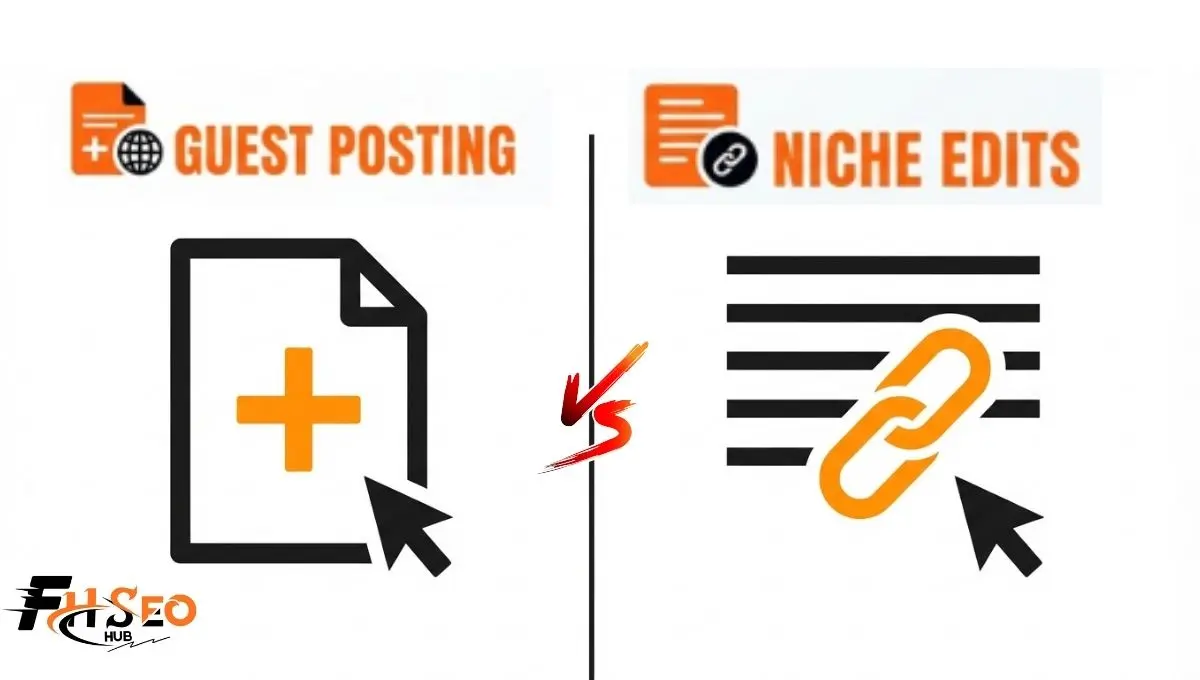
Guest posting and niche edits both earn backlinks through paid or negotiated placements, but they work differently enough that picking the wrong one wastes budget on the wrong outcome. Guest posts build new content and brand visibility on someone else’s audience. Niche edits insert your link into a page that’s already ranking, which is why they pass value faster but offer nothing beyond the link itself.
What Is Guest Posting?
Guest posting means writing an original article for another site in exchange for a contextual backlink, typically placed within the body content or an author bio. The publisher gets free content. You get a link on a real, editorially-reviewed page alongside a byline that builds thought leadership in your niche.
The full definition and mechanics of guest posting matter less here than the trade-off. You’re paying with content creation time, not just money, and a freshly published page needs to get indexed before the link passes any value. That indexing lag is the main structural difference between this tactic and a niche edit.
What Are Niche Edits?
Niche edits, sometimes called link insertions, add your link into an already-published, already-indexed article on someone else’s site, instead of creating new content. Because the page is already crawled and ranking, niche edits typically pass value faster than a guest post on the same site.
The trade-off is control and risk. You’re not writing the surrounding content, so you’re trusting the vendor’s judgment on relevance and context. A niche edit inserted into a page that’s already carrying several unrelated paid links reads as a red flag to both readers and Google’s spam systems. That’s why vetting the specific page matters more than vetting the site’s overall metrics.
Guest Posting vs. Niche Edits: Key Differences
Guest posting and niche edits differ most in speed to index, content control, and cost structure, though both can deliver a genuine contextual backlink when placed on a relevant, editorially-reviewed site. Neither tactic is inherently safer than the other. Risk depends entirely on execution.
| Factor | Guest Posting | Niche Edits |
| Speed to pass value | Slower, new page needs indexing | Faster, page already indexed |
| Content control | Full, your byline and framing | None, inserted into existing text |
| Typical cost (DR 30-50) | $80-$250 | $50-$150 |
| Brand visibility | Yes, byline and author bio | No, link only |
| Vetting priority | Publisher’s editorial standards | Page’s existing traffic and link history |
| Turnaround time | 1-3 weeks typical, content plus review | Days to 1-2 weeks typical |
Domain Rating and Domain Authority matter for both, but niche edits add a second variable guest posts don’t: the specific page’s own performance. A high-Domain Authority site can still host a niche edit on a page that’s lost its traffic or picked up too many outbound links. That’s why checking the individual page, not just the domain, is the step most buyers skip.
Pros and Cons of Guest Posting
| Pros | Cons |
| Builds brand visibility alongside the link | Requires real time and effort to write genuinely good content for every placement |
| A byline builds recognition and thought leadership a bare link insertion never will | A rushed, thin guest post gets rejected by publishers with real editorial standards, or worse, accepted by one that doesn’t have any |
| Full control over anchor text, surrounding context, and framing | Scales slower than niche edits, since content creation is the bottleneck, not outreach capacity |
Want me to do the same for the Niche Edits section, and update the actual article file to use both tables in place of the prose?
Pros and Cons of Niche Edits
| Pros | Cons |
| Lower per-link pricing at comparable Domain Rating since there’s no content creation involved | Vetting difficulty, since you’re relying on someone else’s judgment about where your link fits naturally |
| Faster contribution to rankings, since insertion into an already-indexed page starts working sooner than a new guest post would on the same site | A careless vendor can place your link in a context that reads as forced or unrelated |
| Wins on overall speed and cost efficiency compared to content-based placements | No brand presence beyond the link itself, no byline, no author bio, nothing a reader associates with your business specifically |
Similarities Between Guest Posting and Niche Edits
Both tactics carry the same core compliance requirement: a paid placement needs a rel=”sponsored” or rel=”nofollow” attribute to stay compliant with Google’s spam policies, regardless of which format the link takes. Skipping disclosure is the same violation whether the link sits in new content or inserted into old.
Both also depend entirely on the same underlying quality signals: topical relevance, real editorial oversight on the publisher’s end, and a healthy backlink profile on the linking domain itself. A PBN selling both guest posts and niche edits carries the same manipulation risk regardless of which format you buy, since the problem is the network, not the placement type.
How to Find Guest Posting Opportunities
Finding legitimate guest posting opportunities means searching your niche plus “write for us” or “guest post guidelines,” checking guest posting sites lists against real traffic and editorial standards, and prioritizing relationship-based outreach over marketplace inventory. A publisher that reviews and edits submissions is worth more than one that accepts anything for a fee.
Competitor backlink analysis through Ahrefs or Moz surfaces sites already publishing guest content in your space, which is a stronger signal than a generic directory list. Reaching out through a genuine outreach email, not a mass template, still gets meaningfully better response rates than a form pitch sent to a hundred sites at once.
Which Strategy Is Better for SEO? (By Business Type and Goal)
Neither tactic is universally better. The right choice depends on whether your bottleneck is speed, budget, or brand visibility, and how much organic traffic quality matters relative to raw link volume for your specific goal.
A brand-new site with no content history benefits more from guest posting. It builds both a link and a public presence at once, something a niche edit can’t offer a site nobody’s heard of yet. An established site with strong content already needs to demonstrate authority mainly wants niche edits for their speed, since the brand-visibility benefit of a guest post matters less once you already have one.
B2B and SaaS companies lean toward guest posting more heavily, since thought leadership and referral traffic quality matter as much as the link itself. Ecommerce brands chasing volume often get a better cost-per-link from niche edits at comparable authority.
Can You Use Both Together?
Yes, and most mature link building programs run both simultaneously rather than choosing one exclusively. Guest posts build the slower, visibility-driven layer of a backlink profile, while niche edits fill in faster, more targeted placements around specific pages or keywords that need a quicker lift.
Running both also produces a more diversified backlink profile, which matters for anchor text distribution and pattern detection. A profile built entirely from one editorial backlink type, regardless of which one, looks more manufactured to Google’s systems than a mix that reflects how link building genuinely happens across different tactics and timelines, including resource page links and HARO-style digital PR alongside guest posts and niche edits.
Common Mistakes to Avoid When You Choose Both
The most common mistake when running guest posts and niche edits together is treating them as interchangeable. Applying the same anchor text and vetting standards to both ignores that they carry different risk profiles needing separate scrutiny. A niche edit needs page-level vetting a guest post doesn’t, since you’re inheriting an existing page’s history, not building one from scratch.
Budget mismanagement is the second common mistake. Teams often overspend on guest posts for brand mentions and visibility they don’t genuinely need yet. That underfunds the niche edits that would move rankings faster for pages already close to ranking. Match the tactic to the real goal for that specific page or keyword, not a fixed ratio applied blanket across the whole campaign.
The third mistake is buying both from the same vendor without separately vetting each placement type. A vendor strong at guest post relationships isn’t automatically vetting niche edit pages with the same rigor. Assuming otherwise is how a mixed campaign ends up with one tactic performing well and the other quietly accumulating risk.
How to Choose the Right Strategy for You
Choose guest posting when brand visibility, thought leadership, or a brand-new site’s first layer of authority matters as much as the link itself. Choose niche edits when speed and cost efficiency matter more, and you already have enough content and brand presence that another byline adds little.
Budget realistically for both. Guest posting on relevant DR 30-50 sites typically runs $80 to $250 per placement with a one-to-three-week turnaround including content creation. Niche edits on comparable sites typically run $50 to $150 with a faster turnaround, days to about two weeks, since there’s no content to write or review. FHSEOHub’s guest posting service and niche edit service run both tactics with the same vetting standard applied to every placement.
If you’re still unsure, start with a small test batch of each, five to ten placements per tactic. Track referral traffic quality and ranking movement on the specific pages you’re targeting before committing a full campaign budget to one or the other. Ethical link building practices apply identically to both tactics regardless of which one you scale.
Conclusion
Guest posting versus niche edits isn’t really a competition. It’s a question of matching the tactic to what a specific page or campaign genuinely needs right now. Guest posts earn visibility and a slower-building link. Niche edits earn speed and cost efficiency at the expense of narrative control. FHSEOHub offers both programs and services with reasonable prices.
FAQs
Niche edits often pass ranking value faster since the host page is already indexed, but they don’t build the brand visibility or thought leadership a guest post’s byline provides. Which “works better” depends on whether your goal is link velocity or public presence.
Guest posts on relevant DR 30-50 sites typically run $80 to $250 per placement. Niche edits on comparable sites typically run $50 to $150. Premium, higher-authority sites cost more for both, and pricing varies by vendor and niche competitiveness.
Neither is inherently safer. Both require a rel=”sponsored” or rel=”nofollow” attribute on paid placements to comply with Google’s spam policies, and both carry the same manipulation risk if bought from a low-quality network regardless of format.
A brand-new site generally benefits more from guest posting first, since it builds public brand presence and a byline alongside the link, something a site with zero existing reputation needs more than raw link speed.
Yes, and most established link building programs do, using guest posts for slower-building visibility and niche edits for faster, targeted placements. Vet each tactic separately rather than applying identical standards to both.


