
10 Best HARO Alternatives in 2026: Platforms, Strategy and Pitches That Work

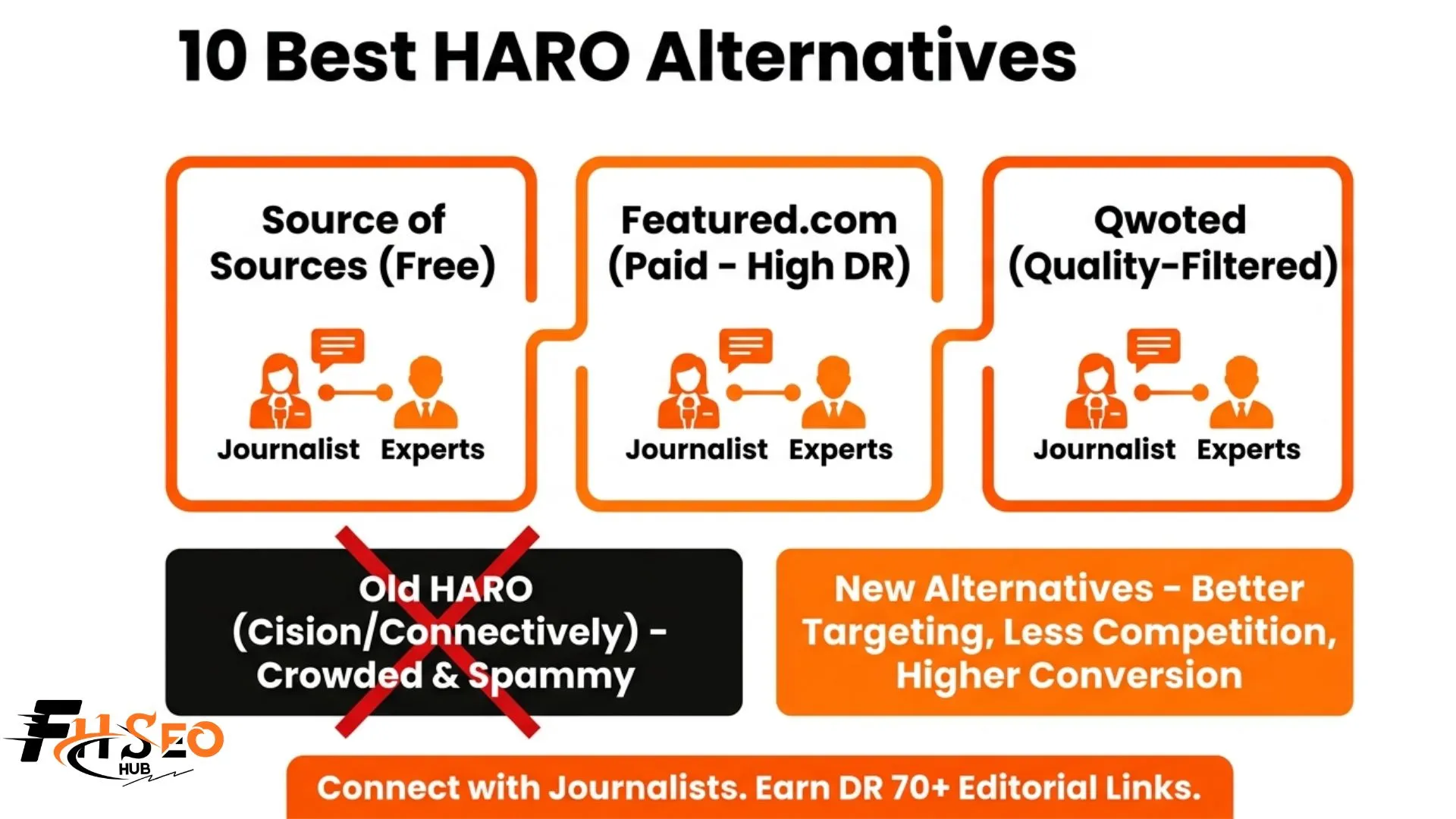
HARO alternatives are platforms that connect journalists and content creators with expert sources, just like the original Help a Reporter Out did. In 2026, the top options include Source of Sources (free), Featured.com (paid with Forbes and Fortune access), Qwoted (quality-filtered), SourceBottle (free and global), and Help a B2B Writer (free, B2B focused). HARO shut down in 2024, revived under new ownership in 2025, but remains too crowded and spammy to rely on as your primary platform.
What happened to HARO and why are people searching for HARO alternatives?
HARO launched as one of the smartest free ideas in PR: a daily email list connecting journalists with expert sources. It worked beautifully until Cision acquired it, rebranded it as Connectively and shut it down entirely in 2024.
New owners revived it in late 2024 with significant changes: AI scoring, tougher spam filters, a new podcast category and stricter rules about geographic consistency. Pitch from a location that doesn’t match your profile and you risk a lifetime ban.
The core problem with the new HARO: it historically had approximately 1 million subscribers. Black-hat SEOs flooded journalist inboxes with AI-generated pitches. Real experts got buried. The rebuilt version is stricter, but also harder to win on, even for qualified sources.
This is why serious SEOs, PR professionals, and brands now use other platforms offering less competition, better targeting and measurably higher conversion rates.
Is the new HARO still worth using in 2026?
HARO is worth using as a supplementary channel, not a primary one. The AI scoring system misfires on legitimate pitches. Real-time competition is still intense. And the broad general nature of the platform puts you in competition with every niche simultaneously. Use it alongside better platforms but don’t anchor your entire link building strategy to it.
Should you use reactive or proactive journalist outreach platforms?
Understanding the two types of outreach changes how you evaluate every platform.
Reactive platforms send you journalist queries and you respond. Source of Sources, Featured.com, Qwoted, SourceBottle and Help a B2B Writer all work this way. You wait for relevant opportunities and pitch when they arrive. The model rewards fast responders with deep expertise.
Proactive platforms let you search for journalists by beat or topic and pitch them directly without waiting for a query. JournoFinder and Just Reach Out work this way. The approach requires more effort but removes the timing dependency entirely.
The most effective campaigns combine both: reactive platforms for steady inbound opportunities, proactive platforms for targeting specific publications you want coverage in.
What are the best free HARO alternatives in 2026?
Three free platforms consistently outperform in 2026.
Source of Sources
Source of Sources is founded and operated by Peter Shankman, the original creator of HARO. If you loved the old HARO experience, this feels exactly like it.
Up to three email digests per day contain journalist queries. Shankman monitors the platform personally and bans users who pitch irrelevant or AI-generated responses. It stays clean because the rules are enforced by the person who built the original version.
Help a B2B Writer (MentionMatch)
Help a B2B Writer, now rebranded as MentionMatch, is a free B2B-focused request platform connecting content writers with expert sources in business, technology, marketing and SaaS. Because the audience is niche-specific, competition per query is dramatically lower than general platforms. B2B brands consistently report the highest conversion rates here relative to time invested.
SourceBottle
SourceBottle works on the same email-based query model as the original HARO but with particular strength in Australia, the UK and international markets. For businesses outside the US that struggle with the heavy US bias on most platforms, SourceBottle fills an important gap. Competition per query is lower than almost any alternative and the barrier to entry is zero.
What paid platforms give you DR 70+ editorial links?
Two paid platforms deliver the highest authority placements in 2026.
Featured.com (formerly Terkel) is the most recognized paid alternative for enterprise-level link building. At $49 per month for the starter plan, you access a curated dashboard showing journalist requests from Forbes, INC, Fortune, and hundreds of similar high-authority publications. The platform filters requests to your declared areas of expertise, cutting research time compared to scrolling through broad email digests.
The free plan exists but limits you to three answers per month. At three answers monthly you will not see meaningful results. The paid plan changes everything.
Qwoted focuses on quality over volume, using a vetting process that produces a smaller but more trustworthy pool of real-time media requests from verified journalists. Multiple account types covering experts, PR professionals and businesses make it one of the more professional platforms in the space.
Is Featured.com worth paying for compared to free options?
Featured.com is worth paying for if you are actively targeting top-tier publications and have the content expertise to answer questions with genuine authority. A single placement in Forbes or Fortune produces domain authority gains that pay for months of subscription through the referral traffic and ranking improvement alone. If you are a beginner or working with a tight budget, build your pitching skills on Source of Sources first before upgrading to Featured.
How do all major platforms compare?
| Platform | Cost | Best For | Link Quality | Focus |
| Source of Sources | Free | Beginners, HARO veterans | DR 50-80+ | General / US-Global |
| Featured.com | $49/month | Enterprise SEOs, agencies | DR 70-90+ | Curated / US-Global |
| Qwoted | Paid | PR professionals | DR 60-85+ | Quality-filtered / Global |
| SourceBottle | Free | Small businesses, freelancers | DR 40-70+ | General / AU-UK-US |
| Help a B2B Writer | Free | B2B brands, SaaS, agencies | DR 50-80+ | B2B only / US-Global |
| JournoFinder | Paid | Proactive SEO outreach | DR 60-80+ | General / UK-US |
| Social Media (#JournoRequest) | Free | Fast movers, real-time wins | Varies | Real-time / Global |
| ResponseSource | Premium | UK brands and agencies | DR 50-80+ | General / UK |
| Muck Rack | Enterprise | Large PR teams | DR 70-90+ | All niches / US-Global |
How do you write pitches that get accepted?
The platform gets you in the room. The pitch determines whether you get the link. Most pitches get ignored for the same four reasons: they are obviously AI-generated, they arrive too late, they answer the wrong question or the credentials don’t match the query.
Here is what consistently gets published:
How do you avoid being flagged as an AI pitch?
Journalists and platform algorithms now actively flag AI-generated responses. The patterns are recognizable: generic structure, bullet-heavy formatting, no specific examples, corporate language and an absence of genuine opinion or personal experience.
To avoid detection, write from your actual experience. Use “I” in a way that references something real. Include a number, a result, or a failure you actually experienced. Make one observation that only makes sense if you have done this professionally. Your pitch doesn’t need to be perfect. It needs to sound human.
Should you use a virtual assistant to scale outreach?
Yes, with strict quality controls in place. A VA can monitor multiple platforms simultaneously, filter relevant queries, and draft initial pitch frameworks for your review. You review, add your genuine expertise and specific examples, then send. This system lets you cover Source of Sources, Featured.com, and Qwoted simultaneously without spending hours daily on outreach. The VA builds the structure. You provide the expertise that makes the pitch credible.
How do you build a multi-platform strategy that compounds results?
The best results in 2026 come from using three to four platforms simultaneously rather than committing exclusively to one.
A proven starting combination:
Run this combination consistently for six to twelve months. Track results systematically. Set up Google Alerts for your name and brand to catch placements you were not directly notified about. Run a quarterly backlink audit in Ahrefs or Google Search Console. Many brands discover they are earning more placements than they realized.
One real case: an addiction treatment provider in a competitive YMYL niche monitored Qwoted, Featured, Source of Sources, and health-specific queries daily for 12 consecutive months. No shortcuts. No gaps. The compounding placement volume produced serious domain authority gains that accelerated rankings across the entire site.
What mistakes kill your results on these platforms?
Five mistakes destroy outreach campaigns on journalist request platforms:
The core takeaway
HARO alternatives in 2026 are not stopgaps. They are genuinely better tools for building high-authority editorial links with less competition and more targeting control than the original platform ever offered. Start with Source of Sources and Help a B2B Writer if your budget is zero. Add Featured.com when you need top-tier publication access. Build the multi-platform habit before thinking about scaling. The compounding effect of consistent quality outreach across three platforms over 12 months beats any single shortcut available in digital PR today.


