
Link Farming in SEO: What It Is and Why It Still Hurts Rankings

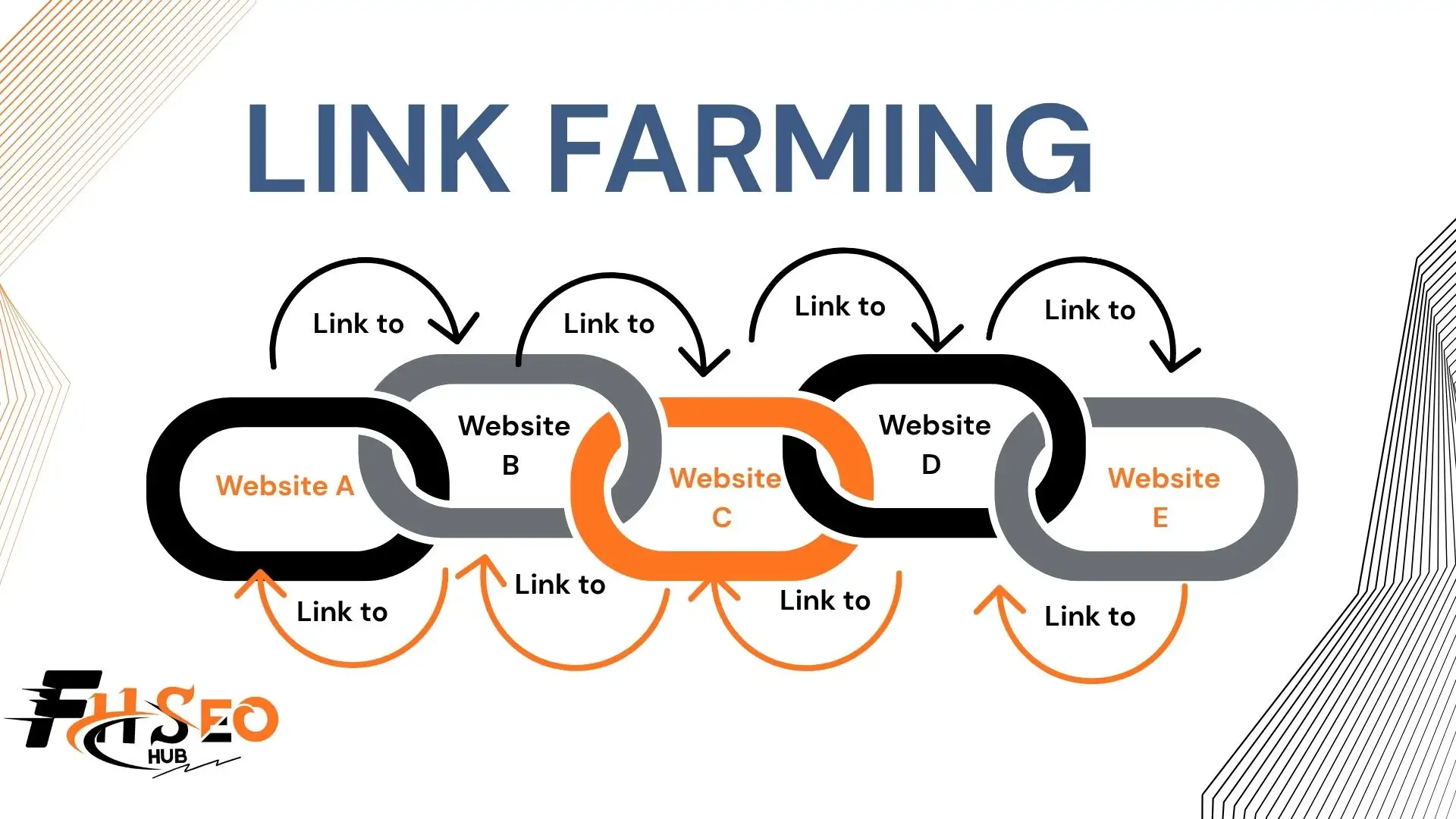
Link farming in SEO is a black hat tactic where a network of low quality sites link to each other, or to one target site, just to fake authority and push rankings up. Google calls this a link scheme, and it almost always ends in a penalty instead of a boost. Here is what really happens once your site gets tied to one.
What Is Link Farming in SEO?
A link farm is a group of websites that exist mainly to trade backlinks with each other. Search engines read backlinks as a vote of confidence, sometimes called link juice or link equity, an idea that goes back to PageRank. A link farm tries to fake that signal instead of earning it through real content.
A few related terms get used loosely, but they are not the same thing:
None of this is new. It is the same old shortcut, just repackaged for a smarter search engine.
How Do Link Farms Work?
A link farm usually runs on templated WordPress sites that all interlink with each other, sometimes through a structured link wheel where site A links to B, B links to C, and C links back to A. The goal is a fake sense of authority built through artificial link building that looks organic from a distance.
This trick is old. SEOs first built link farms back in 1999 to game Inktomi, an early search engine that ranked pages mostly by raw link count. More links meant a higher rank, so people just built more links. That loophole is where black hat link farming started.
In graph terms, a link farm behaves like a clique, or what researchers call a tightly-knit community, a small group of low value pages linking tightly among themselves. This manufactures artificial authority signals that briefly mimic how real sites naturally link to each other, until search engines learn to tell the difference.
Why Do Link Farms Hurt Your SEO?
Link farms cause SEO problems because Google built its ranking systems to catch this kind of manipulative backlink network, and getting caught costs more than any short term gain. Google Panda and Google Penguin first targeted these networks back in 2011 and 2012, and Penguin now runs inside Google’s core algorithm in real time.
Today, SpamBrain does most of the work. It reviews link patterns across the web and can trigger:
Google also groups link schemes alongside other spam tactics like keyword stuffing, cloaking, and aggressive anchor text optimization, so a link farm is just one piece of a bigger enforcement picture. None of this makes a link farm illegal though. No law bans it. It simply breaks Google’s guidelines, and that costs your traffic far more than it sounds.
How Can You Tell If a Site Is a Link Farm?
You can usually spot a link farm by checking its referring domains, its link velocity, and its anchor text ratio. A real site links out with a natural mix of phrasing, while a link farm repeats the same exact-match anchor text across dozens of unrelated pages, a clear red flag once you know to look for it.
Other signs worth checking before you accept or pay for a link:
Here are the tools that make this easy:
| Tool | What it reveals |
| Ahrefs | Referring domains, linked domains, anchor text spread, ranked keywords |
| Moz | Domain Authority, Page Authority, Spam Score |
| Majestic | Trust Flow against Citation Flow, a gap that often exposes fake authority |
| SEMrush | Backlink health and toxic link flags |
| Google Search Console | Manual action notices straight from Google |
A quick WHOIS lookup or a check through the Wayback Machine often reveals a shared footprint too, like matching registration dates or the same owner sitting behind several sites at once.
Will Links From a Link Farm Hurt Your Site?
A couple of stray links from a link farm rarely trigger anything on their own. Google usually devalues the linking domain itself rather than punishing you directly, so one bad link is not the crisis it feels like. The real risk builds when a whole low-quality backlink network points at your site over time.
Watch for a rising bounce rate from referral traffic that has nothing to do with your niche, or an unnatural linking pattern where dozens of links appear fast from sites you never contacted. This is sometimes deliberate, known as negative SEO or Google Bowling, where a competitor points cheap farm links, often bought through sites like Fiverr, at you and hopes the drop lands on your side instead of theirs.
What New Rules Should You Know for 2026?
Link farming does not sit alone anymore. Google enforces newer policies that overlap with it directly, and skipping them leaves a real gap in how you protect your site.
One more shift matters here. AI Overviews and chat based answer engines lean on E-E-A-T signals and machine-learning link detection to decide who gets cited. Link farm pages almost never clear that bar, so showing up in an AI answer is quietly becoming its own proof of honestly earned authority.
How Do You Remove Bad Backlinks?
Removing bad backlinks starts with a full backlink audit inside Google Search Console or a tool like Ahrefs, so you know what you are dealing with before you touch anything. Reach out to the site owner first and ask for removal directly, since that is faster and safer than any automated step.
If that does not work, this order actually helps:
- Export the backlink list and separate the toxic backlink profile from links that are simply low value but harmless
- Use the Google Disavow Tool only on domains you can clearly tie to a manual action or a real attack
- File a reconsideration request once Google has flagged your site, and be specific about what you fixed
Do not disavow every mediocre link out of fear. Google’s own systems already ignore most weak links automatically, and over disavowing can strip out real link equity, leaving you further from a healthy backlink profile.
What’s the White Hat Alternative to Link Farms?
The real alternative to a link farm is white-hat link building, which trades speed for something that actually lasts. It takes more time upfront, but it builds a sustainable backlink profile instead of one that can vanish overnight.
Each of these leans on contextual link relevance and link quality over link quantity, which drives natural link acquisition and organic backlink growth instead of a number that disappears once Google notices it.
Link Farm vs PBN vs Content Farm vs Click Farm
These four terms get mixed up constantly, but each one manipulates something different.
| Term | What it manipulates | How it is structured |
| Link farm | Backlinks | Public network, often sells or trades links openly |
| PBN | Backlinks | Private network feeding one target site only |
| Content farm | Content volume | Mass produces low value pages, not links |
| Click farm | Clicks and engagement | Bots or paid workers fake activity, no links involved |
A private blog network stays a PBN only while it stays private. The moment it starts selling placements to outsiders, it has become a link farm in every way that matters.
Final Thoughts
Link farming might look like a shortcut, but it almost always costs more than it gives back. The safer path is slower. Build real relationships, earn editorial link placement, and let your backlink profile grow the way Google actually rewards. That approach still works in 2026, and unlike a link farm, it does not come with an expiration date.
FAQs
No. There is no law against it. It breaks Google’s guidelines, which means the cost is your rankings and traffic, not a legal case.
No. Any lift is temporary, and once SpamBrain catches the pattern, the inflated search rankings usually fall harder than they rose.
Rarely, and not for long. Machine-learning link detection now flags AI-generated link networks and programmatic link abuse within weeks of launch.
A link exchange scheme is usually a smaller, mutual swap between two sites. A link farm scales that same idea across dozens or hundreds of sites at once.
A backlink is simply a link from one site to another, and good ones are earned naturally. A link farm manufactures backlinks artificially instead of earning them.
It depends entirely on the link neighborhood the links come from. Paid links from relevant, high traffic pages can be fine. The same deal from a disguised farm is not.
Yes. The instant a private network starts selling placements or joins an open link exchange, it stops being private and becomes a link farm.
Yes, through negative SEO. It is rare, but a sudden flood of spammy links you never built is worth investigating, not ignoring.
Almost never. These tools weigh E-E-A-T and genuine authority, and a link farm has neither to offer.
Ask for the exact list of placements before you pay, then check each domain yourself. A vendor that resists sharing sources is usually hiding a weak network behind the report.


