
Link Building vs SEO: What’s the Real Difference?

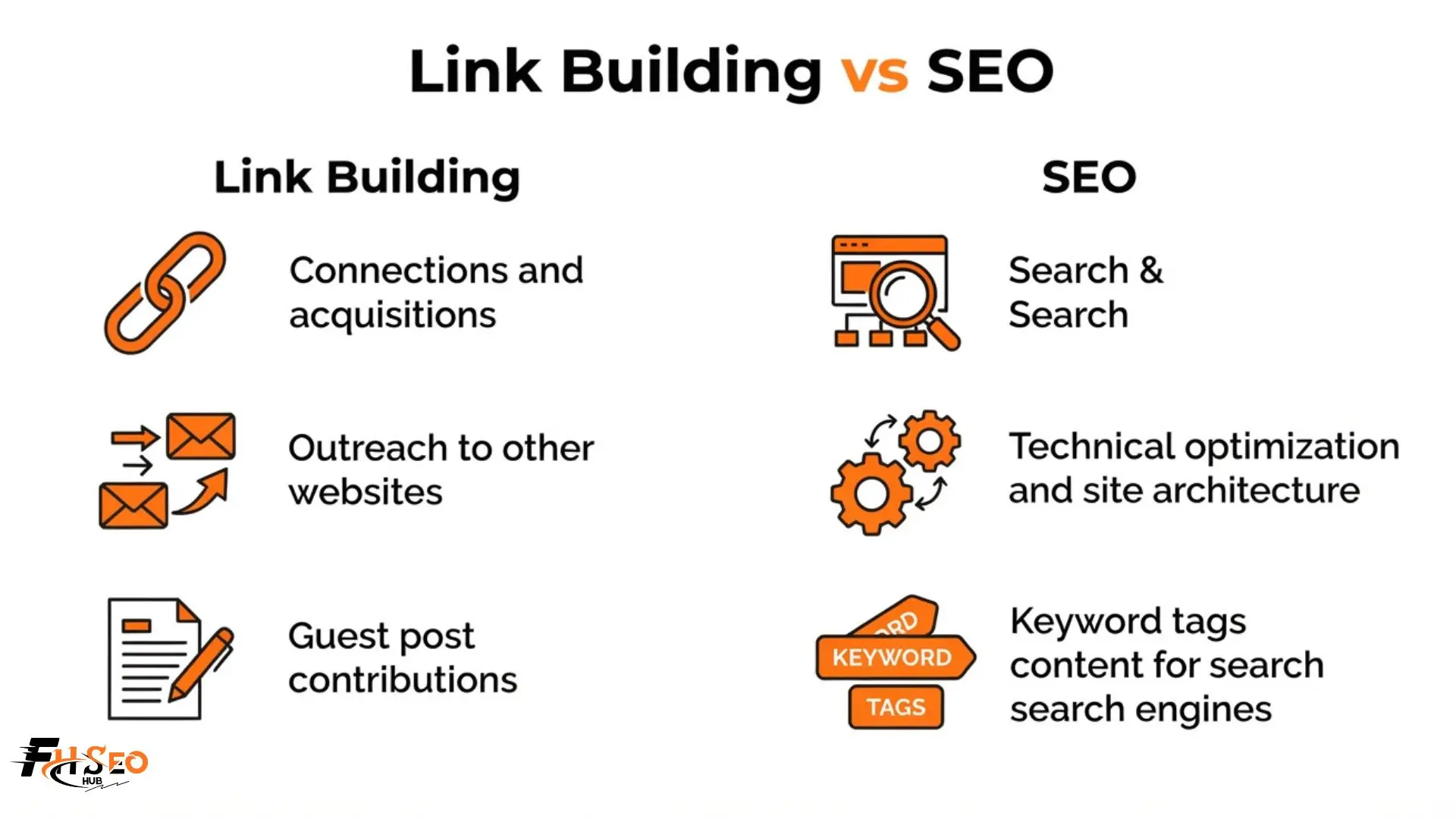
Link building is one specific tactic inside SEO, focused only on earning backlinks from other sites. SEO is the entire discipline of improving how a website ranks, which also covers technical fixes, on page work, and content strategy. A lot of site owners pay for one and expect the results of the other, which is exactly where the confusion starts.
What Is the Difference Between Link Building and SEO?
Earning backlinks is just one input into a much bigger system. SEO covers everything that determines whether your site can rank at all, including whether search engines can crawl it, whether each page answers the query it targets, and whether the content itself is worth ranking. Backlinks strengthen authority once those other pieces are already in place.
Here is the simplest way to say it: SEO is the whole system. Earning links is one part of that system, not a replacement for it. Think of SEO as a house. Technical SEO is the foundation, on page work is the rooms and layout, content is what fills those rooms, and backlinks are the neighborhood’s reputation. A great reputation does not fix a cracked foundation, and a beautiful house nobody has heard of still struggles to attract visitors.
What Does Earning Backlinks Actually Involve?
It is the process of earning hyperlinks from other websites that point back to yours. Each backlink acts like a vote of confidence, telling search engines that someone outside your own site found the content trustworthy enough to reference. More relevant, higher authority votes carry more weight than a large pile of weak ones.
This differs from internal linking, which connects pages within your own site and helps search engines understand your site structure rather than proving outside trust. Both matter, but only external votes function as genuine third party endorsement.
Is Link Building Part of SEO?
Yes. It sits entirely inside off page SEO, the pillar concerned with authority signals coming from outside your own website. It works alongside digital PR and brand mentions, not as a separate discipline running in parallel to SEO.
Can Backlinks Alone Fix Poor Rankings?
Rarely on its own. A common mistake beginners make is buying backlinks while ignoring technical or on page problems, which means those new links point at a page Google may struggle to crawl, render, or understand in the first place. This tactic works best as reinforcement for a page that already deserves to rank, not as a repair for one that’s broken underneath.
SEO professionals consistently find that a quick technical and on page audit before any outreach saves real money later. Spending on backlinks first, then discovering a canonical tag or missing meta title was blocking rankings the whole time, is one of the most common wastes of an SEO budget.
What Are the Main Ways to Earn Backlinks?
Most strategies mix several of the following rather than relying on just one:
Guest posting and blogger outreach tend to move fastest since you control the placement directly. Digital PR takes longer to land but often earns links from far more authoritative, harder to reach publications. Niche edits sit in between, usually faster than digital PR since the content already exists and only needs a relevant addition.
How Do You Measure Backlink Progress vs Overall SEO Progress?
Backlink progress shows up in Domain Rating, referring domains, and how quickly new links accumulate. Overall SEO progress is broader and shows up in organic traffic, keyword rankings, and technical health inside Google Search Console. Watching link metrics alone can hide the fact that the rest of the site isn’t actually improving.
| Tool | Best For |
| Ahrefs | Backlink and referring domain tracking |
| Semrush | Combined technical, content, and link audits |
| Moz | Domain Authority and page level scoring |
| Google Search Console | Indexing status and organic traffic |
Most agencies pull Domain Rating and referring domain counts from Ahrefs or Semrush weekly, then cross check organic traffic and indexing status in Google Search Console monthly. A rising link count paired with flat or falling organic traffic is a clear sign the technical or content side of the site needs attention, not more outreach.
What Backlink Tactics Should You Avoid?
Avoid buying links outright, joining a private blog network, or using automated software to mass produce backlinks. Google’s link schemes policy specifically targets these tactics, and getting caught can trigger a manual action that takes months to recover from, a far bigger cost than any short term ranking gain.
A rising spam score or a sudden spike in low quality referring domains is usually the first warning sign something in your link profile needs attention. Recovering from a manual action tied to unnatural links often takes several months of cleanup and a formal reconsideration request, far longer than it would have taken to build the same authority ethically from the start.
Are Backlinks Still Relevant to SEO in 2026?
Yes, though its role keeps shifting. Search engines and AI systems now weigh unlinked brand mentions and E-E-A-T signals alongside traditional backlinks, so earning links works best today as part of a broader authority and reputation strategy rather than a standalone tactic chasing link counts. A brand mentioned often without a single link can still build real trust with both search engines and AI answer tools, which is a shift most 2019 era advice never accounted for.
Final Thoughts
Link building earns authority. SEO is the system that decides whether that authority turns into rankings. Fix the technical and on page foundation first, then use outreach to reinforce a site that already deserves to rank. Treat the two as partners rather than substitutes, and your budget will go a lot further in 2026 and beyond.
FAQs
No. It is one tactic inside SEO, specifically focused on earning backlinks. SEO is the full discipline, including technical, on page, and content work alongside it.
There isn’t really one. Backlinking is just another name for the outreach and acquisition side of the same practice, which itself sits inside off page SEO.
Content marketing creates the material people want to reference. Earning backlinks is the outreach and process of actually getting a link to that material. Strong content marketing makes outreach easier, but they are distinct activities.
Technical and on page fixes can show impact within a few weeks. A backlink strategy typically takes a few months to compound into a measurable ranking change, since authority builds gradually rather than all at once.
Almost always both. Earning backlinks without a technically sound, well optimized site wastes budget on links pointing at pages that were never able to rank in the first place.
It sits entirely inside off page SEO. It is not a parallel discipline, even though many agencies market it as a standalone service.


