Best AI-Powered Link Building Tools for 2026

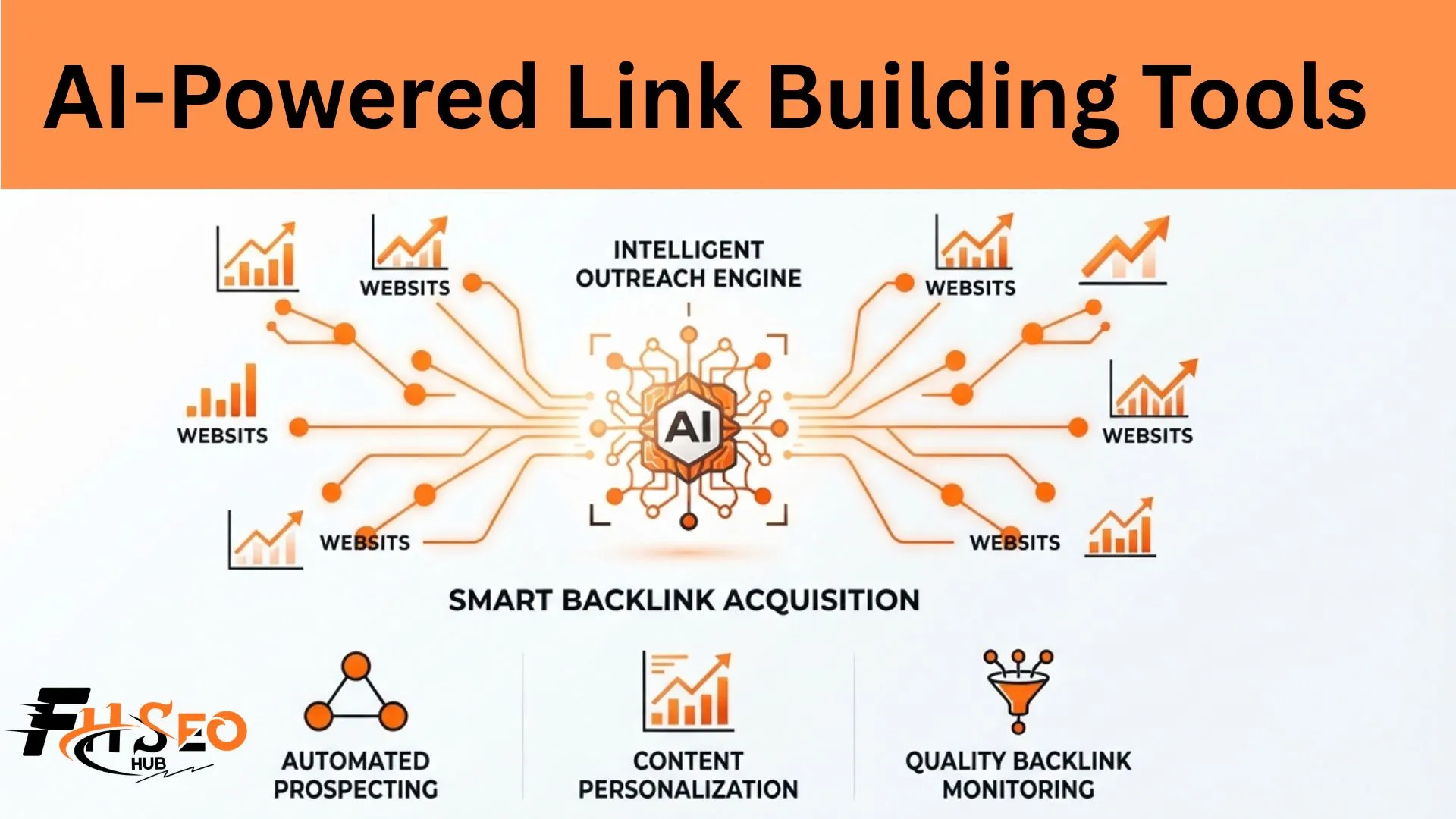
The best AI-powered link building tools in 2026 handle prospecting, personalization, and contact verification so outreach scales without sacrificing relevance. Respona, Pitchbox, Postaga, BuzzStream, and INSERT.LINK lead the category, each suited to a different budget and workflow stage, from solo SEOs sending a few dozen pitches a month to agencies running hundreds of campaigns at once.
Most “AI-powered” tags on link building software describe the same three features: prospect suggestions, email personalization, and reply detection. Few round-ups explain which of these features change your placement rate, and fewer still address the real question hanging over the category: does using AI to scale outreach cross into the automated link schemes Google’s spam policies prohibit? This guide breaks down the tools worth paying for, what each one costs in 2026, and where the compliance line sits.
What Makes a Link Building Tool AI-Powered?
An AI-powered link building tool uses machine learning for one or more of three tasks: finding relevant prospects from content or keywords, personalizing outreach based on a target’s published work, and verifying or scoring contact data. The strongest tools combine all three, the weakest ones bolt AI-written subject lines onto a traditional cold email sender.
The difference matters when you’re comparing pricing. A tool that uses AI purely for subject-line generation shouldn’t cost the same as one that reads a target site’s recent articles and builds a genuinely relevant pitch around them. When evaluating a tool, check whether the AI touches prospecting, meaning finding who to contact, personalization, meaning what to say, or both. Tools that only personalize still require you to build prospect lists manually, which limits how much time they save you.
Here’s how the main players compare before the full breakdown below.
| Tool | Starting Price (2026) | Core AI Function | Best For |
| Respona | $100–$500 per placement | Content-first prospecting, managed placements | Teams wanting links without running campaigns |
| Pitchbox | $165/month | Multi-step outreach automation, SEO tool integrations | Agencies running high-volume campaigns |
| BuzzStream | $24/month | AI-assisted contact discovery (ListIQ) | Small teams on a tight budget |
| Postaga | $84/month | AI campaign-type suggestions from a URL | Solo SEOs and small agencies |
| INSERT.LINK | Pay-per-link, from ~$10–$30 | NLP-based topic matching, no subscription | Fast, self-serve placements without outreach |
| Pitchpanda | Custom, campaign-based | AI-personalized journalist pitching | Digital PR and editorial placements |
| Ahrefs | Base plan plus $199+/month for Brand Radar | Content Explorer prospecting, AI visibility tracking | Prospecting and AI Overview citation tracking |
1. Respona
Respona now operates as a managed AI-powered link building service rather than pure self-serve software, pricing placements at roughly $100 to $500 depending on target domain rating instead of charging a flat monthly fee. It’s the strongest pick for teams that want AI-driven prospecting without running campaigns themselves.
This is a meaningful shift from how Respona is still described in a lot of older comparisons. The platform’s AI reads a target site’s recent content and builds contact-specific pitches, and its ListIQ media list tool researches journalists automatically, but the company has moved toward handling placement end to end for a per-link fee rather than selling seats. Expect roughly $2,000 to $2,500 a month for around 10 placements on its Authority tier. That price includes content, outreach, and publishing, closer to an agency retainer than software.
2. Pitchbox
Pitchbox combines AI-assisted prospecting with multi-step outreach sequencing and native integrations with Ahrefs, Semrush, and Moz. Pricing starts at $165 a month for the Pro plan, covering 2 users and 2,000 outreach emails, scaling to $675 a month for agency-level volume.
Pitchbox earns its price at scale. Agencies running five or more client campaigns at once get real value from its workspace separation, conditional automation rules, and deep SEO data integrations. For a solo SEO or a single in-house campaign, that price is hard to justify against cheaper alternatives that cover the same core workflow.
3. BuzzStream
BuzzStream starts at $24 a month and uses AI mainly for contact discovery through its ListIQ feature, while the outreach itself stays closer to manual than fully automated. It’s the cheapest credible option for small teams that want relationship tracking without agency-level pricing.
The trade-off for that price is that BuzzStream is email-only, with no LinkedIn or multichannel outreach, and most of the outreach work still falls on you. It doesn’t automate sequencing or personalization the way Pitchbox or Postaga do. What it does well is relationship history: every past email, reply, and note tied to a contact stays organized across campaigns, which matters more than automation for teams that build links through long-term relationships rather than volume.
4. Postaga
Postaga’s AI campaign assistant analyzes a content URL and suggests specific campaign types, guest posting, broken link building, resource pages, then finds prospects and drafts personalized sequences on its own. Pricing starts around $84 a month on annual billing.
This is the tool that comes closest to what most people picture when they hear “AI link building tool.” You paste in a URL, and it returns a built campaign rather than a blank outreach template. The limitation is language support, its personalization is strongest in English, so teams building links in other markets get less value from the AI layer. Several users on lifetime-deal plans have reported support and credit issues, so subscribing month to month or annually is the safer path.
5. INSERT.LINK
INSERT.LINK is an AI and NLP-powered marketplace of more than 40,000 vetted sites for guest posts and niche edits, with no subscription fee, pricing per link instead. Insertions start around $10 to $30 and guest posts from roughly $40 to $70, scaling up with domain rating and traffic.
Instead of automating outreach, INSERT.LINK removes outreach from the process entirely. Its AI sorts publisher inventory by topical relevance using natural language matching, so you search by subject rather than scrolling category tags, then buy the placement directly. This is the fastest path to a link, typically 2 to 5 days for insertions, but you’re trading relationship-building and editorial input for speed. Vet every listing’s outgoing link ratio and recent link history before buying, since marketplace inventory quality varies more than agency-vetted outreach targets.
6. Pitchpanda
Pitchpanda focuses AI specifically on digital PR and journalist pitching rather than mass guest posting, personalizing outreach based on a reporter’s recently published work and tracking coverage and sentiment after placement.
For teams pursuing editorial links from real publications instead of guest post inventory, this is a narrower but more targeted tool than the general outreach platforms above. Pricing scales by campaign and contact volume rather than a flat monthly fee, so cost depends heavily on how many journalists you’re pitching per month.
7. Ahrefs
Ahrefs isn’t built as an outreach tool, but its Content Explorer surfaces link prospects, broken pages, and top-performing content by topic across a 14-billion-page index, and its Brand Radar add-on tracks how often your brand appears in AI-generated answers across six platforms including ChatGPT and Google AI Overviews.
Most agencies run Ahrefs alongside a dedicated outreach tool rather than instead of one. Content Explorer pairs well with any of the tools above for prospecting, while Brand Radar addresses a newer priority: knowing whether AI Overviews and chatbots cite your brand at all. Brand Radar costs $199 a month per AI platform tracked or $699 a month for all six, on top of a base Ahrefs subscription, worth budgeting separately rather than a reason to switch platforms.
Is Automated Link Building Safe Under Google’s 2026 Spam Policies?
AI tools that automate prospecting and personalization are not the issue, they still produce links a human reviewed and earned. What Google’s spam policies prohibit is the use of automated programs or services to create links at scale, meaning tools or services that generate or place links without editorial review on the receiving end.
Google’s May 2026 spam policy update extended this language further, explicitly covering attempts to manipulate AI-generated answers in Search, not just traditional rankings. That doesn’t ban AI-assisted outreach. It targets the output, not the tool. A guest post placed through Postaga’s AI-suggested campaign on a real, editorially-reviewed site is the same link whether you found the prospect manually or through AI matching. A batch of links placed through a marketplace onto pages with no editorial standards, thin content, or an outgoing link ratio that reads as a link farm, that’s the pattern SpamBrain is built to catch, regardless of which tool sourced them.
The practical rule: judge the destination page, not the tool. Vet publisher quality, keep exact-match anchor text to a modest share of your total profile, and mark paid placements with rel=”sponsored” where required, no matter how the placement was sourced.
How to Choose an AI Link Building Tool for Your Team
Match the tool to your bottleneck, not the flashiest AI feature. If prospecting is slow, prioritize Postaga or Ahrefs. If outreach volume is the limit, look at Pitchbox or BuzzStream. If you want links without running campaigns at all, Respona or INSERT.LINK skip outreach entirely.
A solo SEO or small in-house team rarely needs Pitchbox’s agency-grade automation, BuzzStream or Postaga cover the same core workflow for a fraction of the price. An agency running concurrent client campaigns gets real value from Pitchbox’s workspace separation and reporting, features that don’t matter for a single site. If your team has budget but not time, a marketplace like INSERT.LINK or a managed service like Respona removes the outreach step entirely, at a premium per link. There’s no single best tool here, only the one that matches whichever part of link building costs you the most time right now.
Final Thoughts
The AI label on a link building tool matters less than which task it automates and whether that task fits your bottleneck. Respona and INSERT.LINK skip outreach for teams that want links without running campaigns, Pitchbox and BuzzStream scale outreach itself at very different price points, and Postaga sits in between as the closest thing to a true AI campaign builder. Whichever AI-powered link building tools you choose, the same rule holds: use them to earn links from real, editorially-reviewed pages, and the tool becomes an accelerator, not a risk.
FAQs
Yes, when the AI is doing prospecting and personalization for links a human still reviews before pitching. Risk comes from the destination page and pattern, not from using AI in the process itself.
Most tools on this list offer a limited free tier, but caps on pitches or contacts are low enough that they work mainly for testing a workflow, not running a real campaign. Budget-tier paid plans, like BuzzStream’s $24 a month, are the realistic starting point.
Budget tools like BuzzStream start around $24 a month, mid-market platforms like Postaga and Pitchbox run $84 to $165 a month, and managed or per-placement options like Respona or INSERT.LINK charge per link instead of a subscription, typically $10 to $500 depending on the tool and target site.
It can surface relevant prospects and pages faster than manual searching, using Content Explorer’s index or a platform’s NLP matching, but it still needs a human to vet relevance, check editorial quality, and approve outreach before anything gets sent.