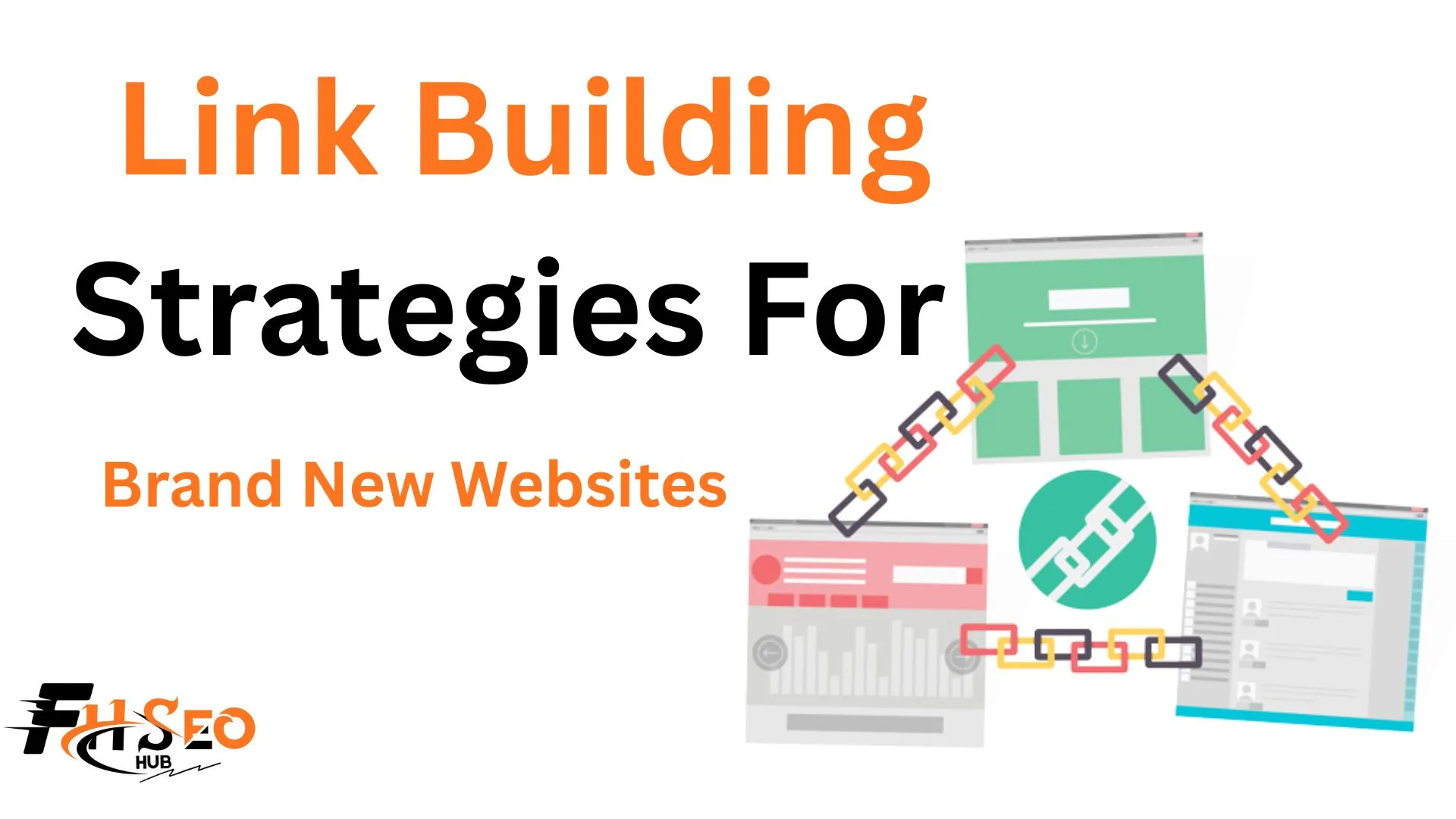
10 Link Building Strategies for Brand New Websites

If you’re picking link building strategies for a brand new website, start small and sequence them: foundational citations, resource page outreach, and broken link building first, then guest posts, niche edits, and one linkable asset once you have some traction. A new domain doesn’t need volume, it needs a handful of relevant, trustworthy links placed in the right order.
Most guides treat link building like a checklist you run through all at once. For a brand new domain, that’s the wrong approach. You have zero backlink history, so search engines have almost nothing to judge your site’s trustworthiness by outside of the links you’re about to build. Move too fast with the wrong mix and your profile can start looking manipulated before you’ve earned any real authority. Move too slow and you leave rankings on the table for months.
This guide walks through 10 link building strategies that work specifically for brand new websites, sequenced by how much trust a domain actually has at each stage, along with realistic costs, timelines, and the parts of Google’s 2026 spam policies that apply to a site this young.
Why Link Building Works Differently for a Brand New Website
A brand new website has no backlink history, so search engines can’t yet tell if it’s trustworthy. Even strong links take longer to show impact during this early trust-building period, sometimes described as a sandbox-like delay. That’s why sequencing and relevance matter more than raw link count when a domain is just getting started.
Domain age and link equity build up together. A single guest post on a high-authority site for an established competitor almost immediately, but the same link on a two-week-old domain usually takes longer to register, because ranking systems are still gathering broader signals about your site’s overall quality and expertise, not just about that one link. This isn’t a written rule anywhere, it’s a pattern site owners consistently report: new domains see a lag between link acquisition and ranking movement that eases once the domain has a track record. Budget for that lag. Don’t panic and start buying volume to compensate for it, that’s usually what turns a slow start into an actual penalty risk.
How Many Backlinks Does a New Website Need?
There’s no fixed number, but most new sites need somewhere around 10 to 30 quality referring domains before rankings start moving in a meaningful way. What matters more than the count is relevance and diversity: a handful of topically relevant, trustworthy links beats a large batch of unrelated ones.
Estimates vary depending on who you ask and how competitive your niche is. Some practitioners treat 10 to 20 referring domains as the realistic floor for a new site to start looking credible. Others, especially in competitive spaces like finance or SaaS, put the number closer to 40 or 50 links before a homepage becomes genuinely competitive. Both can be true at once, because it depends entirely on what your top 10 competitors already have.
The more useful exercise is a competitor check: look at the referring domain count for whichever page is currently ranking in the weakest position on page one for your target keyword, and treat that as your realistic threshold, not the strongest page in the results. You’re trying to beat the tenth-ranked page, not the first.
10 link building strategies for a new website
1. Build Foundational Local Citations and Business Relationship Links
Foundational links come from directories, associations, and real business relationships, not persuasion. They’re low-risk, easy to get, and give a brand new site its first layer of legitimacy before it’s ready for editorial outreach.
Start with the links that don’t require pitching anyone. Local business directories, industry associations, chamber of commerce listings, and supplier or partner pages are the easiest links a new site can get, and they carry almost no risk because they aren’t the kind of link Google’s systems treat as manipulative. Keep your name, address, and contact details consistent across every listing, since inconsistent details undercut the trust signal these links are supposed to build. These links rarely move rankings on their own, but they round out a backlink profile that would otherwise look suspiciously thin once you start adding stronger links.
2. Target Resource Pages in Your Niche
Resource page link building means finding existing “useful links” or “further reading” pages in your niche and asking to be added. It works well for new sites because the page owner is already curating links, so a relevant addition is a small ask, not a favor.
Search for phrases like “resources,” “useful links,” or “recommended tools” combined with your niche to find these pages. Once you have a list, check that each page is still actively maintained, a resource page untouched for three years is less likely to get edited for you. Send a short, specific email explaining what your resource adds that isn’t already listed. Vague pitches (“I think your readers would love my site”) get ignored. Specific ones (“your resource page is missing a current guide on X, here’s mine”) get replies.
3. Use Broken Link Building for Fast Wins
Broken link building means finding dead links on relevant pages and offering your content as the replacement. It’s one of the few tactics that gives the page owner something to fix, not just something to add, which raises reply rates.
Use a tool like Ahrefs or Screaming Frog‘s broken link checker to scan resource pages, roundups, and older blog posts in your niche for outbound links that now return a 404. Before you pitch, confirm you actually have content that fits the original link’s topic, forcing an unrelated page in as a “replacement” is an easy way to get ignored. This tactic scales slower than most, since not every niche has hundreds of dead links to find, but the links it produces tend to be genuinely earned rather than negotiated, which makes them some of the safest links a new site can build.
4. Pursue Guest Posts on Mid-Tier, Relevant Sites
Guest posting means writing an original article for another site in exchange for a byline link. For brand new websites, mid-tier sites in the DR 30 to 50 range are the realistic target, both because they’re more open to new contributors and because they cost less.
Guest post pricing in 2026 varies widely by domain rating, niche, and whether the fee includes content writing. Across the broader market, average prices land somewhere around $400 to $500, but that figure is skewed upward by premium DR 70+ placements that can run well past $900. For a brand new site on a limited budget, DR 30-50 sites are the more realistic and more valuable target early on, prices in that range often fall between $80 and $250, and these sites are far more likely to accept a first-time contributor with no track record. Competitive or higher-risk niches like finance, legal, and health typically cost more because fewer publishers accept content in those spaces.
The trade-off with guest posts is time. Original content has to be written, reviewed, and published, and a freshly published page needs to get indexed before the link passes any value, so guest posts are slower to show impact than a niche edit on an already-indexed page. What guest posts give you that other tactics don’t is a byline, a chance to build topical authority and brand visibility on a real publication, not just a link.
5. Add Niche Edits on Existing High-Traffic Pages
A niche edit adds your link into an already-published, already-ranking article instead of creating new content. Because the page is already indexed and has existing traffic, niche edits tend to pass value faster than a guest post.
Niche edits are generally the cheaper option because there’s no content creation involved, you’re paying for placement on a page that already exists. Market pricing in 2026 typically runs $50 to $150 for lower and mid-tier placements, though a niche edit on a page with strong existing traffic and rankings can cost as much as or more than a guest post on the same site, because that page is already proven to work.
The risk with niche edits is vetting. Since you’re not creating the content, you need to check that the page you’re being added to is genuinely relevant, still ranking, and not already stuffed with unrelated paid links. A niche edit on a page that’s clearly been sold repeatedly is a pattern Google’s spam systems are built to catch.
| Factor | Guest Post | Niche Edit |
| Typical cost (DR 30-50) | $80–$250 | $50–$150 |
| Speed to index | Slower, new page | Faster, page already indexed |
| Content control | Full, your byline | None, inserted into existing text |
| Best for | Brand visibility plus a link | A quicker authority pass |
| Vetting priority | Publisher’s editorial standards | Page’s existing traffic and link history |
6. Reclaim Unlinked Brand Mentions
Unlinked mentions happen when a site names your brand or references your content without linking to it. Reclaiming them is one of the easiest wins available, since the writer has already decided you’re worth mentioning, you’re just asking them to finish the job.
Set up a Google Alert or use a mention-tracking tool for your brand name and any founder names tied to the business. When you find an unlinked mention, send a short, polite note asking if they’d be willing to add a link for readers who want to find you directly. This works especially well after any press coverage, guest post, or interview, since those often get referenced by other writers without linking back to the original source.
7. Pitch Journalists Through the HARO Successors
HARO in its original form was scaled back after a change in ownership, and most active digital PR pitching in 2026 happens through platforms like Qwoted, Featured, and Connectively instead. These platforms connect you with journalists actively writing about your industry in exchange for a quote and a link.
If you’re following an older guide that tells you to sign up for HARO and start pitching, know that the landscape has shifted. Featured.com now runs the HARO brand as a scaled-back newsletter, while Qwoted and Connectively have become the more actively used platforms for this kind of outreach. Qwoted’s free tier gives you a couple of pitches a month with a delay before you see new requests, its paid tier runs roughly $99 to $149 a month and removes that delay. Featured operates on a similar structure. None of these are expensive relative to guest post or niche edit pricing, which makes digital PR one of the better return-on-effort tactics for a new site with more time than budget, as long as you’re realistic about response rates. Most pitches don’t get picked up, but the ones that do tend to land on higher-authority publications than a guest post budget alone could reach.
8. Build One Linkable Asset Worth Citing
A linkable asset is a free tool, original data set, or in-depth guide that other sites reference on their own, without you asking. For a brand new site, one well-built asset can outperform months of manual outreach.
The format that tends to work best is something genuinely useful and free to use, a calculator, a template, a checklist, or a short original survey of your own audience or niche. It doesn’t need to be complex. What it needs is a reason for someone to link to it instead of just mentioning it in passing, ideally because it saves the reader time or gives them a number they can’t easily find elsewhere. Once it’s live, that single asset becomes something you can point to in every other outreach email on this list, which makes strategies 2, 3, and 6 noticeably easier to execute.
9. Reverse-Engineer Competitor Backlinks
Competitor backlink analysis means pulling a rival’s referring domains through a tool like Ahrefs, Semrush, or Moz and treating every site linking to them as a pre-qualified outreach target for you, since they’ve already shown a willingness to link to a site like yours.
Since a brand new site has no backlink profile of its own to run a gap analysis against, use the tool differently: pick two or three direct competitors, pull their referring domains, and filter for pages with real organic traffic and a DR in a range you can realistically compete for. Prioritize domains that link to more than one of your competitors, since that’s a signal they cover the niche broadly and might consider you too. This tactic doesn’t replace the others on this list, it feeds them, since most of what you’ll find is a mix of resource pages, guest post opportunities, and niche edit candidates you’d otherwise have had to find manually.
10. Layer In Partnerships and Sponsorship Links
Partnership links come from suppliers, customers, or sponsorships that mention you as part of a real business relationship, not a paid placement negotiated purely for SEO value.
If your business already has suppliers, clients, partners, or affiliates with a website, ask whether a mention or listing makes sense for both sides, most businesses are open to this since it’s mutually beneficial and doesn’t read as a link scheme to anyone reviewing it, including Google. Small local sponsorships, like sponsoring a community event or a niche podcast, often come with a link back as part of the package.
Which Strategy a Brand New Website Adopt at Start?
Start with the lowest-risk tactics first: foundational citations, resource pages, and broken link building, then move to guest posts and niche edits once you have a small base of links, and layer in digital PR and a linkable asset alongside everything else once the site has something worth citing.
A realistic first 90 days looks like this. Weeks 1 to 4: foundational citations and business relationship links, since these require no pitching and carry no risk. Weeks 3 to 8: resource page outreach and broken link building, run in parallel once you have a page worth linking to. Around week 6 to 8, once you have some links in place and a page that’s started to get indexed and ranked, start guest posts and niche edits on mid-tier sites. Digital PR and your linkable asset can start any time, but they tend to convert better once you have a live, credible-looking site to point journalists and other publishers toward, rather than a domain that was registered last week.
| Stage | Tactic | Tool to Use |
| Weeks 1–4 | Foundational citations | Manual directory submission |
| Weeks 3–8 | Resource pages, broken links | Ahrefs or Screaming Frog |
| Weeks 6–8+ | Guest posts, niche edits | BuzzStream or Pitchbox for outreach |
| Ongoing | Digital PR | Qwoted or Featured |
| Ongoing | Competitor analysis | Ahrefs, Semrush, or Moz |
Is Buying Links Safe for a New Website in 2026?
Paying for a placement isn’t automatically a violation, but paying specifically to pass ranking credit without disclosure is. Google’s link scheme policy treats undisclosed paid links intended to manipulate rankings as a direct violation, while a paid placement marked rel=”sponsored” or rel=”nofollow” is treated as disclosed and compliant.
Google’s spam policies define a link scheme as any link intended to manipulate rankings, and that includes buying or selling links that pass ranking credit, large-scale guest posting with keyword-rich anchor text, and automated link generation. The practical fix that most compliant guest post and niche edit vendors already apply is marking paid links as sponsored or nofollow, which converts a violation into a disclosed, lower-risk placement.
A brand new domain carries more exposure here than an established one, not because the rules are different, but because a thin, oddly-patterned link profile is easier to notice on a small site with little else going on. Keep exact-match commercial anchor text under roughly 15% of your total anchor profile, and avoid concentrating more than a small share of your links with a single vendor or publisher.
Final Thoughts
Link building for a brand new website isn’t about running every tactic on this list at once. It’s about sequencing: earn the low-risk, easy links first, build a small, credible base, then layer in guest posts, niche edits, and digital PR once the site has something worth citing. The domains that struggle are usually the ones that skip straight to paid placements before they have any foundation to support them. Start with what’s realistic for your current budget and timeline, and treat this list of link building strategies as a roadmap to work through in order, not a checklist to rush.
FAQs
Most site owners see the first signs of movement in about 4 to 12 weeks after a batch of links goes live, though a brand new domain often takes longer than an established one simply because it’s still building overall trust. Give any single batch of links at least two to three months before judging whether it worked.
Not in its original form. HARO was scaled back into a limited newsletter under new ownership, and most active digital PR pitching now happens on platforms like Qwoted, Featured, and Connectively instead. If you’re still relying on the old HARO workflow, it’s worth switching over.
There’s no single official number, but many practitioners aim to keep exact-match commercial anchors under about 15% of the total profile, with branded, naked-URL, and generic anchors making up the rest. A new site with mostly exact-match anchors from its very first links looks manufactured rather than organic.
It depends on your time versus budget. Foundational citations, resource page outreach, and broken link building are realistic to do yourself with a spreadsheet and some patience. Guest posts, niche edits, and digital PR scale faster with an agency’s existing publisher relationships, but that convenience comes at a price premium over sourcing placements directly.


