Ethical, Google-Friendly Link Building Tactics for 2026

Ethical link building means earning backlinks through methods Google’s guidelines genuinely reward: genuine relationships, content worth referencing, and full disclosure on anything paid. Most teams already know this in theory. Where it breaks down is execution, chasing volume over relevance, misreading which side of a bad link gets penalized, or assuming nofollow links are worthless and skipping them entirely.
What Is Ethical Link Building?
Ethical link building is the practice of acquiring backlinks through methods that comply with Google’s guidelines rather than manipulating rankings directly. That means editorial placement, relationship-based outreach, and content strong enough to earn a reference on its own merit. It excludes anything built primarily to pass ranking value without a genuine editorial reason behind it.
The distinction that matters for practitioners isn’t “white hat feels nicer.” It’s that ethical link building survives algorithm updates because it was never dependent on a loophole in the first place. Manipulative tactics work until SpamBrain or a manual reviewer catches the pattern, and once that happens, the benefit doesn’t pause, it disappears.
White Hat vs. Gray Hat vs. Black Hat Link Building
White hat link building earns links through content and relationships that fully comply with Google’s guidelines. Gray hat sits in ambiguous territory, technically pushing against the spirit of the rules while staying harder to detect, think aggressive guest post exchanges or lightly disguised paid placements. Black hat relies on outright manipulation: private blog networks, bought links passing full ranking value, and automated link generation at scale.
| Category | Core Method | Detection Risk | Typical Consequence |
| White hat | Editorial earning, genuine relationships | Low | None, by design |
| Gray hat | Aggressive but plausible outreach | Moderate | Inconsistent enforcement |
| Black hat | PBNs, bought links, link farms | High | Manual penalty or algorithmic discount |
One honest caveat worth naming directly: enforcement isn’t uniform across every industry. Gambling, adult content, and a handful of other saturated niches still see gray and black hat tactics persist with less friction than mainstream sectors face, largely because the competitive pressure and margins in those spaces make the risk calculation different. That’s the exception, not evidence the rules have loosened.
How Did Google Stop Unethical Link Building?
Google’s Penguin update launched in April 2012 specifically to target manipulative link building, penalizing sites that had inflated rankings through low-quality, high-volume backlinks. Penguin operated as a periodic filter for years before Google folded its signals into the core algorithm in 2016, making link spam detection continuous rather than something you waited months to recover from.
SpamBrain extends that enforcement today, running as a continuous, machine-learning driven system rather than a scheduled update. Instead of waiting for a Penguin refresh to see if a disavow worked, sites now operate inside an environment where link value gets evaluated close to the moment a link is discovered.
Does Google Penalize the Linking Site or the Site Being Linked To?
Most often, Google discounts the ranking value passed by the linking domain itself rather than issuing a formal penalty to the site receiving the link. Google’s own spam update documentation states this plainly: once the ranking benefit of a spammy link is neutralized, that benefit cannot be regained, not paused, not restored after cleanup, gone.
This distinction matters more than most guides let on. A site that receives a handful of low-quality inbound links rarely triggers a manual action on its own. The real exposure builds when a pattern of paid or manipulative links accumulates without disclosure, at which point a manual reviewer, not just the algorithm, gets involved. A common mistake beginners make is panicking over every individual low-quality link instead of watching for that broader pattern.
What Counts as Black Hat Link Building
Google’s link scheme guidelines name several practices explicitly: buying or selling links that pass PageRank without a nofollow or sponsored attribute, large-scale link exchanges built primarily to inflate rankings, automated programs that generate links at scale, and private blog networks built specifically to funnel authority to a target site. Link farms fall into the same category, networks of low-value sites that exist only to link to each other or to paid clients.
A common mistake beginners make here is assuming intent matters more than pattern. Google’s systems don’t evaluate whether you meant to manipulate rankings, they evaluate whether the link pattern looks manipulative regardless of intent. A legitimate reciprocal partnership between two relevant sites is fine. The same structure repeated across fifty unrelated sites reads as a link exchange scheme either way.
Content-Led Link Building Tactics
Content-led tactics require producing something first, original research, a data study, an interactive tool, or a strong infographic, that other sites want to reference without being asked. The skyscraper technique fits here too: find content that already earns links, build something more current or more complete, then pitch it to the same sites linking to the original.
These tactics take longer to pay off since you’re building the asset before any outreach begins, often several weeks of research and production before the first pitch goes out. What you get in return is compounding value. A genuinely useful data study or tool can earn links for years without additional per-link effort, since other sites cite it independently once it exists.
Content-Less Link Building Tactics
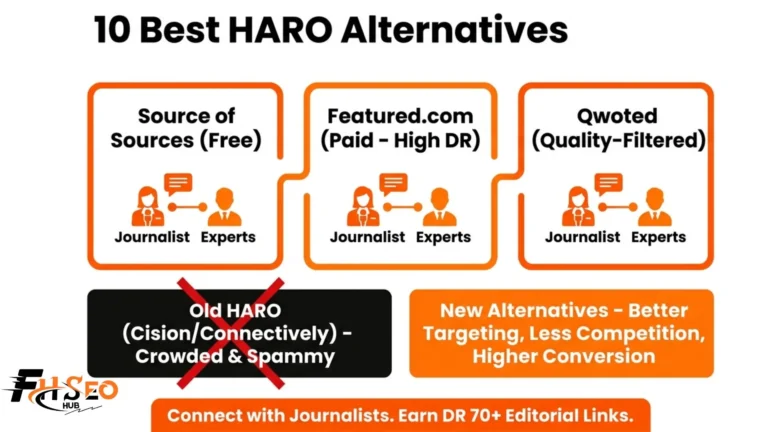
Content-less tactics use assets or relationships that already exist instead of requiring new content production. Unlinked mention reclamation finds places your brand was already mentioned without a link and asks for one. Broken link building finds dead links on relevant pages and offers your existing content as the replacement. HARO and similar quote request platforms connect you directly with journalists who need expert commentary on deadline.
These tactics cost less upfront than content-led ones, since you’re not commissioning research or design work, but they scale more slowly and depend heavily on how much relevant material and existing brand presence you already have to work with. A brand with zero existing mentions has nothing to reclaim yet, which is exactly why most practitioners run content-led and content-less tactics in parallel rather than choosing one.
Digital PR and Relationship-Based Link Building
Digital PR earns links through media coverage rather than direct link requests, typically triggered by original research, a notable press release, or a genuinely newsworthy company story. A well-pitched data study can generate coverage across dozens of publications from a single piece of outreach, since journalists are citing the finding, not doing you a favor.
Relationship-based link building takes a slower path: building real connections with editors and writers in your space over repeated, low-pressure interactions rather than transactional one-off pitches. Rand Fishkin has described outreach as fundamentally an exchange of value, and that framing holds up. The pitch that leads with what the journalist’s audience gains, not what you want, converts at a meaningfully higher rate than a templated ask.
Guest Posting and Niche Edits Done Ethically
Ethical guest posting means contributing genuinely useful, original content to a relevant site in exchange for a contextual link inside the body text, not paying for a placement dressed up as editorial. The line between ethical guest posting and a black hat link exchange scheme comes down to whether the content adds real value to that site’s audience or exists purely to carry a link.
Niche edits insert a relevant link into content that’s already published, rather than requiring a full new article. This works faster than guest posting since the content already exists and is already indexed, but it depends entirely on finding pages where your link genuinely improves what’s already there. A common mistake beginners make is treating niche edits as a shortcut to insert links anywhere with traffic, regardless of topical fit, which is exactly the pattern SpamBrain is built to catch.
Effective Link Building Tactics for Ecommerce Brands
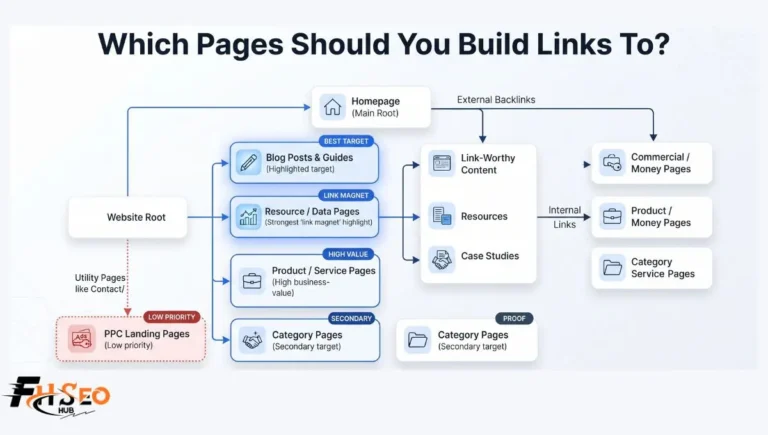
Product and category pages are genuinely harder to earn links to than blog content, since almost nobody links to a product listing the way they link to a useful guide or a piece of research. Ecommerce brands that succeed at this route link equity through supporting content instead: buying guides, comparison pages, and original data that naturally attracts links, then use internal linking to pass that authority toward product and category pages.
Third-party product reviews and roundup placements work well specifically because they combine a backlink with high-intent referral traffic, a mention in a trusted buying guide sends visitors who are already close to purchasing, unlike a generic blog mention. Local directories and .edu or .gov citation opportunities matter more for ecommerce brands with a physical or regional presence than most guides acknowledge, since these sources carry trust signals that are hard to earn through outreach alone.
Do Nofollow and Sponsored Links Still Matter?
Nofollow and sponsored links don’t pass ranking value directly, that’s the entire point of the attribute, but properly tagged placements still carry indirect value worth pursuing. They drive real referral traffic, and they contribute to the brand mention patterns that both Google’s entity-recognition systems and AI platforms increasingly weigh when establishing whether a brand is genuinely trustworthy, separate from traditional link equity.
This matters more heading into an AI-citation-driven search environment. Reddit and Quora have both seen substantial growth in AI Overview visibility, and Reddit has reportedly removed the nofollow attribute on some high-engagement threads. Whether or not a specific link carries a nofollow tag, showing up consistently and helpfully in these communities is increasingly tied to how often AI systems cite your brand at all, a factor some practitioners now describe as AI share of voice.
How Do I Audit My Backlink Profile for Risk?
Use Ahrefs or Semrush to pull your full referring domains list and review anchor text distribution for unnatural concentration, a backlink profile dominated by exact-match commercial anchors is a common early warning sign. Moz’s domain authority scoring gives useful directional context, though it should never be the only metric you trust. Google Search Console remains the definitive source for checking whether a manual action already exists on your site.
| Tool | Best For |
| Ahrefs | Referring domains, anchor text distribution, link intersect analysis |
| Semrush | Backlink audit combined with broader technical SEO context |
| Moz | Domain authority benchmarking against competitors |
| Google Search Console | Confirming manual actions directly from Google |
Run this audit on a set schedule rather than only after rankings drop. SEO professionals consistently find that catching a pattern of low-quality inbound links early is far cheaper than recovering from a manual action that’s already landed. Quarterly reviews work well for most sites, while sites in competitive or frequently targeted niches benefit from checking monthly instead.
Tiered Link Building: Worth It or Too Risky?
Tiered link building builds links pointing to your existing backlinks rather than directly to your own site, the idea being that strengthening the pages linking to you compounds the authority they pass along. In practice, this only works when every tier stays genuinely relevant and high quality. The moment a lower tier introduces low-quality or spammy sources, the risk compounds just as fast as the intended benefit, and it becomes far harder to audit since you’re now responsible for the health of links you don’t directly control.
Most practitioners treat tiered link building as an advanced, higher-risk tactic best reserved for sites with an already strong, clean core backlink profile, not a shortcut for sites still building foundational authority.
DIY vs. Hiring a Link Building Agency
DIY link building costs time rather than cash, but it demands genuine outreach skill, content production capability, and the patience to build relationships without an existing network to draw on. It works well for teams with in-house content and communications talent who can dedicate consistent hours to the process.
Hiring a link building agency shifts that cost structure. Pricing typically runs from around $50 to a few hundred dollars per individual placement for niche edits or guest posts, scaling up to several thousand dollars a month for retainer-based programs targeting genuinely authoritative, relevant sites. Agencies bring existing publisher relationships that take years to build independently, which is exactly what you’re paying for beyond the links themselves. The trade-off is quality variance across vendors, since the same monthly budget can buy genuinely relevant placements from one agency and generic, low-relevance links from another.
| Approach | Best For | Trade-off |
| DIY | Teams with in-house content and outreach skill | Slower without existing relationships |
| Agency | Teams needing volume or niche-specific relationships | Ongoing cost, variable quality by vendor |
The honest deciding factor isn’t budget alone. It’s whether your team has the outreach bandwidth and content production capacity to sustain ethical link building consistently, since sporadic effort in either direction underperforms a steady, smaller-scale approach.
Final Thoughts
Ethical link building isn’t slower because it’s more virtuous. It’s slower because it depends on genuine relationships and content worth citing, both of which take real time to build. That same dependency is exactly why it survives the algorithm updates that periodically erase manipulative tactics overnight. Audit your existing backlink profile before adding anything new, match your tactic mix to how much content production capacity you genuinely have, and treat nofollow and sponsored links as a real part of your visibility strategy rather than dead weight to ignore. FHSEOHub is a SaaS link building agency who follows the ethical link building strategies to grow your website visibility.
FAQs
Broken link building, unlinked mention reclamation, digital PR built around original research, and genuine guest posting on relevant sites all consistently work without triggering guideline violations, since none of them depend on paying for ranking value.
Not automatically. Google explicitly states that buying or selling links for advertising purposes is normal web economics, as long as the link carries a nofollow or sponsored attribute. It only becomes a violation when a paid link passes ranking value without that disclosure.
They don’t pass direct ranking value, but they drive referral traffic and contribute to brand mention patterns that increasingly affect AI citation visibility, which is a real, if indirect, benefit worth pursuing deliberately.
White hat earns links through genuine value and full compliance with Google’s guidelines. Black hat manipulates rankings directly through tactics like private blog networks, bought links without disclosure, and automated link generation.
Most practitioners see initial movement within roughly two to three months of consistent effort, though this varies widely by tactic, competition, and how authoritative the earned links are. Content-led tactics typically take longer to launch but compound afterward, while content-less tactics like broken link building can convert faster once a prospect list exists.