What Is an Inbound Link? A Guide to Backlinks, Types and SEO Impact

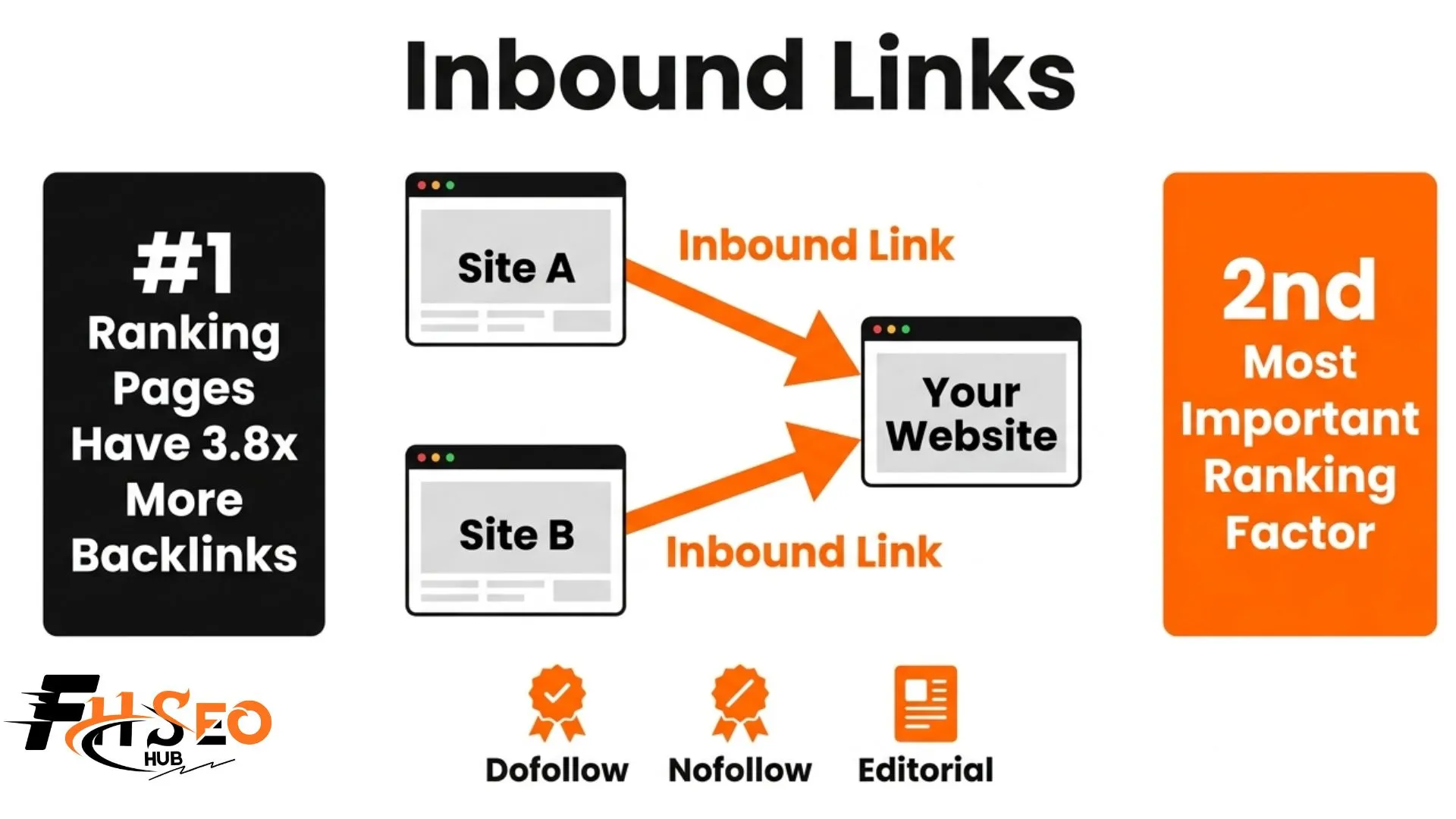
An inbound link is a hyperlink from another website pointing to yours. Search engines treat it as a vote of confidence that your content is valuable and trustworthy. In 2026, the #1 ranking page on Google has 3.8 times more inbound links than every page ranked below it, making this one of the highest-leverage activities in SEO.
Most site owners know links matter. Fewer understand why specific links carry more weight, how to earn them without shortcuts and which types actually move rankings. This guide covers all of it.
What is an inbound link?
An inbound link is a hyperlink from one external website pointing to a page on your website. Google uses these links to assess how credible and authoritative your site is. The more high-quality, relevant websites link to you, the more Google trusts that your content deserves to rank.
The concept connects directly to PageRank, Google’s foundational ranking algorithm. PageRank treats every link as a vote. A link from a trusted, authoritative site casts a stronger vote than one from a low-traffic, unrelated site. That vote transfers link equity (also called link juice) from the linking page to yours, improving your page’s ranking potential for related search queries.
The clickable text that wraps the link is called anchor text. Descriptive, keyword-relevant anchor text gives Google’s crawler context about what your linked page covers. A link with anchor text “best running shoes for beginners” tells Google far more than a link that just says “read more.”
Are inbound links the same as backlinks?
Yes, completely. Inbound links and backlinks are two names for the exact same thing: a hyperlink from another website pointing to yours. In SEO tools like Ahrefs and Semrush, you will see “backlinks” used more often. In content marketing discussions, “inbound links” appears more frequently. Both terms are fully interchangeable and describe identical functionality.
What is the difference between an inbound link, an internal link, and an outbound link?
Three types of links exist in SEO, and understanding the direction of each one clarifies everything.
| Type | Direction | What It Does | Who Controls It |
| Inbound link (backlink) | From another site TO your site | Transfers authority, builds trust, improves rankings | External site (you earn it) |
| Internal link | From one page on your site TO another page | Distributes internal authority, improves crawlability | You fully control it |
| Outbound link | From your site TO another site | Passes authority out, signals topical relevance | You fully control it |
The practical takeaway: inbound links are the only type you earn rather than place. You control internal and outbound links completely. You influence inbound links through content quality and outreach, but the decision to link always belongs to the other site.
What are the different types of inbound links?
Not all inbound links carry the same SEO value. The two most fundamental categories are dofollow and nofollow links.
A dofollow inbound link tells Google’s crawler to follow the link and pass PageRank to your site. These directly transfer link equity and help your rankings. A nofollow link (rel=”nofollow”) signals Google should not follow the link for ranking purposes. In 2026, Google treats nofollow as a hint rather than a strict directive, meaning it may still evaluate some nofollow links for contextual relevance.
Beyond dofollow and nofollow, links are classified by how they were placed:
| Link Type | SEO Value | What It Is | How to Get It |
| Editorial backlink | Very High | Earned naturally from valuable content | Create link-worthy assets |
| Contextual link (in body) | Very High | Embedded in body copy of a related article | Guest posting, digital PR |
| Resource page link | High | Listed in curated industry resource lists | Resource page outreach |
| Dofollow link | High | Passes PageRank and link equity | All active link building |
| Nofollow link | Low-Medium | No direct PageRank; still drives referral traffic | Brand mentions, PR |
| UGC link (rel=ugc) | Low | User-generated content tag | Forum participation |
| Niche directory link | Medium | Listed in industry-specific directory | Targeted directory submissions |
| Social media citation | Low (indirect) | Link from social platforms | Content distribution |
Editorial backlinks from relevant, authoritative publications carry the most weight because they reflect genuine endorsement rather than paid or arranged placements.
How does link quality affect rankings more than quantity?
One editorial link from a high-authority publication in your niche outperforms 50 links from unrelated, low-quality directories. Google weighs topical relevance, domain credibility, and contextual placement when calculating link value. A link naturally embedded in the body of an article about your exact topic from a well-respected source sends a far stronger authority transfer signal than dozens of footer links from sites with no relevance to your industry.
What makes a high-quality inbound link?
A genuinely valuable link meets five criteria:
Why does anchor text diversity matter?
A healthy backlink profile includes a mix of brand anchors (your company or site name), URL anchors (your full web address), and contextual descriptive anchors (keyword-relevant phrases). Over-optimizing with the exact same keyword anchor text repeatedly looks unnatural to Google’s algorithm and can trigger closer scrutiny. Varying anchor text across different links pointing to the same page keeps your link profile looking naturally diverse.
How do you build inbound links to your website?
Seven tactics consistently produce results in 2026:
- Broken link building: Find dead outbound links on authoritative sites in your niche, create content that replaces the broken resource, then contact the webmaster to suggest yours as the replacement
- Guest posting: Publish high-quality articles on relevant industry sites with a contextual link back to your content
- Digital PR: Create original research or expert commentary that journalists naturally cite as a source
- Linkable asset creation: Build infographics, data studies, or comprehensive guides that attract editorial links organically
- Link reclamation: Find existing pages that mentioned your brand without linking and ask the publisher to add a link
- Unlinked brand mention outreach: Email sites that referenced your brand without a hyperlink to request inclusion
- Resource page outreach: Identify curated resource lists in your niche and suggest your best content for inclusion
Can inbound links hurt your website?
Yes. Toxic backlinks from spammy, irrelevant, or link-scheme websites can send negative signals to Google and damage your domain credibility. If your site accumulated large numbers of spam links through past tactics or a negative SEO attack from a competitor, identify them using Ahrefs, Semrush, or Google Search Console and submit them to Google’s Disavow Tool to neutralize their impact. A healthy link profile includes diverse referring domains with strong topical relevance, not hundreds of links from the same low-quality source.
How do you check inbound links to your website?
| Tool | Cost | What It Shows | Best For |
| Google Search Console | Free | Real links Google has discovered and indexed | Verified, accurate data |
| Ahrefs Site Explorer | Paid | Full backlink profile, DR, dofollow/nofollow filter | Comprehensive analysis |
| Semrush Backlink Analytics | Paid | Referring domains, anchor text distribution | Competitor link research |
| Moz Link Explorer | Free/Paid | Domain authority, page authority, spam score | Authority assessment |
| Majestic | Paid | Trust Flow and Citation Flow metrics | Link quality scoring |
Google Search Console is the best starting point because it shows exactly what Google has indexed and credited. Ahrefs and Semrush provide broader datasets including competitor backlink profiles and link velocity history for strategic planning.
How do inbound links connect to AI search in 2026?
Links from pages that Google AI Overviews, ChatGPT, or Perplexity already cite as trusted sources now carry compounding value. They connect your domain to content ecosystems that AI systems already trust, increasing both your traditional SERP visibility and your probability of appearing directly in AI-generated responses. As Thomas Cornelius, Founder of graph8, noted in 2026: “A single high-authority backlink today is a GTM asset that keeps delivering authority and traffic for years, the same way a well-built system keeps producing returns long after the initial build.”
The core takeaway
An inbound link is not just a ranking signal. It is a long-term authority asset that compounds value across traditional search results and AI-generated answers simultaneously. Focus on earning links from authoritative, topically relevant sources, maintain a diverse anchor text profile, and audit your link profile quarterly for toxic links. Start by identifying your strongest existing content, find which pages earn zero inbound links and build your outreach strategy around those pages first.


