
What are EDU Backlinks: They Work and 7 Strategies to Get Backlinks from .edu Domains

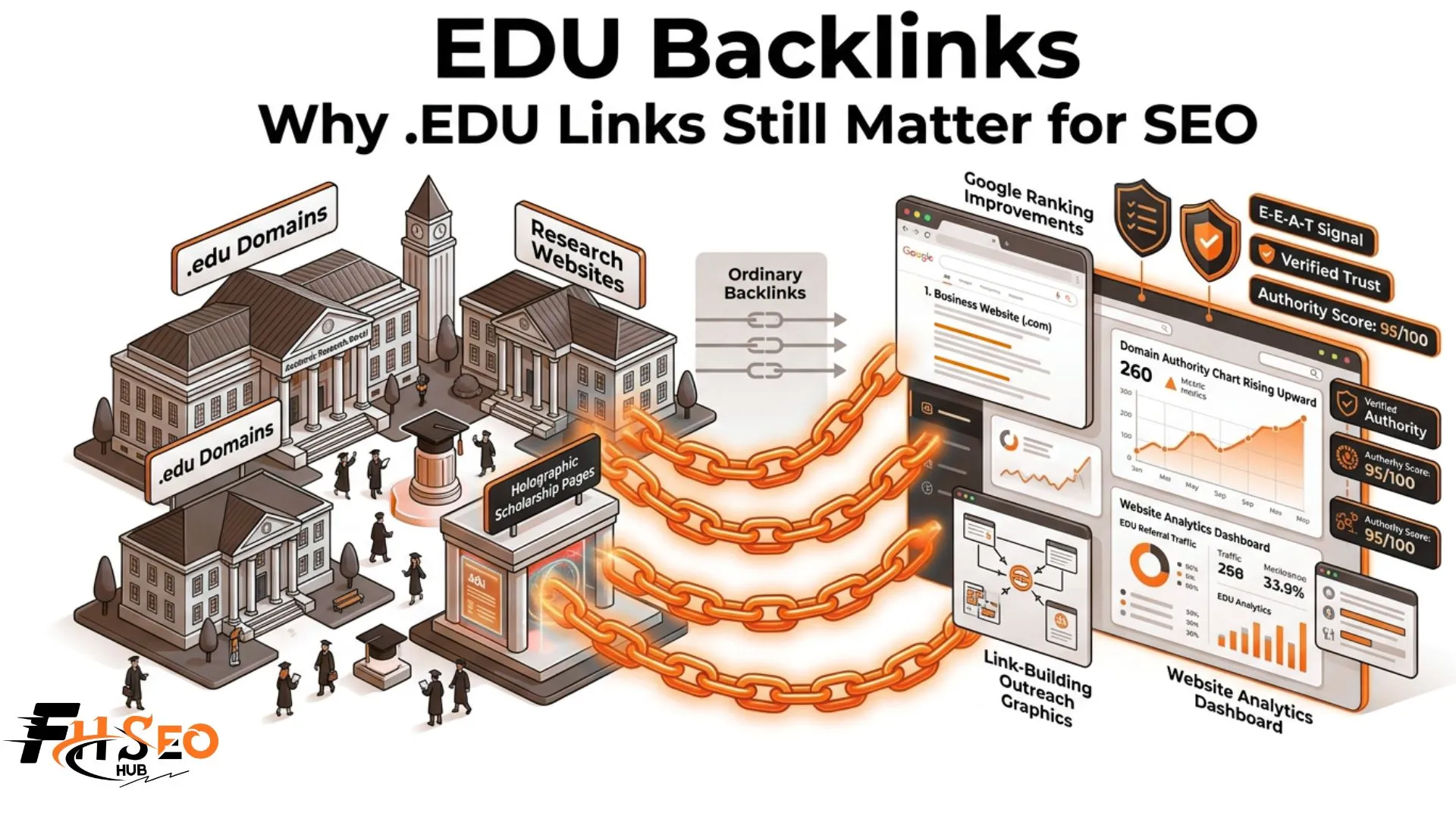
EDU backlinks are inbound links from websites on .edu domains, which are exclusively reserved for accredited educational institutions. Most .edu sites carry domain authority scores between 70 and 90+, making a single well-placed link worth more than dozens of average commercial links. In 2026, they also strengthen your visibility in Google AI Overviews and generative search results alongside traditional organic rankings.
What are edu backlinks and why does the .edu domain matter?
EDU backlinks are links from websites using the .edu top-level domain (TLD), exclusively reserved for accredited educational institutions including universities, colleges, research institutes and vocational schools. These domains carry exceptional authority because .edu domain registration requires verified proof of institutional legitimacy. You cannot purchase a .edu domain the way you purchase a .com. That restriction makes .edu sites rare, trusted and naturally hard to manipulate.
Google’s John Mueller confirmed that the .edu TLD itself is not a direct ranking factor. Google does not automatically boost your rankings because a link carries a .edu extension. The real value lies in the domain authority, E-E-A-T signals and strict content standards that most .edu sites naturally meet. The extension is a reliable proxy for quality, not an algorithmic preference in itself.
What makes the authority from .edu sites different from regular high-authority links?
Because .edu domain registration is restricted to legitimate educational institutions, these sites maintain high content standards by necessity. They publish well-researched content, link only to credible external sources, and maintain clean link profiles for decades. When a .edu site links to your content, it functions as a vote of confidence from a domain Google already treats as exceptionally trustworthy. That trust transfers to your site through link equity in a way most commercial high-authority links cannot replicate.
Why are these links so valuable for SEO in 2026?
Most .edu domains carry domain authority (DA) scores between 70 and 90+. Harvard.edu carries a DA of 93 and MIT.edu a DA of 94. The average commercial site sits between DA 30 and DA 50. A single contextual backlink from a site at that authority level delivers more ranking impact than many lower-quality links combined.
Three specific benefits make .edu links worth pursuing in 2026:
Did Google’s March 2024 core update change anything for .edu links?
Google’s March 2024 core update mentioned educational websites as a category that could be impacted, which triggered significant concern across the SEO community. Based on reported client data from multiple agencies, .edu backlinks placed on quality institutional pages continued performing as well as before the update. The update penalized low-quality content broadly, not .edu domains specifically. High-quality placements on substantive, relevant edu pages retain full value.
Do .edu links only come from Ivy League universities?
No, and this misconception limits most link building campaigns before they start. The .edu ecosystem is far broader than Harvard, MIT, Stanford, and Yale. You can earn legitimate .edu backlinks from:
These smaller institutions link more willingly than elite universities because they actively need useful resources for their students. Competition for their links is dramatically lower than for Ivy League placements. A link from a community college with DA 55 still delivers meaningful link equity and serves your link profile diversification strategy well.
How do .edu links strengthen AI Overviews and generative search?
In 2026, .edu backlinks serve a second strategic purpose beyond organic rankings. Google AI Overviews, ChatGPT and Perplexity regularly treat .edu sources as authoritative references when generating answers to user queries. When a trusted .edu domain links to your content, AI-powered search systems recognize your brand as a credible source for that topic area.
Earning a .edu backlink no longer just influences your position in blue-link results. It increases the probability your content gets cited in AI-generated answers. For brands investing in Generative Engine Optimization (GEO), .edu backlinks have become dual-purpose assets that support both traditional SEO and AI search visibility simultaneously.
What are the 7 most effective strategies for earning .edu links?
| Strategy | Difficulty | Time to Result | Best For |
| Scholarship program | Medium | 2-4 months | All niches with a budget |
| Broken link building | Low-Medium | 2-6 weeks | Content-heavy sites |
| Resource page outreach | Medium | 4-8 weeks | Educational and tool-based content |
| Student or faculty discounts | Low | 2-4 weeks | E-commerce, SaaS, local businesses |
| Faculty member interviews | Medium | 4-8 weeks | Authority and thought leadership brands |
| Alumni backlinks | Low | 2-4 weeks | Any brand with alumni team members |
| Free tools and calculators | High to build | 1-3 months | SaaS, fintech, education tools |
How does the scholarship strategy work?
Create a genuine scholarship valued at $500 minimum (ideally $1,000 or more). Build a dedicated page with eligibility criteria, application guidelines and contact details. Then use Google operators like site:.edu “external scholarships” and site:.edu “scholarship opportunities” to find listing pages. Contact the financial aid office directly and request inclusion. Submit the scholarship to Fastweb and Scholarships.com to multiply visibility across scholarship directories that universities actively monitor.
How does broken link building work on .edu sites?
Use Ahrefs or Screaming Frog to scan .edu pages for 404 errors and dead outbound links. When you find a broken link, create or repurpose content that matches the original topic. Email the webmaster or department contact pointing out the broken link and offering your resource as a direct replacement. Universities respond well to this approach because you solve a real problem for their site and their visitors at the same time.
How do you find .edu link building opportunities at scale?
Advanced Google search operators are the fastest way to surface edu link building opportunities systematically.
| Goal | Search Operator |
| Niche resource pages | site:.edu “resources” + [your keyword] |
| External scholarship listings | site:.edu “external scholarships” |
| Scholarship opportunity pages | site:.edu “scholarship opportunities” |
| Link page inclusion | site:.edu “links” + [your keyword] |
| Department blog outreach | site:.edu blog + [your keyword] |
| Competitor .edu backlinks | Ahrefs Site Explorer, filter by .edu TLD |
| Alumni directory opportunities | site:.edu “alumni” + [your keyword] |
For contact discovery, email finder tools helps you find direct emails for academic departments and financial aid offices. Ahrefs Site Explorer lets you reverse-engineer which .edu domains already link to competitors in your niche, giving you a warm list of institutions already open to linking externally.
What outreach mistakes destroy most .edu link building campaigns?
Mistakes fall into two clear categories: wrong targets and wrong tactics.
Wrong targets:
Wrong tactics:
Patience and precision are both required. One well-placed contextual link on a relevant resource page delivers far more value than twenty placements on irrelevant comment sections.
How do .edu backlinks compare to other high-authority links?
| Factor | EDU Backlinks | HubSpot Links | Niche Authority Links |
| Average DA or DR | 70-90+ | 90+ | 40-80 |
| Ease of earning | Very Hard | Hard | Medium |
| Topical relevance | Often broad | Broad | High |
| Scalability | Very Low | Low | Medium |
| Link durability | Very High | Medium | Varies |
| Referral traffic quality | Mixed (student audiences) | High commercial intent | High niche intent |
| Cost via white-hat methods | Free if earned | Typically PR or earned | Earned or affordable |
The strategic takeaway: edu backlinks are a supporting component of a diversified link profile, not a standalone strategy. Treat them as 10 to 20 percent of your total link building effort alongside editorial links, digital PR and niche authority placements.
The takeaway
EDU backlinks remain among the most durable, trust-building links available in 2026. Start with broken link building and student discount outreach for faster wins, then build toward a scholarship program for the longer runway. Expand beyond Ivy League targets. Community colleges, vocational schools and research institutes offer real .edu authority with far less competition. Every .edu link you earn today also strengthens how AI Overviews and generative search engines recognize and cite your brand going forward.


