
Keyword Cannibalization: How to Identify and Fix It

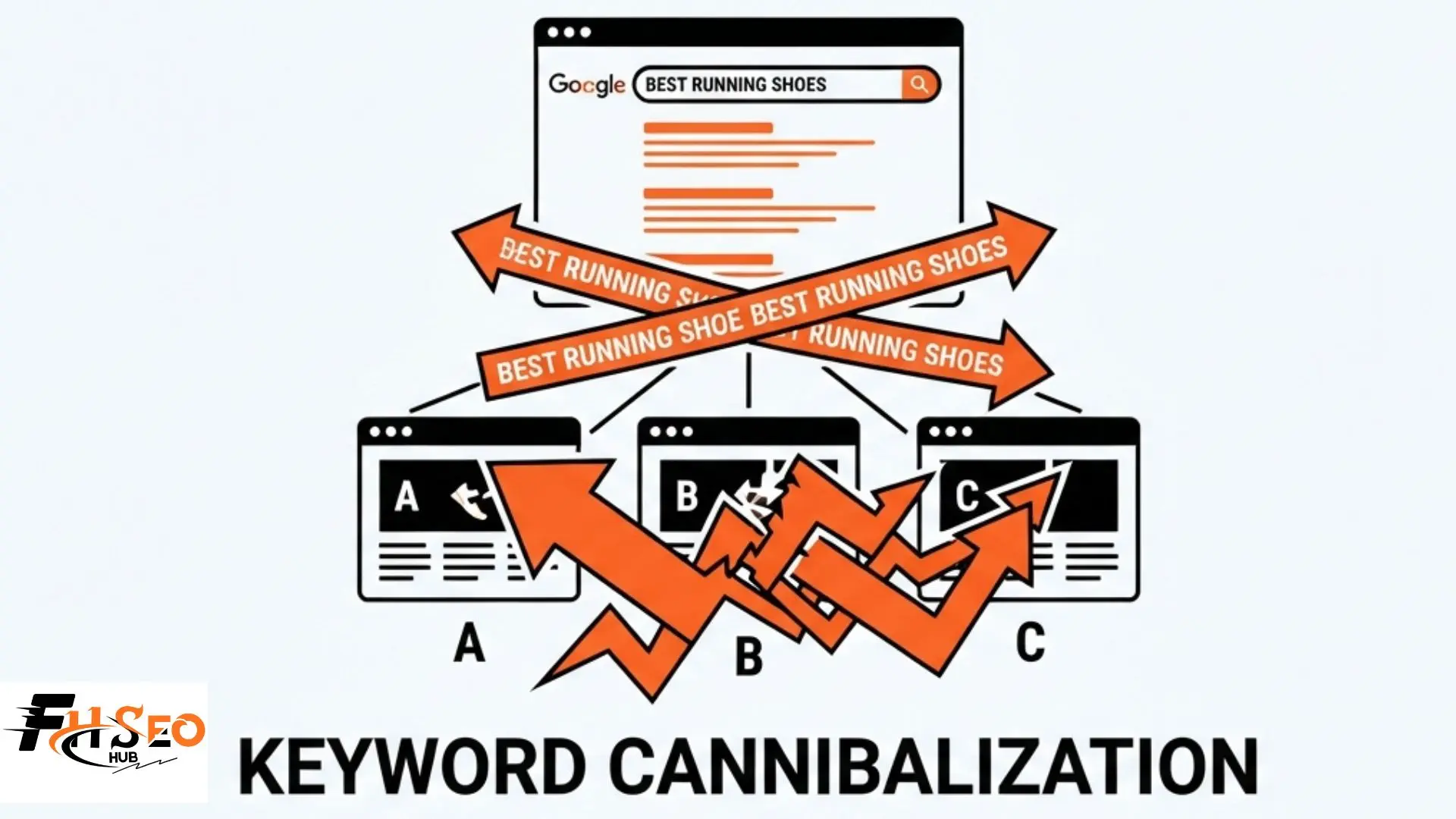
Keyword cannibalization happens when multiple pages on the same site compete for the same search intent, splitting ranking signals and often confusing Google about which page to show. Most content treats every instance as an emergency to fix immediately, but a widely-cited Ahrefs analysis found the majority of flagged cases don’t actually need fixing at all, healthy topical diversification gets mistaken for competition more often than practitioners assume.
What Is Keyword Cannibalization?

This happens when two or more pages on the same domain target the same keyword and the same search intent, forcing Google to choose one page over another rather than letting either page build consistent ranking strength. The practical damage isn’t that both pages disappear, it’s that ranking signals, backlinks, internal linking, click-through rate, split across competing URLs instead of consolidating behind one strong page.
The key distinction most older content gets wrong: this isn’t about two pages simply sharing a keyword, it’s specifically about duplicate intent, two pages genuinely answering the identical question for the identical searcher. Google’s improved semantic understanding means sharing a term alone rarely triggers real competition anymore, the overlap has to be in what the searcher actually wants, not just the words on the page.
What Is Content Cannibalization? (How It Differs )
Content cannibalization is the broader version of the same problem, covering pages that compete on topic and audience overlap even when they don’t target one identical keyword phrase. Two blog posts covering slightly different angles of the same core topic, both drawing the same audience and satisfying overlapping intent, fall under content cannibalization even if their exact-match keywords differ, a “10 tips” listicle and a comprehensive guide on the same subject being a common real-world example.
The practical difference matters for diagnosis: keyword cannibalization shows up cleanly in a keywords report as multiple URLs ranking for one term, while content cannibalization requires a broader content audit looking at topic overlap, internal linking patterns, and organic rankings across a cluster of related pages rather than one keyword at a time. A site can have real content cannibalization across a dozen loosely related posts without any single keyword report flagging the problem directly, since the overlap shows up in audience and topic coverage rather than one shared search term.
Is Keyword Cannibalization Bad For Your SEO?

Sometimes, but far less often than most audits suggest. A widely-cited Ahrefs analysis of thousands of keywords with multiple pages from the same site ranking found the overwhelming majority of those cases didn’t actually need fixing, since ranking for the same term on different pages is frequently healthy diversification rather than genuine competition, a blog post and a product page both surfacing for a broad term serve different intents even when they share a keyword.
The real cost shows up specifically when two pages compete for identical intent: ranking dilution keeps either page from consistently reaching its full potential, and Google’s own ranking algorithm can inconsistently swap which page it favors, undermining the position tracking data teams rely on to measure progress. The 2026-specific risk goes further than classic rankings: AI Overviews and chat-based answer engines typically select one URL per query rather than blending multiple sources from the same domain, and when a site’s own pages compete for the same intent, the AI system often cites neither, a skipped citation that costs visibility in a growing share of how people now find information. One current analysis suggests AI citation systems weight the earlier portion of a page’s content heavily when selecting what to cite, meaning two pages with near-identical openings effectively offer the same answer twice and get passed over by both.
How to Identify Cannibalization Issues
Run this diagnostic in three layers rather than relying on one tool alone, since each layer catches something the others miss.
- Check Google Search Console’s query filter for terms where impressions and clicks split across multiple URLs, a direct signal that more than one page is competing for the same query.
- Use Ahrefs Site Explorer’s Multiple URLs report inside Organic Keywords to see every term where more than one page from your domain ranks, filtering out host clustering noise from unrelated subdomains.
- Pull Semrush Position Tracking to flag competing pages automatically and review ranking history over several months rather than a single snapshot.
- Run a manual site: search operator check, searching site:yourdomain.com plus the target term, to see exactly which URLs Google currently considers relevant for that query.
- Apply the ranking swap test to separate real cannibalization from harmless overlap: if Page A ranks position 6 in one month and Page B ranks position 6 a few months later, with the two trading places repeatedly, that’s genuine cannibalization. If one page consistently holds position 6 while another consistently sits at position 18, the pages have likely settled into different, non-competing roles and don’t need intervention.
How to Fix Cannibalization Issues
Five mistakes show up repeatedly when teams rush the fix instead of diagnosing the problem first.
- Reaching for a noindex tag as a first response. This removes the weaker page from search entirely without preserving any of its existing backlink equity, a permanent loss where a 301 redirect would have passed that value forward instead.
- Deleting a competing page outright without a redirect. This creates the same problem in a more severe form, existing backlinks now point to a dead URL that returns nothing to your site’s authority, effectively throwing away link equity that took real time and effort to earn.
- Reflexively fixing every instance a cannibalization report flags. Given how often the underlying “competition” turns out to be healthy diversification rather than genuine overlap, running the ranking swap test before touching anything prevents wasted consolidation work on pages that were never actually hurting each other.
- Changing only the page title or a few keywords without addressing the underlying duplicate intent. This rarely resolves real cannibalization, since Google’s semantic understanding evaluates what the content actually answers, not just the surface-level keyword choices on the page.
- Consolidating too aggressively. Merging genuinely distinct pages that happened to share a keyword can eliminate coverage of a legitimate sub-intent, losing traffic the separate pages were each capturing rather than gaining anything by combining them.
Cannibalization Fixes to Avoid
Reaching for a noindex tag as a first response is a common overcorrection, since it removes the weaker page from search entirely without preserving any of its existing backlink equity, a permanent loss where a 301 redirect would have passed that value forward instead. Deleting a competing page outright without a redirect creates the same problem in a more severe form, existing backlinks now point to a dead URL that returns nothing to your site’s authority at all, effectively throwing away link equity that took real time and effort to earn.
Reflexively fixing every instance a cannibalization report flags is itself a mistake given how often the underlying “competition” turns out to be healthy diversification rather than genuine overlap, running the ranking swap test before touching anything prevents wasted consolidation work on pages that were never actually hurting each other. Changing only the page title or a few keywords without addressing the underlying duplicate intent rarely resolves real cannibalization either, since Google’s semantic understanding evaluates what the content actually answers, not just the surface-level keyword choices on the page. Consolidating too aggressively carries its own risk too: merging genuinely distinct pages that happened to share a keyword can eliminate coverage of a legitimate sub-intent, losing traffic the separate pages were each capturing rather than gaining anything by combining them.
Real-World Example: How to Merge Overlapping Content
Consider two pages both genuinely answering “how to reduce cart abandonment,” one published two years ago as a general listicle, the other published more recently with deeper, more current tactical detail, both drawing similar traffic and both showing up in the same Multiple URLs report. The ranking swap test confirms real cannibalization here, since Search Console data shows the two pages trading the same ranking position back and forth over several months rather than settling into distinct roles.
The fix: audit both pages for their strongest sections, unique data points, examples, or subtopics neither page fully covers alone, then build a content brief combining the best of both into one comprehensive, updated page under the stronger-performing URL. A tool like Yoast Duplicate Post can help pull the older page’s content into a draft for easier manual merging inside WordPress specifically, streamlining the content merge process considerably compared to copying sections back and forth between two open tabs. Once the merge is complete, the weaker original URL gets a 301 redirect to the surviving page, and every internal link across the site pointing to the old URL gets updated to point directly at the new one rather than relying on the redirect chain alone. Expect ranking recovery on the surviving page to take a few weeks to a couple of months as Google recrawls and reprocesses the consolidated content, faster on sites with strong existing crawl frequency, slower on larger sites where the merged page competes for crawl budget against many other updates.
How to Prevent Keyword Cannibalization

Build a keyword mapping document before publishing new content, assigning one primary keyword and intent to each URL so writers and strategists can check for existing overlap before a draft ever gets written. Treat this map as a living document reviewed during content planning, not a one-time spreadsheet exercise, since genuine keyword research naturally surfaces adjacent terms that risk overlapping with existing pages if the mapping isn’t checked first.
Run a quarterly content audit specifically looking for organic rankings drift and new multiple-URL matches, catching genuine cannibalization early before it compounds across a growing content library. Building genuine topical authority through a deliberate pillar page and supporting-content structure, rather than publishing standalone posts reactively, naturally reduces cannibalization risk too, since each supporting page has an explicit, planned relationship to the pillar rather than an ad hoc topic chosen without checking what already exists.
Final Thoughts
Keyword cannibalization deserves a more selective response than most audits give it: run the ranking swap test before consolidating anything, since a meaningful share of flagged overlap is healthy diversification that would only get weaker if forced together. Where real duplicate intent exists, consolidate decisively with a proper 301 redirect and updated internal linking rather than reaching for noindex or deletion, and build keyword mapping into your content planning process so new overlap gets caught before publication rather than discovered months later in an audit. Get the diagnosis right first, and the fix that follows takes care of itself.
FAQs
Check Google Search Console’s query filter for terms where clicks and impressions split across multiple URLs, then confirm with the ranking swap test, if two pages keep trading the same position over several months, that’s real cannibalization rather than harmless overlap.
Sometimes, but less often than most audits suggest. A widely-cited Ahrefs analysis found most flagged cases were healthy diversification rather than genuine competition, with real harm concentrated specifically in cases of duplicate intent where two pages answer the identical question for the identical searcher.
If both pages genuinely serve the same intent, consolidate the stronger content into one page and 301 redirect the weaker URL to preserve its backlink equity. If they serve genuinely different sub-intents, reoptimize each around a distinct angle instead of merging them.
Use a 301 redirect when consolidating two genuinely competing pages into one, since it fully removes the duplicate and passes its authority forward. Reserve canonical tags for legitimate near-duplicate technical variations, like tracking parameters, where both versions need to keep existing.
Yes. AI Overviews and chat-based answer engines typically select one URL per query, and when a site’s own pages compete for the same intent, the AI system often skips both rather than choosing between them, making unresolved cannibalization a citation risk on top of the classic ranking risk.


