How Agencies Build High-Quality Backlinks at Scale

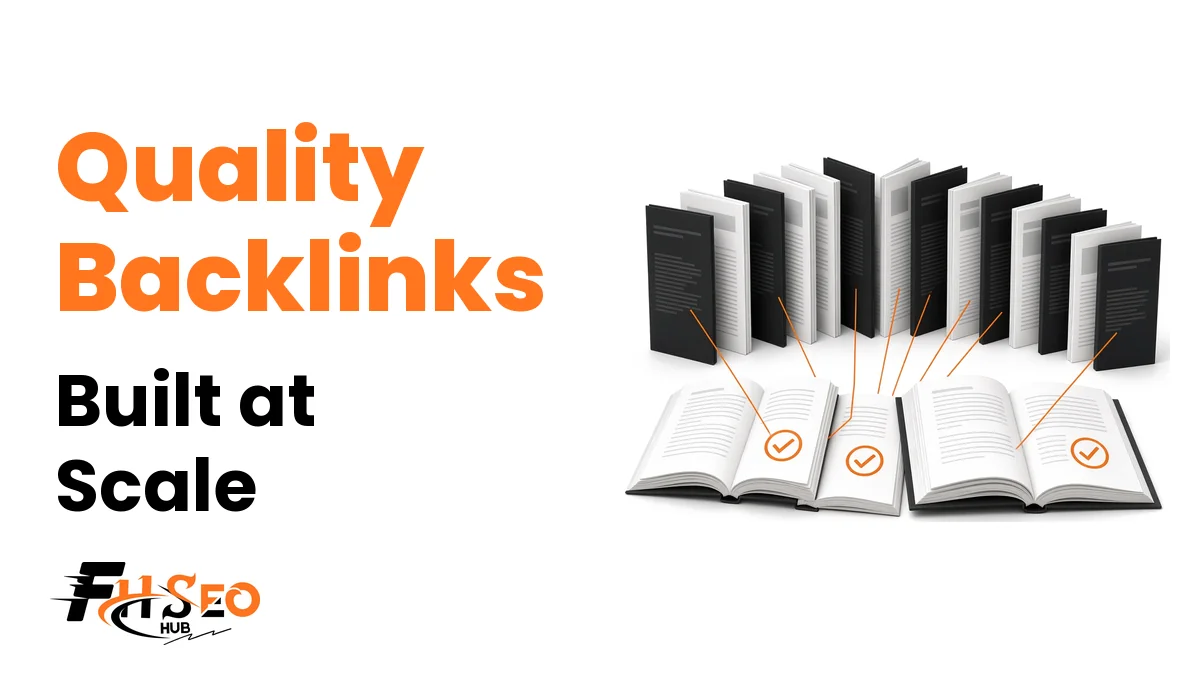
Agencies build high-quality backlinks at scale by qualifying publishers first, running a stage-gated fulfillment process, and reporting only live, relevant, correctly attributed links. Volume comes from clear roles and repeatable checks, not from looser standards about what a placement has to be.
The work fails when a team treats every accepted pitch as a win, or when a monthly quota outruns the time needed to verify the host. Agency link building holds up only when prospecting, outreach, content, quality control, and reporting each have a named owner and an approval gate. Those gates matter more than a larger unvetted list. This article walks through that system, the outreach habits that keep pitches personal, and the mistakes that turn volume into link spam.
Why Agency Link Building Breaks When Volume Comes First
Most campaigns break at the same point: the monthly target rises, and the team tries to hit it with the same people, the same list, and the same template. Quality drops first in the prospect list, then in the pitch, then in what gets reported as a placement.
Editorial.Link’s 2026 survey of 518 SEO professionals found that 67.2% cited scaling link building without losing quality as a major challenge, second only to the cost of premium backlinks. That pressure is real in agency operations. A higher send volume will not fix this. A slower, clearer path from a qualified prospect to a reported link works better, with cost per qualified placement tracked as carefully as raw count. Problems show up in reporting, when weak hosts hide behind a total and the client sees a count, not how domains were chosen.
Templated Outreach and Weak Prospect Lists
A copied pitch sent to a mixed list is a fast way to burn a sending domain and a response rate. Weak prospecting shows up as sites with no topical overlap, thin archives, or outbound link patterns that look like a paid-post farm. A prospector should confirm the host publishes on the client’s topic, that pages earn organic traffic, and that the editorial standards are real, before anyone writes a sentence.
Missing Handoffs Across Agency Operations
Scale also fails in the gaps between roles. The prospector closes a tab, the outreach specialist never sees why a site was chosen, and the writer gets a one-line brief. Placement confirmation then sits in a private inbox instead of a shared link log. Missing handoffs produce duplicate pitches, stale URLs, and links that no QA reviewer can reconstruct later. Agency operations need a documented pass-off at each stage, not a pile of half-finished threads.
What Quality Looks Like Before You Scale
Quality has to be defined before you try to scale link building, or the team will fill the month with whatever is easiest to place. A useful backlink is earned on a relevant page, from a real publisher, with an in-content placement a reader would trust, and with anchor text that fits the sentence.
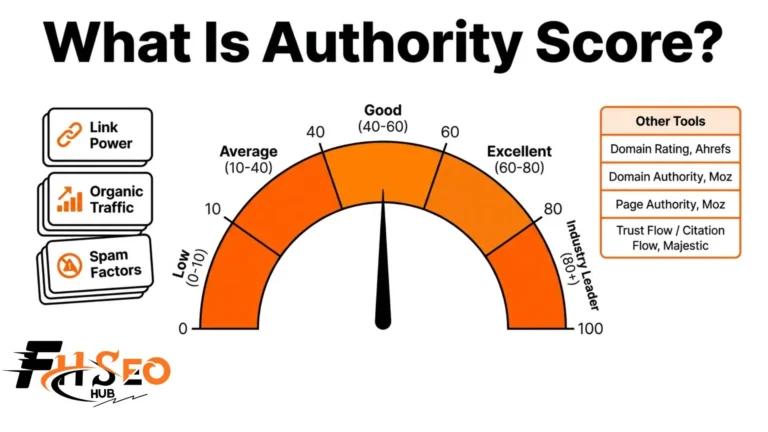
Google does not publish a Domain Rating floor, a traffic minimum, or a safe monthly link velocity. Vendor filters such as a DR 30 cutoff, a range of 300 to 1,000 visits a month, or a long “27-point” review can help a team sort a list. They are useful internal rules, not Google rules. Use them only as a starting screen, then judge the page itself.
Topical Relevance, Real Traffic, and Editorial Standards
A high third-party authority score does not replace a weak topical fit. The host should already cover the client’s subject, and the linking page should make sense next to the destination URL. Check whether the site earns organic traffic on those topics, not a third-party authority score alone. Editorial standards show up in bylines, source use, and whether the site rejects thin or promotional copy. A site that will take any insert is a weak candidate, even if the metric looks fine.
Link Types That Fit the Client, Not a Shared Template
Guest posts can work when the host has a real editorial process. Digital PR, resource pages, and broken link replacement often fit better for a brand that needs mentions, not a marketed guest-post slot. Start with a backlink gap analysis so you fill each client’s gaps, not one copied inventory across accounts. White-label link building is held to the same standard: the placed link has to suit the client.
Outreach Workflows That Stay Personal at Higher Volume
Outreach workflows scale when the list is already qualified and the pitch still reads as if one person wrote it to one editor. Personalized outreach takes longer at the start and saves time later, because replies are more useful and fewer follow-ups are wasted on dead ends. Keep that personalization in the first line, even when the caseload grows.
Qualify Prospects Before Anyone Writes a Pitch
Confirm topical fit, real organic traffic, a clean outbound link pattern, and a contact who can actually accept a pitch before a word of the email is written. Drop sites that show PBN signals, scraped pages, or a trail of untagged paid inserts. Qualified prospects cost more time up front and save more time in outreach campaign management, because the outreach specialist is not inventing a reason to write.
Personalize Pitches and Answer Replies on a Set Clock
A useful pitch names a specific page, a gap, or a correction, then offers a short, relevant asset. Generic compliments waste the first line. Set a clock for first replies, often the same business day, and keep a short follow-up sequence that adds a new detail rather than repeating the ask. Speed here is about respect for the editor’s inbox, not a script that chases everyone on the same cadence.
Protect Sending Domains and Follow-Up Cadence
Deliverability collapses when one sending domain is used to blast a large, cold list. Warm new domains slowly, cap daily volume, and stop a sequence when the editor says no or when bounces rise. Follow-up cadence should be short and finite. A long chase does not turn a weak prospect into a good one, and it can pull a healthy inbox into spam filters. Protect the domain the same way you protect publisher relationships: with restraint.
A Practical Link Building Fulfillment Process
The link building fulfillment process runs as a stage-gated delivery workflow: prospect, pitch, brief, place, review, then report. Work does not move forward until the previous gate is signed off. Each stage has a named owner and a recorded decision in the shared link log. That structure is how you add volume without turning the month into a race to record any URL.
Split Roles and Keep One Shared Link Log
Split the work so a prospector, an outreach specialist, a writer, and a QA reviewer are not the same person on the same placement. One shared link log is the single source of truth: the target URL, the host, the agreed anchor, the status, and the live link once it appears. Without that log, white-label teams and in-house teams both lose placements, double-book publishers, or report links no one can find later.
Write Briefs That Meet Host Editorial Guidelines
The content brief should match the host’s editorial guidelines, not a client template pasted into every draft. State the topic, the destination URL, a natural anchor, any claims that need a source, and what the host will not accept. Exact-match anchors belong in the minority. Default to branded and partial-match anchors so the sentence reads like the rest of the page. A brief that ignores the host creates rewrites, delays, and weaker placements.
Run Quality Control Before a Placement Is Reported
Quality control needs a second pair of eyes. The QA reviewer should be someone other than the person who secured the link. A basic link building QA checklist confirms the page is live and indexable, the placement is in the content, the page is topically relevant, and the link is attributed correctly. Paid or sponsored placements must carry rel=”sponsored”, which Google prefers, or nofollow. QA should reject private blog networks, untagged paid inserts, keyword-rich guest-post anchors, and excessive link exchanges.
Recheck Live Links and Report Leading Indicators
A reported link should still be live when the client sees it. Recheck the URL after publication, then again later, because pages get edited or redirected. Link monitoring and link reclamation belong together: if a link disappears, try to restore it before you drop it from the count. The client report should show referring domains, the live URLs, and leading indicators such as indexation and organic traffic, not a raw total alone.
Mistakes That Turn Scalable Link Building Into Link Spam
Chasing a volume target leads into Google’s link spam policies. Buying or selling links for ranking purposes, including untagged pay-per-link deals and “dofollow delivery” sold as a quality method, risks the client and the agency. Google says advertising and sponsorship links are normal when they are qualified so they do not pass ranking credit, the term it uses for what people often call link equity. Leave paid links tagged. An untagged paid insert is not a success.
Other mistakes pile up when a team chases a number: reusing a paid-post farm across clients, stuffing exact-match anchors, and ignoring outbound link patterns on the host. Publisher reuse is fine when the relationship is real and the topics fit, and a problem when one site becomes inventory for every account. Google publishes no official monthly volume that looks unnatural. A burst of low-relevance, poorly tagged, or repeated placements looks careless. High quality backlink acquisition is slower than a scheme.
Scale the System, Not the Shortcuts
The way to scale link building without harming the client is to keep the quality standard unchanged and make the workflow more reliable. Add people and approval gates before you add more sends. Keep outreach personal, keep the link log complete, and keep QA independent. That model holds when the client list grows, because the standard is not rewritten to hit a quota. High-quality backlinks at scale are the output of that system, not a monthly promise you meet by skipping a check.
FAQs
Paid or sponsored placements can be used as advertising when the link is marked with rel="sponsored", which Google prefers, or with nofollow. Untagged paid links that pass ranking credit fall under Google's link spam policies. Do not buy untagged dofollow placements and report them as editorial wins.
Yes, when the host is relevant to each client and the relationship is editorial, not a private inventory. Reusing one site as a placement factory for every account creates a repeated outbound pattern and weakens topical fit. Review publisher reuse in the link log before pitching the same host again.
A QA reviewer who did not secure the placement should review it. That person checks that the link is live, indexable, relevant, placed in the content, and correctly attributed, including any required sponsored or nofollow tag. The person who closed the pitch should not sign off on their own work.
Report only links that are live, indexable, relevant, and correctly attributed. The client report should list the referring domain, the live URL, the anchor, and the date checked, plus early signs such as indexation or Search Console movement. A raw count of promised placements is not a complete report.
No. Google does not require a Domain Rating or Domain Authority minimum. Those floors, and traffic cutoffs such as 300 to 1,000 visits a month, are vendor filters that some teams use to sort prospects. They can be a screen, but the page has to be relevant and editorially sound.