15 Types of Websites in 2026: Ranked by What Gets Cited by AI Search

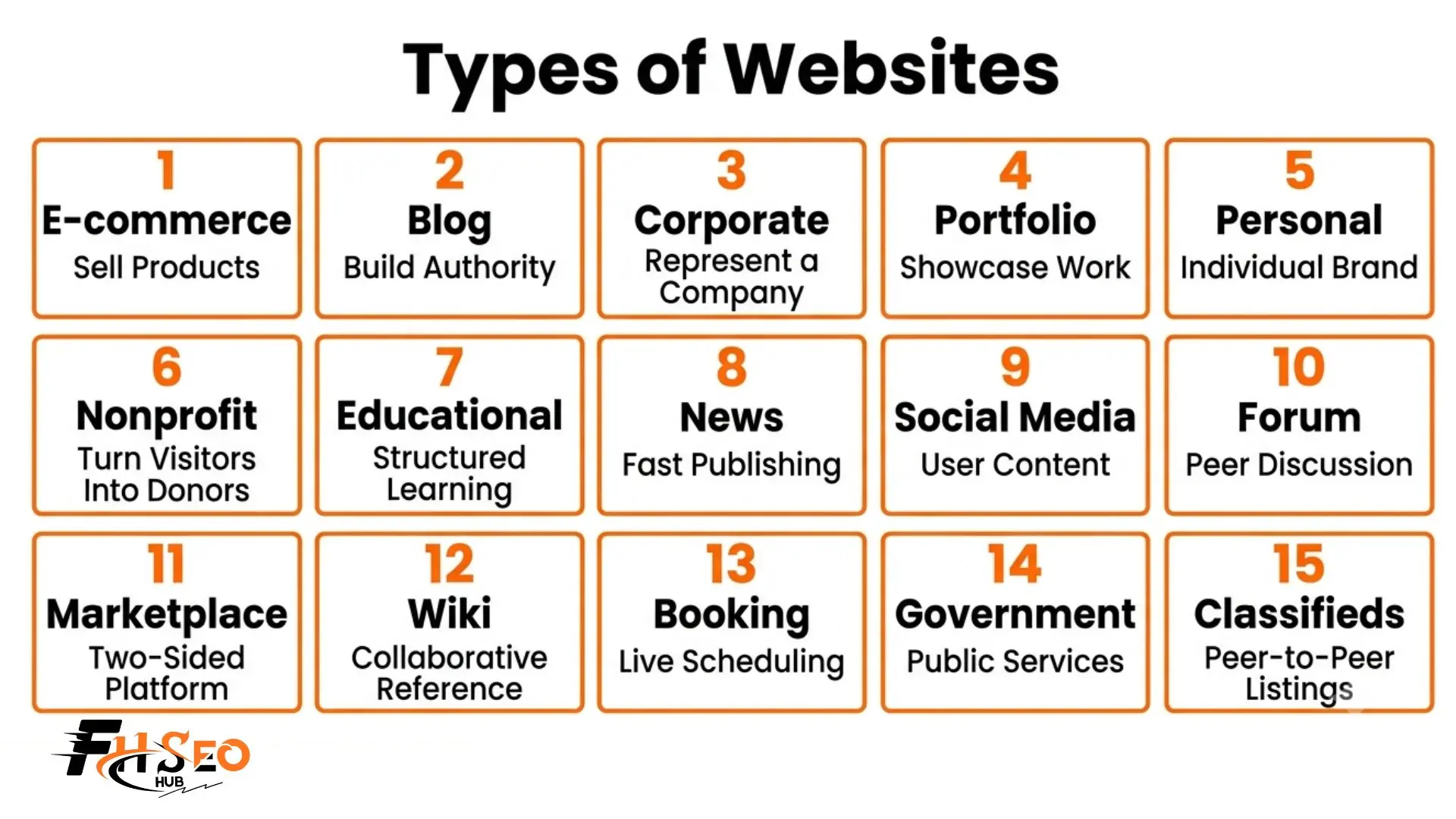
Types of websites break down into groups by purpose, like a blog, e-commerce website, or corporate website, and by architecture, like static versus dynamic. The 15 options below cover the 10 everyone expects plus 5 most competitors skip entirely, ranked by real build cost and how likely each type is to get cited by AI search in 2026.
What Are the Main Types of Websites?
The main types of websites are commonly grouped by purpose, such as a blog, e-commerce website, or corporate website, and by architecture, such as static versus dynamic. Purpose determines what the site does for a visitor. Architecture determines how the content behind it actually gets built and updated.
Most people searching this topic want the purpose-based list. That is where this article spends most of its time, though architecture matters too once you start comparing real build costs.
What Is the Difference Between Static, Dynamic, and Headless Websites?
A static website shows the same fixed content to every visitor. A dynamic website changes content based on user data or behavior. A headless website using API-first architecture separates content from design entirely, and in 2026 some teams are experimenting with agentic website interfaces built around an AI-native interface instead of traditional pages.
Here is how the three main approaches compare:
| Architecture | How Content Updates | Best For |
| Static website | Manual re-upload only | Simple, rarely-changing pages |
| Dynamic website | Database-driven, changes per visitor | Personalized, interactive experiences |
| Headless website | Content managed separately via API | Teams publishing across multiple channels |
| Agentic website | Conversational, AI-driven interface | Emerging 2026 chat-first experiences |
Most small businesses still start with a dynamic site built on WordPress, Wix, or Squarespace. Larger teams increasingly reach for headless setups once they need to push the same content to a website, an app, and other channels at once.
15 Types of Websites in 2026
This list starts with the highest-search-volume types everyone expects, moves through the genuinely underserved types most competitor lists skip, and ends on the entry most often confused with something else entirely.
1. E-commerce Website: Best for Selling Products Directly Online
An e-commerce website lets a single brand sell products or services directly, and it remains the type most people mean when they think about starting an online business.
2. Blog: Best for Building Authority Through Regular Content
A blog publishes articles on a regular schedule, and it remains one of the most cost-effective ways to build long-term search visibility.
3. Corporate Website: Best for Representing a Company to Two Audiences at Once
Here is a website type that has to do double duty from day one, speaking to customers and potential employees on the same pages.
4. Portfolio Website: Best for Showcasing Creative or Professional Work
A portfolio website does not sell a product or explain a company mission. It shows finished work and lets that work do the talking.
5. Personal Website: Best for Building an Individual Brand Beyond Just Work Samples
Unlike a portfolio, a personal website puts the person front and center, not just their output.
6. Nonprofit Website: Best for Turning Visitors Into Donors
A nonprofit website has one real job that every other type on this list does not share: convincing a stranger to trust you with their money.
7. Educational Website: Best for Structured Learning and Course Delivery
Structure is everything here. An educational website succeeds or fails based on whether learners can actually follow the path laid out for them.
8. News or Magazine Website: Best for Fast Publishing at Reading Scale
Speed and clarity fight each other constantly on a news site, and the best ones never let one win at the expense of the other.
9. Social Media Website: Best for Platforms Built Entirely on User Content
Take away the users and a social media website has nothing left. That single fact shapes every design decision on a platform like this.
10. Forum or Community Website: Best for Structured Peer Discussion
Long before social media existed, forums proved that strangers will happily answer each other’s questions for free if you give them the right structure.
11. Marketplace Website: Best for Connecting Independent Buyers and Sellers
This is the entry every other list on this topic gets wrong, lumping it in with standard online stores when it actually works completely differently.
12. Wiki Website: Best for Collaborative, User-Submitted Reference Content
Nobody owns the content on a wiki, and that is exactly the point.
13. Booking or Appointment Website: Best for Service Businesses Needing Live Scheduling
For a coach, stylist, or consultant, the entire website often exists to accomplish one single action: getting a time slot filled.
14. Government Website: Best for Public Services Under the Strictest Compliance Rules
Every other type on this list can treat accessibility as a nice-to-have. A government website legally cannot.
15. Classifieds Website: Best for Peer-to-Peer Buy and Sell Listings
Unlike a marketplace with an ongoing storefront, classifieds are built for one-off listings between people who will likely never interact again.
Can a Website Be More Than One Type at Once?
Yes. Most real sites combine at least two types on purpose. A blog often lives inside a corporate website. A portfolio website frequently adds booking functionality. Treat one type as primary, then layer a second type in only once the first is actually working.
Here is how the most common types compare on cost and AI search visibility:
| Type | Best For | Cost Tier | AI Citation Likelihood |
| E-commerce website | Direct product sales | Medium-High | Low (product pages) |
| Blog | Authority and search traffic | Low | High |
| Corporate website | Company representation | Medium | Medium |
| Portfolio website | Creative showcase | Low-Medium | Low |
| Nonprofit website | Donations and awareness | Low-Medium | Medium |
| Educational website | Structured courses | Medium | High |
| News or magazine website | Fast publishing | Medium-High | High |
| Wiki website | Collaborative reference | Low | Very High |
| Marketplace website | Two-sided buying and selling | High | Low |
| Government website | Public services | High | High |
Notice the pattern. Types built around dense, structured, factual content like wikis and educational sites get cited by AI search far more often than product pages or portfolios, regardless of how much traffic those pages already get from traditional search.
Final Thoughts
Choosing between these types of websites comes down to one question: what does your first visitor need to do in the first thirty seconds? An e-commerce website needs them buying. A blog needs them reading. A booking website needs them scheduling. Pick the type that matches that one action, build it well, and add a second type only once the first is genuinely working for you.
FAQs
Most sites fall into three broad groups. Informational sites like a blog or wiki share content. Transactional sites like an e-commerce website sell products. Interactive sites like a forum or community website let visitors engage with each other directly. Nearly every site you visit fits into one of these three buckets, even the more specialized types further down this list.
A common shortlist includes a blog, e-commerce website, corporate website, portfolio website, and social media website. These five cover the most frequently searched and built categories. Most real projects eventually combine more than one type as they grow, so this shortlist is really a starting point rather than a final destination.
A blog or a single landing page is typically the easiest to launch. Platforms like WordPress, Wix, and Squarespace offer templates requiring no coding knowledge at all. A personal website with just a few pages is also very beginner-friendly, especially if you skip custom features and stick to a simple template.
Yes, and most successful sites eventually are. A corporate website commonly includes a blog. A portfolio website often adds booking functionality once client demand grows. Start with the type matching your primary goal, then add a second type only once that first goal is genuinely being met, not before.
A corporate website covers most small business needs directly, and adding a blog improves search visibility over time without much extra cost. Service businesses specifically benefit from layering in booking functionality so scheduling happens automatically instead of requiring a phone call during business hours.
An e-commerce website sells one brand’s own products directly. A marketplace website connects many independent sellers with buyers without the platform itself holding inventory. That difference changes everything about the build, since a marketplace needs two-sided trust and review systems an e-commerce site never has to worry about.
Structured, factual content types like wiki websites and educational websites tend to get cited more often than product pages or portfolios. AI search systems favor content that answers a specific question clearly, which wikis and well-organized educational content do naturally, while product pages and portfolios are built to sell or showcase instead.


