
What Is Infographic Link Building? Definition, SEO Impact & 2026 Reality

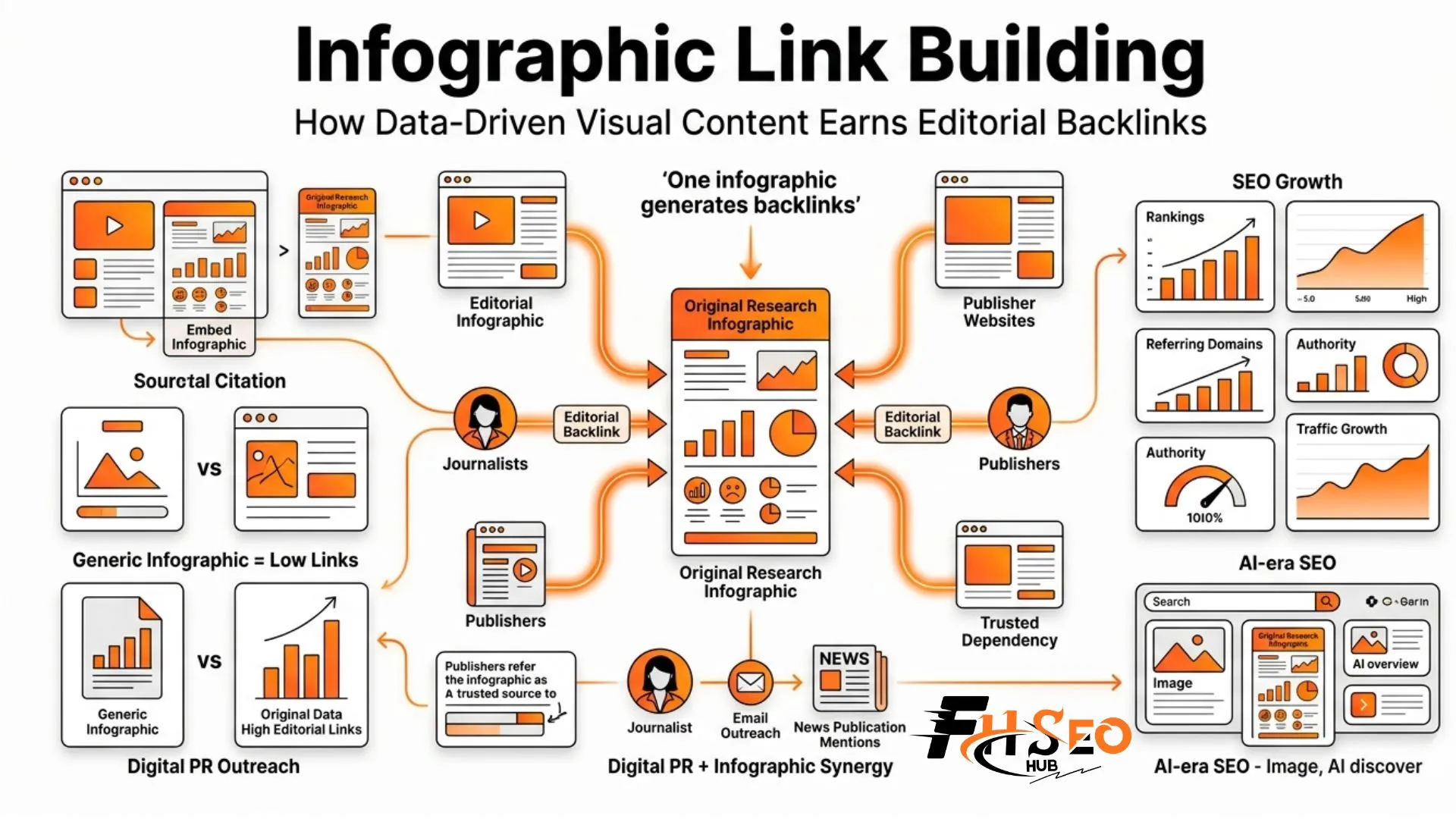
Infographic link building is the practice of creating visually engaging data graphics and distributing them to earn editorial backlinks from other websites. When a publisher embeds your infographic in their content, they typically link back to your original page as the source. In 2026, this tactic works strongly for original data-driven content and weakly for generic visual summaries.
Generic infographics summarizing public data do struggle to earn links in 2026. But data-driven, niche-specific infographics built on original research are earning more backlinks than ever, precisely because AI-generated content has made them rarer and more valuable.
What is infographic link building?
Infographic link building is a content-based link acquisition strategy where you create a visual representation of data, processes, or comparisons and distribute it to earn backlinks from publishers who embed it in their own content.
The mechanism works like this: you build a well-designed infographic that contains genuinely useful information, publish it on your site, and reach out to relevant blogs, journalists, or content creators. When they use your infographic in their article, they link back to your page as the original source. That link passes authority to your domain exactly like any other editorial backlink.
The key distinction from standard link building is the asset itself. In guest posting, you write a new article for another site. In infographic link building, you create one asset on your own site and earn multiple links to that single page over time.
How infographic link building differs from standard link building
Standard editorial link building typically produces one link per campaign effort (one guest post, one expert quote, one resource mention). Infographic link building creates a reusable asset that can earn dozens of links from one creation investment. A single well-researched infographic on a data-heavy topic can accumulate links from 20 to 50 referring domains over its lifetime if the data stays relevant and the outreach is targeted.
The trade-off is upfront cost. Producing a genuinely link-worthy infographic requires research, design, and distribution effort. The ROI case is strong only when the infographic contains information publishers genuinely need to reference.
Why infographics were originally so effective at earning links
Infographics dominated link building between 2010 and 2015 for a simple reason: visual content was scarce. Bloggers and journalists needed ways to illustrate complex data without creating graphics themselves. An infographic with an embed code solved their problem. They embedded the visual, linked back to the source and both parties benefited.
That scarcity is gone. The barrier to creating a visually appealing infographic dropped dramatically with tools like Canva and Visme, which meant the market flooded with low-quality visual content. The tactic lost effectiveness not because infographics stopped working but because most infographics stopped providing genuine unique value.
Does infographic link building still work?
Yes, infographic link building still works in 2026, but the conditions that make it effective have changed substantially and the bar for quality is significantly higher than it was a decade ago.
Why infographic link building declined between 2015 and 2022
The decline happened in three stages.
The result was a period where many SEOs stopped investing in infographics because the mass-submission approach that had worked before stopped producing results. That led to the widespread belief that the tactic was dead, which was accurate for the low-quality version of the strategy but inaccurate for the high-quality version.
What changed and why it works again in the right context
Two developments have strengthened infographic link building for practitioners willing to invest in original content. First, AI-generated text content has flooded the web with recycled statistics from the same third-party sources. According to research cited in Medium (November 2025), original research now earns 8 times more backlinks than curated content, and this gap is widening specifically because AI tools produce derivative content at scale. An infographic built on original survey data becomes the primary citation source for an entire topic.
Second, Google’s 2026 multimodal search indexing means a well-optimized infographic can surface simultaneously in organic search, image search, Google Discover and AI Overview panels. An infographic that receives structured data markup, accessible alt text and dense supporting copy reaches more distribution surfaces than any other content format. This is a 2026-specific advantage that did not exist even in 2023.
The citation dependency mechanism is worth naming explicitly here. When you publish original survey data in an infographic, other publishers cannot simply paraphrase the finding without citing you as the source. That citation dependency drives ongoing link acquisition passively, without additional outreach, as new articles reference your data.
The conditions of effective infographic link building
Three conditions separate infographics that earn links from ones that earn nothing:
Generic infographics summarizing publicly available information consistently fail to earn editorial links in 2026 because they offer publishers nothing they could not produce themselves or find more easily elsewhere.
How does infographic link building help SEO?
Infographic link building helps SEO by generating editorial backlinks that pass link equity directly to your page, while also producing secondary benefits including referral traffic, brand mentions and social signals that support overall domain authority.
The direct SEO benefit of earning backlinks through infographics
An editorial link earned through infographic placement passes the same link equity as any other editorial backlink from the same page. If a domain authority 70 publication embeds your infographic within a well-ranking article and links to your source page, that link carries the same ranking signal as a guest post link from the same publication.
The practical insight experienced link builders know but rarely document: placement context matters as much as domain authority. An infographic cited within the body of a well-ranking article on a topically relevant topic passes significantly more authority than the same infographic listed in a sidebar or directory page on the same domain. Targeted outreach that secures in-article placements produces disproportionately stronger SEO results than placements anywhere else on the page.
Infographic E-E-A-T signals also compound over time. When multiple authoritative publications in your niche reference your infographic as a data source, Google’s quality assessment systems interpret that citation pattern as confirmation of expertise and authoritativeness. According to Hashmeta research (February 2026), original research infographics generate 3 to 5 times more backlinks than infographics visualizing publicly available data, precisely because they produce these E-E-A-T confirmation signals at scale.
How infographic links compare to editorial links in authority value
An editorial link from an infographic embed is equal in SEO value to an editorial link from a guest post, when both come from the same page at the same placement position. The distinction is strategic: a guest post earns one link per article published. A well-researched infographic on a data-dense topic can earn 30 to 50 links from a single asset over 12 to 24 months if the data remains current.
Secondary SEO benefits: traffic, brand awareness and topical signals
Beyond direct link equity, infographics generate referral traffic from sites that embed them. Visual content generates 94% more views than text-only content according to Hashmeta (February 2026), which means infographic pages themselves attract organic visits. Social shares add additional brand signal and indirect link acquisition as new publishers discover the infographic through social channels. These secondary effects compound over the lifespan of an evergreen infographic in ways that most single-use link building tactics do not.
What types of infographics earn the most backlinks?
Not all infographic formats earn equal numbers of backlinks. Data-driven statistical infographics earn the most links, followed by process infographics, comparison infographics, and timeline infographics. Generic list infographics earn the fewest.
Data-driven infographics: why original statistics earn the most links
Statistical and data visualization infographics built on original survey research earn the most backlinks because they create citation dependency. When your infographic contains a named survey with a clear methodology and sample size, journalists and bloggers cannot paraphrase your finding without crediting the source. Every article that references your statistic becomes a potential backlink.
Process and how-to infographics: step-by-step visual content
Process infographics that outline a specific workflow or tutorial attract strong links from how-to content publishers. The SEO value here is narrower but more predictable: if your process infographic covers a well-searched procedural topic in a niche where visual guides are scarce, you can earn consistent editorial links from tutorial writers who would rather embed your visual than recreate it.
Comparison and timeline infographics and their link earning potential
Comparison infographics work effectively for commercial and product-heavy topics where side-by-side visual formats add genuine decision-making value. Timeline infographics perform well for industry history topics and work particularly well for PR-focused link acquisition from news and journalism sites. List infographics are the weakest format in 2026 for link earning: the market is saturated with them and they offer publishers minimal unique value.
Infographic link building vs other link building tactics
Infographic link building performs differently from guest posting and digital PR and works best as a complementary tactic rather than a standalone strategy.
How infographic link building compares to guest posting
Guest posting gives you direct control over anchor text, placement, and publication context. Infographic link building gives you a reusable asset that can earn multiple links without repeated writing effort. The right choice depends on your goals. If you need specific anchor text pointing to a specific page, guest posting is more reliable. If you want to build topical authority through multiple editorial citations to one source page, infographic link building produces stronger compounding results.
Infographic link building vs digital PR
Digital PR and infographic link building overlap most directly when the infographic contains original research that journalists want to cite in their reporting. A data visualization of a 500-person survey about industry trends is simultaneously a link building asset and a digital PR pitch. The infographic provides the visual evidence; the PR outreach places it in front of journalists. Used together, they produce editorial links from higher-authority publications than either tactic produces independently.
Conclusion
Infographic link building works when three conditions are met: the infographic contains original data that creates citation dependency, the topic targets a specific niche with a real visual content gap, and distribution uses personalized editorial outreach rather than mass directory submission. Generic infographic creation with bulk submission does not earn meaningful links.
The tactic is not dead. It has raised its own bar. A data-driven infographic built on 300 to 500-person survey research can earn 30 to 50 editorial backlinks from a single asset investment, producing link building ROI that most other tactics cannot match at that scale.


