What Is Local Sponsorship Link Building?

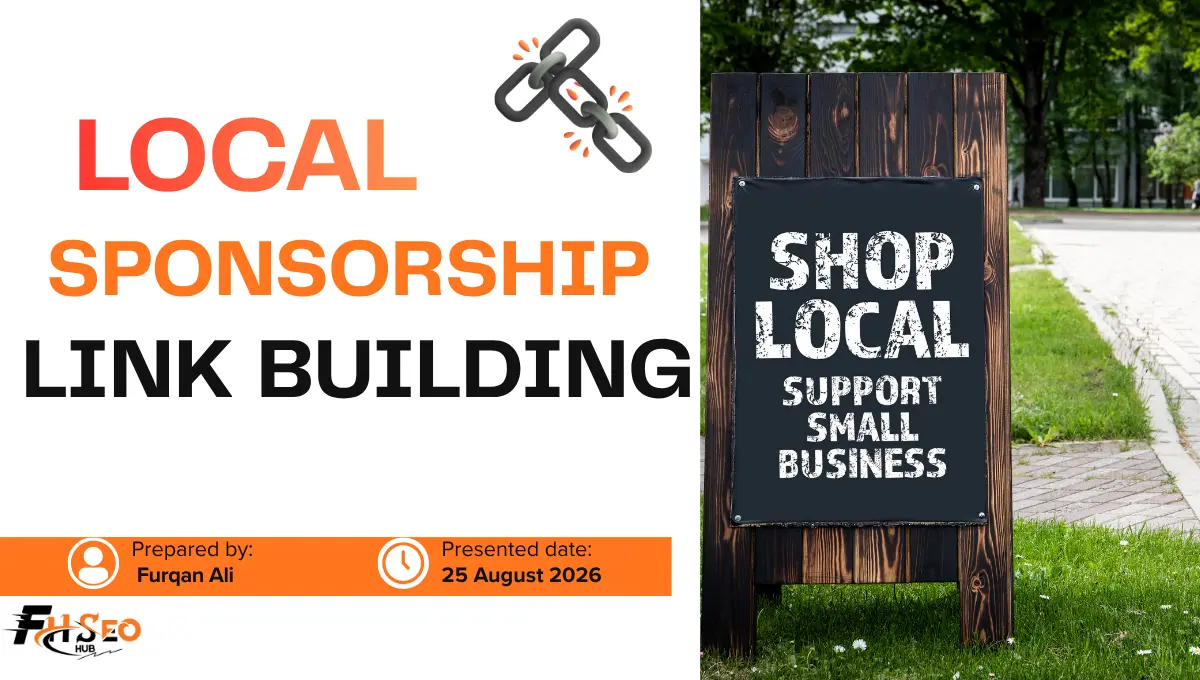
Local sponsorship link building means paying to sponsor a local organization, team, or event and earning a backlink from their sponsors page in return. It works because the link comes from a site genuinely tied to your city, not because the tactic is clever. A youth sports league’s sponsors page and a national directory listing every plumber in America carry very different weight, even if their domain ratings look similar on paper.
Why Local Link Building Matters for Local SEO Rankings
Local link signals are one of the more precisely measured ranking inputs in local SEO right now. Whitespark’s 2026 Local Search Ranking Factors study, based on a survey of local SEO practitioners, found link signals account for roughly 24 percent of local organic rankings and 8 percent of Local Pack rankings, with a newer measurement showing links driving about 13 percent of AI search rankings for local businesses specifically. That third number is the one most local SEO content hasn’t caught up to yet.
A Google Business Profile and consistent NAP data are the foundation everything else sits on. Links from local news, Chamber of Commerce pages, and community sites are what push a local SEO listing past competitors relying on citations alone. You don’t need a large backlink profile to win a Local Pack spot. Top-ranking local pages tend to carry a modest, tightly relevant set of links rather than a massive one.
What Makes a Sponsorship Link Different From Other Local Links
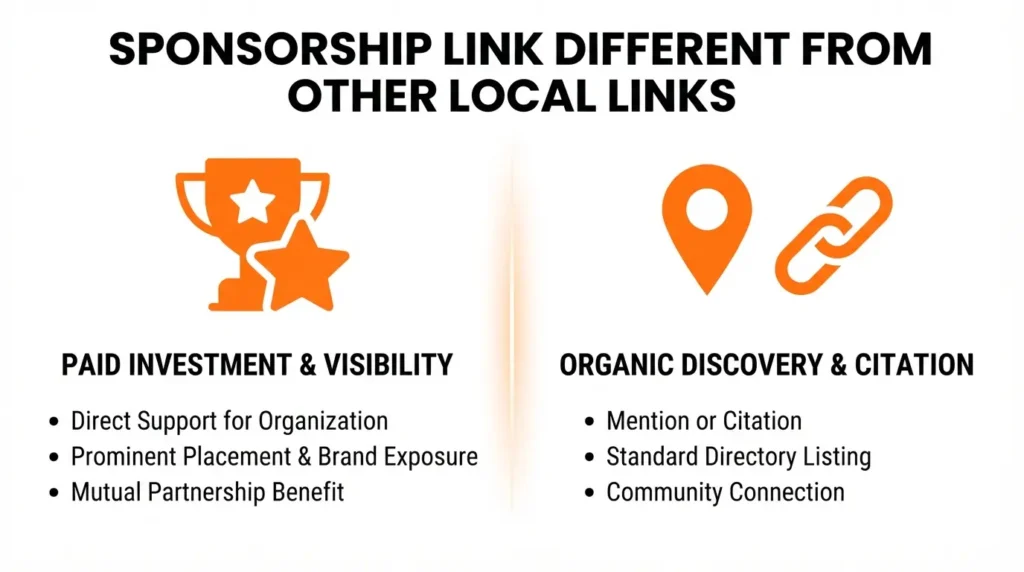
A citation confirms your business exists at a specific address. A sponsorship link does something citations can’t: it puts your name next to something the local community already trusts, a school, a sports league, a charity, and borrows a piece of that trust directly. Directory links serve a baseline function for NAP consistency but rarely move rankings on their own. Sponsorship links carry an actual geographic relevance signal, since the organization sponsoring you and the organization you’re sponsoring both operate in the same place.
There’s a compliance detail worth stating plainly here, the same one that applies to any paid event sponsorship: a sponsorship link is a commercial arrangement in Google’s eyes. It should carry a rel=”sponsored” attribute rather than pass full link equity as an unmarked dofollow link. Genuine sponsorship of a real local organization with a real local presence is legitimate marketing spend with a link as a side benefit. Paying purely for a logo placement on an organization with no real community footprint is closer to buying links with extra steps.
Types of Local Sponsorships That Generate SEO-Value Links
- Youth sports sponsorship. Team and league sponsors pages are common, and most now list sponsors by tier, Bronze, Silver, Gold, with logo placement and a link back.
- School sponsorship. Athletic boosters, fundraisers, and academic programs frequently link sponsors on their site, and school sites sometimes run on .edu domains, which carry real weight for local relevance.
- Nonprofit sponsorship. Local charities almost always maintain a sponsors or supporters page, often on a long-established .org domain with genuine local trust built up over years.
- Local charity event sponsorship. A 5K, a food drive, a community festival, each typically produces a link from the event page itself, separate from any ongoing organizational sponsorship.
- Local awards program sponsorship. Sponsoring a category at a regional business awards event can land you on the program page, the finalist list, the winner announcement, and the recap post, four or five link opportunities from one sponsorship rather than one.
- Local podcast or community media sponsorship. Genuinely underused. A multi-episode sponsorship typically secures a host-read mention and a permanent link in the show notes for every episode sponsored, and almost no local SEO content covers this angle.
How to Identify and Secure Local Sponsorship Opportunities
Start by mapping organizations that already list sponsors publicly rather than pitching cold. A search like site:.org “sponsors” [your city] or [your city] “community partnership” surfaces pages where the link placement already exists as standard practice. Chamber of Commerce membership is worth doing first regardless of what else you pursue: most chambers carry a DR in the 40 to 60 range, membership runs roughly $200 to $500 a year, and the member directory link requires no outreach at all, just the membership itself.
Youth sports and school sponsorships typically run $100 to $1,000 depending on tier and visibility, local charity and event sponsorships land in a similar range, and larger community festivals or multi-team leagues can run higher based on total reach. None of these numbers are fixed. Ask directly what a sponsorship includes before paying, since not every organization automatically adds a link, some only list sponsors on a printed banner or a one-time social post.
How to Maximize the SEO Value of Each Sponsorship Link
Confirm the link exists and check its attribute before considering the sponsorship complete. A verbal agreement to “list you as a sponsor” sometimes means a name with no hyperlink at all, or a link buried on a page Google rarely crawls. Ask specifically for a link to your homepage or a relevant local landing page, not just your logo.
Use consistent NAP formatting wherever the organization allows it, matching exactly how your name, address, and phone number appear everywhere else, since inconsistencies as small as “St.” versus “Street” weaken the trust signal citations depend on. Where anchor text is up to you, a natural mention of your business name and city reads better and holds up longer than a keyword-stuffed phrase, which tends to draw attention for the wrong reasons on a small nonprofit’s sponsors page.
Quick Local Sponsorship Link Wins
Chamber of Commerce membership is the fastest one on this list: join, get listed, done, no pitch required. A Little League team, a school fundraiser, or a food bank sponsorship in the $100 to $250 range often produces a link within days of payment, since most of these organizations update their sponsors page quickly to keep donors happy. Reclaiming a mention you already have, an event you sponsored last year that named you but never linked, is faster still. A short, polite email asking them to add the link usually works better than a fresh pitch to someone who’s never heard of you.
Advanced Local Sponsorship Strategies for Agencies
Running this at scale for multiple clients means building a repeatable pipeline rather than treating each sponsorship as a one-off favor. Track every local organization your clients have sponsored, are sponsoring, or could plausibly sponsor in a shared spreadsheet or CRM, since the same chamber, the same youth league, the same regional podcast often has multiple relevant clients in different industries.
Local awards programs deserve a dedicated line item in an agency’s local link strategy, since one sponsorship genuinely produces several links across a single cycle. Community podcast sponsorship is worth pitching to clients specifically because almost no competitor is doing it yet, meaning the links you secure now carry a first-mover advantage that gets harder to replicate once the tactic gets more common. Budget realistically across a client roster: a handful of $100 to $500 local sponsorships spread across a quarter typically costs less than a single high-end digital PR placement, while producing links with stronger geographic relevance for a local-service business specifically.
How to Track the Impact of Sponsorship Links on Local SEO
Track Local Pack position and local organic rankings for your core service and city terms before and after a sponsorship campaign, not just referring domain count. A local rank tracker checking positions from within the actual service area matters more here than a national rank tracker would, since local results vary block by block in competitive metros.
Watch referring domain growth specifically from .org, .edu, and local news domains as a category, separate from your overall backlink profile, since a local news mention with a link is exactly the segment sponsorship campaigns are meant to build. Give any single sponsorship campaign at least a full quarter before judging impact, since local ranking shifts tend to move slower and less dramatically than a single viral link would in a national campaign.
Tools for Local Link Building
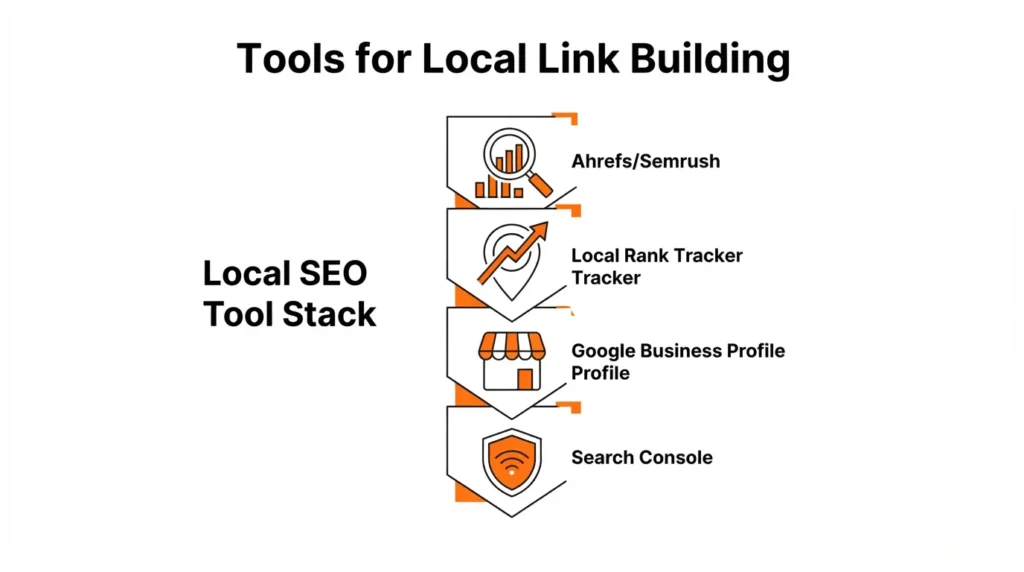
Ahrefs and Semrush both work for checking a prospective organization’s domain authority and existing referring domains before committing sponsorship budget, confirming a chamber or nonprofit site is genuinely active rather than dormant.
A local rank tracker tracks Local Pack and organic position specifically within your service area, the metric that actually matters for this tactic, rather than a national average position that can mask real local movement.
Google Business Profile itself, alongside Google Search Console, rounds out the practical stack, letting you watch whether local visibility and click-through actually shift alongside your growing sponsorship-driven backlink profile.
Conclusion
Local sponsorship link building works because it’s honest about what it is: you pay to support something real in your community, and a link is one of several things you get back. Start with Chamber of Commerce membership, map organizations that already list sponsors before pitching cold, and treat rel=”sponsored” attribution as a compliance requirement rather than an afterthought. Do this consistently across a quarter or two, and the local ranking signal compounds the same way genuine community involvement does.
FAQs
It’s earning a backlink by sponsoring a local organization, team, or event, typically from that organization’s sponsors or supporters page, distinct from directory citations because the link carries a real geographic relevance signal.
Chamber of Commerce membership runs roughly $200 to $500 a year. Youth sports, school, and charity sponsorships typically fall between $100 and $1,000 depending on tier and visibility, with larger community events running higher.
Whitespark’s 2026 Local Search Ranking Factors study found link signals drive roughly 24 percent of local organic rankings, 8 percent of Local Pack rankings, and 13 percent of AI search rankings for local businesses, with geographically relevant links carrying more weight than generic ones.
Yes, generally. A sponsorship is a commercial arrangement, so it should carry a rel=”sponsored” attribute rather than pass full link equity as an unmarked dofollow link, the same guideline that applies to any paid sponsorship.
Search for organizations already listing sponsors publicly using terms like site:.org “sponsors” your city, then start with Chamber of Commerce membership before pursuing youth sports, school, or nonprofit sponsorships in your service area.