AEO vs. GEO vs. SEO vs. LLMO: Terminology Clarified

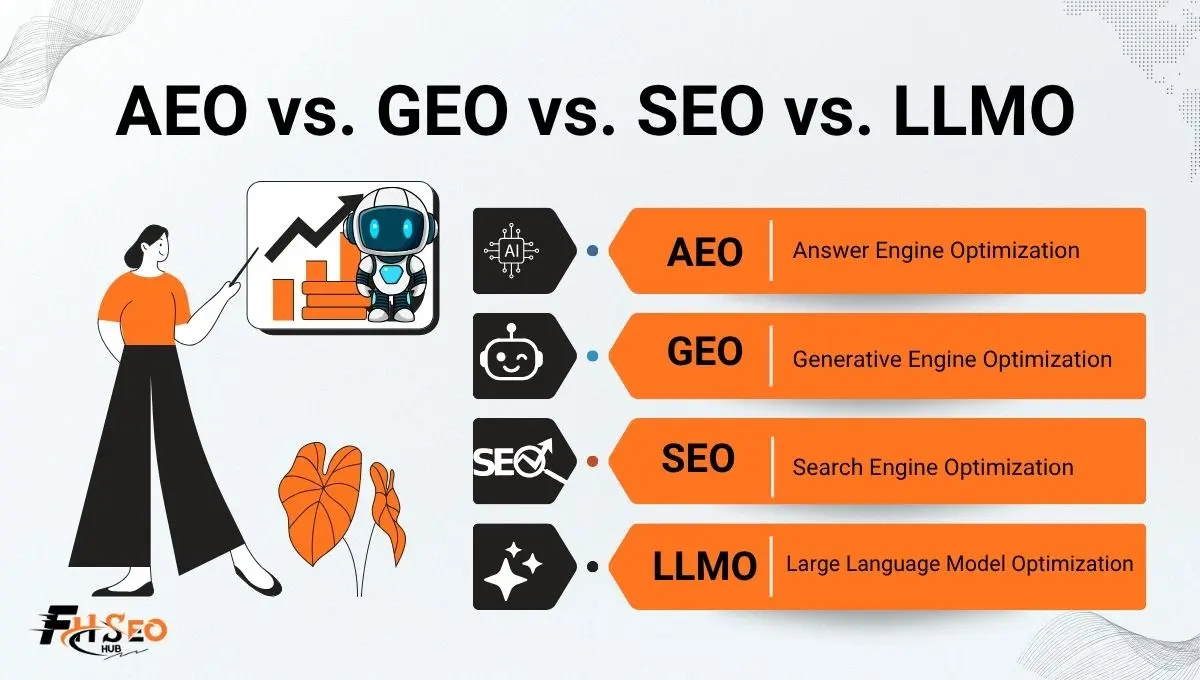
SEO, AEO, GEO, and LLMO all describe the same underlying job, getting content found, extracted, and trusted, applied to four different surfaces: search rankings, direct-answer boxes, generative AI summaries, and the language models themselves. They are not four competing strategies. They are four names for where that job shows up.
If you have sat through a client call where someone asked for a “GEO audit” separate from their “SEO retainer,” you already know why this matters. Budgets are getting split across acronyms that overlap by 80% in practice, and vendors are happy to sell you the same deliverable three times under three different names.
Why the AI Search Acronym Confusion Exists
AEO, GEO, and LLMO exist because AI-driven search split one job into three visible use cases: answering a question directly, generating a synthesized summary, and training a language model on the web. Vendors then packaged each use case as its own service line, which is why the terminology feels newer and more fragmented than the actual work is.
None of this happened by accident. Search behavior changed faster in the last three years than in the previous ten. People now ask ChatGPT and Perplexity questions they used to type into Google, browse AI-generated summaries instead of ten blue links, and expect a direct answer instead of a page to click through. Every AI platform needed a name for the optimization work that followed, and none of them agreed on the same one. That is the entire root of the confusion. It is not that these are radically different disciplines. It is that marketing got ahead of standardization.
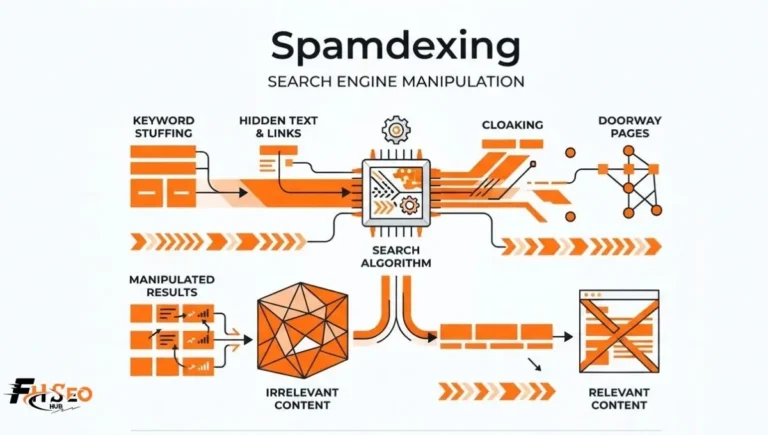
There is a second reason the confusion sticks around: Google itself has not settled the terminology. As of 2026, no consensus definition distinguishing AEO, GEO, and LLMO exists in academic or even standardized industry literature, and practitioners, vendors, and publications use the terms interchangeably depending on who is selling what. That is not a knock on any one source. It is the honest state of the field, and it is exactly why a clear breakdown is overdue.
What Is SEO?
SEO, Search Engine Optimization, is the practice of improving a site’s visibility in traditional search results through technical health, content relevance, and authority signals like backlinks and topical depth. Every discipline that follows in this article, AEO, GEO, and LLMO, is built on top of SEO, not separate from it.
This matters more in 2026 than it did five years ago, not less. AI Overviews and generative engines disproportionately pull from and cite pages that already rank well in conventional search. Google’s own crawlers, ranking signals, and quality frameworks like E-E-A-T still decide which pages are even eligible to be summarized or cited by an AI system. Skip the SEO foundation and there is nothing for an answer engine or generative engine to retrieve in the first place.
A common mistake teams make right now is treating “AI search optimization” as a brand-new discipline they can bolt onto a site that has weak technical SEO, thin content, or no structured data. That does not work. If your site is not crawlable, indexable, and technically sound, none of the AI-driven surfaces can find or trust you, and the budget spent chasing AEO or GEO tactics on top of a broken foundation is largely wasted.
What Is AEO? (Answer Engine Optimization)
AEO, Answer Engine Optimization, is the practice of structuring content so it gets extracted as a direct answer by featured snippets, voice assistants, People Also Ask boxes, and AI Overviews. The concept predates the generative AI boom, it originated with Google’s Featured Snippets and early voice search assistants, and it has simply expanded to cover newer answer surfaces.
AEO prioritizes speed and precision over depth. When a user asks a direct question, answer engines favor content that explains the concept in a short, self-contained block, usually 40 to 80 words, with a clear definition or answer up front. This is why concise explanations, FAQ formatting, and clearly labeled sections consistently outperform long, meandering intros in AEO contexts.
In practice, AEO work looks like this: writing a direct-answer paragraph immediately under every H2 and H3, using FAQ schema markup on question-based content, structuring numbered steps for how-to queries, and keeping one core claim per paragraph so an algorithm can lift it cleanly. Realistic timelines matter here. Most practitioners see featured snippet or AI Overview inclusion shift within four to eight weeks of restructuring existing top-performing pages, not overnight, and results depend heavily on how competitive the query already is. Pages that already rank in the top five organically convert to snippet or AI Overview inclusion far faster than pages starting from page two.
What Is GEO? (Generative Engine Optimization)
GEO, Generative Engine Optimization, is the practice of structuring content and building brand authority so that AI platforms like ChatGPT, Perplexity, and Google Gemini select and cite it inside a generated answer. Unlike SEO, where the goal is a ranked link, GEO targets inclusion inside the synthesized response itself.
To understand what actually earns a GEO citation, it helps to know the mechanism behind it. Most generative AI search tools run on a two-stage process called retrieval-augmented generation, or RAG. First, the system retrieves a pool of relevant documents from an index in response to a query. Second, it generates a response by synthesizing information from that retrieved pool, citing the sources it judged most relevant, consistent, and authoritative. Content that is chunked into clear, self-contained passages, uses specific data points and expert framing, and appears consistently across multiple related queries gets pulled into that retrieval pool far more often than vague, generic prose.
Cost is worth being honest about here, because GEO is where budgets get inflated fastest. Entry-level GEO monitoring and light content optimization typically starts around $1,000 to $2,500 per month. Full-service mid-market GEO retainers, covering content restructuring, entity building, and citation tracking, generally run $3,000 to $10,000 per month. Enterprise programs with cross-platform monitoring, digital PR for co-citation, and dedicated prompt auditing can run $10,000 to $35,000 or more per month. A DIY approach is possible, but tooling alone for AI visibility monitoring commonly runs $30 to $500 per month per platform, and someone still has to act on what the dashboard shows. The risk with GEO specifically is measurement without action: paying for a citation-tracking subscription while never doing the content or outreach work that actually earns a citation.
The competitive math is worth internalizing too. Traditional SEO competes for a spot among ten blue links. GEO competes for a spot among roughly two to seven sources a generative engine actually cites in a single response. That is a smaller, harder-to-win pool, but a citation inside an AI answer functions as an implicit endorsement that no standard organic listing provides.
What Is LLMO? (Large Language Model Optimization)
LLMO, Large Language Model Optimization, is the technical subset of GEO focused specifically on how large language models retrieve, weigh, and cite content through training data ingestion and retrieval-augmented generation pipelines, rather than through a live, user-facing search interface. If you are actively doing GEO work, you are already doing most of what LLMO covers.
The distinction that does hold up: GEO is broader and includes the live retrieval side of the equation, what a model pulls in response to a specific prompt right now. LLMO is narrower and includes the training and pattern-recognition side, how consistently a brand’s name, description, and category language show up across the web over time, which shapes what a model has learned to associate with that brand independent of any single search. This is why entity consistency, using the same company name, service descriptions, and category language across your site, directories, and press coverage, matters more for LLMO than almost any other single tactic.
Bonus Terms: AIO, AI-SEO, and Other Related Acronyms
AIO most commonly refers to AI Overviews, Google’s AI-generated summary feature shown at the top of search results, and it is narrower than AEO. AEO is the broader discipline of optimizing for any answer engine, including featured snippets, voice assistants, and AI answer boxes across multiple platforms, while AIO targets Google’s specific implementation of that idea.
You will also run into AI-SEO and Search Everywhere Optimization used as umbrella marketing terms. Neither describes a distinct technical discipline. Both are shorthand for the combined work covered by AEO, GEO, and LLMO, packaged under a single banner, usually by an agency that wants to sell one retainer instead of explaining three overlapping acronyms to a client.
SEO vs. AEO vs. GEO vs. LLMO
SEO targets ranked links in traditional search results, AEO targets direct-answer features like snippets and voice responses, GEO targets citations inside generative AI-written answers, and LLMO targets how language models interpret and reference a brand over time. All four rely on the same technical foundation and largely the same content quality signals.
| Discipline | Primary Target | Core Output | Typical Timeline | Primary Platforms |
| SEO | Ranked organic listing | Indexed, ranking page | 3 to 6 months for competitive terms | Google, Bing organic search |
| AEO | Direct-answer feature | Featured snippet, voice answer, PAA entry | 4 to 8 weeks on already-ranking pages | Google Search, voice assistants |
| GEO | Citation inside generated answer | Brand mention or link inside AI summary | 60 to 90+ days for consistent citation | ChatGPT, Perplexity, Google AI Mode |
| LLMO | Model-level recognition | Consistent brand association in AI output | Months, tied to training and re-crawl cycles | Underlying LLMs across platforms |
The Contrarian View: Is It All Just SEO?
Google’s own 2026 generative AI documentation states plainly that optimizing for generative AI search is still optimizing for the overall search experience, which is a fairly direct signal that AEO, GEO, and LLMO are not separate ranking systems with their own rulebooks. They are applications of the same E-E-A-T and technical SEO principles to newer surfaces.
This is slightly uncomfortable truth most acronym-driven marketing avoids: GEO, AEO, and LLMO are largely converging on the same playbook, and most of what separates them is emphasis, not method. Structured data, clear entity signals, authoritative content, and crawlable technical infrastructure serve all four at once. The trade-off worth naming directly, if you are deciding whether a business genuinely needs a separate “AI search” budget line: for most small and mid-size sites, the answer is no, that work belongs inside the existing SEO and content function, not a new department. Where a separate budget line does make sense is at the enterprise level, where prompt auditing, cross-platform citation tracking, and digital PR for AI co-citation require dedicated hours that a lean SEO team cannot absorb without dropping something else.
Where These Disciplines Genuinely Differ
The real differences show up in output format, target system, and how success gets measured, not in the underlying tactics. AEO favors short, extractable, self-contained answers built for a single query. GEO favors comprehensive topical coverage an AI system can pull from and synthesize across multiple related prompts. LLMO favors long-term entity consistency a model can learn and repeat accurately over time, independent of any one piece of content.
Writing style shifts accordingly. AEO content leans on short paragraphs, bullet points, and tight definitions. GEO content performs better as comprehensive guides organized into topical clusters, since generative engines are pulling from and comparing multiple sources to build one answer. LLMO content favors well-organized long-form pieces with consistent terminology and stable naming, since a model is effectively pattern-matching your brand’s language across everything it has ingested, not just one page.
The Hierarchy: How AEO, GEO and LLMO Relate to Each Other
GEO functions as the umbrella discipline covering optimization for any generative AI system’s output. AEO is a focused subset of that broader goal, aimed specifically at winning the answer slot, whether that slot is a featured snippet, a voice response, or an AI Overview box. LLMO is a further, more technical subset of GEO, concerned narrowly with how large language models retrieve and cite content through training data and RAG pipelines rather than live search retrieval.
Understanding why a piece of content gets pulled into that pipeline at all requires understanding query fan-out, the technique Google’s AI Mode and most competing AI search tools now use. When a user asks a question, the system does not run one search. It breaks the question into multiple related sub-queries and issues all of them in parallel, covering different facets of the original intent. Each sub-query returns its own set of ranked results. The system then merges those separate result lists using a method called reciprocal rank fusion, or RRF, which scores each document based on where it ranked across every sub-query list and rewards documents that show up consistently across multiple lists rather than dominating just one. The formula is straightforward: for each list a document appears in, you take one divided by a constant, usually 60, plus its rank position, then sum those scores across every list. A document that ranks moderately well across eight different sub-queries can out-score a document that ranks first for only one.
This is exactly why ranking number one for a single keyword is no longer enough for AI visibility. Comprehensive articles that already touch on multiple related sub-topics, definitions, comparisons, use cases, and FAQs, get pulled into more of those fan-out result lists, accumulate a higher combined RRF score, and get cited more prominently as a result. It is a mechanical explanation for why “write comprehensive, well-structured content” keeps showing up as advice. It is not a vague best practice. It is how the scoring math actually works.
Success Metrics: How to Measure Each Discipline
SEO is measured through organic rankings, indexed pages, and organic traffic. AEO is measured through featured snippet ownership, AI Overview appearances, and voice answer inclusion. GEO is measured through Share of Answer, essentially what percentage of relevant AI-generated responses mention your brand, and raw citation frequency across platforms. LLMO is measured through Prompt Recall Rate and the consistency of unlinked brand mentions across AI outputs over time.
| Discipline | Core Metric | What It Actually Tracks | Where to Watch It |
| SEO | Organic ranking position, organic traffic | Whether you show up in the ten blue links | Google Search Console, rank trackers |
| AEO | Featured snippet and AI Overview appearance rate | Whether you own the direct-answer slot | Manual SERP checks, rank tracking tools with SERP feature data |
| GEO | Share of Answer, citation frequency | How often AI platforms cite or mention you across a set of tracked prompts | Profound, Semrush AI visibility tools, Similarweb AI Search Intelligence |
| LLMO | Prompt Recall Rate, unlinked brand mention consistency | Whether a model associates your brand with a topic even without a live search | Repeated prompt testing across ChatGPT, Gemini, Claude, Perplexity |
There is no Search Console equivalent for AI visibility yet, and every vendor measures citations slightly differently, which is worth flagging honestly to a client before you commit to a specific tool as the source of truth. Pick one platform’s methodology, be consistent about which prompts you re-test, and treat month-over-month trend direction as more meaningful than any single snapshot number.
Which One Should You Prioritize First?
Prioritize SEO first if your technical foundation is weak, meaning crawl errors, thin content, or missing structured data, because none of the other disciplines can function without it. Prioritize AEO first if your rankings are healthy but you are losing clicks to featured snippets and AI Overviews on your own ranked queries, since that is the fastest fix available on existing assets. Prioritize GEO or LLMO first if your audience already researches through ChatGPT or Perplexity before they ever open a search engine, which is increasingly common in B2B software, travel, and high-consideration purchase categories.
Most teams land in the middle scenario: rankings are fine, but zero-click answers and AI Overviews are eating traffic that used to convert. Treat AEO, GEO, and LLMO as one combined initiative in that case, restructure existing top-performing pages for extractability, add quotable data points and clear definitions, tighten schema, and strengthen entity signals, rather than running three separate, uncoordinated projects.
How to Optimize for All Four at Once
A single technical and content foundation, clean structured data, consistent entity naming, and direct-answer formatting, serves SEO, AEO, GEO, and LLMO simultaneously, which means most teams should run one integrated workflow rather than maintaining four separate strategies and four separate reporting dashboards.
The practical checklist looks like this. Deploy FAQ schema and, where relevant, HowTo schema on question-based and process content, since AI systems extract tabular and structured data far more reliably than dense prose. Keep company name, service descriptions, and category language identical across your site, directories, LinkedIn, and any third-party mentions, since inconsistent naming actively confuses the entity signals that LLMO depends on. Write a direct, self-contained answer immediately under every major heading, long enough to stand alone if lifted out of context. Build genuinely comprehensive topical coverage rather than thin, single-angle posts, since query fan-out rewards content that shows up across multiple related sub-queries. Update cornerstone content on a real quarterly cadence, since pages that go stale lose AI citation share faster than they lose organic rankings.
One tactic you can safely skip: llms.txt. As of 2026, Google has explicitly and repeatedly confirmed that llms.txt has no effect on Search rankings or AI Overviews inclusion, comparing it to the old, discredited meta keywords tag. Independent studies of hundreds of thousands of domains found adoption sitting around 10%, with no measurable correlation between having the file and getting cited more often by AI systems. It is not harmful to publish one, some coding agents and a couple of AI platforms do reference it for navigation purposes, but treat it as a minor, optional compliance step, not a strategy, and never let a vendor sell it to you as an AI-citation fix.
Budget the DIY tool stack honestly too. Basic AI visibility monitoring alone runs $30 to $500 per month depending on platform coverage, and that is before any content, schema, or outreach work happens. A DIY program can work for a lean team with more time than budget, but once monthly spend clears roughly $2,000, hiring dedicated help typically outperforms hobby hours spread across an already-stretched marketer.
Conclusion
SEO, AEO, GEO, and LLMO describe four angles on the same underlying job: making content findable, extractable, and trustworthy across every surface where people now search, from traditional blue links to AI-generated answers to the models themselves. The acronyms will keep multiplying as platforms compete for attention, but the foundational work, technical health, clear structure, consistent entities, and genuinely useful content, stays the same underneath all of them. Build that foundation once, apply it consistently, and you are covered no matter which acronym a client or a platform decides to lead with next.
FAQs
AEO stands for Answer Engine Optimization, the practice of structuring content so it gets extracted as a direct answer by featured snippets, voice assistants, and AI Overviews.
No, but GEO depends entirely on SEO fundamentals. SEO targets a ranked link in search results, while GEO targets a citation inside an AI-generated answer, and both rely on the same technical foundation and content quality signals.
AI SEO is an umbrella marketing term covering AEO, GEO, and LLMO combined. You do not need to treat them as separate disciplines to learn or budget for; the core skills, structured content, clean technical SEO, and entity clarity, carry across all of them.
AEO targets the direct-answer slot on one platform at a time, mainly Google’s snippets, voice search, and AI Overviews. GEO targets being cited inside a synthesized response across multiple generative AI platforms, including ChatGPT and Perplexity, and typically requires broader topical coverage rather than a single tight answer.
No. Google has explicitly confirmed llms.txt has no effect on Search rankings or AI Overviews. Adoption sits around 10% of sites studied, and no independent research has found a correlation between having the file and getting cited more often by AI systems. It’s optional and low-cost to add, but it is not a ranking or citation strategy.
Focus on comprehensive, well-structured topical content that covers multiple related sub-queries, since generative engines retrieve and merge results from dozens of related searches using query fan-out and reciprocal rank fusion. Content that shows up consistently across those related searches accumulates a higher combined relevance score and gets cited more often.
LLMO is a genuine subset of GEO, not a rebrand. GEO covers the live retrieval side of generative search, what a model pulls in response to a specific prompt right now. LLMO covers the training and pattern-recognition side, how consistently a brand’s name and description appear across the web over time, which shapes what a model has learned independent of any single live search.
RRF scores each document based on its rank position across multiple related sub-query result lists, then sums those scores. Documents that rank moderately well across many related queries typically out-score documents that rank first for only one query, which is why broad topical coverage beats single-keyword optimization for AI citation.
It depends on budget and scope. Entry-level GEO monitoring runs roughly $1,000 to $2,500 per month, mid-market retainers run $3,000 to $10,000 per month, and enterprise programs can run $10,000 to $35,000 or more per month. DIY is viable below roughly $2,000 in combined monthly spend if someone on the team can consistently act on the data, not just track it.
Most current evidence, including Google’s own 2026 generative AI documentation, points that direction. The core tactics already overlap heavily, and the terms are increasingly used interchangeably by agencies and, in Google’s framing, treated as part of the same overall search optimization discipline rather than separate ranking systems.