
What Is Spamdexing: Why and What Google Penalizes

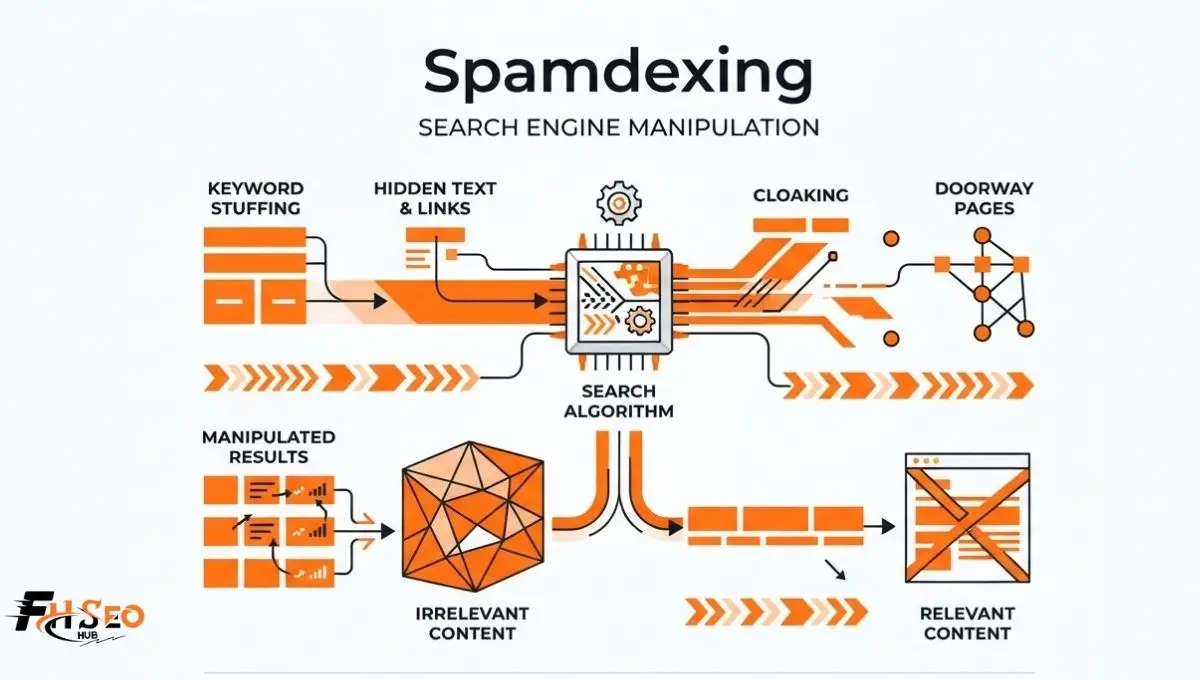
Spamdexing is the practice of manipulating search engine indexes through deceptive tactics, keyword stuffing, cloaking, link farms, and doorway pages, designed to inflate rankings rather than earn them. Google penalizes it through both manual actions and algorithmic systems, and the practical cost is rarely a single dropped ranking. It’s usually months of suppressed visibility across an entire site.
The term itself is old, older than most people pitching these tactics as new “growth hacks” realize. What’s changed is detection. A technique that worked briefly a decade ago on gray-hat forums almost never survives contact with Google’s current spam systems. Knowing exactly which techniques still get flagged, and why, is what separates a defensible content strategy from one quietly accumulating risk.
What Is Spamdexing?
Spamdexing, a portmanteau of “spam” and “indexing,” refers to any technique used to manipulate a search engine’s index so a page ranks higher than its actual content quality or relevance would earn. It covers two broad categories: content spam, which manipulates what a page says, and link spam, which manipulates the links pointing to it.
The term dates back to the mid-1990s, widely attributed to early coverage of the first wave of search engine manipulation as AltaVista and other early engines became commercially important. The underlying problem hasn’t changed since: any signal a search engine uses to judge quality becomes a target for manipulation the moment it becomes valuable enough to fake.
A Brief History of Spamdexing
Spamdexing predates Google itself, emerging alongside the first commercial search engines in the mid-1990s when simple keyword matching made manipulation easy. Early tactics like meta tag stuffing worked because search engines had no way to verify that a page’s stated keywords matched its actual content.
Detection lagged behind the tactics for years. Between 2000 and 2015, doorway pages specifically stayed hard to catch at scale, since early algorithms couldn’t distinguish a genuinely useful local landing page from a manipulative thin one built purely to funnel traffic. The Google Panda update in 2011 brought real content-quality evaluation into the ranking algorithm for the first time, and Google Penguin followed in 2012 targeting link spam specifically. Hummingbird’s semantic understanding in 2013 closed much of the remaining gap. By 2015, machine learning and expanded crawl capacity let Google automate detection of funneling patterns that had previously stayed just under the radar.
The pattern has repeated with every new signal Google introduces. The black hat SEO playbook keeps shrinking, not because practitioners stopped trying, but because each new detection system closes another gap that used to work.
Content Spam Techniques

Content spam manipulates what a page says to make it appear more relevant than it genuinely is, covering keyword stuffing, article spinning, automatically generated thin content, and meta tag stuffing. All four share the same underlying problem: content built for an algorithm’s pattern-matching instead of a reader’s actual question.
Keyword stuffing repeats a target phrase unnaturally throughout a page, in ways no person would write, hoping raw repetition signals relevance. Article spinning takes existing content and swaps words for synonyms to create apparent uniqueness while adding no real value, producing text that often reads as slightly wrong even when grammatically correct. Automatically generated content and scraper sites take this further, publishing text with little or no human oversight purely to occupy search real estate.
Meta tag stuffing, cramming a page’s meta keywords tag with unrelated terms, is a relic that stopped functioning as a ranking signal well over a decade ago, though some sites still carry the habit forward out of inertia. Thin content, pages that don’t fully answer a query or add anything beyond what’s already ranking, is the common thread across every content spam technique. It’s what the systems descended from the Google Panda update, and their current successors, are built to identify.
Link Spam Techniques

Link spam manipulates a site’s backlink profile through artificial means rather than earned editorial placement, covering link farms, private blog networks, reciprocal linking schemes, and lower-effort tactics like comment spam and wiki spam. The Google Penguin algorithm, still active inside current ranking systems, was built specifically to catch this category.
Link farms are networks of sites that exist mainly to link to each other or to a target site, with no real audience or editorial purpose behind them. Private blog networks work the same way at a more sophisticated level, a controlled group of PBN sites built to look independent while all pointing authority at one target. Reciprocal linking schemes and link exchanges trade links purely for mutual ranking benefit rather than genuine relevance, a pattern Google’s link graph analysis is specifically built to detect at scale.
Comment spam and wiki spam add links to publicly-editable content, blog comments and wiki pages, hoping volume compensates for the fact that most of these platforms tag outbound links nofollow by default specifically to remove the incentive. Expired domain abuse buys a domain with existing backlink history purely to redirect that accumulated authority to an unrelated site, a pattern that doesn’t erase the manipulative intent just because the domain used to be legitimate. Most of these lower-effort tactics fall closer to spammy link territory than genuine grey-hat SEO, since there’s no real judgment call involved, just volume over quality.
Cloaking and Other Deceptive Tactics
Cloaking shows search engines a different version of a page than human visitors see, typically detected through IP address or user-agent. Google treats it as one of the more serious spam categories because it’s inherently deceptive by design. A site might serve Googlebot a clean, keyword-optimized page while human visitors land on something entirely unrelated.
Sneaky redirects work as a variant: a page gets built and indexed looking legitimate, then swapped or redirected to different content once it achieves ranking, sometimes called code swapping. Doorway pages are a related tactic, low-value pages built to rank for narrow, similar queries and funnel visitors toward a single destination that adds no real value along the way. A local business running genuinely different location pages isn’t doorway abuse. The line gets crossed the moment those pages stop containing real, distinct information about each location and exist purely to capture search volume.
Worth noting explicitly: not every technical similarity to these tactics is spamdexing. A paywall isn’t cloaking if Google can see the same full content a paying reader sees, and hidden text used specifically for accessibility, not to hide keyword stuffing, isn’t a violation either. Google’s own guidance draws this distinction deliberately, since intent and outcome matter more than the technical mechanism.
How Google Detects Spamdexing
Google detects spamdexing primarily through SpamBrain, its AI-based spam detection system. SpamBrain cross-references content patterns, link graphs, hosting footprints, and behavioral signals across a site’s entire profile rather than evaluating individual pages in isolation. A single suspicious element rarely triggers anything on its own. A pattern across many elements does.
For link spam specifically, SpamBrain weighs shared hosting infrastructure, coordinated anchor text patterns, and unnatural timing. Dozens of new links appearing in a short window from unrelated sites reads as manufactured rather than earned. For content spam, current systems evaluate topical depth, structural quality, and whether a page’s content genuinely matches what its metadata and headings claim it covers. This catches automatically generated and thin content far more reliably than keyword-matching alone ever could.
Detection has broadened further in 2026 specifically. Google’s spam policies now explicitly cover attempts to manipulate AI-generated responses in Search, extending the same manipulation logic that governs traditional rankings to AI Overviews and AI Mode. The definition of spam keeps widening as the surface area of search itself expands.
What Does Google Penalize? Manual Actions vs. Algorithmic Penalties
Google penalizes spamdexing through two distinct mechanisms. A manual action is issued by a human reviewer and visible in Search Console. An algorithmic penalty quietly demotes a site’s rankings with no notification and no formal reconsideration process. Confusing the two leads to the wrong recovery approach.
A manual action requires a documented cleanup and a reconsideration request before rankings can recover, typically taking several weeks for Google to review once submitted. An algorithmic demotion works differently and, in some ways, less forgivingly. Google’s own guidance states its systems need months to relearn that a site complies with policy, and there’s no reinstatement request to speed that process along. A tactic that produced a short-term ranking bump can cost six months or more of suppressed visibility once detection catches up, regardless of how quickly the underlying issue gets fixed.
Consequences of Spamdexing Beyond Rankings
Spamdexing’s consequences extend past lost rankings into deindexing, where Google removes pages or an entire site from its index rather than just demoting them, and reputational damage that outlasts any technical fix. A deindexed site doesn’t just rank lower. It stops appearing in search results at all until the underlying violation is resolved and Google recrawls and reconsiders the site.
The business cost compounds from there. Organic traffic that depends on search visibility for revenue takes a direct hit with a long tail, not a short marketing inconvenience. Rebuilding trust with both users and search engines, including working through backlink removal for any manipulative links involved, takes longer than the violation took to accumulate. A vendor pitching guaranteed rankings through any of these tactics, parasite SEO included, is selling a short-term bump against a well-documented, multi-month downside risk.
How to Prevent Spamdexing on Your Website
Preventing spamdexing means auditing your own site and any vendor’s proposed tactics against Google’s Search Essentials before adopting them, not after a manual action arrives. Focus content on genuinely answering user queries, keep link building white-hat and editorially earned, and treat any tactic promising fast, guaranteed results as a signal worth investigating closely.
Run a periodic technical audit checking for accidental spam patterns you didn’t intend: a legacy meta keywords tag nobody removed, orphaned doorway-style pages from an old campaign, or paid links placed without proper disclosure attributes. Vet any outsourced content or link building vendor specifically for editorial standards, not just price and volume. A vendor selling cheap, fast placements at scale is often selling exactly the pattern SpamBrain is built to catch.
How to Report Spamdexing to Google
Report spamdexing you encounter, whether on a competitor’s site or affecting your own site through negative SEO, using Google’s Search Quality spam report form. It routes directly to Google’s spam review team rather than to a general support channel. Include specific URLs and a clear description of the violation you observed, since vague reports are harder for reviewers to act on quickly.
Reporting doesn’t guarantee immediate action, and Google doesn’t provide a timeline or confirmation of what action, if any, was taken on a specific report. Use it for genuine violations you can document, not as a competitive tool against sites you simply believe are outranking you unfairly, since that distinction matters both ethically and for the report’s credibility.
How Users Can Spot and Avoid Spamdexed Sites
Users can spot spamdexed sites by watching for content that reads unnaturally repetitive, pages that redirect unexpectedly after loading, and search results that don’t match what the destination page genuinely delivers. A page title promising one thing that opens to unrelated or lower-quality content is a common tell for doorway pages or sneaky redirects specifically.
Trust signals still matter here even without technical SEO knowledge. Real author information, genuine contact details, and content that reads like it was written for a person rather than assembled to hit a keyword count are all reasonable indicators of a legitimate site. When in doubt, treat an unusually aggressive, repetitive, or bait-and-switch experience as a reason to leave rather than dig deeper.
Conclusion
Spamdexing hasn’t disappeared, it’s just gotten less profitable as detection has improved across every category, content, links, and cloaking alike. The techniques covered here still get pitched as shortcuts because they occasionally still work for a few weeks before detection catches up. That brief window is what makes them tempting and what makes the eventual cost so disproportionate. Build content and links that would survive a manual reviewer looking closely, and spamdexing stops being a risk you need to manage at all.
FAQs
Spamdexing is the practice of manipulating a search engine’s index through deceptive tactics like keyword stuffing, cloaking, link farms, and doorway pages. The goal is to inflate rankings rather than earn them through genuine content quality and editorial links.
Content spam manipulates what a page says, keyword stuffing, thin or automatically generated content, meta tag stuffing, to appear more relevant than it is. Link spam manipulates the backlinks pointing to a page, through link farms, private blog networks, or reciprocal linking schemes, to appear more authoritative than it is.
Yes. Google’s SpamBrain system and broader crawling infrastructure compare what’s served to Googlebot against what human visitors see, using IP address and user-agent signals. It also cross-references this against broader site behavior patterns rather than relying on manual review alone.
It depends on the mechanism. A manual action typically takes several weeks to review once a reconsideration request is submitted after genuine cleanup. An algorithmic demotion has no formal review process and can take six months or more for Google’s systems to relearn that a site complies with policy.
No, spamdexing violates Google’s webmaster guidelines and spam policies, not any law. The consequence is a search ranking penalty or deindexing from Google specifically, not legal action, though some tactics like scraping copyrighted content can separately raise legal issues unrelated to the SEO violation itself.


