
Query Deserves Freshness (QDF): Guide to Google’s Freshness Algorithm and AI Rankings

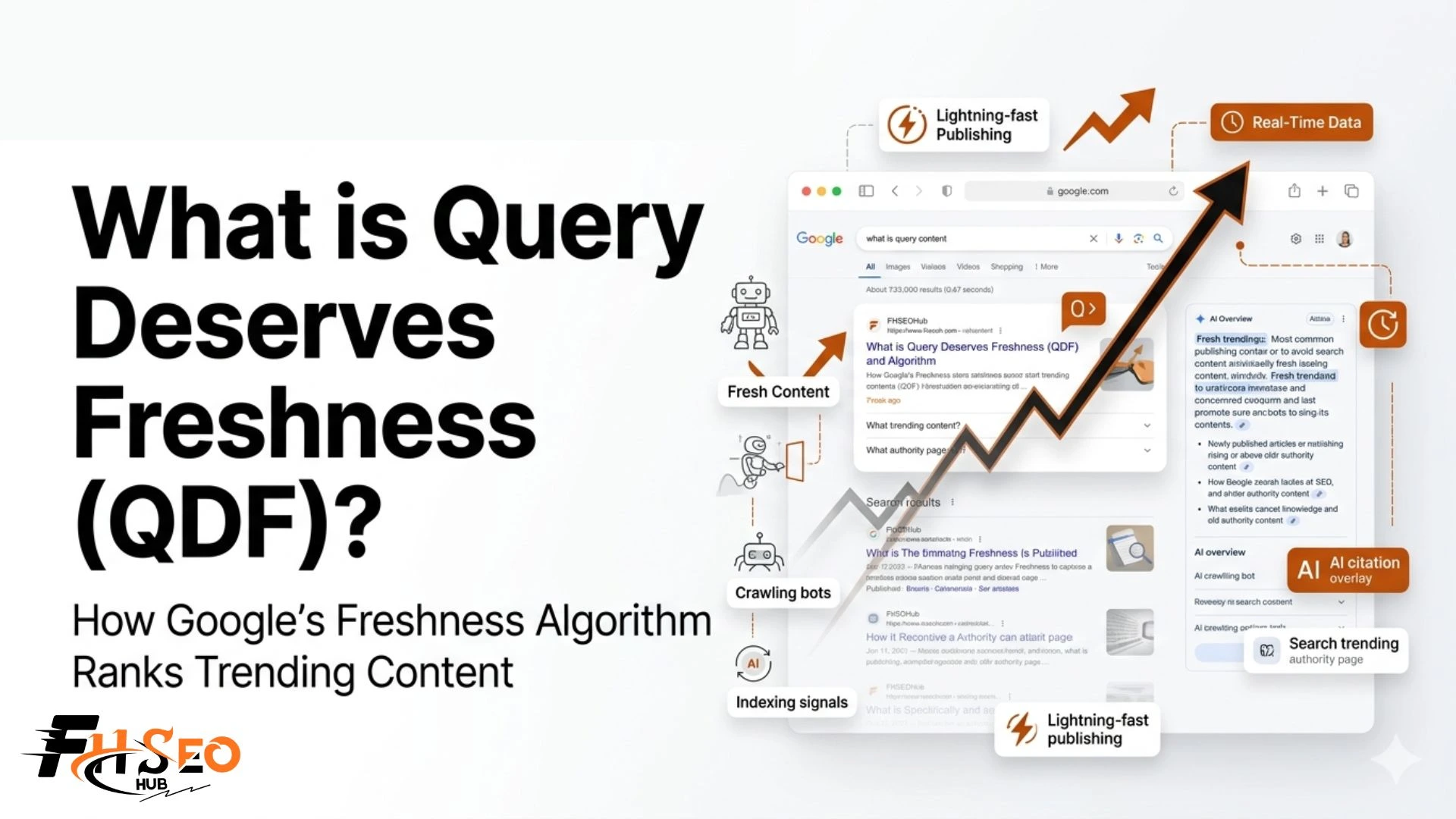
Query deserves freshness (QDF) is a Google re-ranking function that temporarily boosts newer content to the top of search results when a query relates to a trending topic, breaking news or recurring event. It overrides traditional authority signals like backlinks and domain age because the user clearly wants current information, not the most established article on that subject.
If you have ever watched a brand-new site suddenly outrank Wikipedia for a trending search, you witnessed QDF in action. It is one of the few mechanisms in Google’s algorithm where speed matters more than authority, even if only for a short window.
What is Query Deserves Freshness (QDF)?
Query deserves freshness is a specific re-ranking function inside Google’s algorithm that identifies the gap between what a user wants and what traditional authority-based ranking would show them. Amit Singhal, then Senior VP and Google Fellow, described it publicly in a 2007 New York Times interview. His explanation was precise:
“The QDF solution revolves around determining whether a topic is ‘hot.’ If news sites or blog posts are actively writing about a topic, the model figures that it is one for which users are more likely to want current information.”
The contrast between query types makes this concrete. If you search “history of Rome” you want the most researched, authoritative piece available. Age and backlinks signal quality for that intent. But if you search “election results” you want the article published thirty minutes ago. A 2018 article about elections, however authoritative, fails the user completely. QDF exists to fix that failure.
QDF predates Google’s official freshness algorithm update of 2011, which expanded the concept across a wider range of query types. The underlying re-ranking model has been a ranking factor since 2007.
Who invented QDF and what problem did it solve?
Amit Singhal designed the QDF model to solve a fundamental tension in Google’s core algorithm: the system was built to reward established, authoritative content, but for breaking news and current events, established content was often the least useful answer available. The 2007 New York Times interview made the concept public. The 2011 freshness update then applied freshness signals more aggressively across a larger set of time-sensitive queries, formalizing what QDF had been doing quietly for years.
How does the QDF algorithm detect a hot topic?
Google monitors its real-time stream of billions of search queries and watches for mathematical spikes in search volume for a specific phrase. Simultaneously, it tracks how many news sites and blogs are actively publishing content on that topic at the same time.
When both signals spike together, the system treats it as a triangulated data signal. High search volume plus high publication velocity equals a QDF trigger. At that point ranking weights shift. Authority becomes secondary. Google starts hunting for documents with recent inception dates, which is the term for the date Google first discovered a URL during crawling.
For QDF queries, a recent inception date functions as a strong positive signal. For evergreen queries, the opposite applies. An older inception date signals that a page has stood the test of time and earned its position through consistency.
What exactly is an inception date and why does it matter?
An inception date is the date Google first became aware of your URL during crawling. Think of it as the moment the algorithm met your page for the first time. For trending queries, a recent inception date means your content entered the conversation at the peak of public interest. For non-trending queries, an older inception date signals credibility and longevity. The same data point means different things depending entirely on which type of query is being evaluated.
What types of queries trigger QDF?
Not every search activates freshness re-ranking. Understanding the trigger categories tells you exactly where to invest in freshness-focused content and where traditional authority-building still dominates.
| Trigger Type | Examples | Typical Boost Duration | SEO Opportunity |
| Breaking news | Elections, earthquakes, disasters | Hours to days | High for fast publishers |
| Recurring events | Super Bowl, Black Friday, Olympics | Days to weeks around event | High for planners who prepare early |
| Trending viral content | Celebrity news, product launches, memes | Hours to days | High for agile smaller sites |
| Frequently updated topics | Best iPhones, SEO algorithm updates | Ongoing per update cycle | Medium for niche sites updating regularly |
The recurring events category deserves particular attention. Google knows the Super Bowl happens every February. It knows tax deadlines arrive every April. When search volume for these predictable events begins climbing, QDF activates. If you prepare content before the spike arrives rather than scrambling after it peaks, you catch the wave at the right moment.
How does QDF compare to how Google ranks evergreen content?
| Factor | Evergreen Query | QDF-Triggered Query |
| Primary ranking driver | Authority, backlinks, domain age | Publication date, content freshness |
| Content age preference | Older established content wins | Newer content gets temporary boost |
| Small site opportunity | Limited without strong authority | High, agility temporarily beats authority |
| Boost permanence | Stable long-term rankings | Temporary until public interest fades |
| Returns to normal after trend? | N/A | Yes, authority reclaims top spots |
| User intent | Timeless information | Current, up-to-the-minute information |
QDF is temporary by design. Once search volume drops and the news cycle moves on, the boost evaporates. The old authoritative content reclaims its position. QDF brought the tide in, but it always goes back to the normal shoreline.
What is the difference between genuinely fresh content and just changing a date?
This is the most common mistake. Changing a publication timestamp without rewriting the actual content sends a confusing signal that can actively damage rankings.
Google detects substantive freshness by analyzing whether the main content changed in a meaningful way, not whether just small change in the metadata.
| Action | QDF Impact | Reason |
| Publish a new article on a trending topic | Strong positive signal | New inception date with genuinely new content |
| Substantially rewrite with new data | Positive signal | Meaningful content change detected |
| Change publication date only | No positive effect, may hurt | Google detects unchanged underlying content |
| Update a few words or phrases | Minimal to no effect | Cosmetic change, not substantive freshness |
| Add new stats, examples, and sections | Positive signal | Detectable new information added |
| Live blog with multiple event updates | Very strong signal | Continuous freshness signals throughout the event |
The live blog format earns a special mention. Updating a single URL multiple times throughout a breaking event sends continuous freshness signals. Google treats this as strong evidence that the page evolves in real time with the news.
How do you optimize content to benefit from QDF?
Two parallel efforts need to happen simultaneously: publishing fast and getting indexed fast. One without the other misses the window entirely.
Practical steps that work in 2026:
How do you build a predictable spike content strategy?
Identify the annual events in your specific industry that consistently generate search spikes. For a finance site, that is tax deadlines, budget announcements and earnings season. For a tech site, that is major product launches and conference dates. Prepare drafts in advance. Publish at the beginning of the interest curve rather than at peak volume. Speed of indexation determines who catches the QDF wave and who misses it by hours.
How does query deserves freshness connect to Google AI Overviews?
In 2026, QDF extends well beyond organic blue links. When Google AI Overviews generates an answer to a time-sensitive query, it cannot rely on training data from a year ago. The system actively browses the live web for current information. The sites it chooses to cite are the same sites that QDF already elevated as the freshest and most relevant sources for that query.
Winning a QDF ranking increasingly means becoming the citation inside an AI-generated answer, not just a link in the organic results. The audience is different and the stakes are higher.
What is Generative Engine Optimization and how does it connect?
Generative Engine Optimization (GEO) is the practice of structuring content so AI search engines like Google AI Overviews, ChatGPT, and Perplexity select it when generating answers. QDF-ranked content feeds GEO directly. When AI systems browse the live web to answer time-sensitive queries, they follow the same freshness signals Google rewards through QDF. Being the freshest authoritative source during a QDF event makes your content the most likely candidate for AI citation.
Can small websites beat large sites during a QDF event?
Yes. Large authoritative sites like Wikipedia and CNN move slowly. They have editorial processes and approval layers that take time. During a QDF event, a smaller technically sound site that publishes immediately and gets indexed fast can outrank them temporarily.
The requirements are practical: a well-optimized site with fast crawl rates, clean XML sitemaps, managed crawl budget and an active Google Search Console account for rapid indexing requests. Authority matters less during the QDF window than at any other point in SEO. Speed and relevance are the variables that decide the outcome.
The core takeaway
Query deserves freshness is one of the few Google mechanisms where speed genuinely beats authority, at least temporarily. For the right queries, a small agile site can outrank Wikipedia on the day that matters most. In 2026, that opportunity extends into AI Overviews, where QDF-ranked pages become the citations AI systems use when answering time-sensitive questions. Build a content calendar around predictable events in your industry. Invest in technical foundations that allow fast indexing. Catch the wave when it comes rather than writing about it after the tide goes out.


