
How to Build Link Authority: Strategy, Backlinks & SEO Impact

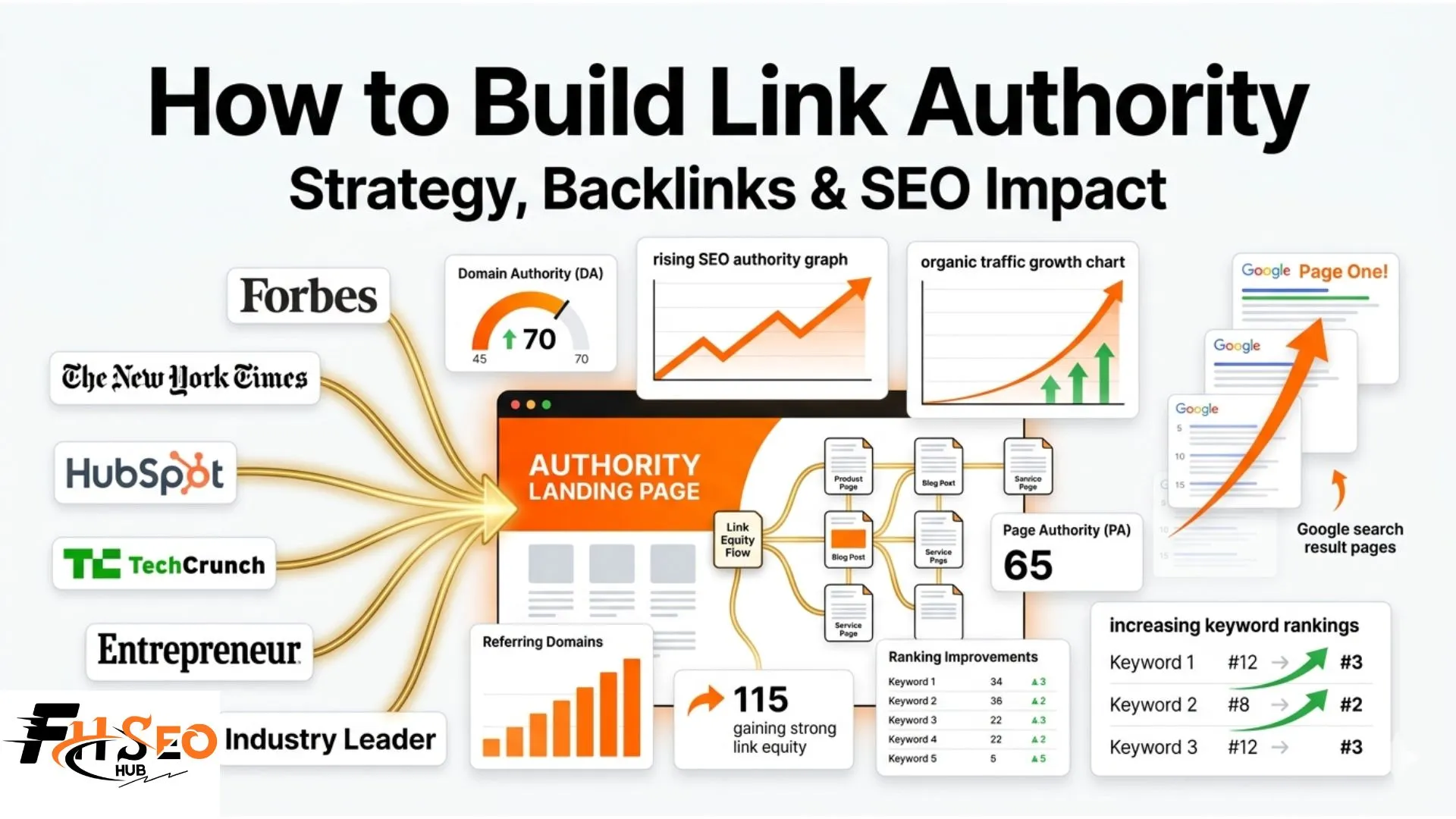
To build link authority, earn high-quality, topically relevant backlinks from pages that carry their own strong link equity, then use internal linking to distribute that earned authority toward the pages you want to rank. Quality and topical alignment determine how much authority each backlink transfers. Start by identifying your best-positioned pages, create content worth linking to, and run personalized outreach to niche-relevant sites with real organic traffic.
Most sites know they need stronger link authority. Few have a repeatable system for building it without wasting budget on low-value links that generate no ranking movement. The problem is not effort. It is targeting: wrong pages, wrong sources, and outreach that treats link building as a volume game rather than a quality-first investment.
This guide gives you a step-by-step strategy for building link authority on both new and established websites. If you need a clear understanding of the underlying concept first, read what link authority is before continuing. This article focuses entirely on the practical system for building it from the ground up.
How does link authority affect Google rankings?
Strong link authority on a specific page gives it a direct ranking advantage over competing pages with weaker link profiles, even when their content quality is comparable. The relationship between link authority and search position is one of the most consistent and measurable patterns in competitive SEO.
The direct relationship between link authority and search position
Google’s ranking systems use link authority as external validation for page quality. When multiple credible pages link to yours, Google reads that pattern as evidence your page deserves visibility for relevant queries.
This effect operates at two levels simultaneously. Page-level link authority produces the fastest visible impact. A single high-authority backlink to a page sitting in positions 5 to 15 can shift it to page one within 60 to 90 days, because Google needs only a small additional authority signal to resolve ranking ties between similarly optimized pages.
Domain-level link authority compounds more slowly but builds a durable ranking foundation. As your domain’s overall backlink profile strengthens, new pages you publish inherit some of that accumulated authority before earning a single external link. This is called link authority inheritance. It explains why established domains rank new content within days of publishing while a new site may need months to rank the same content. A new page on a domain with strong referring domain history starts with baseline trust that a brand-new domain must earn from zero.
Why link authority works differently for competitive vs low-competition keywords
For low-competition keywords, content quality and topical relevance often outweigh link authority. A well-optimized page in a niche with weak competing content can rank without significant external links.
For competitive keywords, link authority is frequently the deciding factor. When multiple pages satisfy the query intent equally well, Google uses link authority as the tiebreaker. According to Semrush research in 2026, the median top-ranking page has 13 referring domains. Pages with fewer high-quality referring domains in those same SERPs consistently rank lower, regardless of content depth.
What happens to rankings when link authority drops or is lost
Link authority is not permanent. When a linking page loses its own referring domains, or when its organic traffic declines significantly, the authority it passes to you erodes proportionally. This is link authority decay. If a site that linked to you switches to nofollow tags, gets penalized, or goes dormant, your page-level authority from that source weakens gradually.
Run a backlink audit in Ahrefs or Semrush quarterly. When you identify lost or broken referring domains, prioritize replacing those links before the decay affects your rankings. The next section explains exactly how backlinks transfer authority so you can evaluate each opportunity with precision.
How do backlinks build link authority?
Backlinks build link authority by transferring a portion of one page’s accumulated link equity to the page they point to. How much transfers depends on the linking page’s own authority level, how many other outbound links it contains, and how topically relevant it is to your content.
The mechanics of link equity transfer
When a page links to yours, it shares a fraction of its own authority through the link. Think of link equity (sometimes called link juice) as a budget. If Page A has strong link authority and links to only two other pages, each receives a meaningful share of that equity. If Page A links to fifty pages, each link receives a much smaller fraction.
This is why outbound link selectivity matters when evaluating link prospects. A site with strict editorial standards that links to only a handful of external sources passes more equity per link than a low-quality directory that links to hundreds of pages indiscriminately.
Why not all backlinks contribute equally to link authority
A dofollow link passes link equity actively to your page. A nofollow link carries the rel=”nofollow” attribute and does not pass equity in the same way. Always prioritize dofollow placements when building link authority for ranking purposes.
One concept most link building guides skip is first-link priority. When multiple links from the same domain point to the same page on your site, Google gives the most weight to the first link it encounters from that domain. Additional links from the same source pass diminishing equity. This is why diversifying across referring domains produces better compounding results than earning multiple links from a single site, even a high-authority one.
How linking page quality, relevance and placement affect authority transfer
Quality, topical relevance and link placement all amplify or reduce authority transfer. A link from a page with ten strong referring domains and genuine organic traffic passes more value than a link from a page with none.
A contextual link placed in the editorial body copy of an article transfers more authority than a link in a footer or sidebar. Google treats contextually placed editorial links as intentional endorsements and weights them more heavily. Topical relevance further multiplies the effect. A link from a specialist publication in your niche passes more effective authority than a link from an unrelated high-DA site, even when their domain rating scores look similar. With the mechanics clear, the next section gives you a four-step process for building link authority deliberately and at scale.
How to build link authority for a website step by step
Building link authority systematically requires four sequential steps: identify the right target pages, create content worth linking to, run targeted outreach to relevant sites and distribute earned authority through internal links. Each step depends on the one before it, and skipping ahead wastes resources.
Step 1: Identify your highest-priority pages to build authority for
Open Google Search Console and filter pages by impressions. Focus specifically on pages currently ranking between positions 5 and 15. These pages already have topical relevance and some existing authority. They need only a small additional link authority signal to reach page one.
Before running outreach, measure the SERP authority gap between your target page and the pages currently holding positions 1 to 3. A SERP authority gap is the difference in page-level link authority between your page and your top-ranking competitors. In Ahrefs, compare the URL Rating (UR) of your page against the median UR of the top 3 results. This gap tells you how many quality links you need to close the distance and gives your outreach a specific target rather than a vague goal.
This targeting approach is the most underused insight in practical link building. Most teams direct their outreach at homepages or brand-new content. The highest efficiency consistently comes from strengthening pages that Google has already marked as topically relevant but not yet authoritative enough for page one. A single high-authority backlink to one of these pages often produces a visible ranking shift within 30 to 60 days.
For new websites: start this step with your most commercially important page and your pillar content. You have no Search Console history yet, so build authority from your foundation outward.
Step 2: Create link-worthy content that earns citations naturally
Linkable assets are content formats that other sites naturally want to reference. Original research, industry surveys, proprietary datasets, and practical tools consistently earn editorial backlinks. Infographic link building can supplement these, particularly for data-heavy topics where visual summaries get embedded across industry blogs.
The differentiator between content that earns links and content that does not is sourcing. When you become an original data source rather than a curator of what others have published, writers across your industry reference you because they need to cite a primary source. A single well-researched study can generate dozens of high-authority inbound links over 12 to 24 months without ongoing outreach effort.
Step 3: Execute targeted outreach for high authority placements
Personalized outreach to niche-relevant sites with genuine organic traffic produces high-authority placements. Mass email campaigns produce low-value noise.
In Ahrefs Content Explorer, filter by organic traffic above 1,000 monthly sessions and domain rating above 40. Within those results, identify pages that already link to similar external content. These editors have demonstrated willingness to reference outside sources. Write pitches that reference the specific article you want a link from, explain what your content adds that theirs currently lacks, and keep every pitch under 150 words.
Step 4: Use internal links to distribute authority across your site
Internal links carry link equity through your site, pushing earned authority from high-authority pages toward the commercial and target pages you want to rank.
Run an authority-first internal linking audit. In Ahrefs, identify your pages with the highest URL Rating. Check which of your target pages they currently link to. Add contextual internal links from your strongest pages to your weakest target pages, using descriptive anchor text relevant to each destination. This is one of the fastest no-cost ways to improve rankings on pages that already have nearby authority available but no internal links directing it toward them.
Conclusion
Building link authority on any page requires four things done in sequence: identify pages with existing ranking potential in positions 5 to 15, create original content that earns citations as a primary source, run personalized outreach to topically aligned sites with genuine traffic and distribute earned authority toward target pages through intentional internal linking.
Link authority is a long-term compounding asset. Sites that know how to build link authority consistently over 18 to 24 months develop a ranking floor that makes new content progressively easier to rank. Sites that treat it as a one-time campaign plateau and lose ground to competitors who keep building.


