B2B Link Building Strategies That Work in 2026

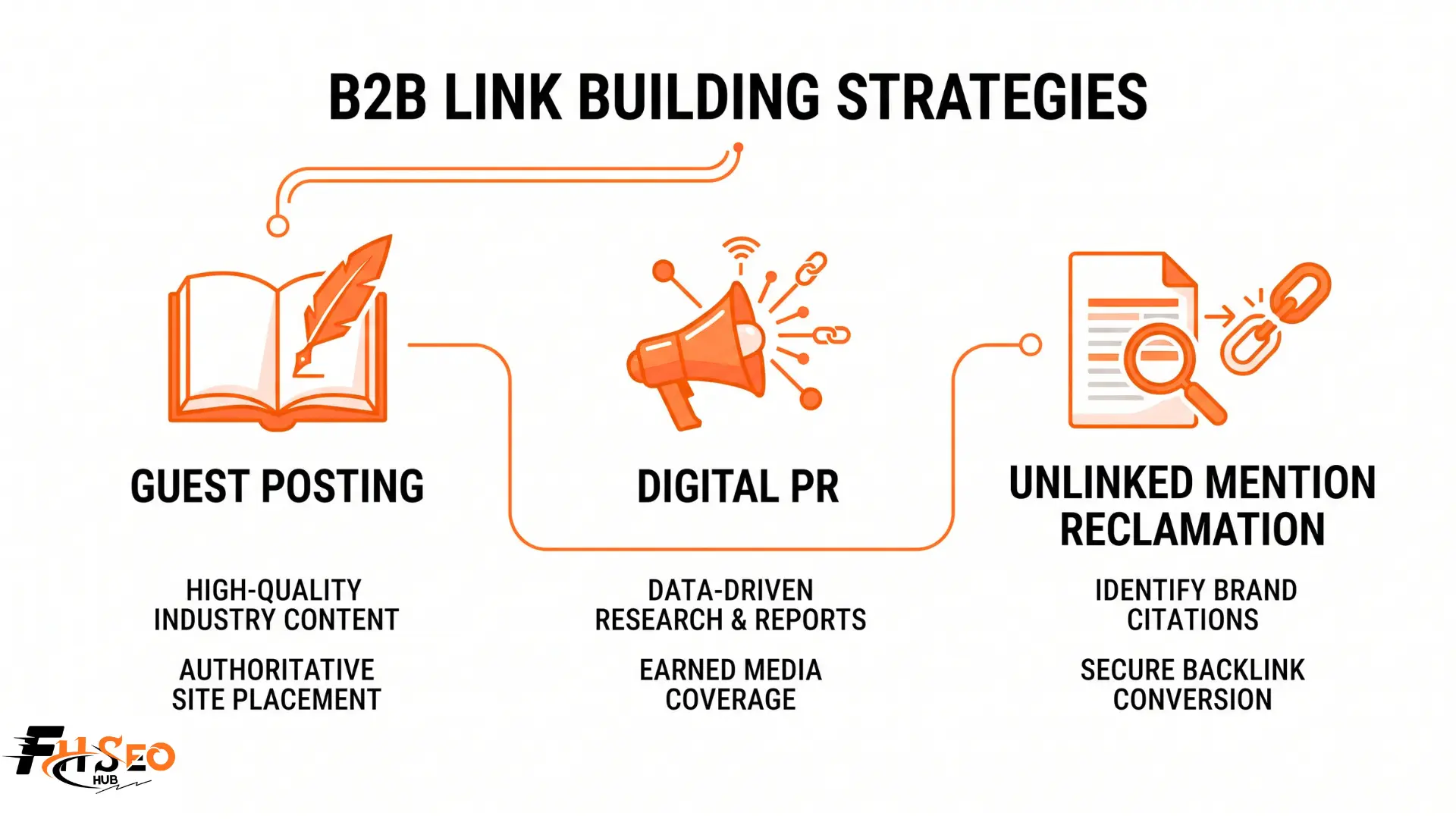
B2B link building differs from consumer SEO in three real ways: a narrower pool of relevant publishers, a much longer sales cycle before results show up in pipeline, and a stronger need to link straight to revenue pages instead of just blog content. The tactics that work are guest posting on trade publications, digital PR built around original data, and reclaiming unlinked mentions, not the generic listicle tactics most B2C guides recycle.
If you have watched a backlink campaign run for three months with nothing to show a VP except a spreadsheet of referring domains, you already know the real problem. It is not that the links do not work. It is that B2B buyers research for weeks before anyone talks to sales, so the payoff shows up later and looks different than a typical SEO report expects.
What Is B2B Link Building?
This is the practice of earning backlinks from publishers, review platforms, and partners that reach your professional buyer, rather than a broad consumer audience. It still runs on the same mechanics as any backlink profile: referring domains, anchor text, and domain authority all matter. What changes is where those links need to come from.
A link from a respected SaaS publication or trade journal your buyers actually read carries more weight than a higher-DR link from an unrelated consumer site. Topical relevance inside a narrow industry matters more here than in almost any other niche.
Why Is Link Building Important for B2B Companies?
Backlinks to your pricing, comparison, and integration pages help those pages rank for the high-intent searches your buyers run right before they talk to sales, not just general blog traffic. A link from a trusted industry site also works as third-party validation during a research phase that often runs weeks or months before a demo call happens.
There is a newer reason too. AI tools increasingly summarize what trusted sources say about a company before a buyer ever visits your site, so links and brand mentions on the publications your industry reads now feed both classic rankings and AI-generated answers. A B2B brand with zero presence on the sites its buyers read is invisible to both channels at once.
Earned Links vs. Bought Links: Why Quality Matters
An earned link comes from real outreach, real content, or a real relationship. A bought link is paid for directly, and Google’s link scheme policies treat undisclosed paid links the same way regardless of how the invoice is worded. White hat link building protects the value of every link you already have, which is exactly what a bought link risks.
| Signal | Earned Link | Bought Link |
| Source | Real outreach, content, relationship | Paid placement or exchange |
| Attribute | Natural dofollow | Often unmarked, should be nofollow or sponsored |
| Risk | Low | Manual action or algorithmic discount |
| Durability | Lasts as long as the content does | Can vanish or get discounted overnight |
| Cost pattern | Time and content investment | Recurring cash, no guarantee of lasting value |
Buying backlinks outright is the clearest version of this risk, and so is leaning on private blog networks or a pile of spammy links from low-quality sellers. One B2B tactic worth flagging specifically: scholarship link building. Google cited scholarship links in a real manual penalty and called the tactic manipulative, and a genuine scholarship program can cost well over a thousand dollars before it earns a single link. It is not automatically off limits, but treat it as high-risk, not a safe default, and mark any resulting links nofollow if you run it at all.
The Best Link Sources for B2B
The strongest B2B link sources are trade publications your buyers already read, software review platforms, journalist queries, and digital PR built around data your industry cites. Generic web directories rarely help, but industry-specific ones still do.
| Source Type | Examples | Best For |
| Trade publications | Industry-specific blogs and magazines | Topical authority, credibility |
| Software review platforms | G2, Capterra, TrustRadius, PeerSpot | Buyer trust, comparison-page rankings |
| Journalist queries | HARO/Featured.com | Editorial links, brand mentions |
| Digital PR | Original data, surveys, benchmarks | High-DR editorial coverage |
| Industry directories | Niche B2B and vertical-specific listings | Referral traffic, discoverability |
Worth knowing before you plan around review platforms: G2 acquired Capterra, Software Advice, and GetApp from Gartner in early 2026, putting four of the largest B2B review sites under one owner. Profiles and reviews increasingly syndicate across all four, so one strong G2 profile now carries further than it did before the consolidation. Guest posting on trade publications still works, but acceptance rates on the sites worth pursuing are often in the single digits, so plan pitch volume accordingly.
How to Develop a B2B Backlink Strategy
Start by auditing your current backlink profile and mapping competitor backlinks to find publishers already linking to companies like yours. From there, build a target list of trade publications, review platforms, and partners, then prioritize revenue pages over blog posts when deciding where new links should point.
Treat the resulting link building campaign as an ongoing program, not a one-time push. Every link you earn adds a small amount of link equity to your domain, and that equity compounds fastest when new links keep arriving at a steady, believable pace rather than in bursts.
8 B2B Link Building Tactics That Work
1. Guest Posting on Trade Publications
Contribute genuinely useful articles to the industry blogs and publications your buyers already read. Acceptance rates on respected sites are often under 10 percent, so pitch several publications at once and lead with a specific angle their audience cannot get elsewhere.
2. Digital PR and Original Research
Original surveys, usage data, or benchmark reports give journalists something concrete to cite. Digital PR built this way earns editorial links from higher-DR sites than cold guest post pitches typically reach, because you are offering data instead of asking for a favor.
3. Unlinked Mention Reclamation
Search for places your brand is already mentioned without a link, then ask the author to add one. Warm reclamation outreach converts at roughly 15 to 40 percent, far above the 3 to 8 percent typical of cold link requests, since the author already decided you were worth mentioning. This is also often the only realistic way to earn a link from a tier-1 outlet that ignores cold pitches entirely.
4. Broken Link Building
Find dead links on relevant industry pages and suggest your content as the replacement. Broken link building works well in B2B because niche industry pages change ownership and go stale often, and a helpful replacement suggestion converts better than a generic ask.
5. Resource Page Link Building
Many B2B sites maintain curated resource or tools pages for their industry. Resource page link building means finding these pages and pitching your genuinely useful tool, guide, or template for inclusion.
6. Product Review Platforms
Building a strong presence on G2, Capterra, and TrustRadius earns links, referral traffic, and third-party validation buyers actively look for mid-funnel. Following the 2026 G2-Capterra-GetApp consolidation, a complete profile on one platform now has more downstream reach than before.
7. Skyscraper Technique
Find a well-linked piece of content in your niche, build something more current and more useful, then reach out to sites linking to the original. The skyscraper technique works especially well in B2B niches where the “best” resource on a topic is often several years out of date.
8. Scholarship Link Building
Included here only because it still gets pitched, not because it is recommended by default. Given the documented penalty history covered above, most B2B budgets are better spent on reclamation or digital PR unless your company already runs a genuine scholarship program independent of SEO goals.
Content That Earns Links in B2B
Linkable assets in B2B are usually data, not opinion. Original research, benchmark reports, and detailed case studies consistently outperform standard blog posts for earning links, since journalists and other writers need numbers to cite, not another take on a familiar topic.
An infographic built around a genuine data set still earns links in industries where visual summaries of dense data get shared, though it works better as a companion to a data-backed report than as a standalone asset. Thought leadership content from a named executive, published consistently on your own site and syndicated through guest contributions, builds the kind of durable authority that keeps earning links long after publication. For a broader list of formats worth testing, our link building ideas roundup covers additional angles beyond the data-driven formats above.
Outreach Approaches That Work in B2B
Manual, personalized outreach consistently outperforms automated link building in B2B, since editors at trade publications can spot a templated pitch instantly and B2B’s smaller publisher pool means burning a relationship costs more than it would in a broader consumer niche. Journalist queries through HARO, personalized reclamation emails, and podcast outreach to shows your buyers listen to all share the same principle: reference something specific about the person or publication you are contacting.
Podcast outreach in particular is underused in B2B. A guest appearance on an industry podcast typically earns a link from the show notes page plus a mention that functions like a brand endorsement, and competition for these slots is far lower than for guest posts on written publications.
Building Links Through Partnerships and Ecosystems
Partner and integration pages are a reliable, low-effort source of B2B links. If your product integrates with other software, ask to be listed on their partner or integration directory, which usually comes with a dofollow link and puts you in front of an audience already evaluating tools like yours.
Reciprocal links between partners work, but keep the exchange proportional and relevant, since an obvious link-swap pattern across many partners starts to look engineered. Joining active link building communities or industry Slack groups also surfaces genuine co-marketing and guest content opportunities that rarely show up through cold outreach alone.
Tracking and Measuring Link Building Success
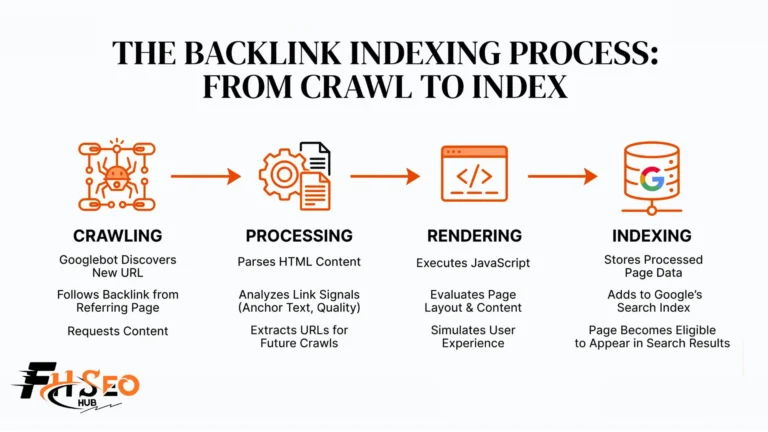
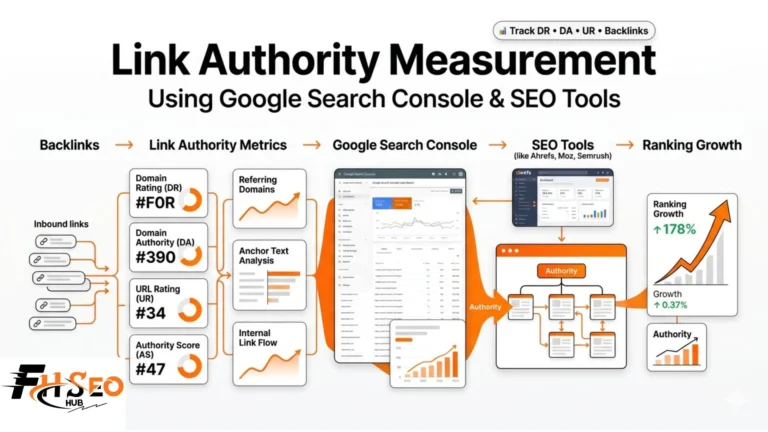
Track referring domains, not total backlink count, since ten links from ten distinct quality domains outweigh fifty links from five. Use Ahrefs or a similar tool to monitor domain rating movement and confirm new links are actually indexed by periodically checking backlinks in Google Search Console.
Link building ROI in B2B needs a longer measurement window than the standard 30 to 90 day SEO report allows. Tie your reporting to the actual sales cycle length for your deal size, since a link’s ranking contribution to a revenue page can take months to show up as pipeline, well after it shows up as a ranking or referral traffic gain.
Why B2B Link Building Takes Longer to Show Results
B2B sales cycles run anywhere from 30 days for small deals to 6 to 12 months or longer for enterprise accounts, and that same timeline stretches out when a link’s ranking benefit needs to convert into a sales conversation rather than an immediate purchase. A ranking gain that shows up in month three might not show up as a closed deal until month seven or eight, simply because that is how long the buying committee takes to decide.
Steady link velocity, a handful of new relevant links added consistently each month rather than in bursts, matters more than in faster-moving consumer niches, since B2B’s smaller publisher pool makes sudden spikes both harder to sustain and easier for Google to notice. Set expectations with stakeholders around this longer window before the campaign starts, not after month two when the first questions start.
Conclusion
B2B link building rewards a narrower, more deliberate approach than the generic tactics most SEO content recycles from B2C playbooks. Prioritize trade publications, review platforms, and unlinked mention reclamation over volume, point new links at revenue pages instead of only blog content, and set stakeholder expectations around a timeline that matches your actual sales cycle rather than a generic SEO report. Whether you run this in-house or bring in a niche edit or guest posting partner, the companies that win at this treat it as a compounding system, not a sprint.
FAQs
It is earning backlinks from publishers, review platforms, and partners that reach a professional buyer audience, rather than a broad consumer one. It runs on the same core mechanics as any backlink strategy, but prioritizes trade publications, software review sites, and industry-specific outreach over general web directories.
B2B has a narrower pool of relevant publishers, a longer attribution window tied to the sales cycle, and a stronger need to link directly to revenue pages like pricing and comparisons rather than just blog content. Consumer campaigns can chase broader viral appeal; this approach cannot.
Guest posting on trade publications, digital PR built around original data, and unlinked mention reclamation consistently produce the highest return. Product review platforms like G2 and Capterra also matter specifically for SaaS, since buyers actively compare tools there mid-funnel.
Rankings typically move within a few months, similar to other niches, but the business impact takes longer since it has to work through an actual sales cycle. For SaaS deals with a roughly 84-day median cycle, expect meaningful pipeline attribution several months after the ranking gain itself appears.
Yes, but acceptance rates on respected trade publications often sit under 10 percent, so it works best as one tactic among several rather than the sole strategy. Sites with real audiences and editorial standards remain worth the lower acceptance rate.
They help brand credibility and buyer trust more directly than they move rankings on their own. Following the 2026 consolidation under G2, a strong profile on one platform now carries further across the group, and consistent brand mentions across review platforms do feed AI search visibility.
It carries real risk. Google has cited scholarship links in an actual manual penalty and calls the tactic manipulative, and running one properly costs real money before it earns a single link. Most B2B budgets are better spent on reclamation or digital PR.
In-house works if someone has the industry relationships and time to do consistent outreach. Outsourcing makes sense once a site’s needs outgrow a few hours a month, particularly for agencies that need white label link building support to deliver client work at scale.