What Is Link Popularity? (The Original Ranking Concept)


Link popularity is the original ranking concept measuring how many inbound links point to a page, treating each link as a vote of confidence from one site to another. It predates Google entirely, and PageRank was built as a mathematical refinement of this same basic idea, not a replacement for it.
Most content on this topic either treats link popularity as ancient history with no current relevance, or conflates it with modern metrics like Domain Authority without explaining what genuinely changed. Neither is accurate. The underlying concept survives inside every current ranking signal Google uses for links. What changed is how much quantity alone is worth.
What Is Link Popularity?
Link popularity measures the quantity and, in its refined forms, the quality of inbound links pointing to a website. It’s built on the premise that a page linked to by many other sites is more likely valuable or authoritative, a premise that eventually evolved into Domain Authority and similar third-party metrics. Early search engines used raw link counts as a primary ranking signal, well before Google existed.
The concept borrows directly from academic citation analysis, where a research paper cited by many other papers is considered more influential within its field. Search engines applied the same logic to the web: a page other sites choose to link to is treated as more credible than one nobody references.
The Origin of Link Popularity: How It Became Google’s First Ranking Signal
Link popularity became a ranking signal in the mid-1990s. Early search engines like AltaVista, Excite, and Inktomi’s HotBot needed a way to rank pages beyond simple keyword matching, which webmasters were already gaming through keyword stuffing. Counting inbound links offered a signal that was harder to manipulate at the time, since it depended on other sites choosing to link, not something a page owner controlled directly.
RankDex, an early link-analysis ranking system developed by Robin Li before he went on to found Baidu, used link structure to rank pages before Larry Page and Sergey Brin formalized PageRank at Stanford. PageRank refined link popularity into a weighted, recursive calculation: a link from a page that itself has many strong inbound links counts for more than a link from an obscure, poorly-linked page. Google launched in 1998 built around this refinement, and it was the first widely-successful search engine to rank primarily on link structure rather than keyword density alone.
Link Popularity vs. Domain Popularity vs. IP Popularity
Link popularity counts raw inbound links, domain popularity counts unique referring domains, and IP popularity counts unique IP addresses or subnets those domains are hosted on. Each refinement solves a manipulation problem the previous metric didn’t catch. A site with 500 links from a single domain scores high on link popularity but low on domain popularity, immediately revealing the metric’s limitation.
| Metric | What It Counts | What It Catches |
| Link Popularity | Total inbound links | Raw link volume, easiest to manipulate |
| Domain Popularity | Unique referring domains | Single-domain link farms and sitewide link abuse |
| IP Popularity | Unique IP addresses or subnets | Multiple domains hosted on the same server, a common link network signature |
IP popularity emerged specifically because early link networks often hid many “different” domains on the same server or hosting account, making domain popularity alone insufficient. This same underlying logic, checking whether linking domains share infrastructure, still drives how modern systems like SpamBrain identify private blog networks today. The specific metric name faded. The detection principle didn’t.
Link Popularity vs. Domain Authority vs. PageRank vs. Link Weight
Link popularity is the original, simplest concept, counting links. PageRank is Google’s original mathematical refinement, weighting links by the authority of the linking page. Domain Authority is a third-party Moz metric estimating overall ranking strength, and link weight refers more generally to how much value any individual link passes based on its context and source.
| Concept | Origin | What It Measures | Still Used Today? |
| Link Popularity | Mid-1990s search engines | Raw inbound link count | As a foundational concept, not a standalone metric |
| PageRank | Google, 1998 | Weighted, recursive link authority | Yes, internally, though public scores were discontinued in 2016 |
| Domain Authority | Moz | Estimated overall domain ranking strength | Yes, as a third-party estimate, not a Google metric |
| Link Weight | General SEO terminology | Value passed by an individual link based on relevance and source | Yes, as a practitioner concept, not a named algorithm |
None of these fully replaced link popularity. Each one added a layer of sophistication on top of the same core premise: links function as votes, and some votes count more than others.
How Penguin Changed the Concept: From Quantity to Quality
Penguin, launched in 2012, shifted link evaluation from rewarding raw quantity to actively penalizing manipulative link patterns, ending the era where more links reliably meant better rankings regardless of source quality. Before Penguin, link popularity in practice had degraded into a counting game, spawning link farms, blog comment spam, and directory submission services built purely to inflate link counts.
Penguin didn’t eliminate the value of link popularity as a concept. It punished the specific abuse pattern quantity-focused link building had produced: unnatural anchor text distribution, low-quality link sources, and link velocity that looked manufactured rather than earned. The underlying logic that links signal authority survived. What died was the assumption that any link, regardless of quality or context, contributed positively.
Is Link Popularity Still a Google Ranking Factor Today?
Link popularity in its original, pure form isn’t a standalone Google ranking factor anymore, but the core concept survives inside every link-based signal Google’s current systems evaluate, filtered through relevance, quality, and trust. Google confirmed it stopped publicly sharing PageRank scores in 2016, though a version of PageRank still operates internally as part of a much larger evaluation system.
Raw inbound link count today correlates with search visibility mainly because genuinely authoritative pages tend to accumulate more legitimate links over time, not because link count itself is what Google rewards directly. A page with fewer, highly relevant, editorially-earned links regularly outranks one with a larger raw link count from low-quality or irrelevant sources.
How Google Evaluates Link Popularity Now
Google evaluates link-based signals now through SpamBrain and related Google algorithm systems that assess topical relevance, referring domain diversity, anchor text distribution, and link equity flow across a site’s entire profile, not link count in isolation. A link’s context, the surrounding content, the linking site’s own trust signals, and whether the link reads as editorially earned, all factor into how much weight it genuinely carries.
E-E-A-T evaluation adds a layer link popularity never accounted for: whether the linking site itself demonstrates genuine expertise and trustworthiness in its subject area. A link from a low-authority but genuinely topically relevant, expert-run site can carry more real weight than a link from a high-traffic but topically unrelated domain. That’s a distinction pure link popularity counting could never make.
Link Popularity in the Age of AI Search
Link popularity’s core premise, that being referenced by others signals credibility, now extends into how AI search systems decide which sources to cite, though the specific signal has broadened beyond links alone. AI-generated answers increasingly cite based on brand mentions and topical authority signals that don’t require a clickable link at all, a genuine departure from the original link-counting model.
Unlinked brand mentions function as a modern echo of the original link popularity concept: a reference that signals credibility without passing any technical link equity. This matters directly for generative engine optimization and answer engine optimization, where the underlying “more references equals more credibility” logic behind link popularity applies to a broader set of signals than links alone.
Factors That Influence Link Popularity
The factors that genuinely influence link popularity’s modern equivalent are referring domain diversity, topical relevance between linking and linked sites, anchor text distribution, link velocity, and the trust and authority signals of the linking domains themselves. No single factor operates in isolation from the others.
Referring domain count matters more than raw link count for search engine ranking purposes, since ten links from ten different relevant domains carry more weight than fifty links from a single source. Topical relevance determines how much of that weight genuinely transfers. A link from a directly relevant site passes more genuine signal than one from an unrelated domain, regardless of that domain’s overall authority. Anchor text distribution and link velocity both function as trust checks. A natural mix and a realistic pace suggest earned links. A pattern that looks manufactured suggests the opposite, regardless of how many total links exist.
How to Measure Your Link Popularity (Tools & Metrics)
Measuring link popularity today means checking referring domain count, Domain Authority or Domain Rating, Trust Flow and Citation Flow, and anchor text distribution through tools like Ahrefs, Semrush, or Majestic. No single metric captures the full picture on its own, and raw backlink count alone tells you almost nothing about quality.
| Tool | Best For | Key Metric |
| Ahrefs | Comprehensive backlink and referring domain analysis | Domain Rating (DR) |
| Semrush | Backlink audit alongside broader SEO data | Authority Score |
| Majestic | Link quality and trust-specific analysis | Trust Flow and Citation Flow |
| Google Search Console | Confirmed, indexed backlink data direct from Google | Top linking sites and pages |
Cross-reference at least two tools rather than relying on one, since third-party metrics use different calculation methods and can disagree meaningfully on the same domain. Trust Flow and Citation Flow together are particularly useful for spotting a profile with high link volume but low genuine trust, exactly the pattern raw link popularity alone would miss.
How to Increase Link Popularity (Proven Strategies)
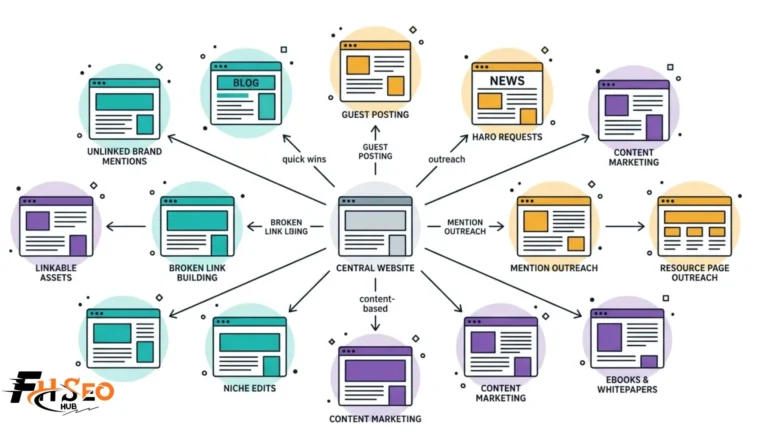
Increasing link popularity effectively today means prioritizing referring domain diversity and topical relevance over raw volume, through tactics like broken link building, digital PR, and genuine guest contributions on relevant, editorially-reviewed sites. A single highly relevant, high-trust link often outperforms dozens of low-quality ones for both rankings and long-term risk.
Reclaim unlinked brand mentions as a low-cost addition to this work. Press coverage and organic mentions that don’t yet link back represent an existing signal you can convert into a genuine link with a quick outreach request. Build content genuinely worth referencing, original data, real expertise, useful tools, since that’s what earns the kind of diverse, relevant links that improve link popularity’s modern equivalents without manufacturing a pattern detection systems flag.
Common Link Popularity Mistakes to Avoid
The most common mistake is still chasing raw link count the way link popularity’s original, pre-Penguin form rewarded, ignoring referring domain diversity and topical relevance in favor of volume. A backlink profile with hundreds of links from a handful of low-quality, unrelated domains looks weaker to current systems than one with a fraction of that count from genuinely relevant, trusted sources.
Treating third-party metrics like Domain Authority or Domain Rating as if they were Google’s actual internal signal is a second common mistake, since these are independent estimates, not confirmed ranking factors. Ignoring anchor text distribution while focused purely on link acquisition is a third mistake. An otherwise clean link building effort can still read as manipulated if anchor text skews too heavily toward exact-match commercial phrases.
Conclusion
Link popularity didn’t disappear, it evolved into every link-based signal Google’s current systems evaluate, filtered through relevance, trust, and E-E-A-T in ways the original raw count never accounted for. Understanding where the concept came from, academic citation analysis, early search engines, PageRank’s refinement, Penguin’s correction, explains why quality-focused link building works today and why quantity-focused tactics from the concept’s earlier era don’t anymore. Build for the same underlying logic that made link popularity work in the first place: genuine references from sources worth being referenced by.
FAQs
No. Link popularity is the original, simpler concept of counting inbound links. PageRank is Google’s mathematical refinement of that concept, weighting each link by the authority of the page it comes from rather than treating every link equally.
The original raw-count version doesn’t function as a standalone ranking factor anymore, but the underlying concept survives inside how Google evaluates referring domain diversity, link relevance, and overall backlink profile trust today.
Domain popularity counts unique referring domains linking to a site, catching single-domain link abuse. IP popularity goes further, counting unique IP addresses or subnets, catching cases where multiple “different” domains are genuinely hosted on the same server, a common link network signature.
Link popularity is a historical concept measuring link quantity. Domain Authority is a specific third-party metric from Moz estimating a domain’s overall ranking strength based on its backlink profile among other factors. Domain Authority is a modern estimate; link popularity is the original underlying idea it builds on.
Yes. A site with a large raw link count from low-quality, irrelevant, or manipulated sources can rank poorly despite that volume, since modern systems evaluate relevance and trust alongside quantity. Raw link popularity alone hasn’t been sufficient for good rankings since Penguin launched in 2012.